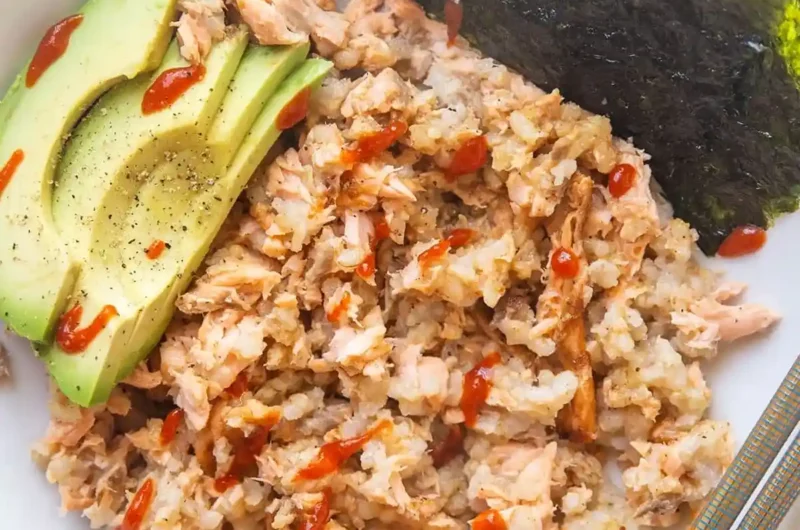
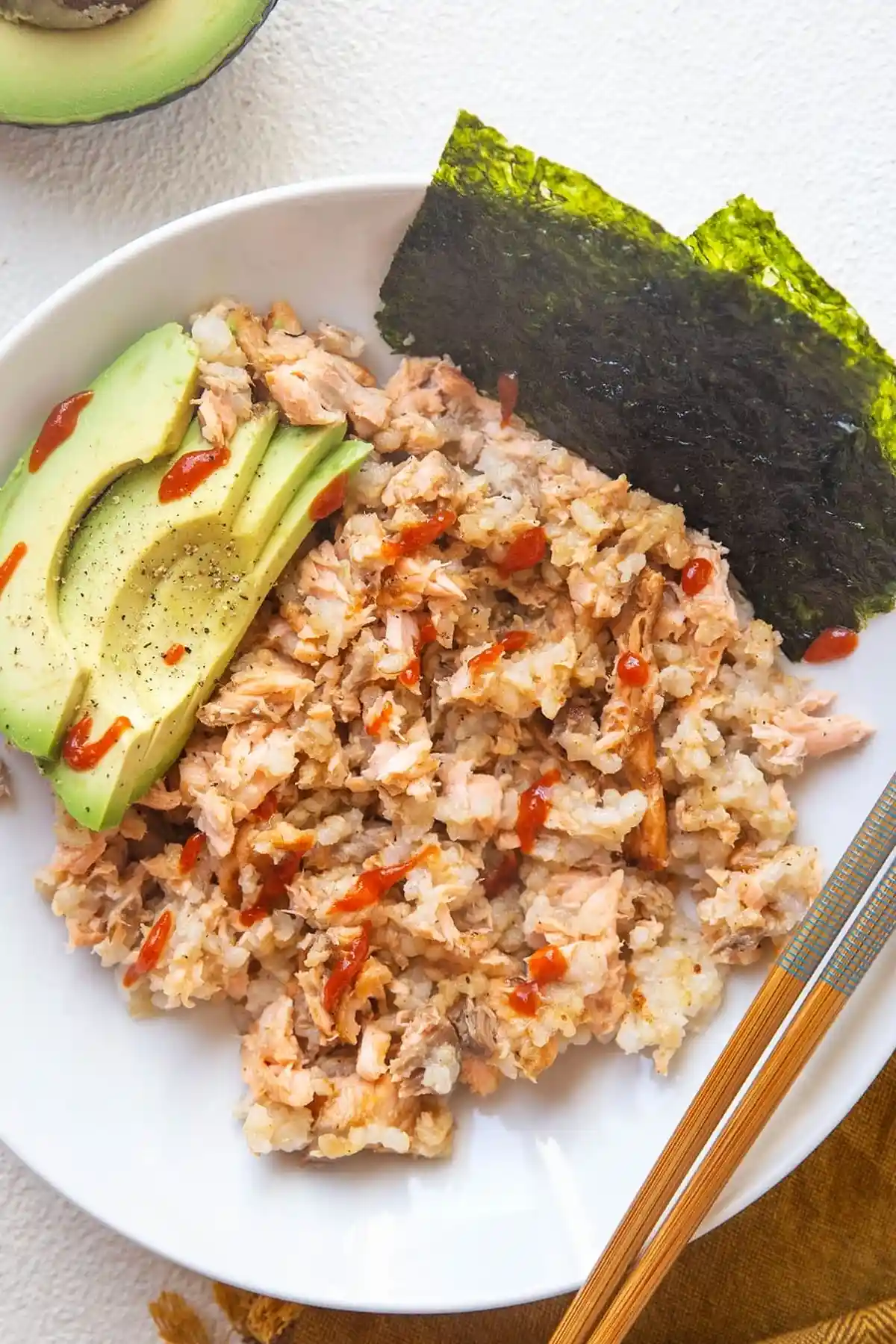
This fast salmon and rice bowl is a nutritious meal perfect for busy lunches or dinners. It utilizes leftover ingredients to create a balanced dish in under ten minutes.
List of ingredients
- 3/4 cup cooked brown rice – provides complex carbohydrates for sustained energy.
- 6 ounces leftover salmon or canned salmon – the primary protein source.
- 1 to 2 Tbsp coconut aminos – adds umami flavor and a hint of sweetness.
- 1 to 2 tsp sriracha – provides a customizable level of spicy heat.
- 1 to 2 tsp mayonnaise – adds creaminess and healthy fats.
- Sea salt – used to enhance all other flavors.
- 1/2 ripe avocado, sliced – contributes healthy omega-3 fats and a creamy texture.
- 1 (0.35-oz) package roasted seaweed snacks – used for scooping or as wraps.
step-by-step instructions
- Prepare the salmon: Place the leftover salmon filet in a bowl or on a plate and use a fork to mash or shred it into smaller pieces. If using canned salmon, drain the liquid thoroughly before transferring it to the bowl.
- Heat the base: Transfer the leftover rice on top of the salmon and cover the bowl with a paper towel or parchment paper. Microwave for 2 to 3 minutes until everything is hot. Alternatively, heat the salmon and rice in a nonstick skillet over medium to medium-high heat for a few minutes; add a small amount of olive oil or water if the mixture seems too dry.
- Mix the sauce: Stir in the coconut aminos, sriracha, and mayonnaise until the ingredients are fully combined. Taste the mixture and add sea salt or additional coconut aminos if more flavor is needed.
- Assemble and serve: Serve the bowls with fresh sliced avocado and roasted seaweed snacks. Use the seaweed sheets to scoop the salmon and rice mixture along with avocado to create mini sushi-style rolls.
Ingredient Substitutions
Replacing Brown Rice with Other Grains
While brown rice provides complex carbohydrates, you can use white jasmine or sushi rice for a stickier texture. For a low-carb alternative, cauliflower rice works well, though it requires less heating time in the microwave to avoid becoming too watery.
Using Soy Sauce or Tamari instead of Coconut Aminos
Coconut aminos are soy-free and slightly sweeter than traditional soy sauce. If you are not avoiding soy, you can substitute coconut aminos with an equal amount of tamari or liquid aminos for a saltier, more traditional umami profile.
Substituting Mayonnaise with Mashed Avocado
If you prefer to avoid mayonnaise, you can omit it entirely and increase the amount of mashed avocado mixed into the rice. This maintains the creamy consistency and provides a similar fat content while adding a fresh, green flavor to the bowl.
Selecting Different Salmon Types
Canned salmon is a convenient option for rapid assembly, though it requires draining to prevent the rice from becoming soggy. Freshly cooked Atlantic salmon is oilier and may require less mayonnaise, while sockeye salmon is leaner and benefits more from the added creaminess of mayo.
Enhancing Texture and Flavor
Achieving Crispy Rice and Skin in a Skillet
Heating the ingredients in a nonstick skillet over medium-high heat allows the rice to toast and the salmon skin to crisp. Use a small amount of olive oil to facilitate browning, which adds a nutty flavor and a contrasting crunch to the soft avocado.
Preventing Rice from Drying Out in the Microwave
Covering the bowl with a paper towel or parchment paper traps steam, which rehydrates the grains of rice. This method ensures the rice remains fluffy and the salmon stays moist without needing to add extra water to the bowl.
Adjusting the Sriracha for Heat Levels
Sriracha varies in intensity, so start with one teaspoon and taste before adding more. If you prefer a milder heat, you can substitute sriracha with a dash of paprika or a mild chili garlic sauce.
Using Sea Salt for Flavor Balance
Sea salt helps to cut through the richness of the salmon and mayonnaise. Add it in small increments at the very end of the process to ensure the saltiness does not overpower the sweetness of the coconut aminos.
Bowl Customization and Add-ons
Incorporating Fresh Crunchy Vegetables
Adding a side of shredded cabbage or a creamy coleslaw provides a fresh contrast to the warm rice. Sliced cucumbers or shredded carrots also add a necessary crunch and a dose of vitamins to the meal.
Adding Kimchi for Probiotic Depth
Kimchi adds a fermented, sour, and spicy element that complements the richness of the salmon. The acidity in kimchi helps balance the fats from the avocado and mayonnaise, creating a more complex flavor profile.
Using Wasabi Paste for Extra Pungency
Mixing one to two teaspoons of wasabi paste into the rice adds a sharp, nasal heat typical of traditional sushi. This is particularly effective when using canned salmon to provide a more gourmet taste.
Adding Rice Vinegar for Acidity
A tablespoon of rice vinegar can be stirred into the rice to mimic the taste of seasoned sushi rice. The acidity brightens the overall dish and makes the salmon taste fresher.
Using Sesame Oil for Nutty Aroma
A small drizzle of toasted sesame oil adds a deep, nutty aroma that pairs well with the seaweed snacks. Use this sparingly, as the flavor is very potent and can easily dominate the other ingredients.
Meal Prep and Storage Guidelines
Optimal Storage for Cooked Brown Rice
Cooked brown rice should be stored in an airtight container in the refrigerator for up to one week. To maintain quality, ensure the rice is cooled slightly before sealing the container to prevent excessive condensation.
Safe Refrigeration of Cooked Salmon
Leftover cooked salmon fillets stay fresh in the refrigerator for up to five days when kept in a sealed container. For maximum food safety, avoid freezing and thawing the salmon multiple times.
Preparing Component-Based Meal Kits
To meal prep this dish, store the cooked rice and salmon in one container and keep the avocado and seaweed separate. Mix the coconut aminos, sriracha, and mayo into a small dressing container to be added just before heating.
Preventing Avocado Oxidation
Keep the avocado pit in the unused half of the fruit and squeeze a small amount of lemon or lime juice over the surface. This prevents the flesh from turning brown, keeping it fresh for the next day’s bowl.
Reheating and Serving Methods
Microwave Reheating for Speed
The microwave is the fastest way to heat this bowl, taking only 2 to 3 minutes. Ensure the salmon is at the bottom and the rice is on top to allow the heat to distribute evenly through the layers.
Stovetop Reheating for Texture
Using a skillet is ideal for those who prefer a charred texture on the rice. Stir occasionally over medium heat to ensure the salmon is heated through without burning the grains of rice.
Creating Mini Sushi Rolls with Seaweed
Lay a piece of roasted seaweed flat on a plate and place a small spoonful of the salmon-rice mixture in the center. Add a slice of avocado on top and roll it tightly to create a handheld, snackable version of the bowl.
Common Recipe Questions
Can I use frozen salmon fillets?
Yes, but they must be fully thawed and cooked before being used in this recipe. Once cooked and cooled, they can be treated as leftover salmon and mashed into the bowl as directed.
Which type of mayonnaise is best for this bowl?
Japanese Kewpie mayonnaise is recommended for its richer, creamier taste and slightly sweeter profile. However, any standard avocado oil or soybean oil mayonnaise will work effectively.
How do I prevent the rice from becoming mushy?
Avoid overcooking the rice initially and do not add too much liquid during the reheating process. Using a paper towel in the microwave instead of a plastic lid helps regulate the amount of steam.
Can I make this dish without sriracha?
Absolutely, as sriracha is used for heat and flavor preference. You can replace it with black pepper, a pinch of cayenne, or simply omit it for a mild, creamy salmon bowl.
Print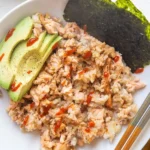
Quick Salmon and Rice Bowl
- Total Time: 10 minutes
- Yield: 1 Bowl 1x
- Diet: General
Description
A 10-minute lunch or dinner recipe made with simple nutritious ingredients, this easy and delicious Salmon and Rice bowl is an otherworldly healthy meal!
Ingredients
- ¾ cup cooked brown rice
- 6 ounces leftover salmon or canned salmon
- 1 to 2 Tbsp coconut aminos
- 1 to 2 tsp sriracha
- 1 to 2 tsp mayonnaise
- Sea salt to taste
- ½ ripe avocado, sliced
- 1 .35-oz. package Roasted Seaweed Snack
Instructions
- Step: Place the leftover salmon filet in a bowl (or on a plate) and use a fork to mash or shred it into smaller pieces (note: if using canned salmon, drain it, then transfer it to the bowl).
- Step: Transfer the leftover rice on top of the salmon, cover the bowl with a paper towel (or parchment paper), then heat in the microwave for 2 to 3 minutes, or until everything is hot.
- Step: As an alternative to microwaving, you can heat the salmon and rice in a skillet over medium heat or medium-high heat in a nonstick skillet for a few minutes until heated through. If need be, add a small amount of olive oil or water to the skillet so that the food doesn’t dry out.
- Step: I recommend heating the ingredients on the stove top if you love crispy salmon skin and crispy rice, as the delicious salmon rice bowl is made even better with some texture.
- Step: Stir in the coconut aminos, sriracha, and Japanese mayo (or your favorite mayo) until everything is combined. Taste for flavor and add sea salt and/or more coconut aminos if desired.
- Step: Serve the bowls with fresh sliced avocado and roasted seaweed snacks. You can use the seaweed snacks as sushi papers to stuff the avocado and rice and salmon mixture inside to fashion up a mini sushi roll.
Notes
Replace the coconut aminos with tamari, liquid aminos or soy sauce if you’d like. Mayo isn’t necessary when using leftover cooked Atlantic salmon, but is recommended for sockeye or canned salmon to add richness.
- Prep Time: 7 minutes
- Cook Time: 3 minutes
- Category: Seafood Main Dishes
- Method: Microwaving
- Cuisine: American
Nutrition
- Serving Size: 1 serving
- Calories: 679 kcal
- Sugar: 4 g
- Sodium: 1150 mg
- Fat: 25 g
- Saturated Fat: 7 g
- Unsaturated Fat: 18 g
- Trans Fat: 0 g
- Carbohydrates: 41 g
- Fiber: 8 g
- Protein: 75 g
- Cholesterol: 85 mg
Keywords: salmon rice bowl, 10 minute meal, healthy lunch, seafood bowl, tiktok recipe