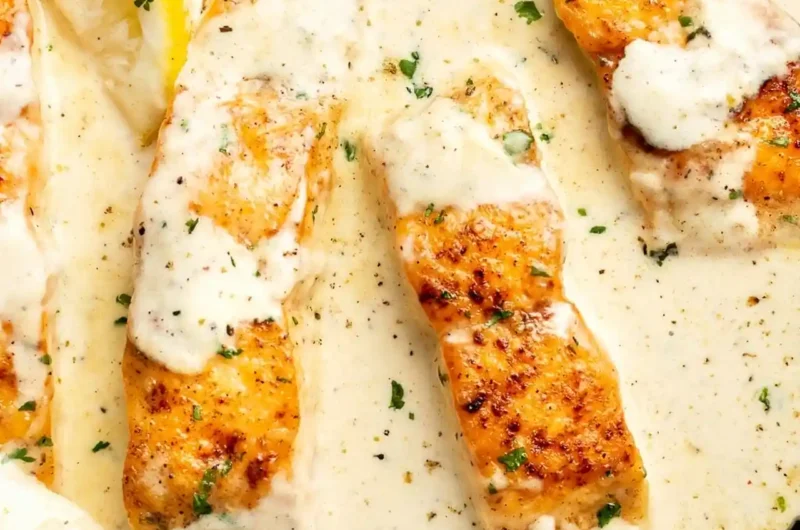
This fast-acting salmon recipe delivers a restaurant-quality meal in only 20 minutes. The combination of pan-seared fish and a zesty cream sauce creates a rich and balanced dinner.
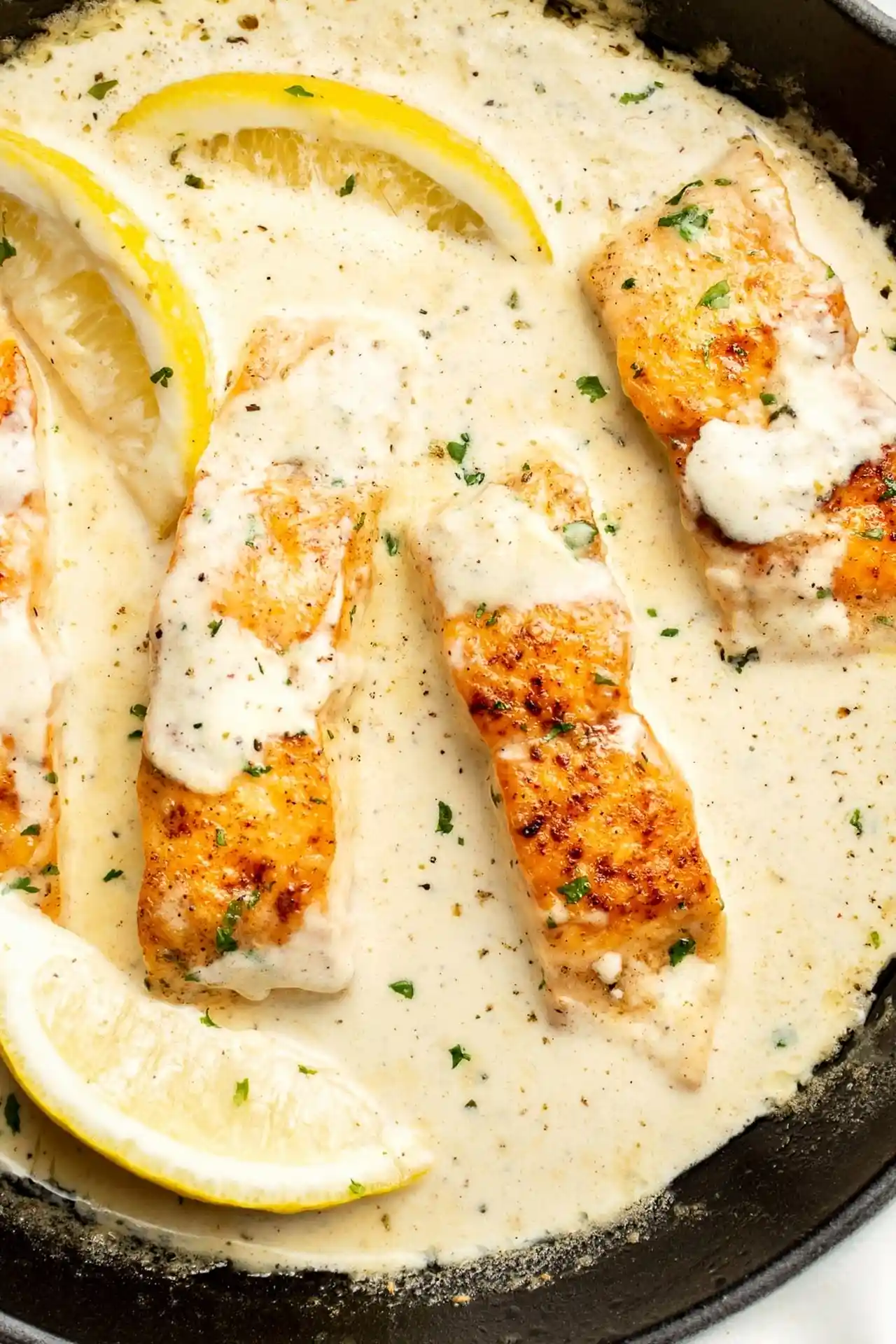
List of ingredients
- 1 pound fresh salmon, cut into 4 pieces – ensures even cooking.
- 1/4 teaspoon garlic powder – adds a savory base.
- Salt and pepper to taste – essential for seasoning.
- Flour for dredging – creates a golden crust and thickens the sauce.
- 1 tablespoon olive oil – prevents sticking at high heat.
- 1 tablespoon butter – adds richness to the sear.
- 1/2 cup chicken broth – provides a savory liquid base.
- 1 tablespoon lemon juice – adds bright acidity.
- 1/4 teaspoon Italian seasoning – a blend of aromatic herbs.
- 1 teaspoon Dijon mustard – enhances the depth of the sauce.
- 1 cup heavy or whipping cream – creates a luxurious texture.
- Fresh parsley to taste, chopped – provides a fresh finish.
step-by-step instructions
- Prepare the fish: Cut your salmon into 4 equal pieces. Sprinkle each piece with garlic powder, salt, and pepper, then dredge all sides in flour.
- Sear the salmon: Heat olive oil and butter in a skillet over medium-high heat. Once hot, add the salmon and cook for 3-4 minutes per side until browned. Remove the fish to a plate, ensuring it is not yet fully cooked.
- Deglaze the pan: Pour the chicken broth, lemon juice, Italian seasoning, and Dijon mustard into the skillet. Stir until the mustard is completely dissolved and let the mixture bubble for one to two minutes.
- Simmer and thicken: Stir in the heavy cream and return the salmon pieces to the pan. Simmer for a few more minutes until the sauce thickens and the salmon is cooked through.
- Garnish and serve: Sprinkle chopped fresh parsley over the dish. Serve the salmon and sauce immediately.
Mastering the Salmon Sear
Pat the Salmon Dry Before Dredging
Use paper towels to remove excess moisture from the surface of the fish before applying seasoning. Excess water creates steam in the pan, which prevents the salmon from browning effectively. A dry surface ensures a crisp, golden-brown crust.
Monitor the Color Shift
Watch the sides of the salmon fillets as they cook in the skillet. The fish will transition from a deep, bright pink to a lighter, opaque pink. This visual cue is the most reliable way to determine when to flip the fillet.
Let the Fish Release Naturally
Avoid using a spatula to force the salmon off the pan if it feels stuck. When the fish has developed a proper sear, it will naturally release from the surface. Forcing it can tear the delicate flesh and ruin the crust.
Account for Fillet Thickness
If your salmon pieces are thicker than one inch, you may need to extend the searing time. Use a meat thermometer to ensure the internal temperature is reaching your preference. Thicker cuts require a slower simmer in the sauce to cook through.
Use a Heavy-Bottomed Skillet
Stainless steel or cast iron pans are ideal for this recipe because they distribute heat evenly. This prevents hot spots that can burn the butter or overcook one side of the fish. A heavy pan also helps maintain temperature when the cold fillets are added.
Customizing the Lemon Cream Sauce
Prioritize Heavy Cream Over Milk
Always use full-fat heavy cream instead of milk or half-and-half for this sauce. The higher fat content stabilizes the emulsion when the acidic lemon juice is added. Lower-fat alternatives are more likely to curdle or separate under heat.
Incorporate Fresh Lemon Zest
For a more intense citrus flavor, grate fresh lemon zest into the sauce using a microplane. The zest contains essential oils that provide a bright aroma without adding extra acidity. Stir the zest in at the very end to keep the flavor vibrant.
Swap Chicken Broth for Vegetable Broth
If you prefer a different flavor profile or a vegetable-based base, use a high-quality vegetable broth. This substitution maintains the savory depth of the sauce while altering the primary protein base. Ensure the broth is low-sodium to control the overall salt level.
Integrate Leafy Greens
Add a handful of fresh baby spinach or chopped kale during the final simmering stage. The heat from the cream sauce will wilt the greens in about one to two minutes. This adds color and nutritional value to the meal.
Use Different Dried Herb Blends
While Italian seasoning is standard, you can substitute it with Herbes de Provence or a mix of dried dill and thyme. Dill pairs exceptionally well with salmon and lemon. Adjust the quantity based on the potency of the herb blend.
Optimal Serving Suggestions
Pair with Garlic Mashed Potatoes
Creamy mashed potatoes infused with roasted garlic are an excellent pairing. The fluffy texture of the potatoes helps soak up the lemon cream sauce. This makes the meal more filling and satisfying.
Serve Over Garlic Butter Noodles
Toss the salmon and sauce over wide egg noodles or linguine. The pasta acts as a vehicle for the sauce, ensuring every bite is flavorful. Sauté the noodles in butter and garlic first for added depth.
Complement with Steamed Asparagus
Steamed asparagus provides a crisp, fresh contrast to the richness of the cream sauce. Lightly season the spears with salt, pepper, and a squeeze of lemon. This adds a necessary vegetal balance to the plate.
Use Basmati or Jasmine Rice
Serve the salmon over a bed of steamed white rice for a neutral base. The rice absorbs the excess sauce without overpowering the delicate taste of the fish. This is a great option for those who prefer a gluten-free side.
Top with Shaved Parmesan Cheese
Add a sprinkle of freshly grated Parmesan cheese over the finished dish. The salty, nutty flavor of the cheese complements the acidity of the lemon. Use a block of cheese rather than pre-shredded for a smoother melt.
Proper Storage and Handling
Store in Airtight Containers
Place leftover salmon and sauce in a glass airtight container and refrigerate immediately. Seafood is highly perishable and should be consumed within two to three days. Keep the sauce and fish together to maintain moisture.
Reheat Using a Covered Pan
Transfer the leftovers to a small saucepan and cover with a lid. The lid traps the steam, which prevents the salmon from drying out during the reheating process. Heat the dish slowly to maintain the sauce’s consistency.
Apply Low Heat During Reheating
Keep the stove temperature on low or medium-low when reheating the cream sauce. High heat can cause the dairy to break and separate from the fats. Stir gently to incorporate the sauce as it warms.
Use Cold Leftovers in Arugula Salads
Cold creamy lemon salmon is excellent when flaked over a bed of fresh arugula. Add a light vinaigrette and some shaved Parmesan to create a sophisticated lunch. This avoids the need for reheating entirely.
Avoid Freezing the Finished Dish
Do not freeze the salmon once it has been cooked in the cream sauce. Dairy-based sauces often change texture and separate upon thawing. For the best quality, eat the dish fresh or keep it refrigerated.
Resolving Common Cooking Issues
Fix a Curdled Sauce
If the sauce begins to separate, quickly whisk in a tablespoon of warm water or broth. Maintain a low heat and stir vigorously to re-emulsify the fats. Avoiding extreme temperature shifts helps prevent this issue.
Prevent Overcooking the Salmon
Remove the salmon from the pan as soon as the exterior is browned, even if the center is raw. The fish will finish cooking gently during the final simmering stage in the cream. This ensures the salmon remains flaky and moist.
Correct a Sauce That is Too Thin
If the sauce is too runny, let it simmer for an additional two to three minutes without the lid. This allows the liquid to reduce and thicken naturally. The flour from the dredging process also helps the sauce bind.
Eliminate Bitter Lemon Tastes
Ensure that no lemon seeds fall into the sauce during the juicing process. Seeds can release a bitter flavor when heated. Using a fine-mesh strainer while juicing prevents this contamination.
Achieve a More Even Crust
Press the salmon firmly into the flour to ensure a complete and even coating. Shake off any excess flour before adding the fish to the pan. Too much flour can lead to clumping and an uneven brown color.
Common Cooking Questions
Can I use frozen salmon fillets?
Yes, but you must thaw them completely in the refrigerator before cooking. Pat them dry thoroughly with paper towels to remove ice crystals. Cooking frozen fillets directly can result in an uneven sear and a watery sauce.
Is it necessary to dredge in flour?
Dredging serves two purposes: it creates a golden-brown crust and acts as a thickening agent for the sauce. If you skip this step, the salmon will be softer and the sauce will be thinner. You can use cornstarch for a gluten-free alternative.
Can I substitute the Dijon mustard?
Whole grain mustard can be used as a substitute for Dijon. It provides a similar tang but adds a slightly coarser texture to the sauce. Avoid using yellow mustard, as the flavor profile is too sharp for this dish.
How do I store the salmon before cooking?
Keep the salmon in the coldest part of your refrigerator, preferably on a bed of ice or in a sealed container. Use the fish within 48 hours of purchase for maximum freshness. Freshness is key to the final flavor of the dish.
What is the best way to zest a lemon?
Use a microplane or a fine grater to remove only the yellow outer skin. Avoid grating into the white pith, as the pith is bitter and will affect the taste of the sauce. Zest the lemon before juicing it.
Print
Creamy Lemon Salmon
- Total Time: 20 minutes
- Yield: 4 servings 1x
- Diet: General
Description
This creamy lemon salmon recipe is decadent yet easy with very few ingredients and is ready in only 20 minutes! The bright lemon cream sauce is really addictive.
Ingredients
- 1 pound fresh salmon (cut into 4 pieces)
- 1/4 teaspoon garlic powder
- Salt & pepper (to taste)
- Flour (for dredging)
- 1 tablespoon olive oil
- 1 tablespoon butter
- 1/2 cup chicken broth
- 1 tablespoon lemon juice
- 1/4 teaspoon Italian seasoning
- 1 teaspoon Dijon mustard
- 1 cup heavy/whipping cream
- Fresh parsley (to taste, chopped)
Instructions
- Step 1: Cut your salmon into 4 pieces. Sprinkle it with the garlic powder and season with salt & pepper. Dredge each piece in flour on all sides.
- Step 2: Add the olive oil and butter to a skillet over medium-high heat. When it’s hot, add the fish. Cook it for 3-4 minutes/side or until it’s nicely browned. Remove salmon to a plate and set aside.
- Step 3: Add the chicken broth, lemon juice, Italian seasoning, and Dijon mustard to the pan. Stir until mustard has dissolved, and let it bubble for a minute or two.
- Step 4: Add the cream to the pan, along with the salmon. Let it cook for a few more minutes until the sauce has thickened a bit and the fish has cooked through.
- Step 5: Sprinkle with fresh parsley before serving.
Notes
Use full-fat heavy cream to prevent the sauce from curdling due to the citrus juice.
- Prep Time: 5 minutes
- Cook Time: 15 minutes
- Category: Main Course
- Method: Pan-Searing
- Cuisine: American
Nutrition
- Serving Size: 1 fillet
- Calories: 437 kcal
- Sugar: 2 g
- Sodium: 212 mg
- Fat: 35 g
- Saturated Fat: 17 g
- Unsaturated Fat: 15 g
- Trans Fat: 1 g
- Carbohydrates: 5 g
- Fiber: 1 g
- Protein: 25 g
- Cholesterol: 138 mg
Keywords: creamy lemon salmon, pan-seared salmon, lemon cream sauce, quick salmon recipe