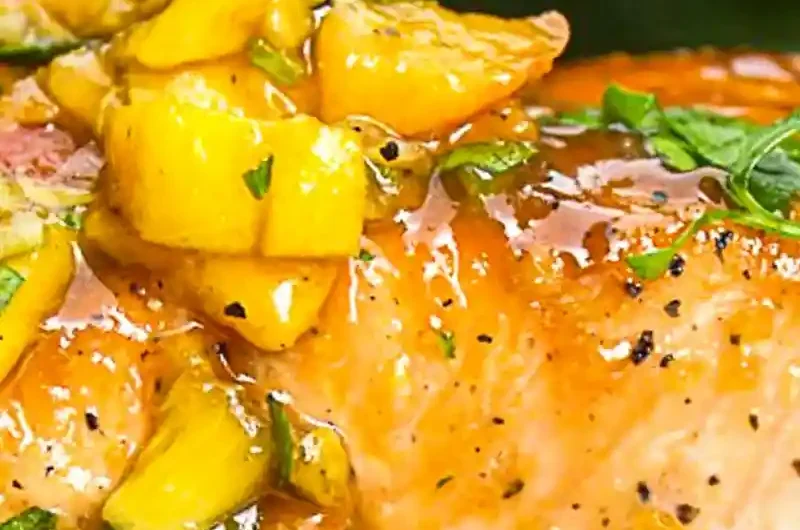
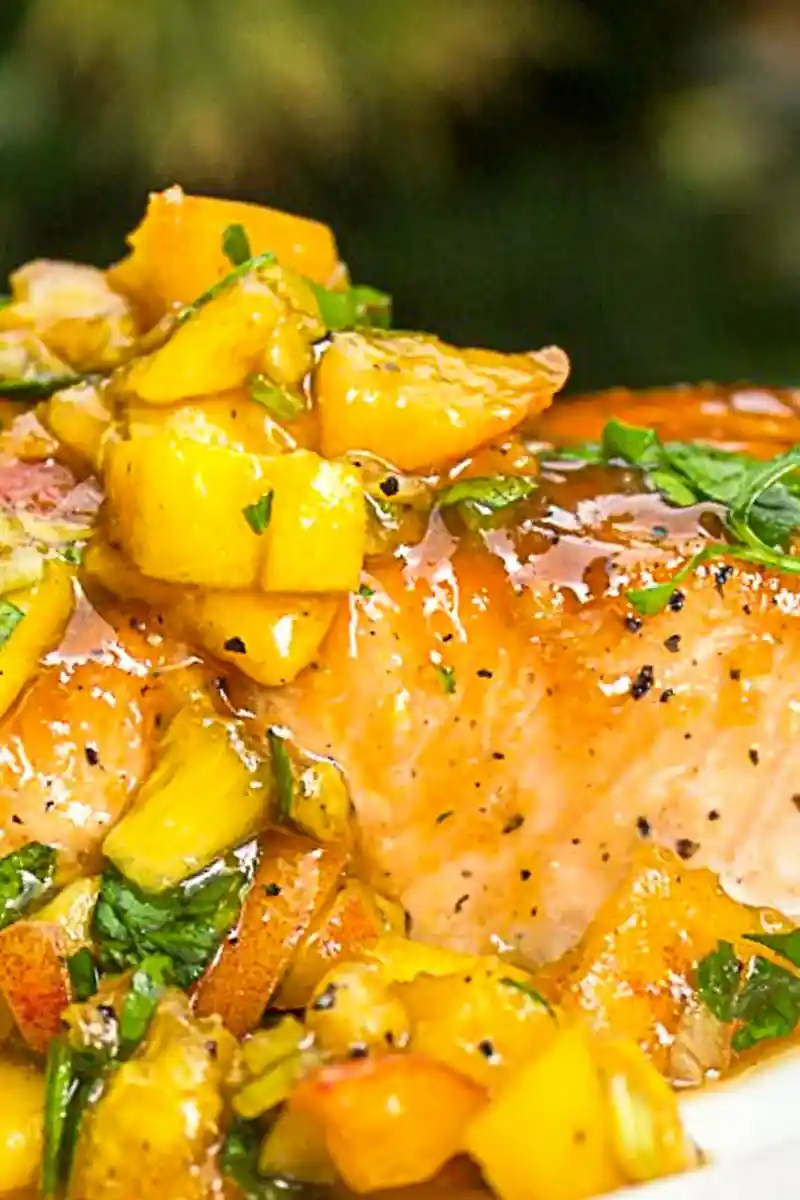
This recipe combines a sweet and savory maple ginger glaze with a refreshing fruit salsa. It is a quick-prep meal that balances the richness of salmon with the acidity of lime and peaches.
List of ingredients
- 1 pound salmon fillets (2 fillets or one larger piece)
- 1/4 cup maple syrup (or replace with honey or brown sugar) – provides the base sweetness for the glaze.
- 2 tablespoons soy sauce (low sodium) – adds saltiness and depth of flavor.
- 1 teaspoon fresh grated ginger – adds a zesty, aromatic kick.
- 1 clove garlic, minced – provides a pungent, savory note.
- 1/4 teaspoon ground black pepper – adds a mild spice.
- 1/2 teaspoon cornstarch (ADD AFTER MARINATING) – used to thicken the marinade into a glaze.
- 2 cups peaches, diced, skin on (about 3-4 peaches) – the main component of the fresh salsa.
- 2 tablespoons fresh lime juice (1 lime) – provides essential acidity.
- 1 tablespoon honey (or maple syrup) – balances the lime juice.
- 1 teaspoon grated fresh ginger (or 1/4 tsp powdered ginger) – mirrors the flavor in the salmon.
- 1 tablespoon green onion, minced (or more) – adds a mild onion flavor and color.
- 2 teaspoon olive oil – helps bind the salsa ingredients.
- 1 tablespoon balsamic vinegar – adds a tangy, complex sweetness.
- 1/4 teaspoon salt – enhances all overall flavors.
- 1/4 teaspoon black pepper – provides a subtle heat.
- 1/2 teaspoon sriracha (optional) – add more for extra spiciness.
- 2 tablespoon herbs (e.g. chives, parsley, cilantro) – adds fresh, herbal notes.
step-by-step instructions
- Prepare Oven: HEAT OVEN to 425F/218C. Line a baking pan with parchment paper or aluminum foil sprayed with oil for easy clean up.
- Marinate the Salmon: Put maple syrup, soy sauce, ginger, garlic and pepper in a sealed bag. Squish to blend. Add salmon. Marinate salmon for 20 minutes.
- Prepare the Salsa: Place all salsa ingredients in a bowl and mix well. Set aside.
- Create the Glaze: Remove salmon from marinade and place it on a baking sheet lined with parchment paper or aluminum foil (spray with oil) for easy cleanup. Pour marinade from bag into a small microwavable measuring cup or bowl. Add the cornstarch and whisk to blend. Microwave for 45 seconds to thicken glaze. Pour over salmon, reserving 1 tbsp to glaze after roasting.
- Bake the Fish: Place salmon skin side down on prepared pan and bake for 8-12 minutes (depending on thickness of salmon) or until just flaky and still warm pink inside. Estimate 10 minutes per inch (2.5 cm) of thickness. Don’t overdo it. Brush with remaining glaze after baking.
- Final Assembly: Place roasted salmon on a large serving dish or individual plates. Garnish with chopped parsley and serve immediately with peach salsa on top or on the side.
Pro Cooking Techniques for Salmon
Use a Meat Thermometer for Precision
To avoid overcooking, use an instant-read meat thermometer. Aim for an internal temperature of 130-135F (54.4-57.2C) for a medium-rare finish. The salmon will continue to cook slightly as it rests, reaching a safe and moist temperature.
Calculate Baking Time by Thickness
Salmon fillets vary in thickness, which affects cooking time. A general rule is 10 minutes of baking per inch of thickness. Using this calculation prevents the fish from becoming dry and chalky.
Maintain the Skin During Cooking
Keep the skin on the salmon while baking to act as a barrier. This protects the flesh from direct heat and helps the fillet retain its natural moisture. You can easily slide a spatula between the skin and meat to remove it before serving.
Ingredient Substitutions and Swaps
Alternative Fish Selection
While salmon is the primary choice, this glaze and salsa pair well with other fish. Trout, halibut, or sea bass are excellent alternatives. Adjust the baking time based on the specific density and thickness of the chosen fish.
Using Different Fruits for Salsa
If peaches are out of season, you can use nectarines or mangoes. Pineapple also works well for a more tropical flavor profile. Ensure the fruit is ripe but still firm enough to hold its shape when diced.
Replacing Maple Syrup
If maple syrup is unavailable, honey or brown sugar are suitable replacements. Honey provides a similar floral sweetness, while brown sugar adds a slight molasses depth. Use the same measurements as listed in the recipe.
Managing Ginger Availability
Freshly grated ginger offers the most intense flavor. If you only have powdered ginger, use one-quarter of the amount called for in the recipe. Frozen ginger cubes are also a convenient time-saving alternative.
Serving and Pairing Suggestions
Low-Carb Side Dishes
Pair this dish with herb-seasoned cauliflower rice for a light, nutrient-dense meal. Grilled purple cabbage slaw also adds a vibrant color and a satisfying crunch. These options keep the meal fresh and healthy.
Grain-Based Accompaniments
White or brown rice provides a neutral base that complements the sweet glaze. Quinoa or vegetable couscous are also great options for adding texture. These grains help absorb any extra glaze or salsa juices on the plate.
Fresh Salad Pairings
A citrus-based salad or a vegetable quinoa salad works well with the salmon. A light vinaigrette with lemon or lime will mirror the acidity in the peach salsa. Avoid heavy cream-based dressings that might clash with the fruit flavors.
Storage and Make-Ahead Guidance
Refrigerating Cooked Salmon
Cooked salmon can be stored in an airtight container in the refrigerator for up to two days. To serve, you can eat it cold or bring it to room temperature. Avoid reheating it excessively to prevent the fish from drying out.
Freshness of the Peach Salsa
The salsa is best prepared on the day of serving to keep the peaches crisp. If you must make it ahead, store it in a sealed jar for up to 24 hours. Give the salsa a quick stir before serving to redistribute the juices.
Optimizing Make-Ahead Timing
You can marinate the salmon several hours in advance to deepen the flavor. However, avoid marinating for more than 24 hours, as the soy sauce and acids may change the texture of the fish. Prepare the glaze components but add the cornstarch only right before cooking.
Reheating and Troubleshooting
Gentle Reheating Methods
To reheat the salmon, use a low-temperature oven (around 275F) for a few minutes. This prevents the protein from tightening and becoming tough. Avoid high-heat reheating, which can ruin the delicate texture of the fillets.
Microwave Reheating Tips
If using a microwave, use a medium power setting and cover the fish with a damp paper towel. Heat in short 30-second bursts. This creates a steaming effect that helps keep the salmon moist.
Preventing Glaze Burn
Because the glaze contains sugar from the maple syrup, it can burn if the oven is too hot or the fish is cooked too long. Monitor the salmon closely during the final few minutes of baking. If the glaze darkens too quickly, tent the fish with foil.
Balancing Salsa Flavors
If the salsa feels too sweet, add an extra squeeze of fresh lime juice. If it is too tart, a small pinch of salt or a bit more honey can balance the acidity. Taste the salsa and adjust the seasoning before topping the fish.
Frequently Asked Questions
What temperature should I cook salmon to?
While some guidelines suggest 145F, many chefs prefer 130-135F for a moist, medium-rare center. The temperature will rise slightly during a 5-minute resting period.
Should you remove the skin before cooking salmon?
No, leave the skin on during the baking process. The skin protects the flesh from losing moisture and prevents the fish from sticking to the pan.
Should salmon be rinsed before cooking?
Salmon should not be rinsed under the tap. Rinsing can spread bacteria across your sink and kitchen surfaces without significantly cleaning the fish.
What exactly is a salsa?
Salsa is a Spanish and Italian word meaning ‘sauce’. While often associated with spicy tomato and onion mixes, it can refer to any chunky sauce or condiment used to top a dish.
Can I use frozen peaches for the salsa?
Yes, frozen sliced peaches can be used if fresh ones are unavailable. Thaw them completely and drain any excess liquid before dicing them and mixing with the other salsa ingredients.
How do I keep the glaze from sliding off the fish?
The addition of cornstarch to the marinade is the key. Whisking cornstarch into the liquid and heating it creates a thicker consistency that clings to the salmon fillets during the roasting process.
Which type of salmon is best for this recipe?
Atlantic or Sockeye salmon work well here. Atlantic salmon typically has a higher fat content, which makes it more forgiving during the baking process and keeps it moist.
Print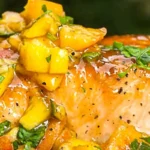
Maple Ginger Salmon with Peach Salsa
- Total Time: 38 minutes
- Yield: 2–3 servings 1x
- Diet: Pescatarian
Description
Mouthwatering maple ginger salmon with peach salsa is an impressive company-worthy dish bursting with flavor and easy to make.
Ingredients
- 1 pound salmon fillets
- 1/4 cup maple syrup
- 2 tablespoons soy sauce
- 1 teaspoon fresh grated ginger
- 1 clove garlic, minced
- 1/4 teaspoon ground black pepper
- 1/2 teaspoon cornstarch
- 2 cups peaches, diced, skin on
- 2 tablespoons fresh lime juice
- 1 tablespoon honey
- 1 teaspoon grated fresh ginger
- 1 tablespoon green onion, minced
- 2 teaspoon olive oil
- 1 tablespoon balsamic vinegar
- 1/4 teaspoon salt
- 1/4 teaspoon black pepper
- 1/2 teaspoon sriracha
- 2 tablespoon herbs (e.g. chives, parsley, cilantro)
Instructions
- Heat Oven: Heat oven to 425F/218C. Line a baking pan with parchment paper or aluminum foil sprayed with oil for easy clean up.
- Marinate Salmon: Put maple syrup, soy sauce, ginger, garlic and pepper in a sealed bag. Squish to blend. Add salmon. Marinate salmon for 20 minutes.
- Make Salsa: Place all salsa ingredients in a bowl and mix well. Set aside.
- Make Glaze: Remove salmon from marinade and place it on a baking sheet. Pour marinade from bag into a small microwavable bowl. Add cornstarch and whisk to blend. Microwave for 45 seconds to thicken glaze. Pour over salmon, reserving 1 tbsp to glaze after roasting.
- Bake Salmon: Place salmon skin side down on prepared pan and bake for 8-12 minutes or until just flaky and still warm pink inside. Brush with remaining glaze after baking.
- Serve: Place roasted salmon on a serving dish. Garnish with chopped parsley and serve immediately with peach salsa on top or on the side.
Notes
Variations: Can be made with trout, halibut, or sea bass. Substitute peaches with nectarines. Shortcuts: Use store-bought fruit chutney or frozen ginger/garlic cubes. Make ahead: Refrigerate cooked salmon for up to 2 days and serve cold or at room temperature.
- Prep Time: 8 minutes
- Cook Time: 10 minutes
- Category: Main Course
- Method: Baking
- Cuisine: American
Nutrition
- Serving Size: 1 serving
- Calories: 590 kcal
- Sugar: 47 g
- Sodium: 1435 mg
- Fat: 19 g
- Saturated Fat: 3 g
- Unsaturated Fat: 16 g
- Trans Fat: 0 g
- Carbohydrates: 55 g
- Fiber: 3 g
- Protein: 49 g
- Cholesterol: 125 mg
Keywords: maple ginger salmon, peach salsa, baked salmon, easy seafood dinner