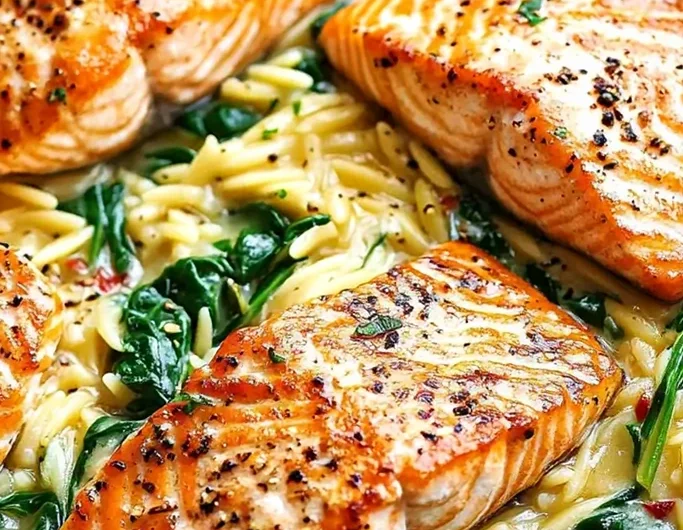
This one-pan meal delivers flaky pan-seared salmon over a bed of creamy lemon-infused orzo. It is a balanced, 30-minute dinner that minimizes cleanup by using a single skillet.
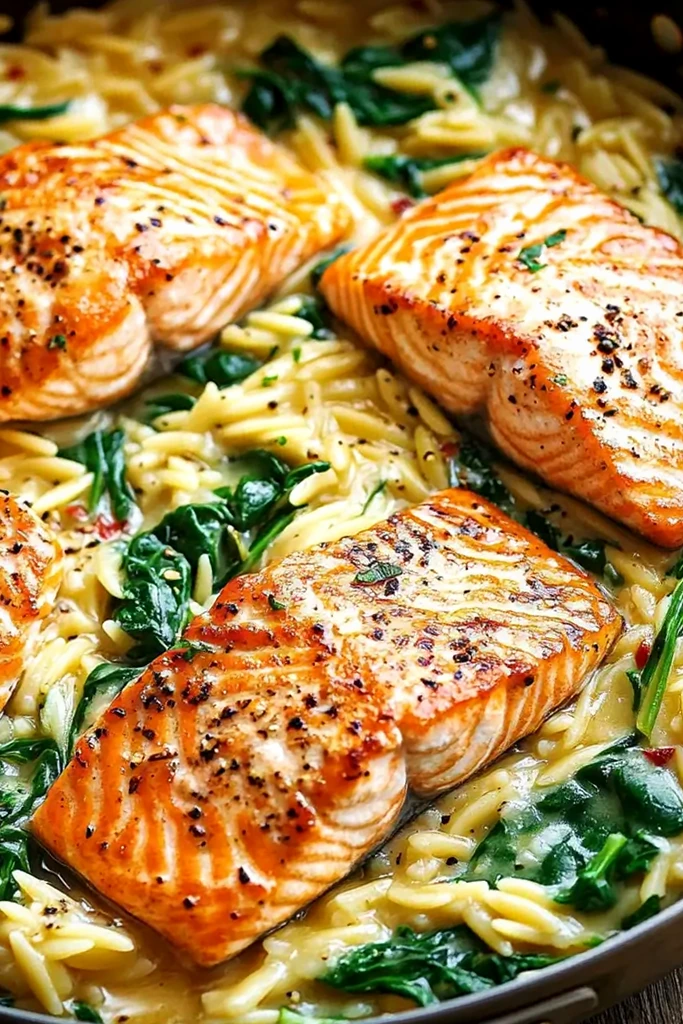
List of ingredients
- 4 salmon fillets – approximately 6 oz each, patted dry.
- 2 tbsp olive oil – used for searing the fish.
- 1 tbsp unsalted butter – adds richness to the sear.
- 1 tsp salt – for seasoning the salmon and pasta.
- ½ tsp black pepper – provides a mild spicy contrast.
- 1 tsp paprika – adds color and a smoky depth.
- ½ tsp garlic powder – enhances the savory profile.
- ½ small onion – finely chopped for aromatic base.
- 2 cloves garlic – minced for pungent flavor.
- 1 cup orzo pasta – small rice-shaped pasta for a creamy base.
- 2 cups chicken broth – the cooking liquid for the orzo.
- 1 tsp dried thyme – adds an earthy, herbal note.
- 2 cups fresh spinach – chopped for color and nutrients.
- ½ cup grated Parmesan cheese – creates the creamy sauce.
- Juice of 1 lemon – provides brightness and acidity.
- Zest of ½ lemon – concentrates the citrus aroma.
step-by-step instructions
- Season the salmon: Rub the salt, black pepper, paprika, and garlic powder evenly onto both sides of the salmon fillets.
- Sear the fish: Heat olive oil and butter in a large skillet over medium-high heat; cook salmon for 3-4 minutes per side until golden, then remove and set aside.
- Sauté aromatics: In the same skillet, cook the finely chopped onion and minced garlic over medium heat for about 2 minutes until softened.
- Toast the pasta: Add the orzo to the skillet and stir for 1 minute to toast the grains, which deepens the flavor.
- Simmer the orzo: Pour in chicken broth and stir in thyme, salt, and pepper; simmer for 8 minutes until the liquid is mostly absorbed.
- Finish the sauce: Stir in the chopped spinach, Parmesan cheese, and lemon juice, mixing until the spinach wilts and the sauce is creamy.
- Combine and serve: Return the seared salmon to the skillet to warm through for 2-3 minutes, then serve immediately.
Technical Tips for Perfect Salmon
Patting Salmon Dry for a Crispy Crust
Moisture on the surface of the fish creates steam when it hits the pan, which prevents the Maillard reaction. Use heavy-duty paper towels to dry the fillets completely before seasoning. This ensures a golden-brown crust and prevents the fish from sticking to the skillet.
Monitoring Internal Temperature
Salmon can easily overcook, becoming dry and chalky. Use an instant-read digital thermometer to pull the fish when it reaches an internal temperature of 130-135°F. The temperature will rise slightly during the resting period to reach a perfect medium finish.
Allowing Salmon to Rest
Let the fillets rest for 3-5 minutes after searing and before adding them back to the pasta. This allows the juices to redistribute throughout the protein. Resting prevents the juices from leaking out instantly into the orzo, keeping the fish moist.
Orzo Preparation Secrets
The Importance of Toasting
Stirring the raw orzo in the fat before adding liquid toasts the exterior of the pasta. This process creates a nuttier flavor and helps the pasta maintain its structural integrity. Toasting prevents the orzo from becoming overly mushy or clumping together during the simmering phase.
Managing Broth Absorption
Maintain a consistent medium simmer to ensure the orzo absorbs the chicken broth evenly. Avoid boiling the liquid too vigorously, as this can evaporate the broth before the pasta is fully cooked. Stir occasionally to prevent the pasta from sticking to the bottom of the pan.
Achieving a Risotto-Like Texture
The creaminess of the orzo comes from the release of starches during the simmering process. By stirring in the Parmesan cheese at the end, you emulsify the remaining broth with the fats in the cheese. This creates a thick, velvety consistency similar to a traditional risotto without the constant stirring.
Ingredient Substitutions
Alternative Protein Options
If you do not have salmon, shrimp or cod are excellent alternatives. Shrimp should be seared for only 2 minutes per side to avoid toughness. Cod or halibut may require a slightly longer searing time depending on the thickness of the fillet.
Substituting Leafy Greens
While spinach is traditional, kale or Swiss chard can be used for a heartier texture. Kale takes longer to wilt, so add it to the pan 2 minutes before the spinach would normally go in. Arugula is another option, but it should be stirred in at the very end to prevent over-wilting.
Dairy-Free Alternatives
To make this dish dairy-free, replace the butter with a plant-based butter or extra olive oil. Substitute the Parmesan cheese with nutritional yeast or a vegan parmesan alternative. These options provide a similar salty, nutty flavor profile without the lactose.
Using Vegetable Broth
Vegetable broth is a direct substitute for chicken broth. Ensure the vegetable broth is low-sodium to prevent the dish from becoming too salty, especially since Parmesan cheese already contains significant salt. This maintains the light, bright flavor of the lemon.
Flavor Variations
Adding a Spicy Element
For a bit of warmth, stir in a pinch of red pepper flakes during the aromatic sauté phase. You can also add a dash of cayenne pepper to the salmon seasoning. These additions contrast well with the creamy cheese and citrus notes.
Increasing the Richness
For an even creamier sauce, stir in a tablespoon of Greek yogurt or a splash of heavy cream along with the Parmesan. This increases the viscosity of the sauce and adds a tangier depth. Ensure the heat is low when adding dairy to prevent curdling.
Using Fresh Herbal Accents
Fresh dill or parsley can be stirred in just before serving to elevate the Mediterranean profile. Fresh herbs provide a bright, grassy contrast to the richness of the salmon. Chop them finely and sprinkle them over the top for a professional presentation.
Incorporating Sun-Dried Tomatoes
Adding chopped sun-dried tomatoes during the onion and garlic sauté adds a concentrated umami flavor. The acidity of the tomatoes complements the lemon juice. This variation adds a pop of red color to the green spinach and white orzo.
Serving and Pairing Ideas
Adding Finishing Citrus Zest
Fresh lemon zest added at the very end provides an aromatic hit that juice alone cannot offer. Zest the lemon directly over the finished plates to release the essential oils. This enhances the perceived freshness of the dish.
Pairing with a Crisp Side Salad
A simple arugula salad with a lemon-olive oil vinaigrette provides a sharp contrast to the rich pasta. Cucumber and tomato salads with a splash of red wine vinegar also work well. These sides cleanse the palate between bites of creamy orzo.
Complementary Roasted Vegetables
Roasted asparagus or zucchini spears provide an earthy balance to the meal. Toss them in olive oil, salt, and pepper, and roast at 400°F for 12-15 minutes. These vegetables mirror the Mediterranean theme of the main skillet.
Choosing the Right Bread
Warm garlic bread or a toasted sourdough baguette is ideal for soaking up the excess lemon-Parmesan sauce. Brush the bread with olive oil and rub a raw garlic clove on the surface before toasting. This adds an extra layer of savory flavor to the experience.
Storage and Preservation
Refrigeration Guidelines
Store leftovers in an airtight container in the refrigerator for up to 3 days. Keep the salmon and orzo in the same container for convenience, but be aware that the orzo will continue to absorb liquid. This may result in a thicker, less creamy texture upon cooling.
Freezing the Orzo Base
The orzo and spinach mixture can be frozen for up to 3 months in a freezer-safe container. It is recommended not to freeze the salmon, as the texture of cooked fish degrades significantly during the freezing and thawing process. Freeze the base and sear fresh salmon when ready to eat.
Properly Wrapping Salmon
If you must freeze cooked salmon, wrap it tightly in plastic wrap and then in aluminum foil to prevent freezer burn. Store it in a heavy-duty freezer bag for up to 2 months. Thaw slowly in the refrigerator overnight before reheating.
Reheating Techniques
Stovetop Restoration
The best way to reheat the dish is in a small skillet over low heat. Add a splash of chicken broth or water to the orzo to restore its creamy consistency. Once the pasta is warm, place the salmon on top and cover the pan for 2 minutes to steam the fish.
Microwave Heating Method
Place the leftovers in a microwave-safe dish and add a tablespoon of broth. Cover the dish with a damp paper towel to trap steam and prevent the fish from drying out. Heat in 30-second intervals, stirring the orzo between each burst.
Oven Warming Process
Preheat the oven to 300°F and place the food in a baking dish. Cover the dish tightly with foil to lock in moisture. Warm for approximately 10-15 minutes, or until the center of the salmon is heated through.
Troubleshooting Common Issues
Preventing Mushy Orzo
If the orzo becomes too soft, it is likely due to overcooking or excessive stirring. Stir only occasionally during the simmering process to avoid breaking the pasta grains. If it becomes too thick, stir in a small amount of warm broth before serving.
Handling Overcooked Salmon
If the salmon is slightly overdone, avoid reheating it further. Serve it immediately with an extra drizzle of olive oil or a squeeze of fresh lemon to add moisture back into the protein. Next time, reduce the searing time by 30 seconds.
Fixing a Bland Sauce
If the sauce lacks depth, increase the acidity with an extra teaspoon of lemon juice. A small pinch of additional salt or a sprinkle of extra Parmesan can also boost the savory elements. Always taste the sauce before adding the salmon back to the pan.
Frequently Asked Questions
Can I use a different type of fish?
Yes, you can substitute the salmon with shrimp, cod, or halibut. Adjust the cooking time based on the fish type; shrimp cooks much faster, while thick cod fillets may need an extra minute per side.
What if I don’t have orzo?
You can use pearl couscous or a small rice-shaped pasta as a replacement. If using rice, you will need to increase the broth quantity and the simmering time, as rice takes longer to cook than pasta.
Can I make this dish dairy-free?
Yes, simply omit the Parmesan cheese and butter. Replace them with nutritional yeast for a cheesy flavor and olive oil for the fat. The dish remains delicious and creamy due to the starch in the orzo.
How can I make it spicier?
Add red pepper flakes during the sauté step or stir in a teaspoon of Sriracha or chili oil at the end. Cayenne pepper added to the salmon rub also provides a consistent heat throughout the meal.
Print
Creamy One Pan Salmon and Lemon Orzo
- Total Time: 30 minutes
- Yield: 4 servings 1x
- Diet: General
Description
This One Skillet Salmon with Lemon Orzo is a quick and delicious 30-minute meal packed with bright lemon flavor, creamy Parmesan orzo, and flaky, pan-seared salmon.
Ingredients
- 4 salmon fillets
- 3 tbsp olive oil
- 1 tbsp unsalted butter
- 1 ½ tsp salt
- ¾ tsp black pepper
- 1 tsp paprika
- ½ tsp garlic powder
- ½ small onion, finely chopped
- 2 cloves garlic, minced
- 1 cup orzo pasta
- 2 cups chicken broth
- 1 tsp dried thyme
- 2 cups fresh spinach, chopped
- ½ cup grated Parmesan cheese
- Juice of 1 lemon
- Zest of ½ lemon
Instructions
- Season: Season the salmon with salt, black pepper, paprika, and garlic powder.
- Sear: Sear the salmon in a skillet with olive oil and butter for 3-4 minutes per side. Remove and set aside.
- Sauté: Sauté onion and garlic in the same skillet until fragrant.
- Simmer: Toast the orzo, then add broth, thyme, salt, and pepper. Simmer for 8 minutes.
- Cream: Stir in spinach, Parmesan, and lemon juice, cooking until creamy.
- Finish: Return salmon to the skillet and warm through. Serve hot.
Notes
Use fresh or frozen salmon (thawed and patted dry). Adjust lemon juice for more or less brightness. Add red pepper flakes for a spicy kick. Substitute spinach with kale or arugula.
- Prep Time: 10 minutes
- Cook Time: 20 minutes
- Category: Dinner
- Method: One-Pan
- Cuisine: Mediterranean
Nutrition
- Serving Size: 1 serving
- Calories: 480 kcal
- Sugar: 4 g
- Sodium: 450 mg
- Fat: 18 g
- Saturated Fat: 7 g
- Unsaturated Fat: 11 g
- Trans Fat: 0 g
- Carbohydrates: 42 g
- Fiber: 5 g
- Protein: 38 g
- Cholesterol: 95 mg
Keywords: one pan salmon, lemon orzo, 30 minute dinner, Mediterranean salmon