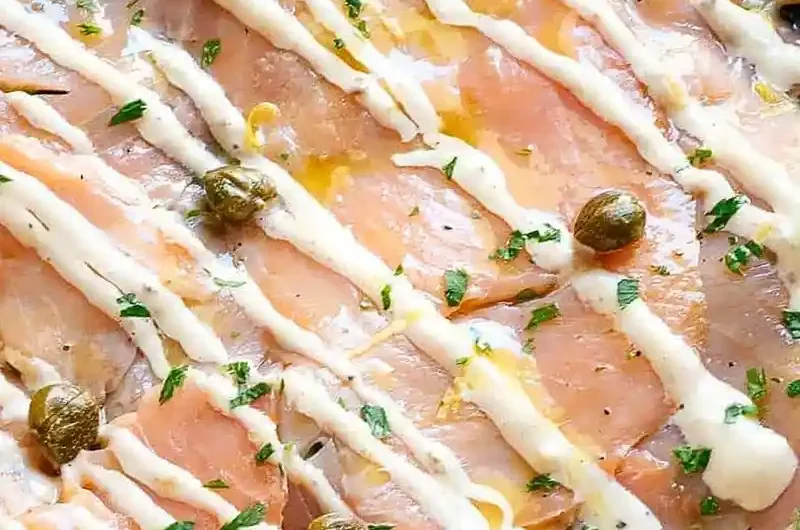
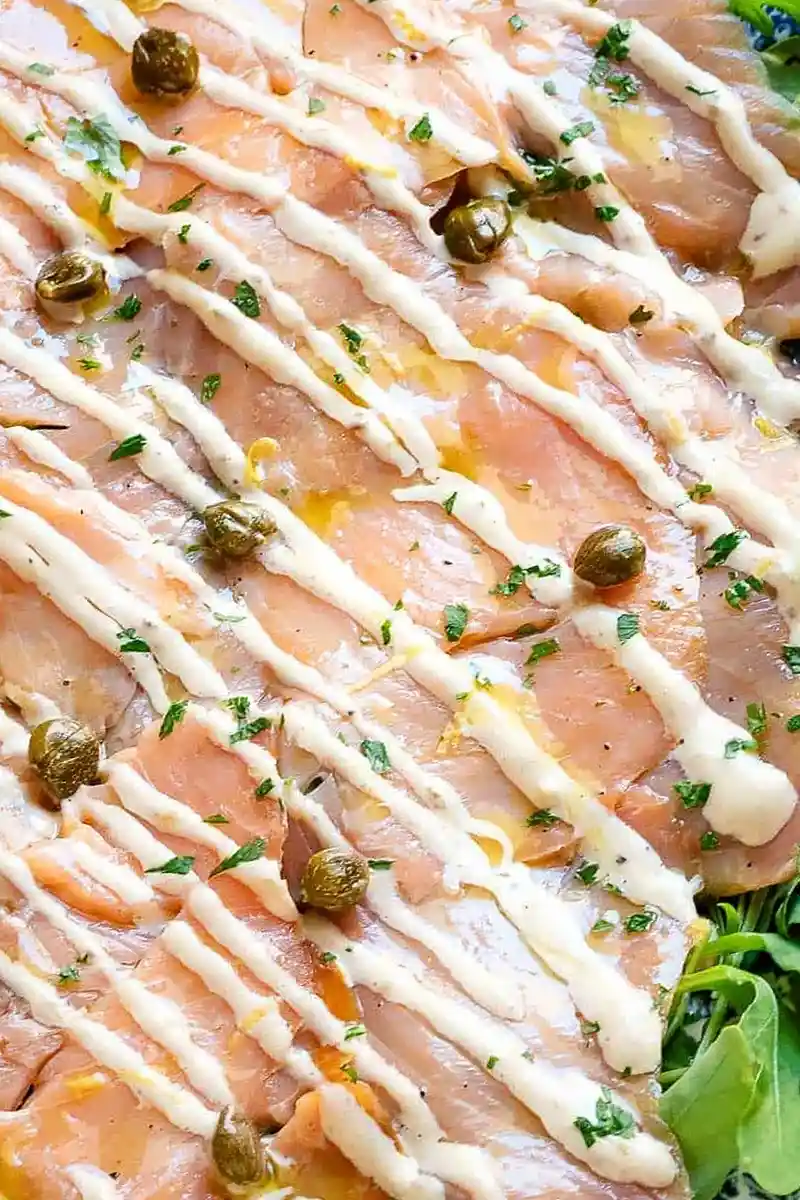
This smoked salmon carpaccio is a sophisticated, no-cook dish that works perfectly as a light appetizer or a refreshing main course. It combines buttery fish with a bright citrus dressing and a creamy white sauce for a balanced flavor profile.
List of ingredients
- 16 oz smoked salmon (about 400-450 grams) – Use high-quality smoked or sushi-grade vacuum-packed fillets.
- 1 lemon – Required for fresh juice and optional zest for garnishing.
- 1/4 cup extra virgin olive oil (50 grams) – For the citronette dressing.
- 1 tbsp lemon juice – Used in the olive oil dressing.
- 1/4 tsp salt – To season the olive oil dressing.
- Freshly ground black pepper – Added to taste in the olive oil dressing.
- 6 tbsp mayonnaise (75 grams) – The base for the creamy white sauce.
- 1 tbsp lemon juice – For acidity in the white sauce.
- 2 tbsp extra virgin olive oil – For texture in the white sauce.
- 2 anchovy fillets – Provides a salty, umami depth to the white sauce.
- 5 capers (optional) – Added to the white sauce for pops of brine.
- 2 sprigs fresh parsley – For chopping and garnishing.
- Lemon zest (optional) – Recommended for an aromatic finish.
- 10 capers (optional) – For final garnishing on the plate.
- 2 cups arugula – Or other leafy greens like baby spinach or watercress.
step-by-step instructions
- Prepare the Olive Oil Dressing: Combine the olive oil, 1 tablespoon of lemon juice, salt, and pepper in a glass jar. Shake the jar vigorously until the ingredients are fully emulsified and set it aside.
- Create the White Sauce: Place the mayonnaise, 1 tablespoon of lemon juice, 2 tablespoons of olive oil, anchovy fillets, and 5 capers into a blender or tall container. Blitz the mixture until it is completely smooth and has a runny consistency.
- Arrange the Base: Spread the arugula or your chosen leafy greens evenly across a large serving platter.
- Layer the Salmon: Place the smoked salmon slices on top of the greens, arranging them so they slightly overlap to cover the surface.
- Apply the First Dressing: Shake the olive oil dressing again to bring back the creamy consistency, then drizzle it generously over the salmon slices.
- Marinate the Fish: Let the plated salmon sit for 10 to 15 minutes to allow the citrus and oil to marinate the fish.
- Add the Final Sauce: Drizzle the white sauce over the salmon using a squeeze bottle for precision and a professional look.
- Garnish and Serve: Finish the dish by sprinkling chopped parsley, lemon zest, and extra capers over the top before serving immediately.
Optimizing Salmon Selection
Choosing the Right Smoked Salmon
Select a cold-smoked salmon rather than hot-smoked, as cold-smoked fish retains a silky, raw-like texture essential for carpaccio. Look for fillets with a consistent orange color and no slime on the surface. Ensure the fish is stored at a constant cold temperature to maintain safety and texture.
Using Sushi-Grade Fresh Salmon
If you prefer fresh salmon, it must be sushi-grade or flash-frozen to ensure it is safe for raw consumption. High-quality fresh fillets should be firm to the touch and spring back when pressed. Fresh salmon provides a cleaner taste but requires more precision during the slicing process.
Techniques for Ultra-Thin Slicing
To achieve paper-thin slices, place the salmon fillet in the freezer for about one hour before cutting. Use a very sharp carving knife or a sashimi knife to make long, diagonal slices. This slight firmness prevents the fish from tearing or bunching up under the blade.
Refining the Sauce Components
Achieving a Stable Citronette Emulsion
The olive oil dressing relies on a temporary emulsion of oil and acid. Shaking the ingredients in a sealed jar creates more shear force than whisking, resulting in a thicker consistency. Always shake the dressing immediately before drizzling to ensure the lemon juice has not settled at the bottom.
Balancing Umami with Anchovies
Anchovies act as a natural flavor enhancer in the white sauce, adding a deep savory note that complements the richness of the salmon. If you find the flavor too intense, you can reduce the number of fillets or substitute them with a few drops of a salt-based savory seasoning. Ensure the anchovies are well-blended to avoid salty chunks in the sauce.
Adjusting Sauce Viscosity
The white sauce should be runny enough to drizzle but thick enough to cling to the fish. If the sauce is too thick, add a teaspoon of lemon juice or water to thin it out. Conversely, adding an extra tablespoon of mayonnaise will make the sauce creamier and more stable on the plate.
Plating and Presentation Strategies
Creating a Bed of Leafy Greens
Arugula is traditional due to its peppery flavor, which cuts through the fat of the salmon. Ensure the greens are washed and completely dried using a salad spinner to prevent the sauces from becoming watered down. You can mix arugula with baby spinach for a milder taste and a different visual contrast.
Using Tomato Bases for Variation
For a different texture, use thinly sliced beefsteak or heirloom tomatoes instead of greens. Place the tomato slices in a circular pattern on the plate before adding the salmon. This adds a juicy, acidic element that pairs naturally with the smoked fish and creamy white sauce.
Implementing Layered Textures
For a more complex presentation, create a layered effect by placing arugula first, followed by a layer of sliced tomatoes, and then the salmon. Drizzle the white sauce between the tomato and salmon layers to ensure every bite is seasoned. This method adds height and visual interest to the platter.
Serving and Pairing Suggestions
Choosing Complementary Breads
Serve this dish with crusty Italian breads such as ciabatta or a traditional focaccia. Toasted baguette slices rubbed with a clove of raw garlic provide a sharp contrast to the creamy sauce. Avoid overly sweet breads, as they can clash with the salty nature of the smoked salmon and capers.
Adding Side Dish Accompaniments
Small, acidic bites like cherry tomato bruschetta or roasted red pepper antipasto complement the carpaccio well. A side of grilled asparagus or sautéed zucchini can add a warm element to the meal if served as a main course. Keep side dishes light to avoid overwhelming the delicate flavor of the raw fish.
Selecting Non-Alcoholic Beverage Pairings
A chilled sparkling water with a twist of lime or a lemon-infused iced tea pairs well with the citrus notes of the dish. For a more complex flavor, a non-alcoholic sparkling cider provides a crisp acidity that cleanses the palate between bites. Avoid heavy juices or creamy drinks that might compete with the white sauce.
Storage and Make-Ahead Advice
Preserving Salmon Quality
Once sliced and plated, the salmon begins to cure further due to the acid in the lemon juice. To prevent the fish from becoming too soft, do not plate the salmon more than 30 minutes before serving. If you must store the plated dish, cover it tightly with plastic wrap to prevent the fish from drying out.
Advanced Sauce Preparation
Both the olive oil dressing and the white sauce can be made up to two days in advance. Store them in airtight containers in the coldest part of the refrigerator. The white sauce may thicken slightly during refrigeration, so stir it well or add a drop of lemon juice to restore the consistency before use.
Refrigeration and Shelf Life
Leftover carpaccio should be stored in the fridge for no more than 24 hours. Because the fish is raw or smoked, it is highly perishable and must be kept at 40°F (4°C) or below. Discard any leftovers that have developed a strong fishy odor or a change in color.
Troubleshooting Common Issues
Fixing Separated Dressings
If the olive oil dressing separates into distinct layers of oil and juice, it is simply a natural process. A vigorous shake for 10 seconds will re-emulsify the mixture. If it refuses to stay combined, adding a tiny pinch of mustard can act as a stabilizer to keep the emulsion together longer.
Handling Salmon Tearing During Slicing
Tearing usually occurs when the knife is not sharp enough or the fish is too warm. Ensure your knife has a razor edge and the salmon is chilled. Use a long, smooth drawing motion with the knife rather than a sawing motion to maintain the integrity of the slices.
Correcting Overly Acidic Flavors
If the lemon juice makes the dish too tart, you can balance it by adding a small amount of honey or maple syrup to the dressing. Alternatively, increasing the amount of mayonnaise in the white sauce will neutralize some of the acidity. Taste the sauces individually before applying them to the fish.
Frequently Asked Questions
Can I use a different oil instead of olive oil?
You can use a neutral oil like avocado or grapeseed oil, but the flavor will be less robust. Extra virgin olive oil is recommended for its fruity notes and health benefits, which pair best with Mediterranean-style seafood.
What is a good substitute for capers?
If you do not have capers, finely diced green olives provide a similar salty and briny punch. Alternatively, a small amount of chopped cornichons can offer the necessary acidity and crunch to the white sauce.
Is it possible to make this without mayonnaise?
Yes, you can replace the white sauce with a mixture of Greek yogurt and lemon juice for a lighter, tangier version. Ensure the yogurt is strained (Greek style) to avoid making the sauce too watery on the plate.
How do I prevent the arugula from wilting too quickly?
Only dress the arugula immediately before serving or place the salmon slices on top to act as a shield. The oil in the dressing creates a barrier that slows down the wilting process caused by the lemon juice.
Can I add other vegetables to the platter?
Yes, thinly sliced red onions or shaved fennel are excellent additions that provide a crisp texture. These vegetables should be soaked in ice water for 10 minutes before serving to remove their harsh bite.
Print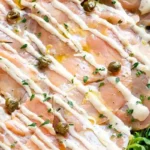
Elegant Smoked Salmon Carpaccio
- Total Time: 12 minutes
- Yield: 4 servings 1x
- Diet: Pescatarian
Description
Try this salmon carpaccio that is light, elegant, and so effortlessly chic. It’s perfect to serve as an appetizer or as a no-cook main.
Ingredients
- 16 oz smoked salmon
- 1 lemon (juice and zest)
- ¼ cup extra virgin olive oil
- 1 tbsp lemon juice
- ¼ tsp salt
- Freshly ground pepper to taste
- 6 tbsp mayo
- 1 tbsp lemon juice
- 2 tbsp extra virgin olive oil
- 2 anchovy fillets
- 5 capers (optional)
- 2 sprigs parsley
- 10 capers (optional)
- 2 cups arugula or other leafy greens
Instructions
- Step: Put all olive oil dressing ingredients in a jar and shake vigorously; set aside.
- Step: Place all white sauce ingredients in a blender cup or tall container and blitz until smooth.
- Step: Arrange arugula on a large serving dish and place salmon slices slightly overlapping on top.
- Step: Shake the olive oil dressing again to emulsify and drizzle generously over the salmon. Let it sit for 10-15 minutes to marinate if time permits.
- Step: Drizzle the salmon carpaccio with the white sauce.
- Step: Garnish with chopped parsley, lemon zest, and additional capers if preferred.
Notes
You can substitute arugula with sliced beef or heirloom tomatoes. For the white sauce, anchovies can be substituted with a few dashes of Worcestershire sauce. If using fresh salmon instead of smoked, ensure it is sushi-grade and consider marinating with salt and sugar for 24 hours before slicing.
- Prep Time: 7 minutes
- Cook Time: 0 minutes
- Category: Appetizer
- Method: No-cook
- Cuisine: Italian
Nutrition
- Serving Size: 1 serving
- Calories: 475 kcal
- Sugar: 1 g
- Sodium: 1226 mg
- Fat: 42 g
- Saturated Fat: 6 g
- Unsaturated Fat: 34 g
- Trans Fat: 0.04 g
- Carbohydrates: 4 g
- Fiber: 1 g
- Protein: 22 g
- Cholesterol: 36 mg
Keywords: salmon carpaccio, Italian appetizer, smoked salmon, no-cook main, carpaccio di salmone