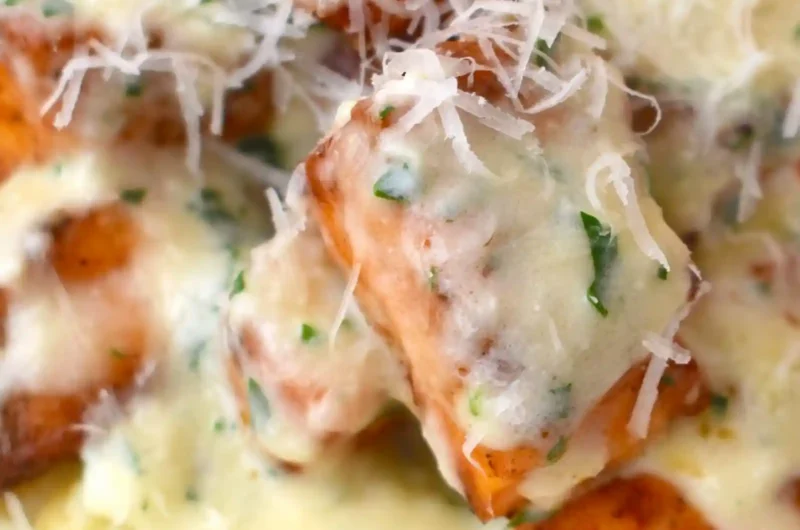
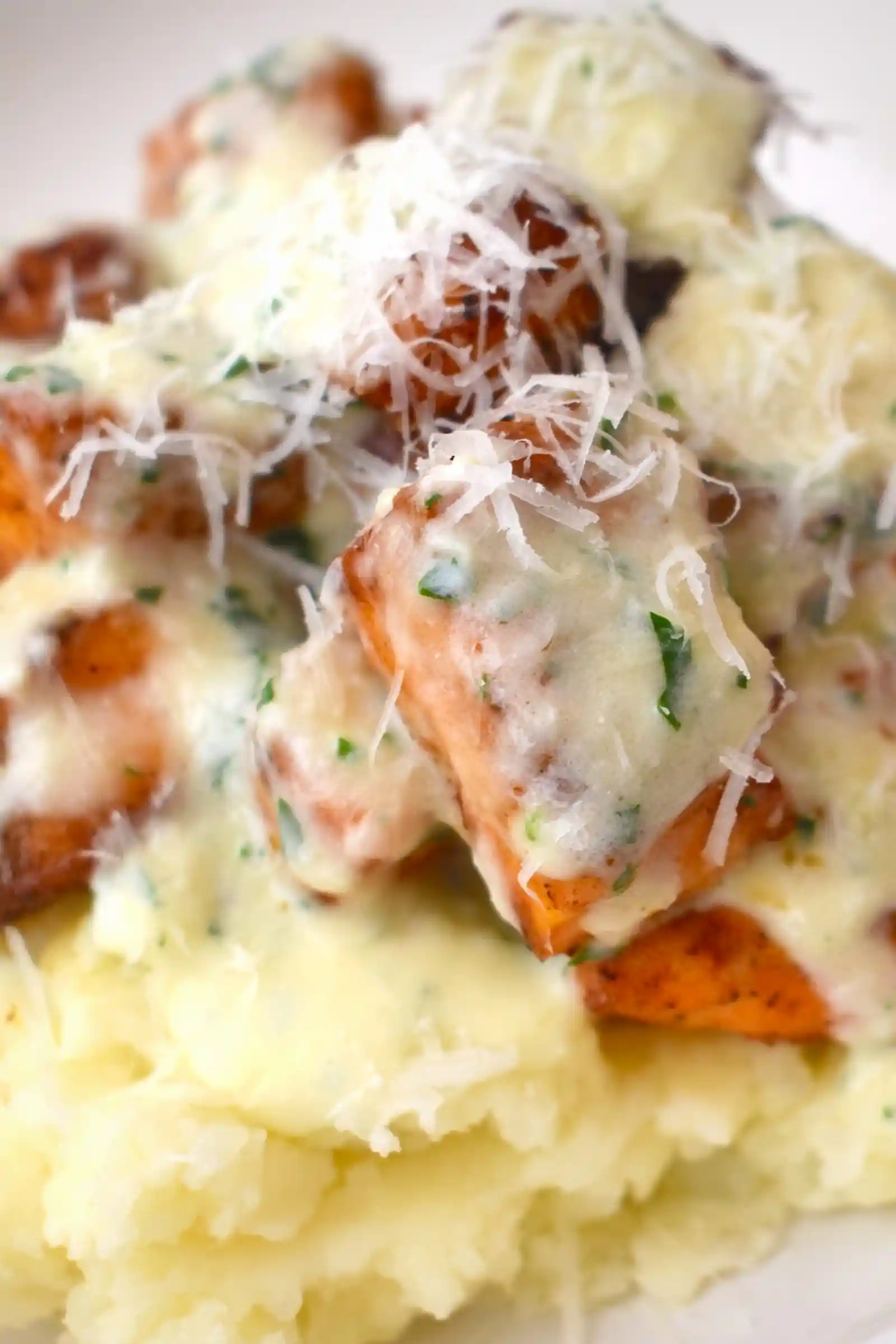
These air fryer salmon bites are a high-protein meal paired with a rich, savory parmesan sauce. This method ensures a crispy exterior and tender interior in under fifteen minutes.
List of ingredients
- 5-6 Oz Salmon – cut into 1 inch cubes.
- 1 Tbsp Old Bay Seasoning – for a classic seafood flavor.
- 1 Tbsp Louisiana Cajun Seasoning – optional, for added heat.
- 1 Tbsp Butter – used for the sauce base.
- 1/2 Cup Heavy Cream – creates the creamy texture.
- 1/2 Cup Freshly Grated Parmesan Cheese – provides saltiness and thickening.
- 1 Tbsp Minced or Grated Garlic – for aromatic depth.
- 1 Tbsp Lemon Juice – adds acidity to balance the richness.
- 1 Tbsp Minced Parsley – for a fresh finish.
- Salt – to taste.
step-by-step instructions
- Prep the fish: Dice your salmon into 1 inch cubes.
- Preheat: Preheat your air fryer or oven to 390 F.
- Season: Season your salmon with Old Bay and Cajun seasonings or seasonings of your choice.
- Arrange: Place your seasoned salmon on a greased air fryer basket or lined baking sheet making sure they are not over crowded.
- Cook: Air fry at 390 for 9-11 minutes. If using an oven, bake for about 15 minutes.
- Prepare sauce: In a small sauce pan over low to medium heat, add the butter, heavy cream, parmesan, garlic, lemon juice, and parsley.
- Thicken: Stir until the sauce is combined. The cheese will make it thicker. Sprinkle in a little salt to your liking.
- Serve: Serve your salmon over potatoes or pasta and drizzle sauce over salmon.
Technical Tips for Perfect Salmon Bites
Pat Dry the Salmon Before Seasoning
Use a paper towel to remove all surface moisture from the salmon cubes before applying seasonings. Excess water creates steam in the air fryer, which prevents the edges from crisping. Dry fish allows the seasonings to adhere better and ensures a faster sear.
Avoid Overcrowding the Air Fryer Basket
Arrange the cubes in a single layer with space between each piece. If the bites are touching or stacked, the hot air cannot circulate around all sides of the fish. This leads to uneven cooking and soggy spots where the cubes touch.
Use a Meat Thermometer for Precision
Salmon is easy to overcook, which results in a dry, chalky texture. Use an instant-read thermometer to check the internal temperature. Remove the bites when they reach 135-145 degrees Fahrenheit depending on your preference.
Grease the Basket Thoroughly
Salmon contains natural oils, but the seasonings can still stick to the basket. Use a high-smoke point oil spray or a small amount of melted butter on the grate. This prevents the salmon from tearing when you attempt to remove the pieces.
Ingredient Substitutions and Alternatives
Replacing Heavy Cream for Lighter Options
If you prefer a lighter sauce, you can substitute heavy cream with half-and-half or whole milk. If using milk, you may need to whisk in a teaspoon of cornstarch mixed with water to achieve the same thickness. Evaporated milk is another option that maintains a creamy consistency without the full fat content of heavy cream.
Alternative Seasoning Combinations
If you do not have Old Bay or Cajun seasoning, mix 1 teaspoon each of salt, pepper, paprika, onion powder, garlic powder, Italian seasoning, and cayenne. This blend replicates the savory and spicy profile of the original seasonings. You can also use a simple lemon-pepper blend for a milder taste.
Substituting the Type of Cheese
While freshly grated parmesan is recommended for its melting properties, Pecorino Romano is a great substitute for a saltier, sharper flavor. If using pre-shredded cheese, be aware that it contains anti-clumping agents. These additives can sometimes make the sauce feel grainier than cheese grated from a block.
Using Different Types of Fish
This cooking method works well with other firm-fleshed fish like halibut or mahi-mahi. These fish have a similar density to salmon and can withstand the 390 F temperature without falling apart. Adjust the cooking time slightly as leaner fish may cook faster than fatty salmon.
Serving Ideas and Pairings
Pairing with Mashed Potatoes
Serve the salmon bites over a bed of creamy garlic mashed potatoes. The starch absorbs the extra parmesan sauce, creating a cohesive meal. The buttery flavor of the potatoes complements the acidity of the lemon juice in the sauce.
Serving Over Pasta
Toss cooked fettuccine or linguine in a small amount of olive oil before topping with the salmon bites. Drizzle the parmesan sauce over the pasta and fish. This transforms the recipe into a complete pasta dish similar to a seafood Alfredo.
Adding Fresh Vegetable Sides
Steamed broccoli, roasted asparagus, or sautéed spinach provide a necessary nutritional balance to the rich sauce. The bitterness of charred broccoli or the earthiness of spinach cuts through the creaminess of the parmesan. Roast these vegetables in the oven while the salmon is in the air fryer.
Creating a Low-Carb Base
Substitute pasta or potatoes with cauliflower mash or zucchini noodles. Sauté the zucchini noodles quickly so they remain crisp. The creamy sauce provides enough flavor to make these vegetable alternatives satisfying.
Storage and Reheating Guidelines
Refrigerating Leftovers
Place cooked salmon bites and the sauce in separate airtight containers. Salmon can be stored in the refrigerator for up to three days. Keep the sauce separate to prevent the fish from becoming too soft and losing its texture.
Preventing Sauce Separation
Cream-based sauces may separate or thicken significantly when chilled. When storing, ensure the container is completely sealed to prevent a skin from forming on top. If the sauce becomes too thick, you can thin it out during the reheating process.
Best Method for Reheating Salmon
To maintain the texture, reheat salmon bites in the air fryer at 350 F for 3-5 minutes. This restores the crispiness of the exterior without overcooking the center. Avoid the microwave, as it often makes the fish rubbery and removes the sear.
Warming the Parmesan Sauce
Reheat the sauce in a small saucepan over low heat. Add a tablespoon of milk or water and stir constantly to bring back the smooth emulsion. Avoid boiling the sauce, as high heat can cause the cheese to separate from the cream.
Troubleshooting Common Issues
Fixing a Lumpy Sauce
If the cheese does not melt smoothly, it is likely because the heat was too high or the cheese was not finely grated. Use a whisk to vigorously blend the sauce over low heat. If lumps persist, you can pass the sauce through a fine-mesh strainer.
Adjusting Sauce Thickness
If the sauce is too thin, let it simmer for an additional two minutes to reduce the liquid. If it is too thick, stir in a teaspoon of heavy cream or lemon juice at a time. The sauce should be thick enough to coat the back of a spoon without being paste-like.
Preventing Burnt Seasonings
If the seasonings burn before the fish is cooked, lower the temperature to 375 F and increase the cooking time by 2 minutes. This happens more frequently in air fryers with very powerful heating elements. Using a small amount of oil in the seasoning rub can also help distribute heat more evenly.
Dealing with Overcooked Salmon
If the salmon becomes too dry, increase the amount of sauce served with each bite. The creamy parmesan sauce helps mask the dryness of overcooked fish. In the future, check the internal temperature two minutes before the timer ends.
Frequently Asked Questions
Can I use frozen salmon for this recipe?
Yes, but you must thaw the salmon completely before dicing and seasoning. If you cook salmon from frozen, the exterior will overcook before the center reaches the safe temperature. Pat the thawed fish dry to remove excess moisture.
How do I know when the salmon bites are done?
The salmon should be opaque and flake easily with a fork. The edges should be golden brown and slightly crisp. An internal temperature of 145 F is the USDA recommended standard for cooked fish.
Is this recipe gluten-free?
Yes, the ingredients listed are naturally gluten-free. Ensure that your chosen seasonings, such as Old Bay or Cajun blend, do not contain hidden wheat fillers. Always check the labels on pre-packaged spices.
Can I make the sauce in advance?
You can prepare the sauce ahead of time, but it must be reheated gently. Store it in the fridge and warm it on the stove with a splash of milk before serving. Do not microwave the sauce on high heat as it may break the emulsion.
What is the best type of salmon to use?
Center-cut salmon fillets are best because they provide uniform thickness for dicing. Atlantic salmon is common and fatty, which helps it stay moist in the air fryer. Sockeye salmon is leaner and may cook faster, so monitor it closely.
Print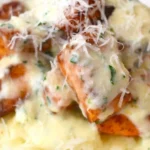
Air Fryer Salmon Bites with Creamy Parmesan Sauce
- Total Time: 21 minutes
- Yield: 2 servings 1x
- Diet: Gluten-Free
Description
Easy and flavorful air fryer salmon bites paired with a rich, creamy parmesan sauce for a sophisticated yet simple meal.
Ingredients
- 5–6 oz salmon
- 1 tbsp Old Bay Seasoning
- 1 tbsp Louisiana Cajun Seasoning
- 1 tbsp butter
- 1/2 cup heavy cream
- 1/2 cup freshly grated parmesan cheese
- 1 tbsp minced or grated garlic
- 1 tbsp lemon juice
- 1 tbsp minced parsley
- Salt
Instructions
- Dice: Dice your salmon into 1 inch cubes.
- Preheat: Preheat your air fryer or oven to 390 F.
- Season: Season your salmon with Old Bay and Cajun seasonings or seasonings of your choice.
- Arrange: Place your seasoned salmon on a greased air fryer basket or lined baking sheet making sure they are not over crowded.
- Cook: Air fry at 390 for 9-11 minutes. Bake for about 15.
- Sauce: In a small sauce pan over low to medium heat, add the butter, heavy cream, parmesan, garlic, lemon juice, and parsley. Stir until the sauce is combined. The cheese will make it thicker. Sprinkle in a little salt to your liking.
- Serve: Serve your salmon over potatoes or pasta and drizzle sauce over salmon.
Notes
If you do not have an air fryer, this recipe can be easily prepared in the oven. Using a fresh block of parmesan and grating it yourself ensures a smoother, lump-free sauce texture.
- Prep Time: 10 minutes
- Cook Time: 11 minutes
- Category: Main Course
- Method: Air Frying
- Cuisine: American
Nutrition
- Serving Size: 1 serving
- Calories: 545 kcal
- Sugar: 3 g
- Sodium: 850 mg
- Fat: 46 g
- Saturated Fat: 20 g
- Unsaturated Fat: 26 g
- Trans Fat: 0 g
- Carbohydrates: 5 g
- Fiber: 1 g
- Protein: 18 g
- Cholesterol: 120 mg
Keywords: air fryer salmon, salmon bites, creamy parmesan sauce, seafood, low carb