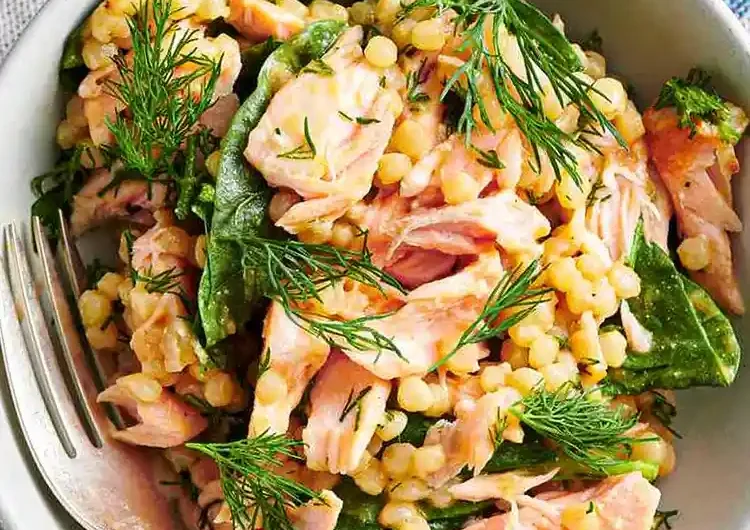
This nutritious meal combines pan-seared salmon with the nutty texture of pearled couscous. A zesty mustard-dill dressing and wilted spinach provide a bright, balanced flavor profile ready in under 30 minutes.
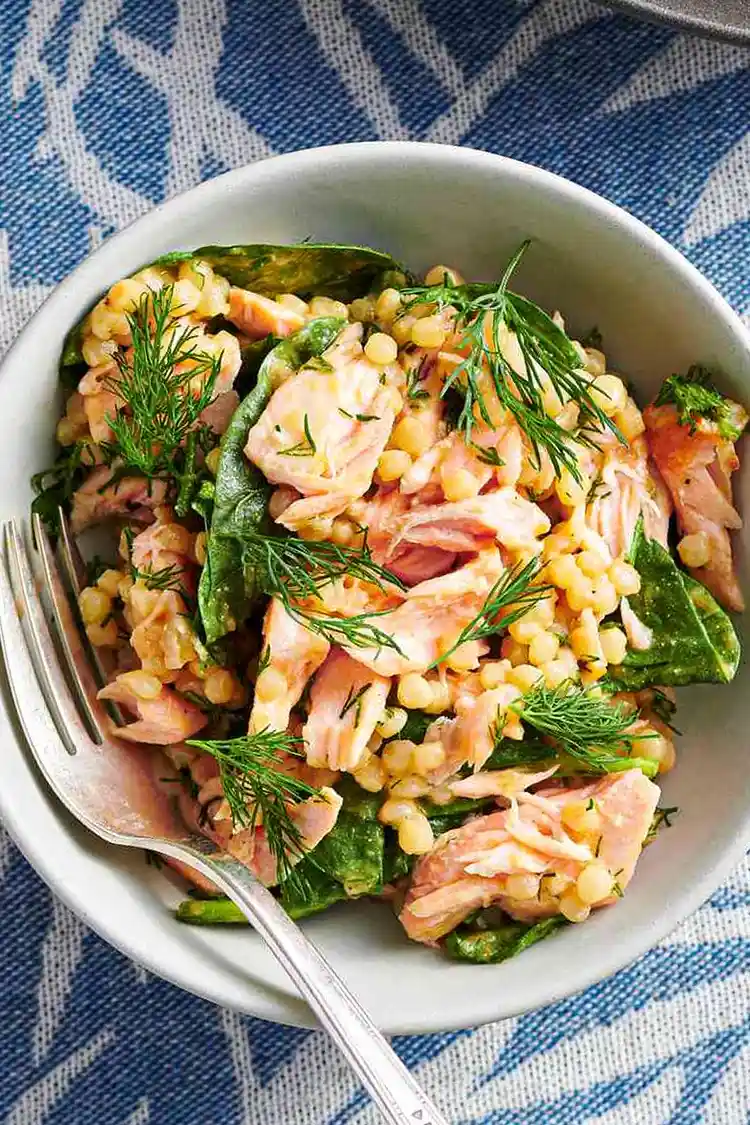
List of ingredients
- 2 (8-ounce) salmon filets, preferably wild – skin on for best texture.
- Kosher salt and freshly ground black pepper – for seasoning the fish.
- 1/3 cup plus 2 tablespoons extra-virgin olive oil, divided – for searing and sautéing.
- 1 medium shallot, thinly sliced – adds a mild onion flavor.
- 6 ounces pearled couscous – also known as Israeli couscous.
- 3 cups homemade vegetable stock or store-bought low-sodium vegetable broth – for cooking the grains.
- 2 tablespoons Dijon mustard – provides tang and emulsion for the dressing.
- 2 tablespoons fresh juice from 1 lemon – adds acidity to cut through the fatty salmon.
- 1/2 cup picked dill, roughly chopped, plus more for garnish – gives a fresh, grassy aroma.
- 1 1/2 cups spinach leaves, chopped in half if large, or left whole if baby – adds color and nutrients.
step-by-step instructions
- Sear the salmon: Season salmon with salt and pepper. Heat 1/3 cup oil in a 12-inch stainless steel skillet over medium-high heat until shimmering. Add salmon, skin-side down, and immediately reduce heat to medium-low. Cook, pressing down gently with a spatula to ensure contact, until skin is rendered and crisp, about 6 minutes. If skin shows resistance when attempting to lift with a spatula, allow it to continue to cook until it lifts easily.
- Finish the fish: Flip salmon and cook until an instant-read thermometer inserted into the thickest part registers 120°F (49°C) for medium rare or 130°F (54°C) for medium, about 1 minute longer. Transfer salmon to a paper towel-lined plate and allow to cool. Once cooled, flake salmon using your hands; discard skin.
- Toast the couscous: Meanwhile, wipe out skillet. Add remaining 2 tablespoons oil and heat over medium-high heat until shimmering. Add shallot and a pinch of salt and cook until softened, about 2 minutes. Add couscous and cook, stirring, until lightly toasted and fragrant, about 1 minute.
- Simmer the grains: Add broth, stirring to combine, and adjust heat to maintain a simmer. Cook until most of the liquid has been absorbed and couscous is tender. Strain any excess liquid.
- Assemble the salad: In a large serving bowl, mix together mustard and lemon juice. Stir in couscous, along with dill and spinach, stirring to fluff the couscous and wilt the spinach. Stir in flaked salmon and season with salt and pepper. Garnish with dill and serve right away.
Expert Salmon Searing Techniques
Choose a Stainless Steel Skillet for Maximum Crispiness
Stainless steel allows for better heat distribution and creates a superior sear compared to non-stick pans. This material helps the salmon skin crisp up and release naturally from the pan once the proteins have browned.
Use Firm Pressure to Prevent Skin Curling
Salmon fillets tend to curl when they hit the hot oil, which prevents the skin from making full contact with the pan. Use a flexible spatula to press the fillets down firmly for the first 30 to 60 seconds of cooking to ensure a uniformly golden crust.
Control the Heat to Render the Fat Slowly
Starting on medium-high and dropping to medium-low allows the fat in the skin to render out slowly. This prevents the fish from overcooking on the inside while the skin is still soft or rubbery.
Use an Instant-Read Thermometer for Accuracy
Using a thermometer is the only way to guarantee the salmon reaches the exact doneness you prefer. Removing the fish at 120°F for medium-rare accounts for carry-over cooking, which will raise the internal temperature slightly as it rests.
Mastering Pearled Couscous
Toast the Grains for Nutty Depth
Sautéing the pearled couscous in oil before adding the liquid toasts the starch. This process creates a deeper, nuttier flavor and helps the individual pearls maintain their structure instead of becoming mushy.
Selecting the Right Broth for Flavor
Using a low-sodium vegetable broth allows you to control the salt levels of the final dish. A high-quality broth adds an aromatic base to the couscous that plain water cannot provide.
Managing Liquid Absorption
Keep the heat at a gentle simmer rather than a rolling boil to ensure the couscous absorbs the liquid evenly. If the liquid evaporates too quickly, the center of the pearls may remain hard.
Ingredient Alternatives and Customizations
Swapping Pearled Couscous for Ancient Grains
You can replace pearled couscous with quinoa or farro for a different texture. If using farro, increase the cooking time to 20-30 minutes and adjust the liquid ratio according to the package instructions.
Using Different Leafy Greens
While spinach wilts quickly and blends well, baby kale or arugula are excellent alternatives. Arugula adds a peppery bite, while kale provides more structure and requires a slightly longer stirring time to soften.
Adjusting the Mustard Profile
Dijon mustard is the standard for its sharp tang, but whole-grain mustard adds a nice textural pop. For a milder flavor, use a small amount of honey mustard, though you may want to reduce any additional sweeteners in the recipe.
Presentation and Serving Suggestions
Serving as a Warm Weeknight Entree
When served immediately, the heat from the couscous gently wilts the spinach and keeps the salmon moist. This makes it a comforting, complete meal that feels like a bistro-style dinner.
Transforming the Dish into a Cold Picnic Salad
Allow the salad to cool completely and refrigerate it for two hours before serving. The flavors of the lemon and dill meld together over time, making it an ideal choice for meal prep or outdoor gatherings.
Adding Texture with Toasted Nuts or Seeds
Adding a handful of toasted slivered almonds or pine nuts provides a crunchy contrast to the soft couscous. Toasted sesame seeds also work well to complement the savoriness of the salmon.
Storage and Preservation Guidelines
Proper Refrigeration Methods for Salmon
Store leftovers in an airtight glass container to prevent the fish from absorbing other fridge odors. The salmon and couscous mixture will remain safe and tasty for up to three days in the refrigerator.
Preventing Couscous from Drying Out
Couscous tends to absorb moisture from the dressing as it sits in the fridge. To refresh the salad, stir in a teaspoon of olive oil or a squeeze of fresh lemon juice before serving it cold.
Keeping Fresh Dill Vibrant
If you are preparing the salad in advance, stir in the majority of the dill but save a small amount for a fresh garnish. This ensures the dish looks bright and tastes fresh even after a day of storage.
Troubleshooting Common Issues
Fixing Overcooked Salmon
If the salmon becomes too dry, flake it into smaller pieces and stir it into the salad while the couscous is still very hot. The moisture from the broth and dressing helps rehydrate the fish slightly.
Correcting Mushy Couscous Texture
Mushy couscous usually results from too much liquid or over-stirring. To fix this, strain any excess liquid immediately and let the couscous sit in a colander for a minute before mixing in the other ingredients.
Balancing an Overly Tart Dressing
If the lemon juice makes the salad too acidic, stir in a pinch of sugar or a small amount of extra olive oil. This neutralizes the sharpness and rounds out the flavor profile.
Frequently Asked Questions
Can I use frozen salmon fillets?
Yes, but ensure they are completely thawed and patted dry with paper towels before seasoning. Any excess moisture on the surface of the fish will steam the salmon instead of searing it, preventing the skin from crisping.
What is the difference between pearled and Moroccan couscous?
Pearled couscous is actually a small pasta made from semolina, whereas Moroccan couscous consists of tiny steamed grains of rolled semolina. Pearled couscous requires simmering in liquid, while Moroccan couscous is typically steeped in boiling water.
Can I make this recipe without a stainless steel pan?
You can use a cast iron skillet for similar results, as it holds heat very well. Avoid non-stick pans if possible, as they cannot handle the high heat necessary to render the salmon skin properly without damaging the coating.
How do I know when the oil is shimmering?
Oil shimmers when it reaches the correct temperature for searing; it will look like it is moving or vibrating slightly on the surface. You can also test it by dropping a small piece of shallot in; if it sizzles immediately, the oil is ready.
Print
Warm Couscous Salad with Salmon and Mustard-Dill Dressing
- Total Time: 25 minutes
- Yield: 4 servings 1x
- Diet: Pescetarian
Description
Flakes of salmon and wilted spinach add body and flavor to this warm couscous salad that’s seasoned with mustard and dill.
Ingredients
- 2 (8-ounce) salmon filets, preferably wild
- Kosher salt and freshly ground black pepper
- 1/3 cup plus 2 tablespoons extra-virgin olive oil, divided
- 1 medium shallot, thinly sliced
- 6 ounces pearled couscous
- 3 cups vegetable stock or low-sodium vegetable broth
- 2 tablespoons Dijon mustard
- 2 tablespoons fresh lemon juice
- 1/2 cup picked dill, roughly chopped, plus more for garnish
- 1 1/2 cups spinach leaves
Instructions
- Step 1: Season salmon with salt and pepper. Heat 1/3 cup oil in a 12-inch stainless steel skillet over medium-high heat until shimmering. Add salmon, skin-side down, reduce heat to medium-low, and cook until skin is rendered and crisp, about 6 minutes.
- Step 2: Flip salmon and cook until an instant-read thermometer registers 120°F (49°C) for medium rare or 130°F (54°C) for medium, about 1 minute longer. Transfer to a paper towel-lined plate, allow to cool, and flake using your hands; discard skin.
- Step 3: Wipe out skillet. Add remaining 2 tablespoons oil and heat over medium-high heat. Add shallot and a pinch of salt and cook until softened, about 2 minutes. Add couscous and cook until lightly toasted, about 1 minute. Add broth, simmer until most liquid is absorbed and couscous is tender, then strain excess liquid.
- Step 4: In a large serving bowl, mix together mustard and lemon juice. Stir in couscous, dill, and spinach to wilt the spinach. Stir in flaked salmon and season with salt and pepper. Garnish with dill and serve right away.
Notes
This dish can be served warm as a main meal or chilled for a picnic lunch.
- Prep Time: 5 minutes
- Cook Time: 20 minutes
- Category: Main Course
- Method: Pan-searing
- Cuisine: American
Nutrition
- Serving Size: 1 serving
- Calories: 551 kcal
- Sugar: 3 g
- Sodium: 511 mg
- Fat: 39 g
- Saturated Fat: 6 g
- Unsaturated Fat: 33 g
- Trans Fat: 0 g
- Carbohydrates: 20 g
- Fiber: 4 g
- Protein: 30 g
- Cholesterol: 71 mg
Keywords: salmon, pearled couscous, mustard-dill dressing, warm salad, quick dinner