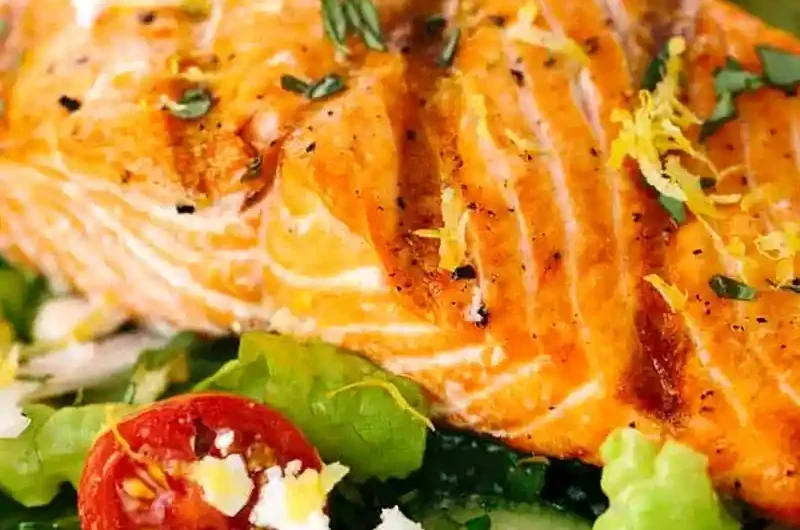
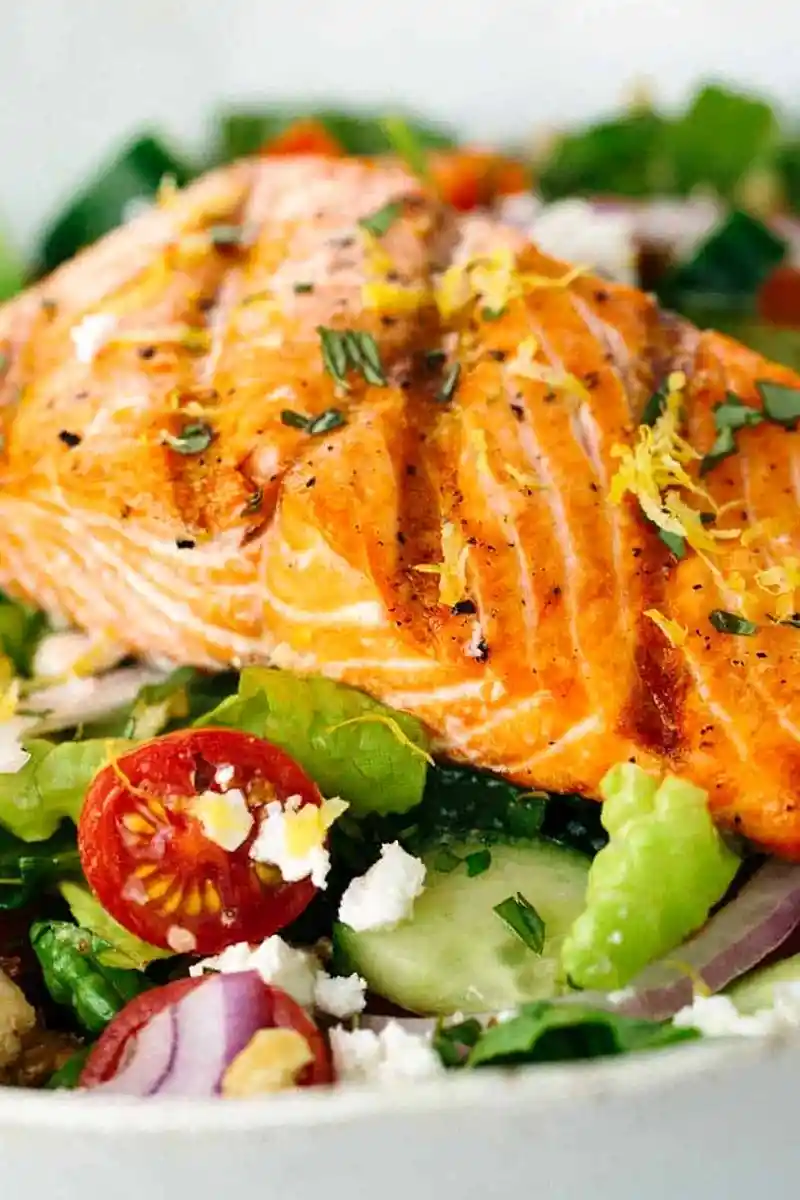
This protein-packed meal features zesty grilled salmon served over a crisp Greek-style salad. A tangy lemon basil vinaigrette ties the warm fish and cool vegetables together for a balanced dinner.
List of ingredients
- 1 pound salmon fillets (4 pieces) – cut into equal portions.
- kosher salt – as needed for seasoning.
- black pepper – as needed for seasoning.
- olive oil – as needed for coating and grilling.
- 8 cups lettuce (romaine, spinach or kale) – chopped into bite-sized pieces.
- 1 cup cherry tomatoes – halved.
- 1 cup cucumber – diced into 1/4 inch pieces.
- 1/2 cup red onion – thinly sliced.
- 1/2 cup red bell pepper – diced into 1/4 inch pieces.
- 4 ounces feta cheese – crumbled, preferably microbial-rennet based.
- 1/2 cup walnuts – roughly chopped.
- 1/4 cup lemon juice – fresh squeezed.
- 1 teaspoon lemon zest – finely grated.
- 1 tablespoon dijon mustard – for emulsion and tang.
- 1 teaspoon honey – for a hint of sweetness.
- 1 teaspoon minced garlic – fresh for better flavor.
- 8 basil leaves – fresh.
- 1/2 teaspoon dried oregano (or 1 teaspoon fresh) – for Greek flavor.
- 1/4 teaspoon kosher salt – for the dressing.
- 1/8 teaspoon black pepper – for the dressing.
- 1/2 cup olive oil – used for the vinaigrette.
step-by-step instructions
- Season the Salmon: Lightly season both sides of each salmon fillet with salt and pepper. Drizzle a small amount of olive oil on both sides to ensure the fish does not stick to the grill.
- Grill the Salmon: Heat a barbecue or grill pan to medium-high. Use a paper towel dipped in vegetable oil to grease the grates. Place salmon fillets on the grill and cook uncovered for 4 to 5 minutes per side until they flake easily, reaching an internal temperature of 130 to 140°F (54 to 60°C). Move them to a plate, cover to keep warm, and remove skin if desired.
- Make the Salad: In a large mixing bowl, combine the lettuce, cherry tomatoes, diced cucumber, sliced red onion, diced bell pepper, crumbled feta, and chopped walnuts. Set this mixture aside until ready to serve.
- Make the Salad Dressing: Combine lemon juice, lemon zest, dijon mustard, honey, minced garlic, basil leaves, oregano, salt, and pepper in a blender. Blend on medium speed for about 30 seconds. With the blender running on low, slowly stream in the olive oil and process for another 30 seconds until the dressing thickens.
- To Serve: Toss the salad greens and vegetables with enough dressing to coat them evenly. Divide the salad among four bowls and place one grilled salmon fillet on top of each. Drizzle additional dressing over the salmon if preferred.
Salmon Grilling Techniques
Using a Grill Pan for Indoor Cooking
If you do not have an outdoor barbecue, a cast-iron grill pan is an excellent alternative. Ensure the pan is preheated over medium-high heat until a drop of water dances on the surface. Use a high-smoke point oil to prevent burning and sticking.
Achieving Professional Sear Marks
Place the salmon fillets at a 45-degree angle relative to the grill grates to create traditional cross-hatch marks. Avoid moving or sliding the fish during the first few minutes of cooking. The salmon will naturally release from the metal once the sear is fully developed.
Identifying Doneness by Texture
The most reliable visual cue for finished salmon is when the flesh easily flakes apart with a fork. Press the center of the fillet gently; it should feel firm but have a slight spring. Avoid overcooking to prevent the white albumin proteins from pushing out too much.
Monitoring Internal Temperatures
Use a digital meat thermometer to check the thickest part of the fillet for accuracy. Aim for 130 to 140°F for a medium-rare to medium finish, which keeps the fish moist. Pull the salmon off the heat slightly before it reaches your target temperature as it continues to cook while resting.
Optimizing the Salad Base
Selecting the Best Leafy Greens
A blend of romaine, spinach, and kale provides a variety of textures and nutrients. Romaine offers a watery crunch, spinach adds a tender bite, and kale provides a sturdy structure. Chop all greens into uniform 1/2-inch pieces for easier eating.
Adding Texture with Seed Varieties
While walnuts provide a rich crunch, you can incorporate toasted sunflower seeds or pumpkin seeds for added depth. These seeds complement the salty feta and the sweetness of the bell peppers. Toast them in a dry pan for two minutes before adding to the bowl.
Choosing Alternative Salty Cheeses
If feta is unavailable, goat cheese or a microbial-rennet based cotija can provide a similar tangy profile. Goat cheese is creamier, while cotija is firmer and saltier. Ensure the cheese is crumbled into small pieces to distribute flavor evenly throughout the salad.
Experimenting with Different Nut Options
Slivered almonds or chopped pecans serve as great substitutes for walnuts if you have dietary preferences. Almonds add a lighter crunch, while pecans offer a buttery flavor that pairs well with the lemon dressing. Always use raw or lightly toasted nuts for the freshest taste.
Dressing Customization and Preparation
Preparing the Vinaigrette Without a Blender
If a blender is not available, you can make this dressing by hand using a whisk. Finely mince the basil leaves and garlic before adding them to a medium bowl. Whisk the oil in a very slow, steady stream to ensure the dressing emulsifies and thickens properly.
Balancing the Acidity Levels
If the dressing feels too sharp, add an extra teaspoon of honey to mellow out the lemon juice. Conversely, if it tastes too sweet, increase the lemon juice by one tablespoon. Taste the dressing with a leaf of lettuce to determine the final balance.
Substituting Sweeteners for Honey
Maple syrup or agave nectar can be used as a direct replacement for honey in this recipe. Maple syrup adds a slight woody note, while agave is more neutral in flavor. Keep the quantity the same to maintain the consistency of the vinaigrette.
Enhancing the Herb Profile
Adding fresh parsley or dill to the blender can shift the flavor toward a more traditional Mediterranean style. Parsley adds a clean, grassy note, while dill pairs specifically well with the oils in the salmon. Use about one tablespoon of fresh herbs for the best result.
Serving and Presentation Strategies
Plating for Individual Portions
Divide the tossed salad into wide, shallow bowls to prevent the greens from compressing. Place the salmon fillet slightly off-center on top of the greens for a professional look. Garnish with a few extra crumbles of feta and a sprinkle of fresh black pepper.
Low-Carb Lettuce Wrap Option
For a lower-carbohydrate version, skip the salad bowl and use large romaine leaves as wraps. Place a piece of grilled salmon inside the leaf and top it with a spoonful of the chopped salad ingredients. Drizzle the dressing directly into the wrap before serving.
Pairing with Hearty Side Grains
This salad can be turned into a more filling meal by adding a scoop of quinoa or farro. Mix the grains into the salad base or serve them on the side. Grains soak up the extra lemon basil dressing, reducing waste and adding complex carbohydrates.
Fresh Garnish Suggestions
Thinly sliced lemon rounds placed on the edge of the plate add a bright visual element and allow guests to add more acidity. A sprig of fresh basil placed atop the salmon also signals the primary flavor of the dressing. Sprinkle a few toasted walnut halves on top for a final textural touch.
Storage and Meal Prep Advice
Keeping the Salad Crisp for Later
When prepping this meal in advance, store the dressing in a separate airtight container. Keep the chopped vegetables and greens in a large container with a paper towel at the bottom to absorb excess moisture. Toss with the dressing only immediately before serving to prevent wilting.
Reheating Grilled Salmon Properly
To reheat the salmon without drying it out, use an oven at 275°F for about 10 minutes. Alternatively, an air fryer at 350°F for 3 to 5 minutes can restore the exterior crispness. Avoid the microwave, as it often results in a rubbery texture.
Storing the Lemon Basil Dressing
The homemade vinaigrette can be stored in a glass jar in the refrigerator for up to one week. Because of the olive oil, the dressing may solidify slightly when cold. Shake the jar vigorously or let it sit at room temperature for ten minutes before using.
Freezing Cooked Salmon Fillets
If you have extra grilled salmon, wrap it tightly in plastic wrap and place it in a vacuum-sealed bag. It will stay fresh in the freezer for up to two months. Thaw it slowly in the refrigerator overnight before gently reheating in the oven.
Troubleshooting Common Issues
Preventing Salmon from Sticking
Sticking usually occurs when the grill is not hot enough or the fish is not properly oiled. Ensure the grill has reached medium-high heat and the salmon is coated in a thin layer of olive oil. Do not flip the fish too early; wait for the sear to form.
Fixing a Broken Dressing
If the oil separates from the other ingredients, the emulsion has broken. To fix this, put a teaspoon of dijon mustard or a splash of warm water in a clean blender and slowly whisk in the broken dressing. The mustard acts as a stabilizer to bind the oil and acid.
Avoiding Soggy Salad Leaves
Sogginess is often caused by wet greens after washing. Use a salad spinner or pat the lettuce dry with a clean kitchen towel until no water remains. Adding the dressing too early is the second most common cause of wilting.
Reducing the Bitterness of Red Onions
If raw red onions are too pungent, soak the thin slices in a bowl of ice water for 10 to 15 minutes. Drain and pat them dry before adding them to the salad. This process removes the harsh sulfur compounds while keeping the crunch.
Frequently Asked Questions
Which salmon type is best for grilling?
Sockeye salmon is leaner and has a deeper color, making it great for a healthy salad. Atlantic salmon is richer and more buttery, which provides a softer texture that some prefer for grilling.
Can I use frozen salmon fillets?
Yes, but they must be completely thawed in the refrigerator before cooking. Cooking salmon from frozen can lead to uneven heat distribution and a mushy texture.
How long does the assembled salad last in the fridge?
Once the dressing is added, the salad should be consumed within a few hours. Without dressing, the prepared vegetable mix stays fresh for about 3 days in an airtight container.
What is a good substitute for dijon mustard?
Yellow mustard can be used, though it is slightly more vinegary. Whole grain mustard is also a great option, adding a rustic texture and a similar flavor profile to the dressing.
Print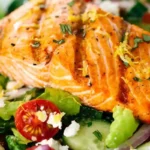
Grilled Salmon Salad with Lemon Basil Dressing
- Total Time: 30 minutes
- Yield: 4 servings 1x
- Diet: Healthy
Description
A healthy and delicious grilled salmon salad paired with a zesty lemon basil dressing, offering a perfect balance of warm protein and crisp, cool vegetables.
Ingredients
- 1 pound salmon fillets (4 pieces)
- kosher salt, as needed
- black pepper, as needed
- olive oil, as needed
- 8 cups lettuce (romaine, spinach or kale)
- 1 cup cherry tomatoes, halved
- 1 cup cucumber, diced, ¼” thick
- ½ cup red onion, thinly sliced
- ½ cup red bell pepper, diced, ¼” thick
- 4 ounces microbial-rennet feta cheese, crumbled
- ½ cup walnuts, roughly chopped
- ¼ cup lemon juice, plus 1 teaspoon lemon zest
- 1 tablespoon dijon mustard
- 1 teaspoon honey
- 1 teaspoon minced garlic
- 8 basil leaves
- ½ teaspoon dried oregano (or 1 teaspoon fresh)
- ¼ teaspoon kosher salt
- ⅛ teaspoon black pepper
- ½ cup olive oil
Instructions
- Season the Salmon: Lightly season both sides of the salmon fillet with salt and pepper. Drizzle a small amount of olive oil on both sides to coat.
- Grill the Salmon: Heat a barbecue or grill pan to medium-high. Grease the grill grates with a small amount of vegetable oil. Add the salmon fillets and cook uncovered for about 4 to 5 minutes on each side until flaky, about 130 to 140°F (54 to 60ºC). Transfer to a plate and cover to keep warm.
- Make the Salad: In a large bowl, combine the lettuce, tomatoes, cucumber, red onion, bell pepper, cheese, and walnuts.
- Make the Salad Dressing: In a blender, combine lemon juice, lemon zest, mustard, honey, garlic, basil, oregano, salt, and pepper. Blend on medium speed for about 30 seconds. With the blender on low, slowly add the olive oil and process until lightly thickened.
- To Serve: Toss the salad with enough dressing to coat the ingredients. Divide the mixture among four bowls and top each with one salmon fillet. Drizzle with additional dressing if desired.
Notes
To make the dressing by hand, finely chop the basil and whisk all dressing ingredients together in a medium bowl. Store leftovers in an airtight container in the refrigerator for up to 3 days.
- Prep Time: 20 minutes
- Cook Time: 10 minutes
- Category: Salad
- Method: Grilling
- Cuisine: Greek
Nutrition
- Serving Size: 1 serving
- Calories: 473 kcal
- Sugar: 5 g
- Sodium: 566 mg
- Fat: 35 g
- Saturated Fat: 7 g
- Unsaturated Fat: 25 g
- Trans Fat: 0 g
- Carbohydrates: 13 g
- Fiber: 4 g
- Protein: 32 g
- Cholesterol: 74 mg
Keywords: grilled salmon, greek salad, lemon basil dressing, healthy lunch, protein-packed salad