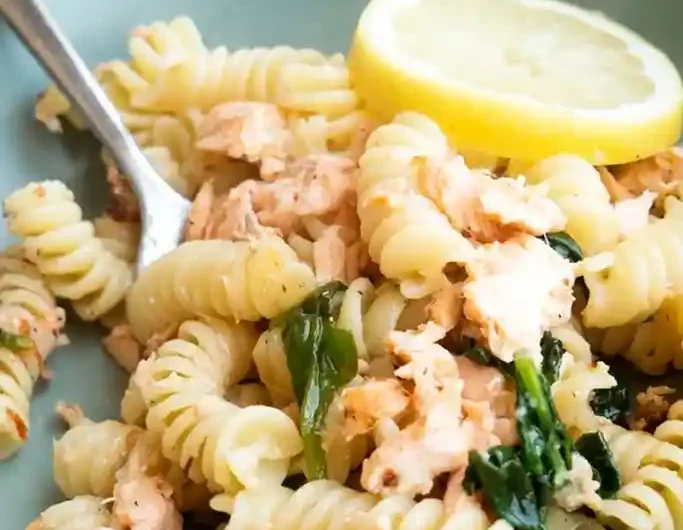
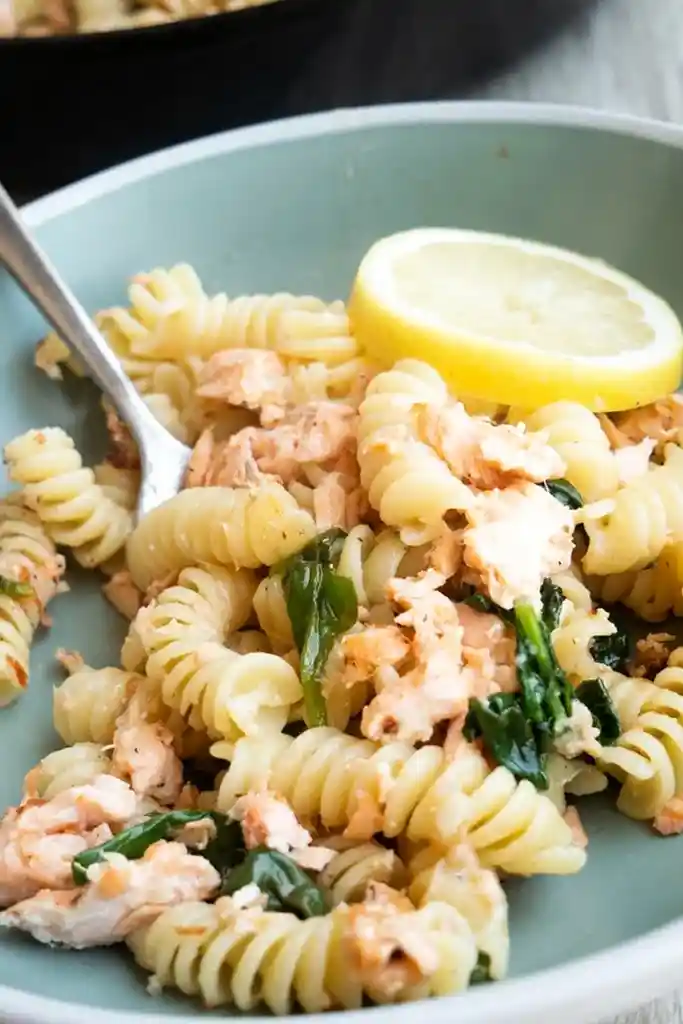
This nutrient-dense salmon pasta combines fresh spinach, zesty lemon, and savory sun-dried tomatoes for a quick meal. It is a high-protein dinner that utilizes a single pan for the main components to reduce cleanup time.
List of ingredients
- 400 gr 14 oz skinless salmon fillet – fresh or thawed.
- 2 garlic cloves – minced for maximum flavor.
- 1 tbsp olive oil – for searing the fish.
- 2 tbsp (4 units) sun-dried tomatoes – chopped into small pieces.
- 1 handful baby spinach – fresh and washed.
- 1 lemon – juiced for acidity.
- 400 gr 14 oz pasta – any shape like fusilli or penne.
- ½ cup parmesan cheese – optional for extra richness.
- 1 tbsp Italian seasoning – a blend of dried herbs.
- Salt and pepper – to taste.
step-by-step instructions
- Boil Pasta: Cook the pasta in a pot of boiling salted water according to the package instructions until al dente.
- Sear Salmon: Heat olive oil in a large pan over medium heat. Add the skinless salmon fillet, season with Italian seasoning, salt, and pepper, sear the sides, and then crumble the fish with a spatula.
- Sauté Aromatics: Add the minced garlic, chopped sun-dried tomatoes, and baby spinach to the pan. Cook for 2 to 5 minutes until the spinach wilts and the garlic becomes fragrant.
- Final Assembly: Squeeze in the fresh lemon juice and stir in the parmesan cheese. Add the drained pasta to the pan and toss everything together until well combined before serving.
Optimizing Pasta Selection
Using Spiral Pasta for Sauce Adhesion
Fusilli or rotini are excellent choices for this recipe. The spirals effectively trap the crumbled salmon and bits of sun-dried tomatoes in their grooves. This ensures every bite contains all the ingredients.
Selecting Bowtie Pasta for Texture
Farfalle, or bowtie pasta, provides a firmer bite and a visually appealing shape. The center of the bowtie holds onto the lemon-parmesan coating well. It works best if you prefer a more substantial pasta texture.
Using Tube Pasta for Hearty Meals
Penne or rigatoni are ideal for those who prefer a sturdier meal. The hollow centers allow smaller pieces of garlic and spinach to settle inside the pasta. These shapes are particularly good if you add extra vegetables.
Substituting with Whole Grain Options
Whole wheat pasta increases the fiber content of the dish. It has a nuttier flavor that pairs well with the richness of the salmon. Ensure you adjust cooking times based on the specific brand’s instructions.
Salmon Preparation Techniques
Achieving a Proper Sear
Pat the salmon fillet dry with paper towels before adding it to the pan. Moisture on the surface creates steam, which prevents a golden-brown crust. High heat and a dry surface result in better flavor development.
Crumbling the Fish Effectively
Use a sturdy silicone or metal spatula to break the salmon apart once it is mostly cooked. Do not over-mix, as leaving some larger chunks provides a better contrast in texture. The fish should be flaked, not mashed.
Preventing Overcooked Salmon
Monitor the heat to ensure the salmon stays moist. Remove the fish from the heat as soon as it turns opaque and flakes easily. Overcooking can make the salmon dry and chewy.
Managing the Salmon Skin
This recipe requires skinless fillets for a consistent texture throughout the pasta. If your salmon has skin, remove it with a sharp knife before seasoning. This allows the Italian seasoning to penetrate the flesh more evenly.
Vegetable and Ingredient Variations
Adding Steamed Broccoli
Broccoli florets add a crunch and boost the vitamin content. Steam them separately or add them to the boiling pasta water during the last three minutes of cooking. Toss them in during the final assembly step.
Using Kale Instead of Spinach
Kale is a heartier alternative to baby spinach. Since it takes longer to soften, add it to the pan before the garlic. Sauté it for an extra 3 to 5 minutes until the leaves are tender.
Incorporating Fresh Cherry Tomatoes
Cherry tomatoes provide a burst of freshness and acidity. Halve them and sauté them along with the sun-dried tomatoes. They will blister and release juices that create a light, natural sauce.
Adding Capers for Brininess
Capers add a salty, pickled element that complements the lemon juice. Add one tablespoon of drained capers during the garlic sauté phase. This creates a flavor profile similar to a piccata sauce.
Using Frozen Peas or Corn
Frozen peas or sweet corn add color and sweetness to the dish. Stir them in at the very end with the parmesan cheese. The residual heat from the pasta is enough to warm them through.
Flavor Enhancement Strategies
Adjusting the Citrus Balance
Depending on the size of the lemon, the acidity may vary. Start with half a lemon and taste the sauce before adding the rest. Too much lemon can overpower the delicate flavor of the salmon.
Increasing Garlic Intensity
For a stronger garlic flavor, slice the cloves thinly instead of mincing them. Sauté them slowly over medium-low heat to avoid burning. Burnt garlic becomes bitter and can ruin the dish.
Experimenting with Herb Blends
While Italian seasoning is standard, you can use dried dill or parsley. Dill pairs exceptionally well with salmon and lemon. Use one teaspoon of dried dill for a more traditional seafood flavor.
Serving and Presentation Ideas
Pairing with Fresh Side Salads
A light arugula salad with a balsamic glaze balances the richness of the salmon. The peppery notes of the arugula cut through the parmesan cheese. Keep the dressing simple to avoid clashing with the pasta.
Serving with Garlic Toast
Toasted baguette slices rubbed with garlic and olive oil complement this meal. The crunch of the bread adds a textural contrast to the soft pasta. It is also useful for scooping up any remaining sauce.
Garnishing with Fresh Herbs
Freshly chopped parsley or basil added at the end provides a bright color. These herbs add a fresh, aromatic layer that dried seasonings cannot replicate. Sprinkle them over the plated pasta just before serving.
Storage and Preservation
Refrigerating Leftovers
Store the pasta in an airtight container in the refrigerator for up to three days. Keep the container sealed to prevent the salmon from absorbing other odors. Ensure the pasta is cooled slightly before sealing to avoid excess condensation.
Freezing Considerations
Salmon pasta is not ideal for freezing as the texture of the fish and pasta can degrade. If you must freeze it, do so for no more than one month. Thaw slowly in the refrigerator before reheating.
Reheating Instructions
Stovetop Reheating Method
Heat a skillet over medium heat and add a splash of water or olive oil. Add the pasta and stir gently until heated through. This method best preserves the texture of the salmon chunks.
Microwave Reheating Tips
Place the pasta in a microwave-safe bowl and cover it with a damp paper towel. Heat in 30-second intervals, stirring in between. The damp towel prevents the pasta from drying out during the process.
Restoring Sauce Moisture
If the pasta seems dry upon reheating, add a teaspoon of lemon juice or a tablespoon of pasta water. Stir well to emulsify the fats from the salmon and cheese. This restores the creamy consistency of the sauce.
Make-Ahead Advice
Preparing the Salmon Base
You can sear and crumble the salmon in advance and store it in the fridge. When ready to eat, simply sauté the vegetables and add the pre-cooked salmon. This reduces the final cooking time to under 10 minutes.
Pre-chopping Vegetables
Mince the garlic and chop the sun-dried tomatoes a day in advance. Store them together in a small container. This streamlines the cooking process during busy weeknights.
Troubleshooting Common Issues
Preventing Dry Pasta
Avoid overcooking the pasta beyond the al dente stage. Reserve a small cup of the starchy pasta water before draining. If the final dish is too dry, stir in a tablespoon of this water to loosen the sauce.
Correcting Excessive Acidity
If the lemon juice makes the dish too sour, add a pinch of sugar or more parmesan cheese. The fat in the cheese helps neutralize the acid. Stir in a small amount of butter for a smoother, more balanced taste.
Managing Spinach Moisture
Ensure the baby spinach is spun dry after washing. Excess water in the spinach can dilute the flavors and make the sauce watery. Sauté the spinach quickly to maintain its vibrant green color.
Frequently Asked Questions
Can I use frozen salmon?
Yes, frozen salmon works well as long as it is fully thawed. Thaw it in the refrigerator overnight or use a cold-water bath. Pat it dry thoroughly before searing to ensure a good crust.
Is this recipe dairy-free?
The recipe is naturally dairy-free if you omit the parmesan cheese. For a similar salty flavor, you can substitute the cheese with nutritional yeast or a plant-based parmesan alternative.
What is the best lemon to use?
Standard Eureka or Lisbon lemons are best for their sharp acidity. Meyer lemons are sweeter and less acidic, which may require you to use more juice to achieve the same flavor profile.
How do I store sun-dried tomatoes?
Store sun-dried tomatoes in a jar with olive oil in the refrigerator. This prevents them from drying out and keeps them tender. You can use a teaspoon of the oil from the jar to sear the salmon for extra flavor.
Print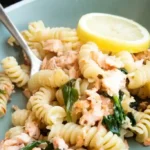
Salmon Pasta with Sun-Dried Tomatoes and Spinach
- Total Time: 30 minutes
- Yield: 4 servings 1x
- Diet: General
Description
Healthy and creamy salmon pasta with sun-dried tomatoes, spinach, and a lemon touch. This is a delicious dinner for spring-summer that mostly uses just one pan.
Ingredients
- 400 gr 14 oz skinless salmon fillet
- 2 garlic cloves
- 1 tbsp olive oil
- 2 tbsp (4 units) sun-dried tomatoes
- 1 handful baby spinach
- 1 lemon
- 400 gr 14 oz pasta
- ½ cup parmesan cheese (optional)
- 1 tbsp Italian seasoning
- Salt and pepper to taste
Instructions
- Step 1: Cook the pasta according to its package instructions.
- Step 2: In a big pan, heat the olive oil. Add the skinless salmon fillet. Season with Italian seasoning, salt, and pepper to taste. Sear the salmon and then crumble it with the help of a spatula.
- Step 3: Toss the minced garlic, chopped sun-dried tomatoes, and spinach. Cook for 2-5 minutes until the spinach is tender and the garlic fragrant.
- Step 4: Squeeze the juice of the lemon and add the parmesan cheese. Toss the drained pasta into the pan and combine well. Serve.
Notes
This is a no-cream recipe. Short pasta varieties like fusilli, farfalle, rigatoni or penne are recommended as they hold the sauce better.
- Prep Time: 5 minutes
- Cook Time: 25 minutes
- Category: Main Course
- Method: Pan-searing
- Cuisine: American
Nutrition
- Serving Size: 1 serving
- Calories: 368 kcal
- Sugar: 0.8 g
- Sodium: 171 mg
- Fat: 13 g
- Saturated Fat: 2.8 g
- Unsaturated Fat: 8.6 g
- Trans Fat: 0 g
- Carbohydrates: 33 g
- Fiber: 1.9 g
- Protein: 28 g
- Cholesterol: 60 mg
Keywords: salmon pasta, sun-dried tomatoes, seafood pasta, healthy dinner, one pan meal