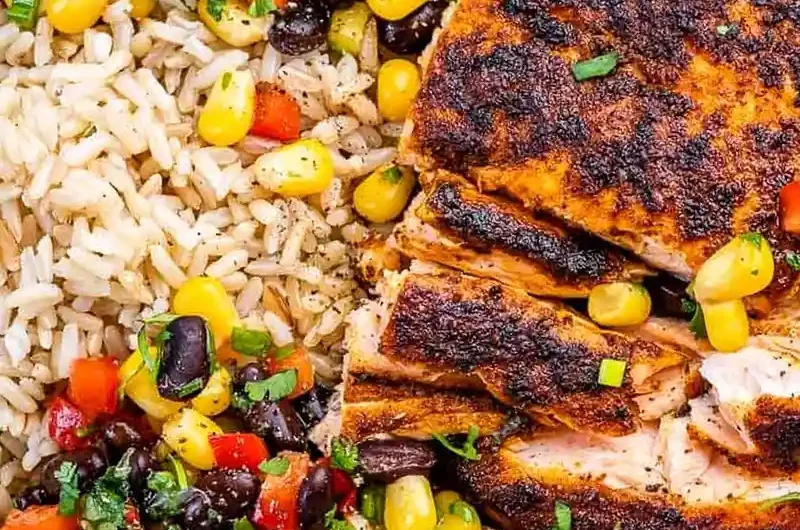
These Southwest Salmon Bowls combine pan-seared seasoned fish with a fresh black bean salsa and brown rice. It is a nutrient-dense meal that comes together in about 20 minutes.
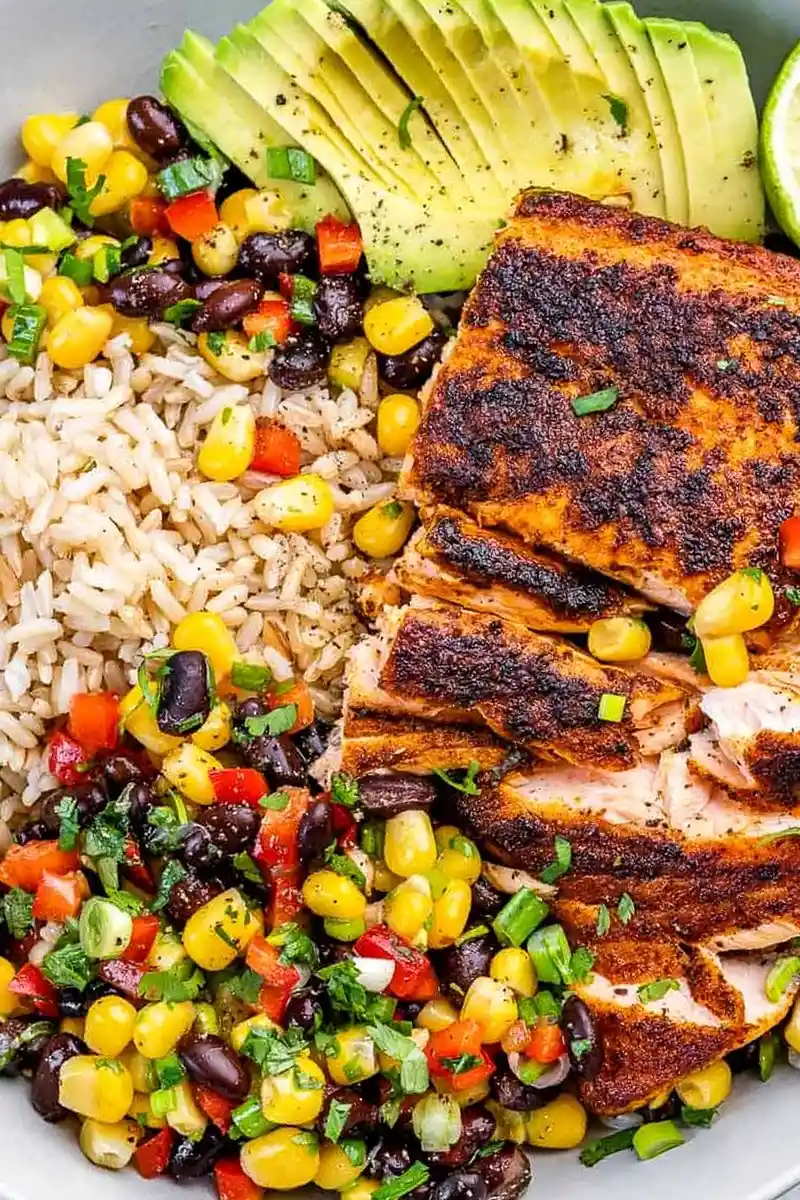
List of ingredients
- 12 ounces skinless salmon filets – preferably wild-caught for better flavor.
- 1 tablespoon taco seasoning – used as a savory rub.
- Kosher salt and pepper – to taste for seasoning.
- 1 tablespoon olive oil – for coating the fish.
- 1 Hass avocado – sliced for topping.
- 1/2 lemon – juiced for brightness.
- 2 cups cooked brown rice – as the base of the bowl.
- 1 red bell pepper – chopped for the salsa.
- 2-3 jalapeño peppers – seeded and chopped for heat.
- 15 ounces can black beans – drained and rinsed.
- 15 ounces corn – drained.
- 4 green onions – chopped.
- 1/4 cup chopped fresh cilantro – for herbal notes.
- 2 limes – juiced for the salsa dressing.
- 2 tablespoons olive oil – for the salsa dressing.
- 1 garlic clove – minced.
step-by-step instructions
- Prepare the fish: Rub the salmon filets with the taco seasoning, salt, pepper, and olive oil.
- Sear the salmon: Preheat a non-stick pan over medium heat. Cook the salmon filets for about 3 minutes per side, or until blackened and the internal temperature reaches 130°F.
- Rest the fish: Allow the salmon to rest on a plate while you prepare the salsa components.
- Mix the salsa: In a mixing bowl, add all the ingredients for the bean salsa and stir well to combine.
- Assemble the bowls: Divide the cooked rice among 4 serving bowls. Top with the bean salsa and the seared salmon.
- Final Garnish: Serve with sliced avocado and lime wedges if desired.
Professional Searing Techniques
Pat the Salmon Dry
Use a paper towel to remove excess moisture from the surface of the salmon before applying the rub. This ensures the fish sears and blackens rather than steaming in the pan.
Manage Pan Temperature
Wait until the olive oil is shimmering but not smoking before adding the fish. This creates an immediate crust and prevents the protein from sticking to the pan surface.
Avoid Overcrowding the Skillet
Leave space between each filet to allow steam to escape. Overcrowding the pan lowers the temperature and prevents the salmon from getting a proper sear.
Use a Fish Spatula
Use a wide, thin spatula to flip the salmon carefully. This prevents the seasoned crust from breaking off the delicate flesh of the fish.
Ingredient Selection and Substitutions
Choose Wild-Caught Salmon
Wild salmon typically offers a bolder flavor and different nutrient profile compared to farmed options. It generally holds its shape better during high-heat searing.
Substitute Brown Rice for Cauliflower Rice
For a lower-carb or grain-free version, replace the brown rice with steamed cauliflower rice. This maintains the bowl structure while reducing the overall calorie count.
Swap Brown Rice for Quinoa
Quinoa provides a slightly nuttier taste and more plant-based protein. Ensure it is rinsed and cooked fully before adding it to the bowl.
Modify the Heat Level
To reduce the spiciness, remove the seeds and membranes from the jalapeños entirely. For more heat, leave a few seeds in or add a pinch of cayenne pepper to the rub.
Alternative Fish Options
If salmon is unavailable, mahi-mahi or cod can be used. Adjust the cooking time based on the thickness of the white fish to avoid overcooking.
Perfecting the Black Bean Salsa
Rinse Canned Beans Thoroughly
Rinse the black beans under cold water until the water runs clear. This removes excess sodium and the metallic taste often associated with canned legumes.
Dice Vegetables Uniformly
Cut the red bell pepper and jalapeños into small, even cubes. This ensures that every spoonful of salsa contains a balanced mix of all ingredients.
Balance the Lime Acidity
Taste the salsa after mixing and add an extra squeeze of lime if it needs more brightness. The acidity cuts through the richness of the salmon and avocado.
Incorporate Fresh Cilantro
Add the cilantro at the very end of the mixing process. This prevents the leaves from bruising and preserves the vibrant green color and fresh aroma.
Temperature and Doneness Guide
Utilize an Instant-Read Thermometer
Insert the probe into the thickest part of the salmon filet. Aim for an internal temperature of 130°F for a medium finish that remains juicy.
Check for Flaking
If a thermometer is unavailable, gently press the side of the filet with a fork. The fish is done when it flakes easily along the natural lines of the muscle.
Allow Proper Resting Time
Let the salmon rest for 3 to 5 minutes after removing it from the pan. This allows the juices to redistribute, ensuring the fish is moist throughout.
Adjust for Thickness
Thicker filets will require more time per side. Increase the cooking time by 1-2 minutes if the filets are over an inch thick, while maintaining medium heat.
Storage and Freshness Advice
Store Salsa Separately
Keep the black bean salsa in a separate airtight container from the rice and salmon. This prevents the rice from absorbing the lime juice and becoming mushy.
Use Airtight Glass Containers
Glass containers provide a better seal than plastic and do not absorb odors. They are also safer for reheating in the microwave.
Keep Salmon for Three Days
Refrigerate the cooked salmon and rice for up to three days. Beyond this window, the texture of the fish may degrade and the flavor may fade.
Store Avocado Separately
Do not slice the avocado until you are ready to serve. If you must prep it early, toss the slices in lemon juice to prevent oxidation and browning.
Reheating and Make-Ahead Tips
Gently Reheat the Salmon
Warm the salmon in a pan over low heat with a teaspoon of water or oil. This avoids the rubbery texture often caused by microwaving fish.
Steam the Brown Rice
When reheating rice, add a splash of water and cover it. This creates steam that restores the fluffy texture of the grains.
Prep Salsa in Advance
The black bean salsa can be made 24 hours before serving. The flavors actually improve as the vegetables marinate in the lime and olive oil dressing.
Pre-Cook Grains
Cook the brown rice in a large batch at the start of the week. Store it in the fridge so you only need to focus on the salmon and salsa on cooking day.
Common Troubleshooting
Preventing Salmon from Sticking
Ensure the pan is fully preheated before adding the fish. If the salmon sticks, do not force it; wait a minute for the crust to form, and it will naturally release.
Fixing Overcooked Salmon
If the salmon becomes too dry, serve it with an extra slice of avocado or a dollop of Greek yogurt. These fats add moisture back into the bite.
Managing Too Much Liquid in Salsa
If the salsa seems too watery, drain some of the excess liquid before assembling the bowl. This prevents the rice from becoming soggy.
Balancing Bland Seasoning
If the salmon lacks punch, add a small squeeze of lemon juice immediately after cooking. The acid enhances the existing salt and spices in the taco rub.
Frequently Asked Questions
Can I use frozen salmon?
Yes, frozen salmon works well. Ensure it is completely thawed in the refrigerator overnight before applying the seasoning and searing.
Should I eat the skin on salmon?
The skin is edible and contains healthy fats. However, if you prefer it removed, you can easily lift it off with a fork after the fish is cooked.
Can I make this recipe vegan?
You can replace the salmon with extra-firm tofu or roasted cauliflower. Follow the same seasoning and searing process for the plant-based alternative.
Is brown rice mandatory for this dish?
No, you can use white rice, quinoa, or farro. Any grain that provides a neutral base will work well with the bold flavors of the salsa.
How do I store the leftover avocado?
Keep the avocado pit in the leftover half and wrap it tightly in plastic wrap. This minimizes air exposure and slows down the browning process.
Print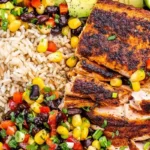
Southwest Salmon Bowls
- Total Time: 20 minutes
- Yield: 4 servings 1x
- Diet: Healthy
Description
Delicious Southwest Salmon Bowls are made with taco seasoned salmon and served with brown rice and a flavorful black bean salsa.
Ingredients
- 12 ounces skinless salmon filets
- 1 tablespoon taco seasoning
- Kosher salt and pepper, to taste
- 1 tablespoon olive oil
- 1 Hass avocado, sliced
- 1/2 lemon, juiced
- 2 cups cooked brown rice
- 1 red bell pepper, chopped
- 2–3 jalapeño peppers, seeded and chopped
- 15 ounces can black beans, drained and rinsed
- 15 ounces corn, drained
- 4 green onions, chopped
- 1/4 cup chopped fresh cilantro
- 2 limes, juiced
- 2 tablespoons olive oil
- 1 garlic clove, minced
Instructions
- Prep: Rub the salmon filets with the taco seasoning, salt, pepper, and olive oil.
- Cook: Preheat a non-stick pan over medium heat. Cook the salmon filets for about 3 minutes per side, or until blackened and the internal temperature reaches 130ºF. Allow the salmon to rest on a plate while making the salsa.
- Mix: In a mixing bowl add all the ingredients for the beans salsa and stir well to combine.
- Assemble: Divide the cooked rice among your 4 serving bowls. Top with bean salsa and salmon. Serve with sliced avocado and lime wedges if desired and enjoy!
Notes
Store leftovers in airtight containers. For maximum freshness, I recommend storing the black bean salsa separate from the salmon and brown rice. Everything will keep fresh, in the fridge, for up to about 3 days. Instead of brown rice, serve with cauliflower rice instead.
- Prep Time: 10 minutes
- Cook Time: 10 minutes
- Category: Main Course
- Method: Pan-seared
- Cuisine: Mexican, American
Nutrition
- Serving Size: 1 serving
- Calories: 652 kcal
- Sugar: 3 g
- Sodium: 853 mg
- Fat: 26 g
- Saturated Fat: 4 g
- Unsaturated Fat: 22 g
- Trans Fat: 0 g
- Carbohydrates: 75 g
- Fiber: 17 g
- Protein: 33 g
- Cholesterol: 47 mg
Keywords: Southwest Salmon Bowls, taco seasoned salmon, black bean salsa, brown rice bowls, healthy salmon