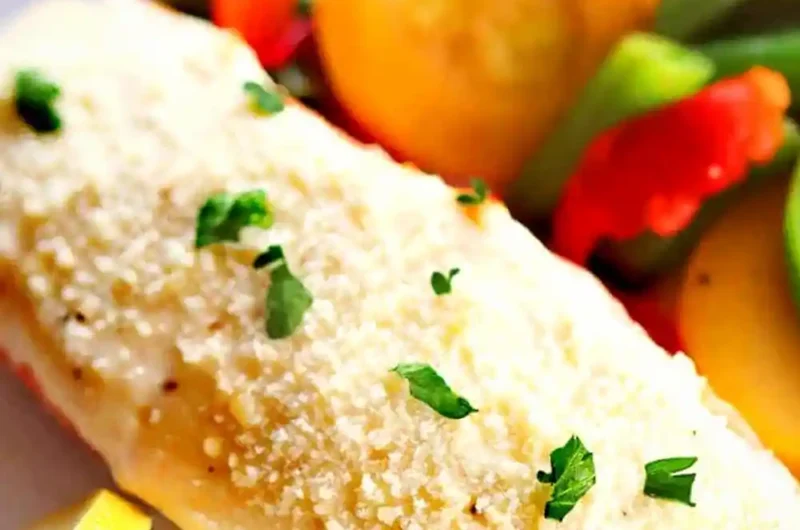
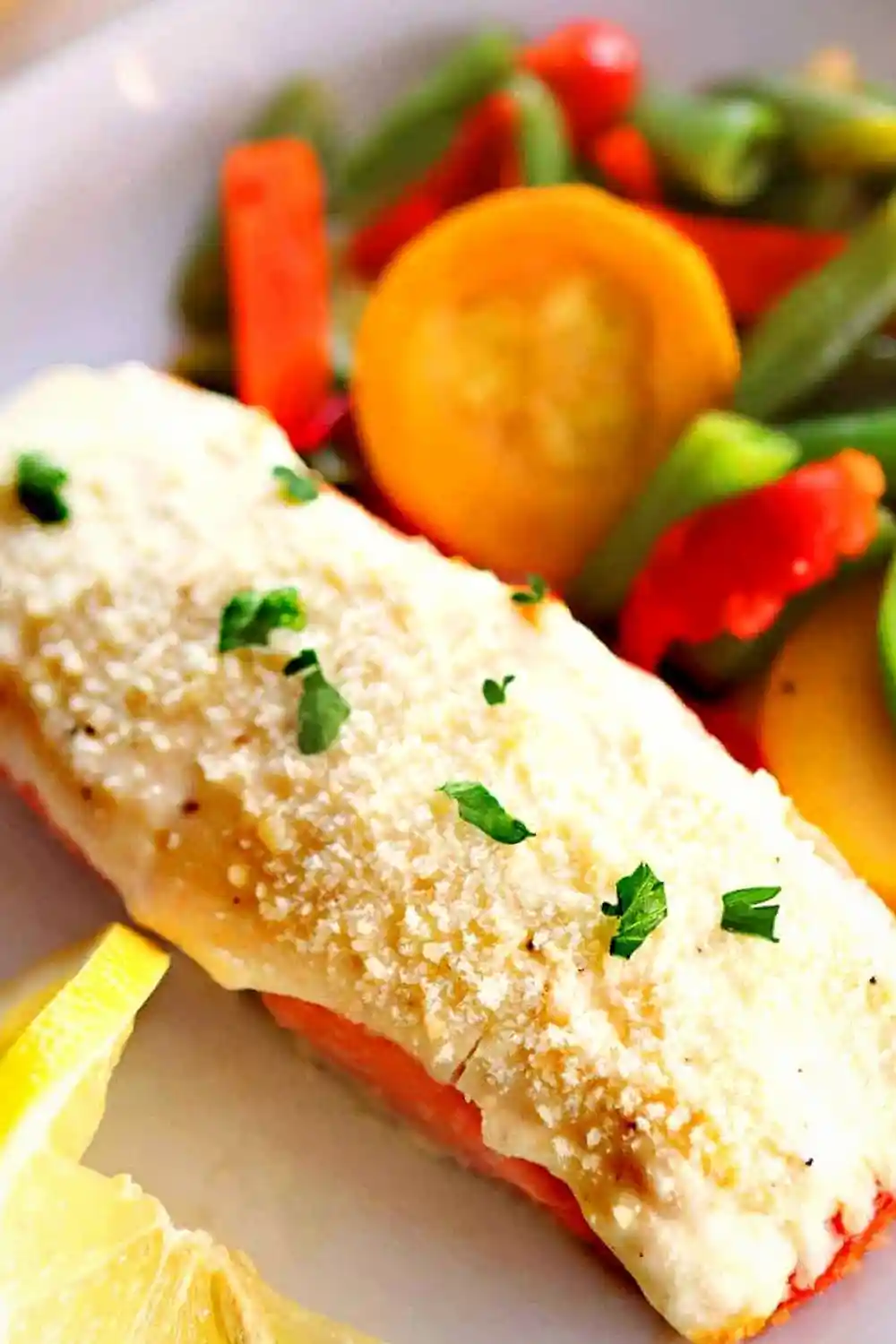
This recipe uses an air fryer to create salmon fillets with a creamy, cheesy crust. The combination of cream cheese and Parmesan provides a rich topping that seals in moisture during the quick cooking process.
List of ingredients
- 2-4 ounces Salmon Fillets – use center-cut pieces for even cooking.
- 3 tablespoons Cream Cheese – softened for easier mixing.
- 3 tablespoons Grated or Shredded Parmesan – provides the salty, crispy crust.
- 2 teaspoons Minced Garlic – fresh minced garlic offers the strongest flavor.
- 1/4 teaspoon Salt – adjust based on the saltiness of your Parmesan.
- 1/4 teaspoon Black Pepper – freshly ground for better aroma.
- Juice of Half a Lemon – adds necessary acidity to cut through the richness.
- Olive Oil – used for rubbing the fillets to prevent sticking.
step-by-step instructions
- Prepare the Fish: Lightly rub the salmon fillets with olive oil on all sides. This ensures the fish doesn’t stick to the foil and helps conduct heat.
- Mix the Topping: In a small mixing bowl, combine the softened cream cheese, minced garlic, black pepper, and lemon juice. Stir until the mixture is smooth and well blended.
- Apply Topping: Spoon the cream cheese mixture evenly onto the top of each salmon fillet. Spread it to the edges to create a protective layer.
- Add Cheese: Sprinkle the grated or shredded Parmesan cheese over the cream cheese layer. Press it down slightly so it adheres to the topping.
- Setup the Air Fryer: Create an aluminum foil sling by placing a piece of foil in the basket, pressing it to the bottom and slightly up the sides. Lightly spray the foil and the basket with oil.
- Arrange Salmon: Carefully place the prepared salmon fillets onto the foil sling, ensuring they are not touching. This allows hot air to circulate around each piece.
- Cook: Set the air fryer temperature to 400 degrees Fahrenheit. Cook the salmon for 5 to 6 minutes.
- Remove: Use the edges of the foil sling to carefully lift the salmon out of the air fryer basket.
Best Practices for Preparing Salmon Fillets
Patting Salmon Dry
Always use a paper towel to pat the salmon fillets completely dry before applying olive oil. Excess moisture on the surface creates steam, which can prevent the topping from crisping and may lead to a rubbery texture. Dry fish ensures better heat conduction and a more stable crust.
Tempering the Meat
Allow the salmon to sit at room temperature for about 10 to 15 minutes before cooking. If the fish is ice-cold from the refrigerator, the outside may overcook before the center reaches the safe internal temperature. Tempering ensures a more uniform cook throughout the fillet.
Understanding the Topping Components
Softening the Cream Cheese
Ensure the cream cheese is at room temperature before mixing. Cold cream cheese will remain lumpy and be difficult to spread evenly across the fish. If you are in a hurry, microwave it for 5 to 10 seconds until it is pliable.
Selecting the Right Parmesan
Grated Parmesan (the powdery kind) creates a more uniform, thin crust that browns quickly. Shredded Parmesan creates larger, golden-brown pockets of cheese with more texture. Either option works, but shredded cheese typically provides a more pronounced cheesy flavor.
Balancing the Lemon Juice
The acidity of the lemon juice is critical for balancing the heavy fats in the cream cheese and salmon. If you prefer a brighter taste, you can increase the amount of juice slightly. Avoid over-marinating the fish in lemon juice, as the acid can break down the proteins and make the fish mushy.
Air Fryer Technical Tips
Creating a Foil Sling
A foil sling prevents the salmon from sticking to the air fryer grate and makes removal much easier. By folding the foil so it has handles or edges, you avoid using a spatula that might break the delicate crust. This method also simplifies the cleanup process significantly.
Using Oil Sprayers
Use a non-aerosol oil sprayer to coat the foil. This prevents the fish from adhering to the aluminum and helps the Parmesan cheese brown more evenly. Avoid using excessive oil, as it can cause the cream cheese topping to slide off the fish.
Managing Airflow
Do not overcrowd the air fryer basket. Leave at least an inch of space between the fillets to allow the high-speed air to circulate. Proper airflow is essential for achieving the characteristic air-fried crispiness on the Parmesan crust.
Determining Doneness
Using a Digital Thermometer
The most accurate way to check salmon is by using an instant-read digital thermometer. Insert the probe into the thickest part of the fillet. The salmon is safely cooked when it reaches an internal temperature of 145 degrees Fahrenheit.
The Flake Test Method
If you do not have a thermometer, use a fork to gently press the top of the fillet. The salmon is done when the flesh flakes easily along the natural white lines of the fish. If the center is still translucent or resists flaking, it needs another minute of cooking.
Visual Cues
Look for the Parmesan crust to be golden brown and bubbling. The edges of the salmon should look opaque rather than translucent. However, remember that color can vary based on the type of cheese used, so always prioritize internal temperature over surface color.
Ingredient Substitutions
Low-Fat Dairy Alternatives
To reduce the calorie count, you can substitute the full-fat cream cheese with a low-fat version or Greek yogurt. While Greek yogurt is thinner and may not hold the Parmesan as well, it provides a similar tangy flavor. Use a slightly smaller amount of yogurt to prevent the topping from running.
Garlic Variations
If you do not have fresh minced garlic, garlic powder can be used as a replacement. Use 1/2 teaspoon of garlic powder for every teaspoon of fresh minced garlic. Fresh garlic provides a sharper bite, while powder offers a more mellow, consistent flavor.
Different Fish Types
This topping works well with other thick fish fillets such as steelhead trout or cod. For thicker fillets, you may need to increase the cooking time by 2 to 3 minutes. For thinner fillets, reduce the time to avoid overcooking the fish.
Serving and Pairing Ideas
Low-Carb Side Dishes
Pair this salmon with roasted asparagus or sautéed spinach. These vegetables cook quickly and complement the richness of the Parmesan crust. A simple side of steamed broccoli with a squeeze of lemon also works well for keto-friendly meals.
Grain-Based Pairings
For a heartier meal, serve the salmon over a bed of quinoa, wild rice, or farro. The grains absorb the juices from the salmon and the cream cheese topping. Adding a bit of chopped parsley to the grains enhances the presentation.
Fresh Garnish Options
Freshly chopped parsley, dill, or chives added after cooking provide a pop of color and a fresh herbal contrast. A slice of fresh lemon served on the side allows the diner to add extra acidity just before eating. Sliced cucumbers with a light vinaigrette also provide a refreshing crunch.
Storage and Preservation
Cooling Before Storage
Allow the salmon to cool to room temperature before placing it in a container. Putting hot fish directly into a sealed container creates condensation, which will make the Parmesan crust soggy. Let it rest on a wire rack for 10 minutes first.
Container Selection
Store the leftovers in an airtight glass or plastic container. Glass containers are generally better for fish as they do not absorb odors. Ensure the container is large enough that the crust is not pressed against the lid.
Maximum Refrigeration Time
Cooked salmon should be consumed within 2 to 3 days when stored in the refrigerator. Beyond this time, the fish may develop off-flavors or the texture may become too dry. Always check for a fresh smell before reheating.
Reheating for Best Quality
Air Fryer Reheating
The air fryer is the best tool for reheating this dish to preserve the crust’s texture. Heat the air fryer to 350 degrees Fahrenheit and warm the salmon for 2 to 3 minutes. This refreshes the cheese without overcooking the fish.
Oven Warming
If an air fryer is unavailable, use a conventional oven set to 300 degrees Fahrenheit. Place the salmon on a parchment-lined tray and warm for 5 to 8 minutes. This slower process prevents the salmon from drying out as quickly as it might in a microwave.
Why Avoid Microwaves
Avoid using a microwave to reheat salmon with a cheese crust. Microwaves heat unevenly and often turn the fish rubbery while making the cheese greasy. The result is a loss of the distinct texture that the air fryer provided.
Common Troubleshooting
Preventing Burnt Cheese
If the Parmesan is browning too quickly before the salmon is cooked, lower the temperature to 375 degrees Fahrenheit. You can also lightly cover the top of the fillets with a small piece of foil to shield the cheese from the direct heating element.
Fixing Underdone Centers
If the crust is perfect but the center is still raw, return the salmon to the air fryer for 1 to 2 minutes. If the crust is already very dark, cover it with foil to prevent further browning while the center finishes cooking.
Stopping Fish from Sticking
If your salmon consistently sticks to the foil, ensure you are using a high-smoke point oil like olive oil or avocado oil. Additionally, make sure the foil is pressed firmly against the bottom of the basket to prevent it from billowing and shifting during the cooking process.
Frequently Asked Questions
Can I use frozen salmon?
Yes, but you must thaw the salmon completely in the refrigerator before cooking. Cooking salmon from frozen will result in an unevenly cooked fillet and the cream cheese topping may melt off before the fish is done.
Should I leave the skin on?
You can leave the skin on or remove it based on preference. Leaving the skin on provides a natural barrier that helps keep the fillet together during the cooking process. The skin will not be crispy because it is underneath the fish and away from the air flow.
Which type of salmon is best?
Atlantic salmon is widely available and has a higher fat content, which makes it very forgiving and juicy in the air fryer. Sockeye or King salmon are also excellent but can cook faster due to different fat distributions, so monitor the internal temperature closely.
Print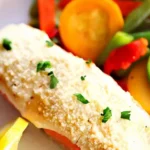
Air Fryer Garlic Parmesan Crusted Salmon
- Total Time: 13 minutes
- Yield: 2 servings 1x
- Diet: Keto, Pescatarian
Description
Air fryer garlic Parmesan crusted salmon is topped with cream cheese, garlic, and grated Parmesan cheese then cooked until it is tender and juicy.
Ingredients
- 2–4 ounces Salmon Fillets
- 3 tablespoons Cream Cheese
- 3 tablespoons Grated or Shredded Parmesan (microbial-rennet)
- 2 teaspoons Minced Garlic
- 1/4 teaspoon Salt
- 1/4 teaspoon Black Pepper
- Juice of Half a Lemon
- Olive Oil
Instructions
- Rub: Lightly rub salmon fillets with olive oil.
- Mix: In a bowl, mix together cream cheese, minced garlic, black pepper, and lemon juice.
- Topping: Spoon mixture onto the top of salmon fillets.
- Crust: Sprinkle grated Parmesan on top.
- Setup: Create an aluminum foil sling for the air fryer basket. Place the foil sling in the basket and press to the bottom and up the sides. Lightly spray the foil and basket with oil. Carefully place the salmon onto the sling.
- Cook: Set the temperature to 400 degrees Fahrenheit and cook for 5-6 minutes.
- Finish: Use the sling to lift the salmon from the air basket once it is done cooking.
Notes
Let salmon warm up to room temperature and dry off the fish before rubbing with olive oil. Cook salmon to an internal temperature of 145 degrees Fahrenheit.
- Prep Time: 8 minutes
- Cook Time: 5 minutes
- Category: Main Dishes
- Method: Air Frying
- Cuisine: American
Nutrition
- Serving Size: 1 serving
- Calories: 468 kcal
- Sugar: 16 g
- Sodium: 339 mg
- Fat: 30 g
- Saturated Fat: 9 g
- Unsaturated Fat: 18 g
- Trans Fat: 0 g
- Carbohydrates: 21 g
- Fiber: 1 g
- Protein: 29 g
- Cholesterol: 98 mg
Keywords: air fryer salmon, garlic parmesan salmon, keto salmon, pescatarian