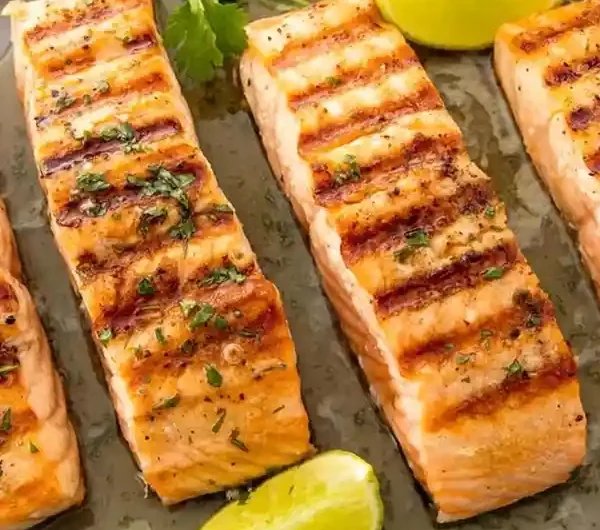
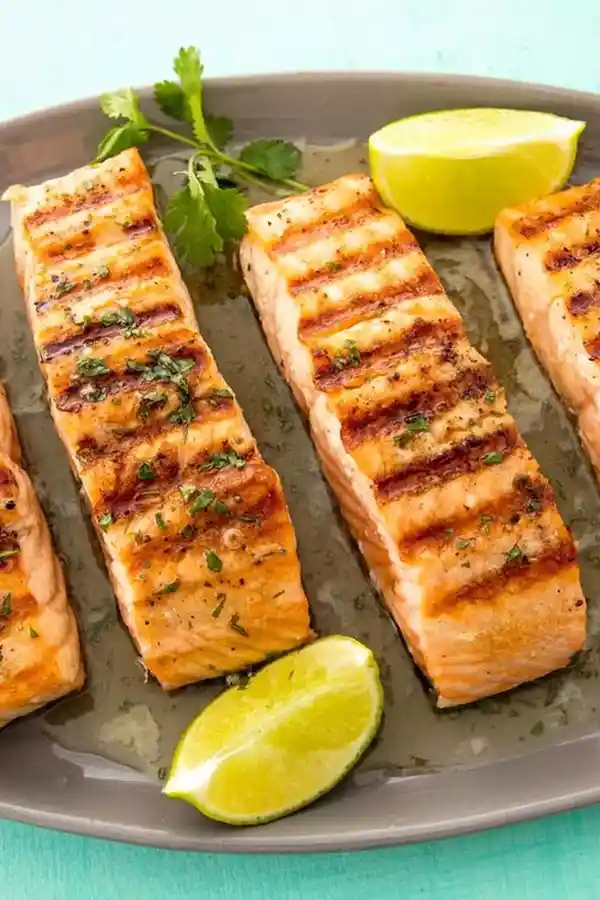
This grilled salmon is a fast and nutritious meal that comes together in under 30 minutes. The combination of zesty lime and sweet honey creates a vibrant glaze that enhances the natural flavor of the fish. It is an ideal choice for a healthy weeknight dinner or a summer gathering.
List of ingredients
- 4 (6-oz.) salmon fillets – center-cut for even cooking.
- Kosher salt – for seasoning.
- Freshly ground black pepper – for seasoning.
- 4 tbsp. butter – provides richness to the sauce.
- 1/2 c. lime juice – adds bright acidity.
- 1/4 c. honey – provides a sweet balance.
- 2 garlic cloves, minced – for aromatic depth.
- 2 tbsp. Chopped cilantro – adds a fresh, herbal finish.
step-by-step instructions
- Prepare and Grill: Season the salmon fillets with salt and pepper. Heat your grill to medium-high heat. Place the salmon on the grill flesh side down and cook for 8 minutes. Flip the fillets and cook on the other side until the fish is cooked through, which usually takes about 6 more minutes. Let the salmon rest for 5 minutes before serving.
- Prepare the Sauce: While the fish is grilling, place a medium saucepan over medium heat. Add the butter, lime juice, honey, and minced garlic. Stir the mixture constantly until the butter is fully melted and all ingredients are well combined. Once combined, remove the pan from the heat and stir in the chopped cilantro.
- Combine and Serve: Pour the warm cilantro lime sauce directly over the rested salmon fillets and serve immediately.
Grilling Best Practices
Preheating the Grill Surface
Ensure your grill reaches a high temperature before adding the fish. A hot surface sears the salmon quickly, which creates a flavorful crust and prevents the fish from sticking to the grates. Use a grill thermometer or wait until the grates are shimmering to ensure optimal heat.
Preventing Fish from Sticking
The most effective way to prevent sticking is to avoid flipping the fish too early. Salmon naturally releases from the grill once the proteins have seared and formed a char. If you feel resistance when lifting the fillet, leave it for another minute until it releases naturally.
Determining Perfect Doneness
While an internal temperature of 145°F is the official safety guideline, you can use the fork test for precision. Gently press a fork into the thickest part of the fillet; if the flesh flakes easily along the natural lines, it is ready. Avoid overcooking, as this can make the salmon dry and tough.
Managing Heat Zones
If your grill has multiple burners, create a two-zone fire with a high-heat side and a lower-heat side. Sear the fillets over the direct heat to get a nice char, then move them to the indirect heat side to finish cooking. This prevents the exterior from burning while the center remains undercooked.
Ingredient Substitutions and Modifications
Replacing Honey with Other Sweeteners
If you prefer a different sweetness, maple syrup is an excellent alternative that pairs well with the acidity of lime. Brown sugar can also be used for a deeper, caramelized flavor profile. Use the same quantity as the honey to maintain the sauce consistency.
Using Lemon Instead of Lime
Lemon juice provides a sharper, more traditional citrus flavor compared to the floral notes of lime. If you make this switch, consider adding a pinch of lemon zest to the sauce for extra brightness. This is a great option if lime is unavailable.
Alternative Herbs for Freshness
For those who do not enjoy cilantro, flat-leaf parsley is the best substitute for a clean, fresh taste. Fresh basil adds a slightly sweeter, peppery note that complements the honey glaze. Tarragon is another professional choice that pairs exceptionally well with seafood.
Substituting Butter with Plant-Based Fats
Olive oil or avocado oil can be used instead of butter for a lighter sauce or a dairy-free version. While you lose some of the creamy richness, the oil helps carry the flavors of the garlic and lime. Use an equal amount of oil to maintain the ratio.
Garlic Alternatives for Subtle Flavor
If minced garlic is too pungent, try using finely diced shallots for a milder, sweeter onion flavor. Garlic powder can be used in a pinch, though fresh cloves provide a superior aromatic quality. Use about 1/4 teaspoon of powder per clove of fresh garlic.
Accompaniment and Serving Ideas
Pairing with Whole Grains
Serve the salmon alongside quinoa or wild rice to add a nutty texture and heartiness to the meal. Brown rice is also a great option for absorbing the extra lime-honey sauce. These grains provide complex carbohydrates that balance the lean protein of the fish.
Fresh Vegetable Pairings
Grilled asparagus or steamed broccoli florets complement the brightness of the sauce perfectly. Sautéed spinach with a touch of nutmeg or lemon can also add a nutrient-dense element to the plate. For a summer feel, try grilled zucchini slices.
Cold Salad Combinations
A chilled mango salsa with red onion and jalapeño adds a tropical contrast to the warm salmon. A simple arugula salad with a light vinaigrette provides a peppery bite that cuts through the richness of the butter sauce. Cucumber salads with rice vinegar are also highly recommended.
Plating and Presentation
Place the salmon on a white platter to make the colors of the lime and cilantro pop. Garnish with extra fresh cilantro leaves and a few thin slices of fresh lime on the side. Drizzle the remaining sauce around the base of the fillet for a professional look.
Storage and Preservation
Refrigeration Guidelines
Store leftover salmon in an airtight glass container in the refrigerator for up to three days. It is best to store the sauce in a separate small container to prevent the fish from becoming overly saturated. Ensure the fish is completely cooled before sealing the lid to avoid condensation.
Freezing Grilled Salmon
Grilled salmon can be frozen for up to two months if wrapped tightly in foil and placed in a freezer bag. To thaw, move the fish to the refrigerator 24 hours before you plan to eat it. Note that the texture may change slightly after freezing and thawing.
Maintaining Sauce Quality
The lime-honey sauce can be kept in the fridge for up to one week. Since it contains butter, it will solidify when cold; gently reheat it in a saucepan or microwave to bring back its liquid consistency. Stir well after reheating to re-emulsify the ingredients.
Reheating Methods
Using the Oven for Best Texture
To maintain the moisture of the fish, reheat salmon in the oven at 275°F. Place the fillets on a baking sheet, cover them loosely with foil, and heat for 10-15 minutes. This gentle method prevents the salmon from drying out further.
Microwave Reheating Tips
If you are in a hurry, use the microwave on a medium power setting rather than full heat. Heat in 30-second bursts and cover the fish with a damp paper towel to create steam. This prevents the edges of the salmon from becoming rubbery.
Stovetop Reheating
Place the fillets in a skillet over low heat with a tablespoon of butter or oil. Cover the pan with a lid to trap heat and moisture, warming the fish for about 3-5 minutes. This method helps restore a bit of the exterior sear.
Common Troubleshooting Solutions
Fixing Overcooked Salmon
If the salmon becomes slightly dry from overcooking, increase the amount of sauce poured over the fillet. Adding a small pat of cold butter on top of the hot fish can also restore some of the lost richness. Serve it with a creamy side, like mashed cauliflower, to compensate.
Handling Broken Fillets
If the fish breaks during flipping, gently push the pieces back together with a spatula. Because the sauce is poured over the top, the broken pieces will still be well-coated and flavorful. In the future, ensure the grill is hotter to create a better sear.
Managing Too Much Acidity
If the sauce tastes too sour from the lime juice, stir in an additional teaspoon of honey. A tiny pinch of salt can also help balance the acidity. Always taste the sauce after removing it from the heat but before adding the cilantro.
Solving Sauce Separation
If the butter and lime juice separate in the pan, whisk them vigorously over low heat. If separation persists, a teaspoon of cornstarch mixed with water can be added to thicken and bind the sauce. Ensure the sauce is not boiling, as extreme heat can cause butter to break.
Frequently Asked Questions
Can I grill skinless salmon?
Yes, you can grill skinless salmon, but it requires more care. The skin acts as a protective barrier that keeps the fish together and prevents sticking. If using skinless fillets, oil the grates heavily and be extra patient when flipping.
Is grilled salmon healthy?
Absolutely. Salmon is rich in omega-3 fatty acids, high-quality protein, and essential vitamins. Grilling is one of the healthiest preparation methods because it requires minimal added fats compared to frying.
What internal temperature is safe?
The FDA recommends cooking salmon to an internal temperature of 145°F. However, many chefs prefer 130-135°F for a more moist, medium-rare texture. Always use a meat thermometer in the thickest part of the fillet for accuracy.
How do I prevent the fish from breaking?
Prevent breaking by ensuring the grill is preheated and avoiding flipping the fish too early. Once the salmon develops a charred crust, it will naturally release from the grate. Using a wide, flexible fish spatula also helps support the fillet during the flip.
Print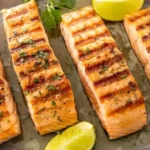
Cilantro Lime Grilled Salmon
- Total Time: 25 minutes
- Yield: 4 servings 1x
- Diet: Low-carb
Description
This quick and easy Grilled Salmon comes together in less than 30 minutes.
Ingredients
- 4 (6-oz.) salmon fillets
- Kosher salt
- Freshly ground black pepper
- 4 tbsp. butter
- 1/2 c. lime juice
- 1/4 c. honey
- 2 garlic cloves, minced
- 2 tbsp. Chopped cilantro
Instructions
- Step: Season salmon with salt and pepper. Heat grill and place salmon on grill flesh side down. Cook for 8 minutes then flip and cook on other side until salmon is cooked through, 6 minutes more. Let rest 5 minutes.
- Step: Meanwhile make sauce: In a medium saucepan over medium heat, add butter, lime juice, honey, and garlic. Stir until butter is melted and all ingredients are combined. Turn off heat and add cilantro.
- Step: Pour sauce over salmon and serve.
Notes
Ensure the grill is preheated and wait for char marks before flipping to prevent the fish from breaking.
- Prep Time: 10 minutes
- Cook Time: 15 minutes
- Category: Dinner
- Method: Grilling
- Cuisine: American
Nutrition
- Serving Size: 1 fillet
- Calories: 532 kcal
- Sugar: 18 g
- Sodium: 410 mg
- Fat: 26 g
- Saturated Fat: 8 g
- Unsaturated Fat: 18 g
- Trans Fat: 0 g
- Carbohydrates: 22 g
- Fiber: 1 g
- Protein: 36 g
- Cholesterol: 115 mg
Keywords: grilled salmon, cilantro lime, healthy dinner, low-carb, quick meals