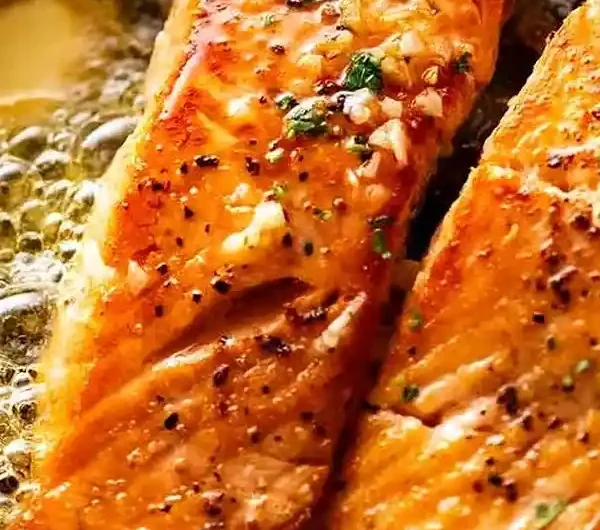
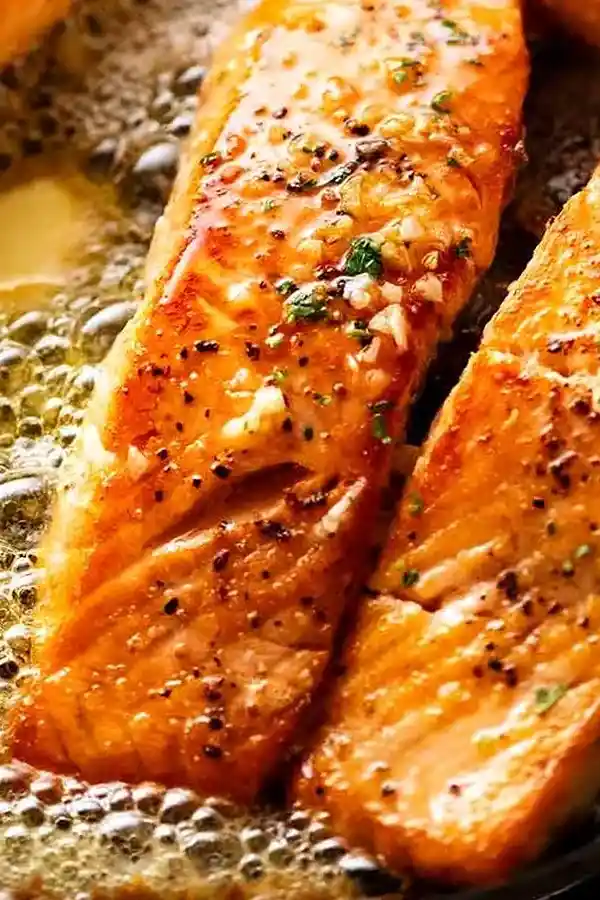
This professional basting method creates a rich, buttery crust on salmon fillets in under 20 minutes. It is a simple yet luxurious way to achieve restaurant-quality results at home for a healthy dinner.
List of ingredients
- 4 salmon fillets (180g/6oz each), skinless and boneless – skinless fillets allow the butter to penetrate the meat more effectively.
- 1/2 tsp salt – use kosher or standard cooking salt for balanced seasoning.
- 1/4 tsp black pepper – freshly cracked pepper adds a better aromatic quality.
- 1 1/2 tbsp olive oil – used for the initial high-heat sear to prevent sticking.
- 1 tbsp garlic (~2 cloves) – finely minced by hand with a knife; avoid using a garlic press.
- 90g / 6 tbsp salted butter – cut into cubes for faster melting; use unsalted plus 1/4 tsp salt if preferred.
- 1 tsp lemon juice – added at the end to provide a bright contrast to the rich butter.
- 2 tsp parsley – finely chopped for a fresh, colorful garnish.
step-by-step instructions
- Season the fillets: Remove the salmon from the refrigerator 30 minutes before you begin cooking. Sprinkle salt and black pepper evenly on both sides of each fillet.
- Initial sear: Heat olive oil in a large non-stick skillet over medium-high heat. Place the salmon in the pan curved side down and cook for 3 minutes until a golden crust forms.
- Flip and melt butter: Turn the fillets over and cook the second side for 1 minute. Immediately add the cubed butter to the skillet.
- Baste the salmon: Once the butter is melted and foaming, add the minced garlic. Tilt the pan slightly so the butter pools on one side, then use a large spoon to continuously scoop and pour the bubbling butter over the salmon for 1 1/2 minutes.
- Check and rest: Use a meat thermometer to ensure an internal temperature of 50°C/122°F for medium-rare. Transfer the fillets to a plate and let them rest for 3 minutes, allowing the temperature to rise to 53°C/127°F.
- Finish the sauce: Place the skillet back on the unlit stove to keep the contents warm. Stir in the lemon juice to the remaining garlic butter.
- Final plating: Place the salmon on serving plates and spoon the garlic butter over the top. Garnish with a sprinkle of chopped parsley.
Professional Searing Techniques
Utilize a High-Quality Non-Stick Pan
A heavy-bottomed non-stick skillet is essential to prevent the delicate salmon flesh from tearing during the flip. It also ensures that the butter distributes evenly without burning in hot spots. This allows for a cleaner sear and easier basting.
Temper the Fish Before Cooking
Bringing the salmon to room temperature for 30 minutes ensures the fish cooks evenly from the outside in. Cold fillets often result in a burnt exterior and a raw center. This step is critical for achieving a consistent medium-rare texture.
Achieve the Perfect Sear
Wait until the olive oil is shimmering and almost smoking before adding the fish to the pan. This creates an immediate sear that locks in moisture and develops a golden-brown color. Do not crowd the pan, as this will lower the temperature and cause the fish to steam.
Master the Art of Basting
Basting involves continuously pouring hot fat over the protein to cook it gently and add deep flavor. By tilting the pan, you create a deep pool of garlic butter that is easier to scoop. This technique ensures every part of the fillet is coated in flavor.
Ingredient Substitutions and Alternatives
Cooking with Skin-On Salmon
If you have skin-on fillets, start by searing the flesh side first for 3 minutes. When you flip the fish to the skin side, add the butter and garlic and proceed with the basting process. The skin protects the meat from the direct heat of the pan.
Swapping Fresh Garlic for Powder
While fresh minced garlic is preferred for its aromatic punch, garlic powder can be used in a pinch. Use 1/4 teaspoon of garlic powder mixed directly into the melted butter. Note that you will lose the golden bits of garlic that characterize this dish.
Using Unsalted Butter
If you only have unsalted butter, simply add an extra pinch of salt to the pan during the basting phase. This ensures the sauce remains savory and enhances the natural flavor of the salmon. The total salt content should remain consistent with the original recipe.
Alternative Citrus Options
Fresh lime juice can be used as a substitute for lemon juice to provide a slightly different, more tropical tang. Orange juice also works well for a sweeter profile that complements the richness of the butter. Use the same quantity as requested for lemon juice.
Flavor Variations for Different Tastes
Adding Earthy Herb Notes
Toss a sprig of fresh thyme or rosemary into the butter just before you begin basting. The hot butter will extract the oils from the herbs, infusing the salmon with a woody aroma. Remove the whole sprigs before serving the dish.
Incorporating a Spicy Element
Add a pinch of red pepper flakes to the butter along with the garlic for a subtle heat. Alternatively, sprinkle a small amount of smoked paprika on the salmon during the seasoning phase. This adds a depth of flavor and a beautiful reddish hue to the crust.
Creating a Honey-Garlic Glaze
Stir one teaspoon of honey into the pan butter after removing the salmon from the heat. The honey emulsifies with the lemon and butter to create a sticky, sweet glaze. Spoon this concentrated sauce over the fish for a more intense flavor.
Lemon-Pepper Seasoning Swap
Replace the standard salt and pepper with a high-quality lemon-pepper seasoning blend. This reinforces the citrus notes throughout the entire fillet rather than just in the finishing sauce. Reduce any additional salt in the butter to avoid over-seasoning.
Suggested Side Dish Pairings
Creamy Cauliflower Puree
Pureed cauliflower offers a light, low-carb alternative to traditional mashed potatoes. Its mild flavor balances the intensity of the garlic butter without overpowering the salmon. Blend steamed cauliflower with a touch of cream and salt for a smooth finish.
Fresh Arugula with French Vinaigrette
A peppery arugula salad dressed in a sharp French vinaigrette cuts through the richness of the butter. The acidity in the dressing cleanses the palate between bites of the fatty fish. Keep the greens simple with a squeeze of lemon and olive oil.
Garlic-Sauteed Asparagus
Asparagus spears provide a crisp texture and a bright green color to the plate. Sauté them in the same pan as the salmon after the fish is removed to soak up the leftover garlic butter. Cook them for 3-5 minutes until tender-crisp.
Wild Rice Pilaf
Wild rice adds an earthy, nutty element and a chewy texture that contrasts well with the soft salmon. Cook the rice with vegetable broth and a few diced carrots for extra flavor. This makes the meal more filling and substantial.
Storage and Reheating Guidelines
Refrigeration and Shelf Life
Store leftover cooked salmon in an airtight glass container in the refrigerator for 3 to 4 days. Keep the garlic butter sauce in a separate small container to prevent the fish from becoming soggy. Ensure the fish is cooled slightly before sealing the lid.
Gentle Reheating Methods
Avoid high-heat microwaves, which can make salmon rubbery and dry. Instead, warm the fillets in a low oven at 150°C (300°F) for about 10 minutes. Alternatively, pan-fry the fish briefly in a small amount of fresh butter over medium heat.
Using Leftovers in Cold Dishes
Cold garlic butter salmon is excellent when flaked into a fresh garden salad or a quinoa bowl. You can also use the chilled fillets in a wrap with avocado and sprouts. The butter flavor remains present even when the fish is served cold.
Freezing Cooked Salmon
While not recommended for the best quality, you can freeze cooked salmon for up to two months. Wrap the fillets tightly in foil and place them in a freezer-safe bag to prevent freezer burn. Thaw slowly in the refrigerator before reheating gently.
Salmon Doneness and Temperature Guide
The Medium-Rare Standard
A pull temperature of 50°C (122°F) is the professional standard for maximum juiciness. This ensures the center is just barely cooked and remains translucent and tender. The resting period is essential to let the heat distribute evenly.
Cooking to Medium
For those who prefer their fish more thoroughly cooked, aim for a pull temperature of 60°C (140°F). This aligns closer to FDA recommendations while still avoiding the dryness of overcooking. The texture will be firmer and more opaque throughout.
Identifying Overcooked Salmon
Watch for white protein called albumin seeping out of the sides of the fillet. This is a sign that the muscle fibers are contracting too tightly from excessive heat. If this happens, the fish will likely be dry and woolly in texture.
Proper Thermometer Placement
Always insert the digital thermometer into the thickest part of the fillet. Ensure the probe does not touch the bottom of the pan, as this will give an inaccurate, higher reading. Pull the fish as soon as the target temperature is hit.
Common Troubleshooting Solutions
Preventing Garlic from Burning
Hand-minced garlic burns slower than pressed garlic because the pieces are larger and the oils are contained. If the butter is too hot and the garlic browns instantly, remove the pan from the heat for a few seconds. Always add the garlic just before the basting phase begins.
Managing Pan Splatter
Butter foams and splatters when water or moisture hits the hot fat. Pat the salmon fillets completely dry with paper towels before seasoning them. Using a large skillet also gives the butter more room to foam without splashing over the edges.
Fixing Sticking Fish
If the salmon feels stuck to the pan, do not force it with the spatula. A proper sear creates its own release mechanism once the crust is fully formed. Give it another 30 seconds of cooking time, and it should lift easily.
Handling Excess Butter
If you find the resulting sauce too rich for your taste, do not pour it all over the fish. Use a small amount for the salmon and save the rest in a jar. You can use this infused garlic butter to sauté vegetables or toast bread the next morning.
Frequently Asked Questions
Can I use frozen salmon for this recipe?
Yes, you can use frozen fillets, but they must be completely thawed first. Thaw them slowly in the refrigerator overnight and pat them very dry before seasoning. Using partially frozen fish will cause the butter to splatter and the sear to fail.
Why is so much butter required for this dish?
The large quantity of butter is necessary to create a deep enough pool for effective basting. It also acts as a temperature regulator, preventing the salmon from scorching during the final stages of cooking. You do not have to consume all of it.
Which cut of salmon is best for pan-searing?
Center-cut fillets are ideal because they have a uniform thickness from end to end. This ensures that the entire piece of fish reaches the target temperature at the same time. Avoid tapered tails, as they will overcook before the center is done.
Can this be made in an oven instead of a pan?
While you can bake salmon with garlic butter, you will lose the distinct crust and the richness of the basting technique. To mimic the result, you could sear the fish in a pan first and then finish it in the oven. However, the stovetop method is faster and more flavorful.
Print
Pan-Seared Garlic Butter Salmon
- Total Time: 13 minutes
- Yield: 4 servings 1x
- Diet: General
Description
A simple-yet-luxurious, cheffy way to cook salmon. By basting continuously with foaming garlic butter, it seeps into every crack and crevice of the salmon and gives it the ultimate buttery crust.
Ingredients
- 4 salmon fillets (180g/6oz each), skinless and boneless
- 1/2 tsp salt
- 1/4 tsp black pepper
- 1 1/2 tbsp olive oil
- 1 tbsp garlic (~2 cloves), finely minced by hand
- 90g / 6 tbsp salted butter, cut into cubes
- 1 tsp lemon juice
- 2 tsp parsley, finely chopped
Instructions
- Season salmon: Take salmon out of fridge 30 minutes prior to cooking. Sprinkle both sides with salt and pepper.
- Sear salmon 3 mins: Heat oil in large non stick skillet over medium-high heat. Add salmon, presentation side (ie. curved side) down, and cook for 3 minutes until golden.
- Turn, cook 1 min, then add butter: Turn salmon and cook the other side for 1 minute. THEN put the butter in.
- Baste 1 1/2 minutes: Once butter is melted and foaming, add garlic and immediately start spooning the bubbling butter continuously over the salmon for 1 1/2 minutes.
- Remove salmon from stove: Check Internal temperature of salmon. It should be 50°C/122°F for medium-rare. Remove salmon to a plate. Rest for 3 minutes.
- Add lemon juice to butter: Put pan back on unlit stove to keep butter hot. Add lemon juice.
- Serve: Place salmon on serving plates. Spoon over butter, garnish with a sprinkle of parsley.
Notes
Using skinless salmon allows the butter to seep in better. Rest the salmon for 3 minutes after removing from heat to reach the final temperature of 53°C/127°F. Cooked salmon keeps for 3 to 4 days in the fridge.
- Prep Time: 5 minutes
- Cook Time: 8 minutes
- Category: Main
- Method: Pan-Searing
- Cuisine: Western
Nutrition
- Serving Size: 1 fillet
- Calories: 464 kcal
- Sugar: 1 g
- Sodium: 531 mg
- Fat: 35 g
- Saturated Fat: 14 g
- Unsaturated Fat: 20 g
- Trans Fat: 1 g
- Carbohydrates: 1 g
- Fiber: 1 g
- Protein: 36 g
- Cholesterol: 147 mg
Keywords: butter salmon, Creamy herb and garlic salmon sauce, pan seared salmon, Quick salmon recipe