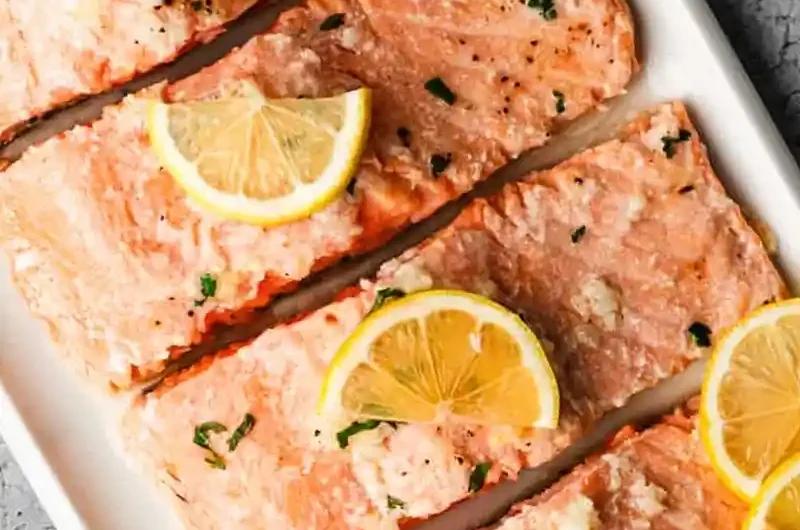
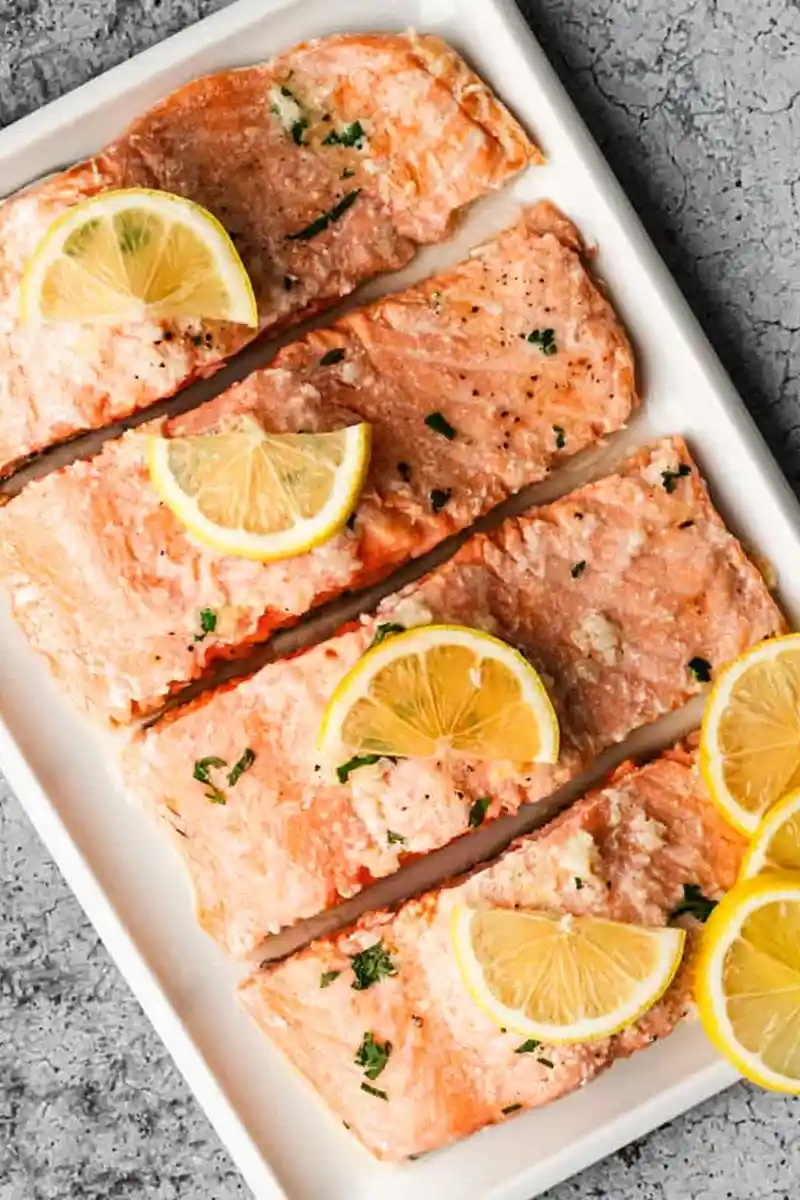
This lemon garlic butter baked salmon is a nutrient-dense, high-protein meal that delivers restaurant-quality flavor with minimal effort. It is an ideal choice for quick weeknight dinners or elegant gatherings due to its simple preparation and fast cooking time.
List of ingredients
- 1 1/2 – 2 lbs salmon fillet (approximately six 4oz portions) – use fresh or thawed fillets.
- Salt and freshly ground black pepper – used for primary seasoning.
- 3 Tablespoons butter, melted – provides a rich base for the sauce.
- 4 cloves garlic, minced – adds a pungent, savory depth.
- 2 teaspoons lemon juice – cuts through the fat with acidity.
- Fresh chopped parsley and lemon slices – used as an optional fresh garnish.
step-by-step instructions
- Temper the fish: Set the salmon on the counter for 20-30 minutes to reach room temperature. Pat the surface dry with paper towels to remove excess moisture for better texture. You may leave the fillet whole or cut it into individual 3-4 oz portions.
- Prepare the pan: Line a baking sheet or tray with aluminum foil and lightly spray it with non-stick cooking spray. Place the salmon fillet on the tray with the skin side facing down.
- Apply the sauce: Melt the butter and stir in the minced garlic and lemon juice. Spoon this mixture evenly over the flesh of the salmon. If you prefer extra moisture, you can fold the aluminum foil around the fish to create a sealed pocket.
- Bake: Cook at 400 degrees F for 12-15 minutes. The time varies based on the thickness of the cut and your preferred doneness.
- Check for doneness: Remove the fish when it reaches 120-130 degrees F for medium rare to medium, or 145 degrees F per USDA guidelines. Alternatively, use a fork to gently pull back the thickest part of the meat; it should flake easily and appear opaque.
Guide to Selecting Quality Salmon
King Salmon (Chinook)
King salmon is prized for its high fat content and rich flavor. It is the most forgiving variety to cook because the extra oils prevent the meat from drying out quickly.
Sockeye Salmon
Sockeye is known for its deep red color and a more robust, intense salmon flavor. Because it is leaner than King salmon, it cooks faster and requires closer attention to temperature.
Coho Salmon
Coho salmon offers a milder taste and a lighter orange hue. It is a versatile option that works well with strong garlic and lemon seasonings without being overpowered.
Atlantic Salmon
Atlantic salmon is widely available and typically has a mild flavor and buttery texture. It often has a higher fat content, making it a great choice for those who prefer a softer bite.
Pink Salmon
Pink salmon is generally the leanest and mildest of the varieties. It is an affordable option that benefits greatly from the addition of butter and lemon juice to add moisture.
How to Verify Fish Freshness
The Scent Test
Fresh salmon should have a mild, clean scent reminiscent of salt water. Avoid any fillet that has a strong, pungent, or fishy odor, as this indicates spoilage.
The Texture Press
Gently press the flesh of the fillet with your finger. High-quality salmon should be firm and spring back immediately rather than leaving a permanent indentation.
Color Inspection
Look for a bright, consistent orange-red hue across the fillet. Avoid pieces with darkening flesh around the edges or any brown or yellow discoloration.
Eye Clarity for Whole Fish
If purchasing a whole fish, inspect the eyes. They should be bright and clear; sunken or cloudy eyes are a sign that the fish is not fresh.
Optimal Preparation Techniques
Safe Thawing Procedures
Thaw frozen salmon slowly in the refrigerator overnight. If you are in a rush, place the fish in a sealed bag and submerge it under cold running water, avoiding hot water which can damage the texture.
Avoiding the Rinse
Do not rinse salmon under the tap before cooking. Washing fish can spread bacteria around your sink and excess water can break down the delicate flesh and prevent proper searing.
Timing the Seasoning
Apply salt and pepper immediately before baking. Adding salt too early draws moisture out of the fish, which can result in a dry fillet and a lack of juiciness.
The Purpose of the Skin
Keep the skin on during the baking process. The skin acts as a protective barrier against the heat of the pan, helping the fish cook more evenly and retain its natural juices.
Understanding Internal Temperatures
Medium Rare Targets
Aim for an internal temperature of 120-130 degrees F. This result is moist and tender, with a slightly translucent center that is preferred in many professional kitchens.
Medium Doneness
Cooking the salmon to roughly 135 degrees F results in a medium finish. The fish will be mostly opaque but still retain a significant amount of moisture.
USDA Recommended Temperature
The USDA recommends a minimum internal temperature of 145 degrees F for safety. This results in a fully opaque, firmer flake that is well-cooked throughout.
The Fork Flake Method
If you do not have a thermometer, use a fork to gently push the thickest part of the fillet. If the meat separates easily along the natural lines (flakes), it is done.
Flavor Customization and Variations
Cajun Seasoning Method
For a spicy alternative, brush the fillets with olive oil and apply a generous coating of Cajun spice. Bake using the same temperature and time settings as the original recipe.
Fresh Dill Integration
Dill pairs exceptionally well with salmon. You can either stir dried dill into the garlic butter before baking or sprinkle fresh chopped dill over the fish immediately after it leaves the oven.
Honey Garlic Glaze Variation
Substitute a teaspoon of the lemon juice with honey for a sweeter profile. The honey caramelizes under the heat, providing a sticky, sweet-and-savory crust on top of the fillet.
Air Fryer Adaptation
To use an air fryer, place the seasoned fillets in the basket at 400 degrees F. Cook for 8-10 minutes, depending on the thickness, for a faster cooking time with a slightly crispier exterior.
Recommended Side Dish Pairings
Roasted Vegetable Options
Roasted asparagus, Brussels sprouts, or carrots provide a great textural contrast to the soft salmon. Toss them in olive oil and salt and roast them on the same pan if space permits.
Grain and Starch Pairings
Wild rice pilaf, quinoa, or a creamy risotto complement the richness of the butter sauce. Potatoes Au Gratin or mashed potatoes also provide a comforting base for the fillet.
Fresh Salad Accompaniments
A crisp Waldorf salad, a vinegar-based coleslaw, or a beet salad adds acidity and freshness. These options balance the richness of the salmon and the butter.
Storage and Preservation
Refrigeration Guidelines
Store leftover cooked salmon in an airtight container in the refrigerator. It will remain safe and tasty for up to three days.
Freezing Cooked Salmon
While fresh is best, cooked salmon can be frozen for up to two months. Wrap it tightly in foil and plastic wrap to prevent freezer burn.
Gentle Reheating Methods
To reheat, use a low-temperature oven or a microwave on a medium setting. Overheating salmon will make it dry and tough, so heat only until it is warmed through.
Common Troubleshooting Fixes
Preventing Dry Fish
The most common cause of dry salmon is overcooking. Always remove the fish from the oven 5 degrees before it reaches your target temperature, as carry-over cooking continues while it rests.
Stopping Salmon from Sticking
Ensure the aluminum foil is well-sprayed with non-stick oil. Using a high-quality parchment paper instead of foil can also reduce sticking for some cooks.
Fixing Uneven Cooking
If your fillets vary in thickness, the thinner ends will cook faster. You can slightly tuck the thin tails under themselves to create a more uniform thickness across the fillet.
Frequently Asked Questions
Can I use margarine instead of butter?
Yes, margarine or a plant-based butter substitute can be used. While the flavor will be slightly different, the moisture and fat content will still protect the fish during baking.
Is it okay to bake salmon without foil?
You can bake salmon directly on a greased pan, but foil makes cleanup easier and helps keep the fish moist. Without foil, the edges may brown more quickly.
How long does baked salmon last in the fridge?
Baked salmon typically lasts 3 to 4 days in the refrigerator when stored in an airtight container. Always check for scent and texture before consuming leftovers.
Print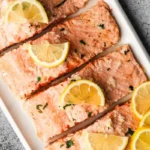
Easy Lemon Garlic Butter Baked Salmon
- Total Time: 50 minutes
- Yield: 6 servings 1x
- Diet: Gluten-Free
Description
An easy Baked Salmon recipe that is just as good as the restaurant, seasoned with a lemon garlic butter on top.
Ingredients
- 1 1/2 – 2 lbs salmon fillet
- salt and freshly ground black pepper
- 3 Tablespoons butter, melted
- 4 cloves garlic, minced
- 2 teaspoons lemon juice
- fresh chopped parsley and lemon slices, for garnish, optional
Instructions
- Rest salmon: Set salmon on counter and allow it to rest for 20-30 minutes to come to room temperature. Pat with a paper towels.
- Prepare pan: Line a sheet pan or any baking tray with a piece of aluminum foil. Lightly spray with non-stick cooking spray. Place fillet on top, skin side down.
- Garlic butter: Melt butter and stir in garlic and lemon juice. Spoon mixture over the flesh of the salmon fillet.
- Bake: Bake at 400 degrees F for 12-15 minutes depending on thickness of salmon and desired doneness.
Notes
Alternate seasoning ideas: Cajun (brush with olive oil and cajun seasoning) or Dill (sprinkle fresh or dried dill). Air Fryer: Cook at 400 degrees for 8-10 minutes.
- Prep Time: 15 minutes
- Cook Time: 15 minutes
- Category: Main Course
- Method: Baking
- Cuisine: American
Nutrition
- Serving Size: 1 portion
- Calories: 360 kcal
- Sugar: 1 g
- Sodium: 240 mg
- Fat: 28 g
- Saturated Fat: 14 g
- Unsaturated Fat: 12 g
- Trans Fat: 1 g
- Carbohydrates: 3 g
- Fiber: 1 g
- Protein: 23 g
- Cholesterol: 118 mg
Keywords: baked salmon, garlic butter salmon, easy dinner, seafood, lemon garlic salmon