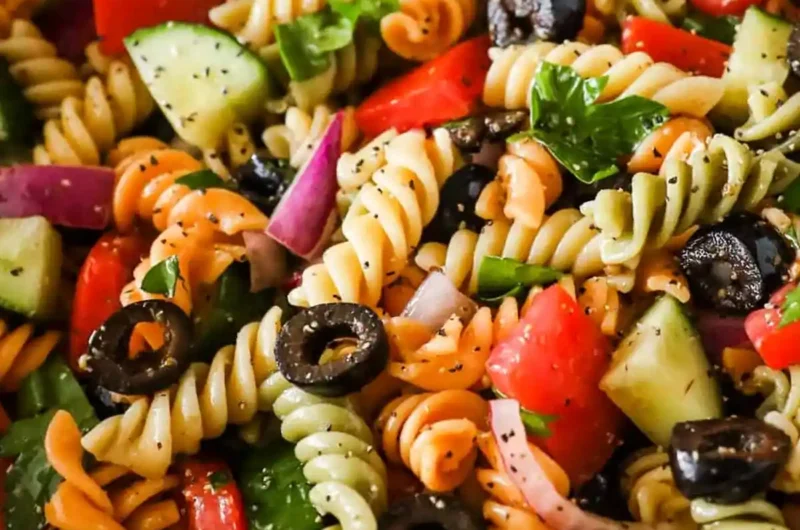
This refreshing pasta salad combines colorful rotini with crisp garden vegetables and a zesty Italian dressing. It is an ideal cold dish for picnics, potlucks, or meal-prepping for the week.
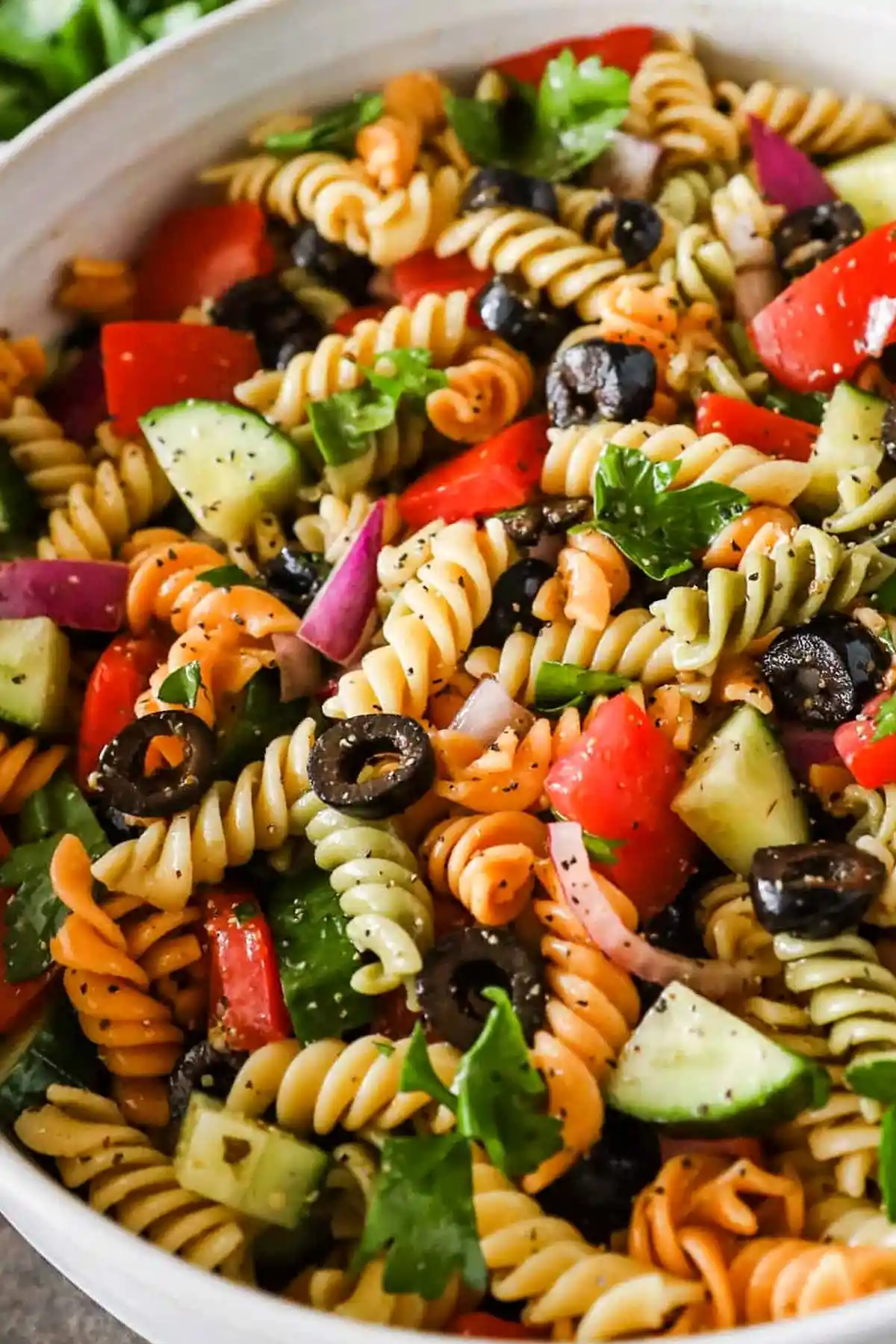
List of ingredients
- 12 oz uncooked tricolor rotini pasta (375 g) – approximately 4 cups once cooked.
- 1 cup chopped english cucumber – sliced into rounds and then quartered.
- 2 cups chopped roma tomatoes – seeds and core removed, or substitute with grape tomatoes.
- 1 cup sliced black olives – drained thoroughly.
- 1/2 cup diced red onion – finely chopped.
- 1/2 cup chopped fresh parsley – roughly chopped for freshness.
- 1 cup Italian salad dressing – store-bought or homemade.
step-by-step instructions
- Cook the pasta: Boil a pot of salted water and cook the rotini according to package directions. Drain through a strainer and rinse with cold water to stop the cooking process and cool it down quickly.
- Prepare the vegetables: Slice the English cucumber into rounds and then quarter them. Chop the Roma tomatoes while removing the seeds and cores. Dice the red onion and roughly chop the fresh parsley. Drain the black olives.
- Assemble the salad: In a large mixing bowl, combine the cooled rotini, chopped cucumber, tomatoes, red onion, black olives, and parsley.
- Dress and chill: Pour the Italian dressing over the mixture and toss gently to coat all ingredients. Cover the bowl and refrigerate for at least 1 hour to allow the flavors to meld.
- Final touch: Give the salad one final toss just before serving to redistribute the dressing.
Optimizing Pasta Selection
Choosing the Best Shape for Dressing Adherence
Rotini is highly recommended for this salad because its spiral shape creates grooves that trap the dressing and small vegetable pieces. Other excellent choices include fusilli, penne, or farfalle, which provide similar surface area for flavor. Avoid very smooth pastas like spaghetti if you want the dressing to cling to the noodles effectively.
Implementing Gluten-Free Alternatives
Brown rice pasta is the most reliable substitute for those avoiding gluten because it maintains a firm texture when chilled. Avoid using chickpea or lentil pastas for this specific recipe, as they can become overly soft or develop a grainy texture once refrigerated. Always cook gluten-free pasta slightly under the package directions to prevent mushiness.
Managing Pasta Texture with Al Dente Cooking
Cooking your pasta to an al dente state is critical for cold salads. Since the pasta will continue to absorb moisture from the dressing while chilling, starting with a firmer noodle prevents the dish from becoming soggy. Ensure the pasta has a slight bite in the center before draining.
Vegetable Preparation Techniques
Using English Cucumbers for Better Texture
English cucumbers are preferred over standard garden cucumbers because they have thinner skins and fewer seeds. This results in a crunchier texture and prevents the salad from releasing too much water over time. If using regular cucumbers, peel the skin and scoop out the seeds with a spoon before dicing.
Preventing Watery Salads by Seeding Tomatoes
When using Roma tomatoes, always remove the watery seeds and pulp from the center. This simple step ensures that the dressing remains concentrated and doesn’t get diluted by tomato juices. For grape or cherry tomatoes, simply slicing them in half is sufficient as they have less interior pulp.
Taming the Pungency of Raw Red Onions
Red onions provide a sharp contrast to the pasta, but some find them too overpowering. To mellow the flavor, soak the diced onions in cold water for ten minutes and then drain them before adding to the bowl. This removes the harsh sulfur compounds while keeping the crisp texture.
Using Fresh Parsley for Brightness
Fresh flat-leaf parsley adds a clean, herbaceous note that cuts through the richness of the oil-based dressing. If fresh parsley is unavailable, you can use dried parsley, but reduce the amount to two tablespoons to avoid a powdery texture. Always chop the stems finely or discard them for the best mouthfeel.
Creating a Custom Italian Dressing
Balancing the Oil and Acid Ratio
A classic Italian dressing relies on a balance of extra virgin olive oil and red wine vinegar. For the homemade version, use 3/4 cup of olive oil and 1/4 cup of red wine vinegar to achieve a standard vinaigrette ratio. This ensures the salad is seasoned without being overly acidic or too greasy.
Adding Natural Sweetness and Depth
Including a teaspoon of granulated sugar or honey helps to balance the acidity of the vinegar and the saltiness of the olives. Minced garlic adds a pungent depth that enhances the overall savoriness of the dish. Ensure the garlic is finely minced or pressed to avoid large, raw chunks in the salad.
Incorporating Dried Herbs for Complexity
A blend of dried parsley, basil, and oregano provides the traditional Mediterranean flavor profile. Using dried herbs in the dressing allows them to rehydrate in the oil and vinegar, releasing their flavors more evenly throughout the pasta. For a fresher taste, you can substitute these with finely minced fresh herbs.
Expanding the Flavor Profile
Adding Savory Cheese Varieties
Cubed mozzarella or crumbled feta cheese can add a creamy, salty element to the salad. For a sharper taste, incorporate shaved Parmesan or cubed sharp cheddar. Add the cheese during the final mixing stage to ensure the cubes maintain their shape and don’t break down.
Integrating Extra Vegetable Mix-ins
You can increase the nutritional value by adding diced celery for extra crunch or steamed broccoli florets for texture. Sliced zucchini, cauliflower, or shredded cabbage also work well with the Italian dressing. Ensure any hard vegetables are cut into small, bite-sized pieces to match the size of the rotini.
Substituting Protein for a Full Meal
To turn this side dish into a main course, add grilled chicken breast or chickpeas for a plant-based protein option. Salami or pepperoni can be added, provided they are compliant with your dietary restrictions. Fold the protein in after the pasta has cooled to avoid warming the vegetables.
Experimenting with Alternative Dressings
While Italian dressing is traditional, a Greek vinaigrette offers a tangier profile with added oregano and lemon. For a creamier version, replace half of the Italian dressing with a small amount of mayonnaise or Greek yogurt. A Caesar dressing can also be used for a more savory, garlic-heavy variation.
Storage and Freshness Logistics
Maximizing Refrigeration Life
This pasta salad can be stored in the refrigerator for 3 to 4 days in an airtight container. However, the vegetables will naturally release moisture over time, meaning the salad is at its peak crispness within the first 48 hours. Keep the container tightly sealed to prevent the pasta from absorbing fridge odors.
Using Mason Jars for Meal Prep
For individual portions, layer the ingredients in mason jars with the dressing at the bottom and the pasta at the top. This prevents the pasta from soaking up all the dressing immediately and keeps the cucumbers and tomatoes crisper. Shake the jar vigorously before eating to distribute the dressing.
Preventing the Sogginess Cycle
The primary cause of sogginess is the absorption of dressing by the pasta and the release of water from the vegetables. To combat this, reserve a small amount of dressing and toss it in just before serving. This refreshes the coating on the noodles and restores the glossy appearance.
Serving and Presentation Advice
The Importance of the Chilling Phase
Chilling the salad for at least one hour is essential because it allows the pasta to absorb the flavors of the dressing. This process acts similarly to a marinade, ensuring the flavor penetrates the center of the noodle. For the best results, prepare the salad 2 to 5 hours before serving.
Managing Room Temperature Service
Pasta salad is safe to sit at room temperature for a few hours during picnics or potlucks. To keep it cool longer, place the serving bowl inside a larger bowl filled with ice. This maintains the refreshing temperature and prevents the dressing from separating in the heat.
Final Garnish Ideas
Just before serving, sprinkle a tablespoon of fresh chopped parsley or a pinch of red pepper flakes on top for a pop of color. A dusting of grated Parmesan cheese also adds a professional finishing touch. These additions enhance the visual appeal without altering the core flavor.
Troubleshooting Common Issues
Fixing Bland or Under-seasoned Salad
If the salad tastes dull after chilling, it is likely because the pasta has absorbed the salt and acidity. Add a teaspoon of red wine vinegar or a pinch of salt and toss again. This awakens the flavors and restores the zesty profile of the Italian dressing.
Addressing Excess Liquid in the Bowl
If you find too much liquid at the bottom of the bowl, it is usually due to under-drained olives or unseeded tomatoes. Use a slotted spoon to serve the salad, leaving the excess water behind. In the future, ensure all canned ingredients are patted dry with a paper towel.
Correcting Overcooked Pasta Texture
If the pasta is too soft, it cannot be reversed, but you can improve the dish by adding more crunchy vegetables like celery or raw carrots. This introduces a textural contrast that distracts from the softness of the noodles. Avoid adding more dressing, as this may make the soft pasta even mushier.
Frequently Asked Questions
Can I use frozen vegetables in this recipe?
It is not recommended to use frozen vegetables as they release too much water upon thawing, which will make the salad soggy. Stick to fresh produce to maintain the necessary crunch and flavor profile.
How do I store the salad without the vegetables getting soft?
Store the pasta and dressing in one container and the chopped vegetables in another. Combine them only when you are ready to serve. This keeps the vegetables perfectly crisp for several days.
Can this recipe be made without oil?
You can replace the olive oil with a small amount of vegetable broth or a splash of water combined with a bit of mustard to emulsify the vinegar. However, the texture will be thinner and less rich than the original version.
Is it possible to use a different type of vinegar?
Yes, apple cider vinegar or white wine vinegar are suitable substitutes for red wine vinegar. Apple cider vinegar provides a slightly fruitier taste, while white wine vinegar is more neutral.
Do I need to salt the pasta water if the dressing is salty?
Yes, salting the pasta water is the only chance to season the interior of the noodle itself. This ensures the pasta tastes good on its own and complements the external dressing rather than tasting bland.
Print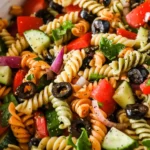
Classic Italian Pasta Salad
- Total Time: 1 hour 22 minutes
- Yield: 8 servings 1x
- Diet: Vegetarian
Description
This easy salad is made with rotini pasta and easy chopped vegetables like cucumber, tomatoes, red onion and olives. All tossed together with an easy Italian salad dressing.
Ingredients
- 12 oz uncooked tricolor rotini pasta
- 1 cup chopped english cucumber
- 2 cups chopped roma tomatoes
- 1 cup sliced black olives
- 1/2 cup diced red onion
- 1/2 cup chopped fresh parsley
- 1 cup Italian salad dressing
Instructions
- Cook: Cook the rotini pasta in a pot of boiling salted water according to the package instructions. Drain the pasta through a strainer and rinse it under cold water. Allow it to cool to room temperature before adding to the salad.
- Prep: Wash and prep the vegetables: Slice the cucumber into rounds, then quarter them. Chop the tomatoes and remove seeds. Slice the red onion. Roughly chop the parsley. Drain the canned black olives.
- Assemble: Add all ingredients to a large salad bowl: cooked rotini pasta, chopped cucumber, chopped tomatoes, diced red onion, sliced black olives and chopped parsley.
- Mix and Chill: Pour the dressing over top and toss everything together. Place covered in the fridge to chill for 1 hour. Toss again just before serving.
Notes
This salad can be refrigerated for 3-4 days in an airtight container. For the best flavor, allow the salad to chill for 2-5 hours before serving to let the vegetables absorb the dressing. You can make your own dressing using olive oil, red wine vinegar, sugar or honey, garlic, dried parsley, dried basil, dried oregano, salt, and pepper.
- Prep Time: 15 minutes
- Cook Time: 7 minutes
- Category: Salad
- Method: Mixing
- Cuisine: Italian
Nutrition
- Serving Size: 1 serving
- Calories: 247 kcal
- Sugar: 3 g
- Sodium: 3114 mg
- Fat: 1 g
- Saturated Fat: 0.2 g
- Unsaturated Fat: 0.5 g
- Trans Fat: 0 g
- Carbohydrates: 50 g
- Fiber: 2 g
- Protein: 6 g
- Cholesterol: 0 mg
Keywords: Italian pasta salad, rotini pasta, cold pasta salad, side dish, summer salad, vegetarian salad