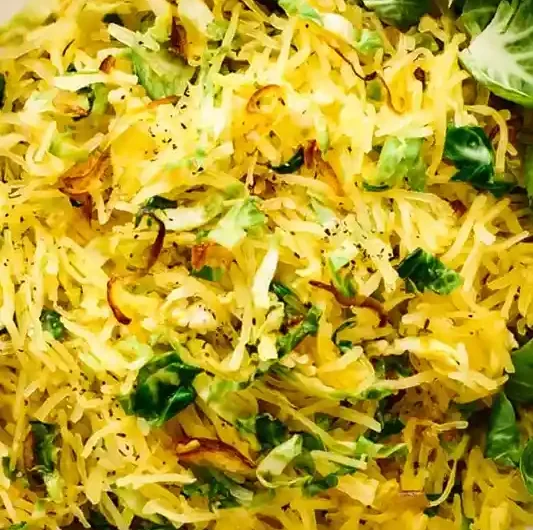
This savory side dish combines the tender texture of roasted spaghetti squash with the crunch of pan-seared Brussels sprouts. It is a nutrient-dense option that brings together classic autumn flavors in one bowl. This recipe is perfect for those seeking a light yet satisfying vegetable accompaniment.
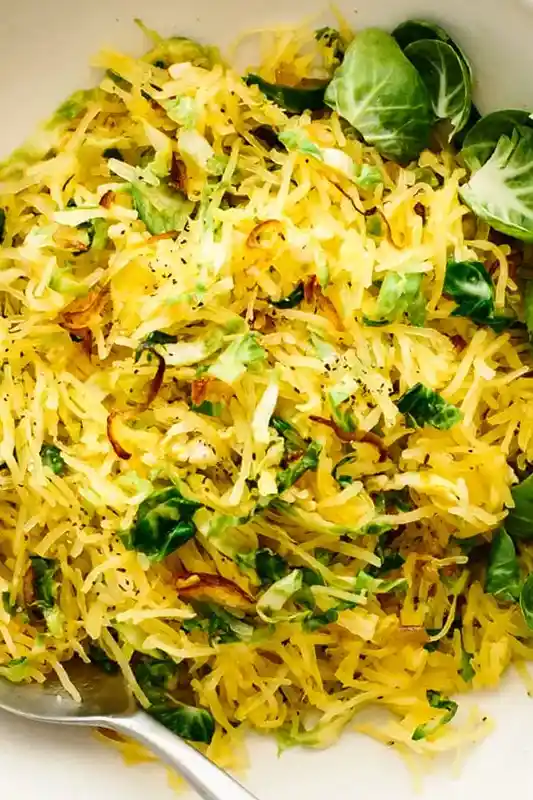
List of ingredients
- 1 3 1/2 – 4 pound spaghetti squash – the main base for the dish.
- 3 tablespoons olive oil (divided) – used for roasting and sautéing.
- 2 large shallots (thinly sliced) – adds a sweet, crispy element.
- 1 pound Brussels sprouts (shaved or thinly sliced) – provides a savory crunch.
- 3 garlic cloves (minced) – adds aromatic depth.
- salt and pepper (to taste) – essential for seasoning.
step-by-step instructions
- Roast the Squash: Preheat your oven to 400F/200C. Slice the spaghetti squash in half and scoop out the seeds. Coat the inside with a little olive oil and salt and pepper, then bake for 40-50 minutes.
- Sauté the Shallots: When the spaghetti squash has cooked for about 30 minutes, heat 2 tablespoons of olive oil on medium heat in a large pan. Add the shallots and cook, stirring frequently, for about 8 minutes or until lightly golden and crispy.
- Drain the Shallots: Use a slotted spoon to remove the crispy shallots to a paper towel to drain.
- Sauté the Sprouts: Add the brussels sprouts and minced garlic to the same pan and saute for 4-5 minutes. You may need to add another splash of oil as well.
- Combine Ingredients: When the spaghetti squash is done, remove it from the oven and use a fork to scrape out the flesh into a bowl. Add the sauteed Brussels sprouts and crispy shallots to the bowl, and season with additional salt and pepper.
- Finish and Serve: Stir all of the ingredients together and serve!
Optimal Preparation Techniques
Choosing the Best Spaghetti Squash
Look for a squash that feels heavy for its size and has a firm, deep yellow skin. Avoid any produce with soft spots, bruising, or cracks in the rind. A weight between 3.5 and 4 pounds ensures the squash cooks evenly within the suggested timeframe.
How to Shave Brussels Sprouts Efficiently
Use a sharp chef’s knife to slice the sprouts as thinly as possible from top to bottom. For faster results, a food processor with the slicing disc attachment is highly effective. Shaved sprouts cook much faster than halves and integrate better with the squash strands.
Perfecting the Shallot Crisp
Maintain a steady medium heat to prevent the shallots from burning before they crisp. Stir the slices frequently so that every piece browns evenly on all sides. Remove them from the pan the moment they turn golden, as residual heat will continue to cook them on the paper towel.
Managing Oven Temperatures
Ensure your oven is fully preheated to 400F before sliding the squash inside. If your oven tends to run hot, check the tenderness of the squash at the 35-minute mark. Use a fork to ensure the strands pull away easily from the skin.
Ingredient Substitutions and Swaps
Alternative Oil Options
Avocado oil is an excellent substitute for olive oil due to its high smoke point. Grapeseed oil is another neutral option that works well for frying shallots without adding a strong flavor. Avoid using butter for the high-heat roasting phase to prevent scorching.
Swapping Shallots for Red Onion
If shallots are unavailable, thinly sliced red onion is a suitable replacement. Red onions offer a bolder, sharper flavor profile that complements the sweetness of the squash. Slice them into very thin half-moons to ensure they crisp up quickly in the pan.
Vegetable Alternatives for Brussels Sprouts
Shredded kale or thinly sliced green cabbage can be used instead of Brussels sprouts. These greens provide a similar texture and earthy flavor when sautéed with garlic. Adjust the cooking time slightly, as cabbage may release more moisture than sprouts.
Using Different Winter Squashes
While butternut squash can be used, it will not provide the same noodle-like strands. If you prefer a different squash, consider finely grating roasted butternut squash or using kohlrabi. Stick to the 400F oven temperature to achieve the best caramelization.
Creative Serving Suggestions
Pairing with Poultry
This side dish pairs beautifully with roasted lemon garlic chicken or crispy baked chicken thighs. The brightness of lemon helps cut through the richness of the roasted vegetables. Serve the squash as a bed for the chicken to soak up the natural juices.
Pairing with Seafood
Garlic butter shrimp or baked salmon fillets are excellent protein companions for this recipe. The savory notes of the crispy shallots mirror the flavors typically used in seafood preparations. For a gourmet presentation, place the shrimp directly on top of the squash mixture.
Converting to a Plant-Based Main Dish
Add roasted chickpeas or sautéed mushrooms to transform this side into a hearty vegetarian meal. Sautéed kale can also be mixed in for extra nutrients and color. This version provides enough protein and fiber to stand alone as a primary course.
Adding a Breakfast Twist
Top a portion of the squash and sprout mixture with a poached or soft-boiled egg. The rich, runny yolk creates a natural sauce that binds the vegetables together. This is an excellent way to incorporate a high volume of vegetables into your morning routine.
Storage and Reheating Guide
Refrigeration Tips
Store any remaining portion in an airtight glass container to maintain freshness. Glass containers are preferable as they do not absorb odors and keep the squash from becoming soggy. The dish will stay safe and tasty in the refrigerator for up to four days.
Best Reheating Methods
A microwave is the quickest way to reheat, typically taking about 60 to 90 seconds. For those who prefer a crispier texture, reheat the mixture in a skillet over medium heat. Stir occasionally until the vegetables are heated through and the shallots regain some crunch.
Freezing Considerations
Roasted squash and sautéed sprouts do not freeze well because their water content changes. Freezing often results in a mushy texture that is difficult to reverse. It is highly recommended to keep this dish refrigerated and consume it within a week.
Troubleshooting Common Issues
Preventing Mushy Squash
Do not overcook the spaghetti squash beyond the 50-minute mark. Remove it from the oven while the strands still have a slight resistance to the fork. If the squash seems too wet, drain the excess liquid before mixing in the other ingredients.
Avoiding Burnt Garlic
Always add the minced garlic to the pan after the Brussels sprouts have already begun to soften. Garlic has a very low burn point and can become bitter if exposed to high heat for too long. Sauté it for only the final 2-3 minutes of the process.
Fixing Overcooked Shallots
If your shallots turn too dark, remove them from the pan immediately and discard any blackened pieces. To prevent this in the future, use a larger skillet to avoid crowding the pan. Crowded shallots steam instead of fry, which often leads to uneven browning.
Managing Excess Moisture in Sprouts
If the Brussels sprouts release too much water during sautéing, increase the heat to medium-high to evaporate the liquid. Avoid adding too much oil at the beginning of the process. Sauté the sprouts in smaller batches if your pan is too small to hold them in a single layer.
Seasoning Adjustments
Adding Fresh Herbs
Garnish the finished dish with fresh chopped parsley or thyme for a bright, herbal finish. These herbs complement the earthiness of the sprouts and the sweetness of the squash. Add them at the very end to preserve their vibrant green color.
Adjusting Salt Levels
Taste the final mixture before adding more salt, as the roasting and sautéing steps already incorporate seasoning. Use a pinch of flaky sea salt at the end for a professional touch. This enhances the natural flavors without oversalting the dish.
Adding a Touch of Acidity
A squeeze of fresh lemon juice or a light drizzle of balsamic glaze can elevate the overall flavor profile. Acidity helps balance the natural sugars found in the roasted squash. Apply the acidic element just before serving to keep the flavors crisp.
Frequently Asked Questions
Can I use a food processor for the sprouts?
Yes, using the slicing disc on a food processor is the fastest way to get thin, consistent shreds. This eliminates the need for tedious manual chopping and ensures the sprouts cook uniformly.
How do I know when the squash is done?
The squash is ready when the flesh is tender and can be easily pierced with a fork. When you scrape the interior, the flesh should naturally separate into long, spaghetti-like strands.
Can I roast the sprouts instead of sautéing?
Yes, you can toss the sprouts with olive oil and roast them on a separate baking sheet. Roast them at 400F for approximately 20 minutes until they are tender and browned.
What is the best way to peel shallots?
Cut off the top and bottom ends of the shallot and make a shallow vertical slice through the skin. Gently squeeze the shallot from the root end to pop the skin off easily.
Print
Roasted Spaghetti Squash with Brussels Sprouts and Crispy Shallots
- Total Time: 60 minutes
- Yield: 4 servings 1x
- Diet: Vegetarian
Description
Spaghetti squash, Brussels sprouts, and crispy shallots are tossed together for an easy and flavorful side dish!
Ingredients
- 1 3 1/2 – 4 pound spaghetti squash
- 3 tablespoons olive oil (divided)
- 2 large shallots, thinly sliced
- 1 pound Brussels sprouts, shaved or thinly sliced
- 3 garlic cloves, minced
- salt and pepper, to taste
Instructions
- Step: Preheat your oven to 400F/200C. Slice the spaghetti squash in half and scoop out the seeds. Coat the inside with a little olive oil and salt and pepper, then bake for 40-50 minutes.
- Step: When the spaghetti squash has cooked for about 30 minutes, heat 2 tablespoons of olive oil on medium heat in a large pan. Add the shallots and cook, stirring frequently, for about 8 minutes or until lightly golden and crispy.
- Step: Use a slotted spoon to remove the crispy shallots to a paper towel to drain.
- Step: Add the brussels sprouts and minced garlic to the same pan and saute for 4-5 minutes. You may need to add another splash of oil as well.
- Step: When the spaghetti squash is done, remove it from the oven and use a fork to scrape out the flesh into a bowl. Add the sauteed Brussels sprouts and crispy shallots to the bowl, and season with additional salt and pepper.
- Step: Stir all of the ingredients together and serve!
Notes
To store: This can be stored in an airtight container in the fridge for up to 4 days. To reheat: Simply pop this in the microwave for about 1 minute or so.
- Prep Time: 15 minutes
- Cook Time: 45 minutes
- Category: Side Dish
- Method: Roasting
- Cuisine: American
Nutrition
- Serving Size: 1 serving
- Calories: 154 kcal
- Sugar: 4 g
- Sodium: 30 mg
- Fat: 11 g
- Saturated Fat: 2 g
- Unsaturated Fat: 9 g
- Trans Fat: 0 g
- Carbohydrates: 13 g
- Fiber: 5 g
- Protein: 4 g
- Cholesterol: 0 mg
Keywords: spaghetti squash, brussels sprouts, crispy shallots, side dish, fall flavors, roasted vegetables