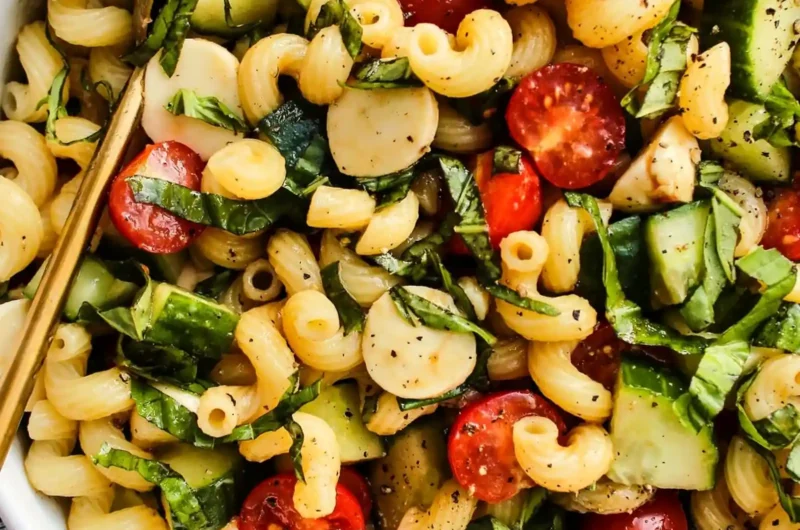
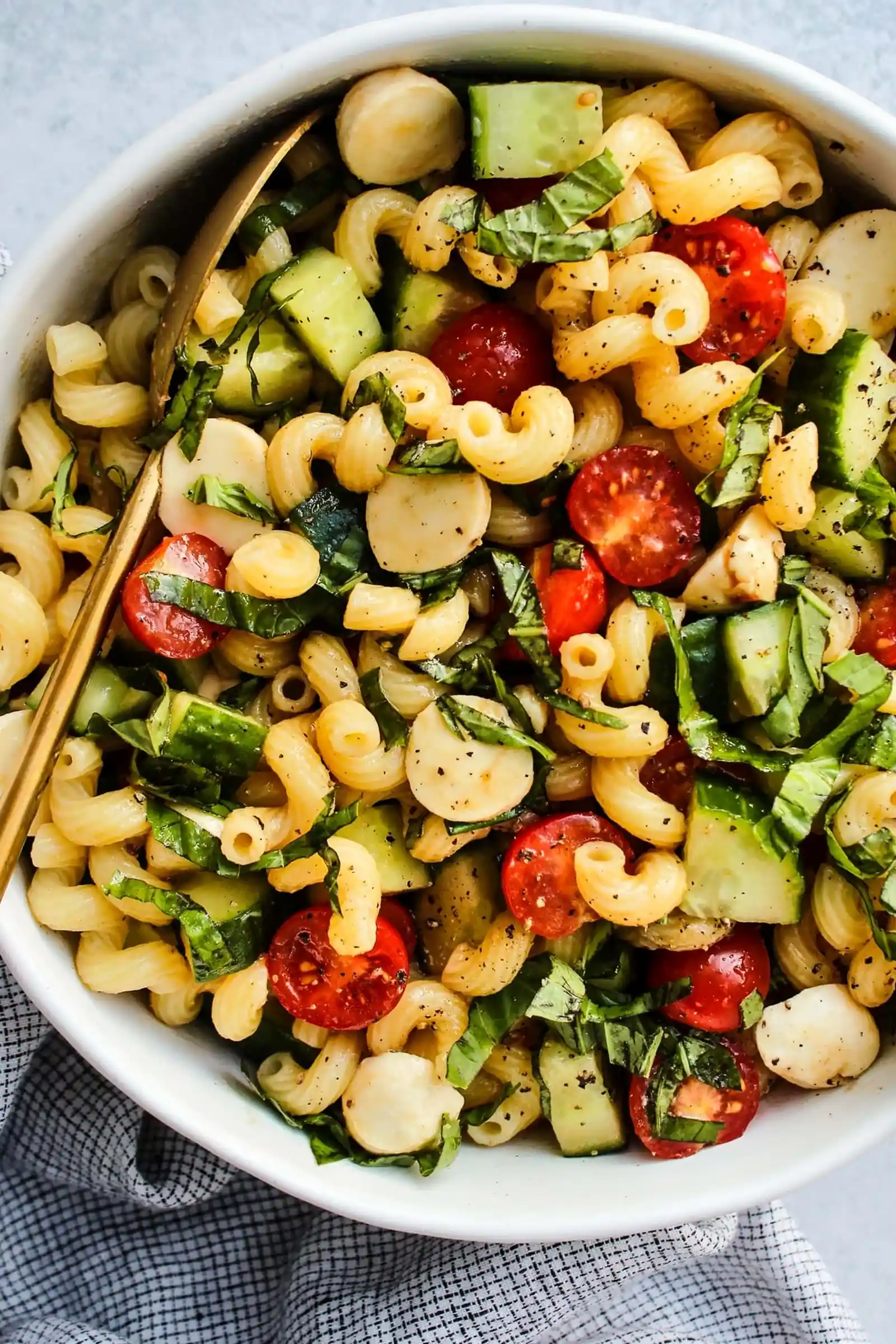
This vibrant pasta salad brings the classic flavors of a Mediterranean garden to your table with minimal effort. By combining juicy tomatoes, creamy cheese, and aromatic herbs, you create a refreshing dish that is perfect for outdoor gatherings or convenient weekday lunches. It is a versatile recipe that performs beautifully as a side dish or a light, satisfying main course.
List of ingredients
- 1.5 cups dry pasta
- 1 large English cucumber
- 2 cups cherry tomatoes
- 1.5 cups bocconcini balls
- 1 cup fresh basil
- Salt and pepper, to taste
- 1/4 cup extra virgin olive oil
- 2 Tbsp balsamic vinegar
- 1 Tbsp lemon juice
- 1 tsp honey
- 1 tsp garlic powder
step-by-step instructions
- Step: Boil a pot of water and cook pasta according to package instructions.
- Step: While pasta cooks, chop cucumber into 1-inch pieces. Halve tomatoes and bocconcini balls. Chop basil. Set aside.
- Step: Add all vinaigrette ingredients to a small jar and shake vigorously to combine.
- Step: Once pasta is done, drain and add to large bowl.
- Step: Add chopped tomatoes, cucumber, bocconcini, and basil to the pasta. Toss in balsamic vinaigrette until well combined, adjusting salt and pepper to taste.
- Step: Cover bowl and place in the fridge to cool for at least 1 hour. Best served chilled!
Practical Preparation Techniques
Ensuring Perfect Pasta Texture
To achieve the best results, cook your pasta just until it reaches the al dente stage, meaning it remains slightly firm to the bite. Once cooked, rinse the pasta briefly under cool running water if you are in a rush; this stops the cooking process immediately and prevents the pasta from becoming mushy or sticking together while it cools. This step is especially important if you plan to keep the salad in the refrigerator for several days.
Maximizing Flavor Marination
While the recipe suggests a minimum of one hour in the refrigerator, allowing the salad to chill for three or four hours is even better. This extended time in the cold environment allows the pasta to absorb the balsamic dressing more deeply, ensuring that every bite is packed with savory goodness. If you find the salad looks a little dry after being chilled, simply add a small splash of olive oil and a pinch of salt just before serving.
Effective Ingredient Substitutions
Exploring Alternative Pasta Shapes
While cavatappi and fusilli are ideal because their grooves capture the dressing, you can use almost any short pasta shape. Whole wheat pasta or chickpea-based pastas are excellent alternatives if you are looking to increase the fiber or protein content of the meal. Ensure you monitor the cooking time carefully, as alternative flours often cook faster than traditional semolina pasta.
Swapping Fresh Herbs and Aromatics
If you have an abundance of fresh parsley or mint, you can incorporate them alongside the basil for a more complex herbal profile. For the garlic component, if you prefer the sharp bite of fresh garlic instead of garlic powder, use one finely minced clove and let it sit in the vinegar for a few minutes before adding the oil. This infuses the liquid with flavor and ensures there are no harsh, raw chunks of garlic in your final salad.
Creative Serving Ideas
Building a Balanced Meal Plate
This salad serves beautifully alongside grilled proteins like seasoned chicken breasts or skewers of roasted vegetables. Because the salad contains healthy fats, protein from the cheese, and complex carbohydrates from the pasta, it works as a standalone light dinner. To elevate it for guests, serve it in a wide, shallow bowl and garnish the top with a few extra whole basil leaves and a drizzle of high-quality balsamic glaze for a professional aesthetic.
Enhancing the Mediterranean Theme
Consider adding toasted pine nuts or sunflower seeds just before serving to introduce a pleasant, nutty crunch. You might also add kalamata olives or marinated artichoke hearts if you want to push the flavor profile toward a more intense, savory Mediterranean style. These additions should be added right before consumption to keep the textures of the vegetables crisp and distinct.
Handling and Storage Advice
Maintaining Freshness in the Fridge
Store your leftover salad in an airtight glass or plastic container to keep the basil from wilting prematurely. It will remain fresh and tasty for up to three days, making it an excellent candidate for meal prep at the start of your week. Ensure the lid is tight to prevent the pasta from picking up any odors from other items stored in your refrigerator.
Reheating and Temperature Adjustments
This dish is specifically designed to be served cold, so it does not require reheating. In fact, heating it would cause the bocconcini to melt and the cucumber to lose its crisp texture, ruining the intended balance of the salad. If you find the pasta feels too cold to eat directly from the fridge, simply remove it from the refrigerator about fifteen minutes before serving to take the chill off the ingredients.
Frequently Asked Questions
Can I prepare this recipe the night before a party?
Yes, preparing it the night before is actually recommended. The flavors of the balsamic vinaigrette, herbs, and vegetables will deepen as they sit together overnight in the refrigerator. Just give the salad a good toss before serving to redistribute the dressing.
Why does my pasta seem to soak up all the dressing?
Pasta acts like a sponge, and it is natural for it to absorb liquid over time. If the salad appears dry after sitting, add a little extra olive oil, a splash of lemon juice, or even a small amount of vegetable broth to loosen the consistency without losing the core flavor.
Is there a way to make this recipe dairy-free?
You can easily make this dairy-free by substituting the bocconcini with a plant-based mozzarella alternative or by simply omitting the cheese and adding chickpeas to ensure you maintain the protein content. If omitting the cheese, increase the amount of fresh basil to ensure the dish stays aromatic.
How can I make the dressing creamier?
If you prefer a thicker or creamier dressing, you can whisk in a teaspoon of Dijon mustard or a small spoonful of tahini. These emulsifiers will help create a richer coating that clings to the pasta, providing a slightly different, more robust mouthfeel compared to the traditional oil-and-vinegar style vinaigrette.
Can I freeze the leftover pasta salad?
It is not recommended to freeze this salad. The cucumber and tomatoes have a high water content and will become mushy upon thawing, while the texture of the pasta will likely change significantly. It is best to prepare only as much as you can consume within three days.
Print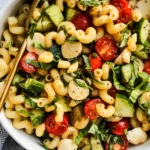
Refreshingly Simple Caprese Pasta Salad
- Total Time: PT20M
- Yield: 4 servings 1x
- Diet: Vegetarian
Description
Bursting with flavour, this caprese pasta salad recipe is easy to make, or make-ahead. It is perfect for a BBQ, picnic, or packed lunch idea. Balsamic vinaigrette and pesto dressing options included!
Ingredients
- 1.5 cups dry pasta
- 1 large English cucumber
- 2 cups cherry tomatoes
- 1.5 cups bocconcini balls
- 1 cup fresh basil
- Salt and pepper, to taste
- 1/4 cup extra virgin olive oil
- 2 Tbsp balsamic vinegar
- 1 Tbsp lemon juice
- 1 tsp honey
- 1 tsp garlic powder
Instructions
- Step: Boil a pot of water and cook pasta according to package instructions.
- Step: While pasta cooks, chop cucumber into 1-inch pieces. Halve tomatoes and bocconcini balls. Chop basil. Set aside.
- Step: Add all vinaigrette ingredients to a small jar and shake vigorously to combine.
- Step: Once pasta is done, drain and add to large bowl.
- Step: Add chopped tomatoes, cucumber, bocconcini, and basil to the pasta. Toss in balsamic vinaigrette until well combined, adjusting salt and pepper to taste.
- Step: Cover bowl and place in the fridge to cool for at least 1 hour. Best served chilled!
Notes
Recipe can be made ahead. Store in an airtight container in the fridge for up to 3 days. For gluten-free version, use certified gluten-free pasta.
- Prep Time: PT5M
- Cook Time: PT15M
- Category: Salad
- Method: Boiling
- Cuisine: Italian
Nutrition
- Serving Size: 1 serving
- Calories: 320 kcal
- Sugar: 4 g
- Sodium: 280 mg
- Fat: 16 g
- Saturated Fat: 4 g
- Unsaturated Fat: 10 g
- Trans Fat: 0 g
- Carbohydrates: 38 g
- Fiber: 3 g
- Protein: 12 g
- Cholesterol: 25 mg
Keywords: bocconcini, caprese, cucumber, pasta, tomato, salad, vegetarian