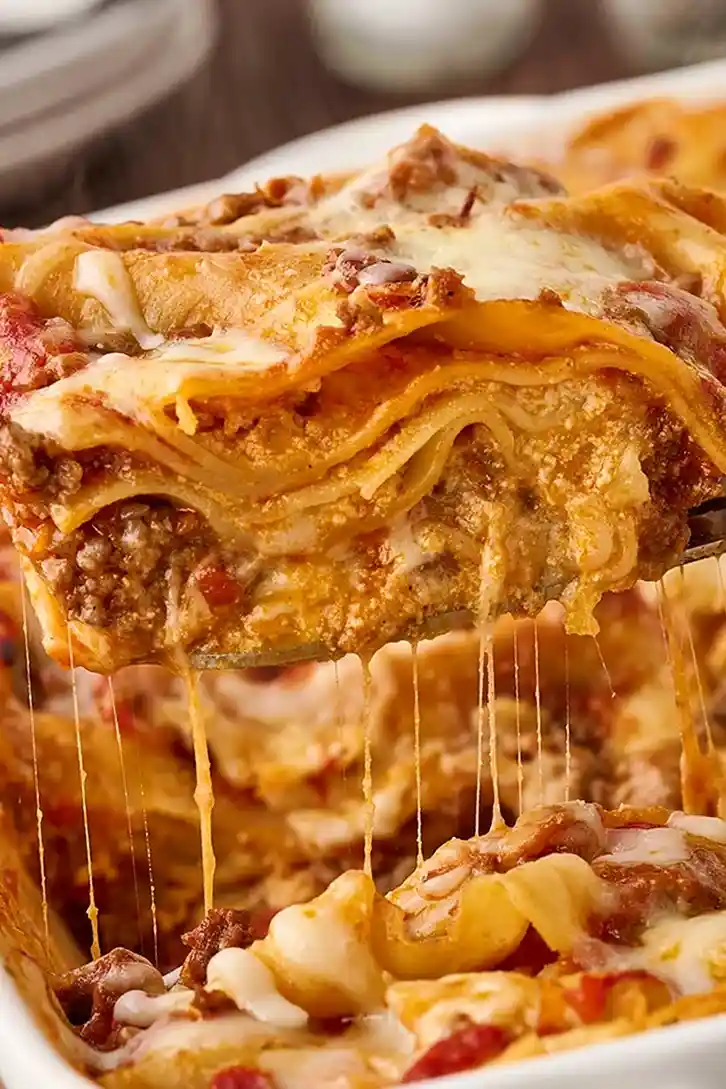
This streamlined lasagna recipe removes the tedious step of boiling noodles, allowing you to assemble a hearty meal in minutes. It uses a few key pantry staples to create a rich, cheesy dish that satisfies a crowd without hours of effort.
List of ingredients
- 1 lb lean ground beef – provides a hearty and savory protein base.
- 1 (24 to 26-ounce) jar marinara sauce – serves as the primary flavoring and moisture source.
- 1 cup water – essential for hydrating the no-boil noodles during baking.
- 1 (12-ounce) package no-boil, oven ready lasagna noodles – eliminates the need for pre-cooking the pasta.
- 1 (15-ounce) container ricotta cheese – creates the creamy, soft internal layers.
- 2 cups shredded mozzarella cheese – adds the melted, stretchy finish on top.
step-by-step instructions
- Prepare the oven and pan: Preheat the oven to 425°F and lightly spray an 11×7-inch baking dish with nonstick cooking spray.
- Cook the meat sauce: Brown the ground beef over medium-high heat and drain the excess grease away. Return the meat to the skillet over medium-low heat and add the marinara and 1 cup water. Stir to combine and heat through.
- Assemble the layers: Layer about 1/4 of the meat sauce evenly in the bottom of the prepared pan. Cover with a layer of the uncooked pasta. Add about half of the ricotta cheese and spread evenly. Sprinkle about 1/3 of the mozzarella cheese. Top with and 1/4 of the sauce, then more pasta, the remaining ricotta, and 1/3 more of the mozzarella cheese. Add another 1/4 of the sauce, then another layer of pasta. Top with the remaining sauce and sprinkle with the remaining mozzarella cheese.
- Bake and set: Wrap the dish tightly with aluminum foil and bake for a hour or until the pasta is tender. Allow to rest for about 10 minutes before serving.
Optimizing Your Baking Process
Seal the Pan Tightly with Foil
The aluminum foil serves a critical purpose by trapping steam inside the dish. This moisture is what hydrates the no-boil noodles, allowing them to soften and cook through. If the seal is loose, the edges of the pasta may remain hard or dry.
Drain the Beef Thoroughly
Removing excess grease after browning the beef prevents the lasagna from becoming oily. A greasy sauce can separate during baking and create a pool of fat at the bottom of the pan. Use a colander or a spoon to remove all rendered fat before adding the marinara.
Observe the Mandatory Resting Time
Allowing the lasagna to sit for 10 minutes after removing it from the oven is essential for structural integrity. This period allows the cheese to firm up and the sauce to set. Without this step, the layers may slide apart when you attempt to slice and serve.
Ingredient Substitutions for Different Preferences
Replacing Ground Beef with Ground Turkey
For a leaner protein option, you can swap the lean ground beef for ground turkey or ground chicken. Ensure you cook the meat fully and season it with a pinch of salt if the marinara is mild. The texture remains very similar to the original beef version.
Substituting Ricotta with Cottage Cheese
If you prefer a slightly different texture, cottage cheese is an excellent alternative to ricotta. For a smoother consistency, you can pulse the cottage cheese in a food processor for a few seconds. This provides a similar creamy layer with a slightly higher protein content.
Choosing Different Marinara Profiles
You can vary the flavor of the dish by choosing different styles of jarred marinara. A garlic-heavy sauce adds pungency, while a basil-infused sauce provides a fresher, herbal note. Since the sauce is a primary ingredient, the quality of the jarred product significantly impacts the final taste.
Flavor and Texture Variations
Incorporating Fresh Spinach into the Cheese
Adding chopped fresh spinach to the ricotta mixture introduces color and nutrients. Squeeze any excess moisture out of the spinach before folding it into the cheese to prevent the lasagna from becoming watery. This adds a subtle earthy flavor that complements the beef.
Adding Sautéed Mushrooms for Umami
Sautéing diced mushrooms with the ground beef enhances the savory depth of the meat layer. Cook the mushrooms until they release their water and brown slightly before adding the marinara sauce. This provides a meatier texture and a richer flavor profile.
Enhancing the Topping with Parmesan
While mozzarella provides the stretch, adding a sprinkle of grated Parmesan cheese on top adds a salty, nutty finish. Mix the Parmesan with the mozzarella or sprinkle it on as the final layer. This helps create a golden-brown, crispy crust.
Serving and Pairing Recommendations
Pairing with a Crisp Green Salad
A fresh garden salad with a vinaigrette dressing balances the richness of the cheese and beef. Use mixed greens, cucumbers, and cherry tomatoes to provide a refreshing contrast. The acidity in the dressing helps cleanse the palate between bites of lasagna.
Serving with Garlic Toasted Bread
Garlic bread is a classic accompaniment that allows you to scoop up any remaining sauce from the plate. Use a baguette or Italian loaf brushed with garlic butter and toasted until golden. This adds a crunchy textural element to the meal.
Adding Steamed Green Vegetables
Serving the lasagna with steamed broccoli or roasted asparagus adds a healthy component to the plate. These vegetables provide a bright contrast to the heavy pasta and cheese. Lightly seasoning them with lemon juice and salt keeps the side dish light.
Storage and Preservation Guidelines
Refrigerating Leftover Portions
Store any remaining lasagna in an airtight container in the refrigerator for up to five days. Ensure the dish has cooled slightly before sealing it to prevent excess condensation. This keeps the pasta from becoming mushy during storage.
Freezing for Future Meals
Lasagna freezes exceptionally well and can be kept for 2 to 3 months. Wrap the portion tightly in plastic wrap and then place it in a freezer-safe container or a heavy-duty freezer bag. This prevents freezer burn and preserves the flavor of the sauce.
Thawing Frozen Lasagna Safely
The safest way to thaw lasagna is to move it from the freezer to the refrigerator 24 hours before you plan to eat it. This allows it to defrost slowly and evenly. Avoid thawing at room temperature to ensure food safety.
Effective Reheating Methods
Reheating Gradually in the Oven
To avoid thermal shock to glass baking dishes, place the cold lasagna in a cold oven and set the temperature to 350°F. Cover the pan with foil and heat for 25 to 30 minutes. This gradual warming prevents the dish from cracking and ensures the center is heated through.
Quick Reheating via Microwave
For individual portions, the microwave is the fastest option. Place a slice on a microwave-safe plate and cover it with a damp paper towel to keep the pasta moist. Heat in 60-second intervals until the cheese is bubbly and the center is hot.
Adding Extra Moisture for Thicker Layers
If you use a deeper pan or more noodles, increase the water by 1/4 cup. No-boil noodles absorb a significant amount of liquid. Without enough water or sauce, the pasta may remain chewy or hard in the center.
Preventing a Watery Bottom Layer
If you find the bottom of your lasagna is too liquid, ensure you are draining the beef completely. Additionally, avoid adding extra water if your marinara sauce is already very thin. A thick sauce helps the layers hold their shape.
Stopping the Cheese from Burning
If the mozzarella begins to brown too quickly before the pasta is tender, check your foil seal. If the foil is loose, the top is exposed to direct heat. Tighten the foil or add a second layer of foil to protect the cheese.
Frequently Asked Questions
Can I use regular noodles instead of no-boil?
Yes, but you must boil them according to the package directions first. Regular noodles are not designed to absorb moisture from the sauce alone and will remain hard if not pre-cooked.
How do I prevent the lasagna from sticking to the pan?
Use a nonstick cooking spray or a thin layer of olive oil on the bottom and sides of the dish. Additionally, ensuring a layer of sauce is the first thing that hits the pan creates a barrier between the pasta and the dish.
Can I make this recipe in a larger pan?
You can use a 9×13-inch pan, but you will need to increase the ingredients proportionally. If you use the current quantities in a larger pan, the lasagna will be very thin and may overcook quickly.
Print
Simple 6-Ingredient No-Boil Lasagna
- Total Time: 80 minutes
- Yield: 8 servings 1x
- Diet: General
Description
A simple, filling, and flavorful 6-ingredient lasagna using no-boil noodles for a quick and easy family dinner.
Ingredients
- 1 lb lean ground beef
- 1 (24 to 26-ounce) jar marinara sauce
- 1 cup water
- 1 (12-ounce) package no-boil, oven ready lasagna noodles
- 1 (15-ounce) container ricotta cheese
- 2 cups shredded mozzarella cheese
Instructions
- Step 1: Preheat the oven to 425°F and lightly spray an 11×7-inch baking dish with nonstick cooking spray.
- Step 2: Brown the ground beef over medium-high heat and drain the excess grease away. Return the meat to the skillet over medium-low heat and add the marinara and 1 cup water. Stir to combine and heat through.
- Step 3: Layer about 1/4 of the meat sauce evenly in the bottom of the prepared pan. Cover with a layer of the uncooked pasta. Add about half of the ricotta cheese and spread evenly. Sprinkle about 1/3 of the mozzarella cheese. Top with 1/4 of the sauce, then more pasta, the remaining ricotta, and 1/3 more of the mozzarella cheese. Add another 1/4 of the sauce, then another layer of pasta. Top with the remaining sauce and sprinkle with the remaining mozzarella cheese.
- Step 4: Wrap the dish tightly with aluminum foil and bake for an hour or until the pasta is tender. Allow to rest for about 10 minutes before serving.
Notes
Store leftovers in an airtight container in the refrigerator for up to five days or in the freezer for 2-3 months. To reheat, warm gradually in the oven at 350°F for 25-30 minutes.
- Prep Time: 20 minutes
- Cook Time: 60 minutes
- Category: Main Course
- Method: Baking
- Cuisine: American, Italian
Nutrition
- Serving Size: 1 serving
- Calories: 427 kcal
- Sugar: 4 g
- Sodium: 679 mg
- Fat: 17 g
- Saturated Fat: 9 g
- Unsaturated Fat: 6 g
- Trans Fat: 0.2 g
- Carbohydrates: 39 g
- Fiber: 3 g
- Protein: 31 g
- Cholesterol: 103 mg
Keywords: easy lasagna, 6-ingredient lasagna, no-boil noodles, family meal, American-Italian dinner