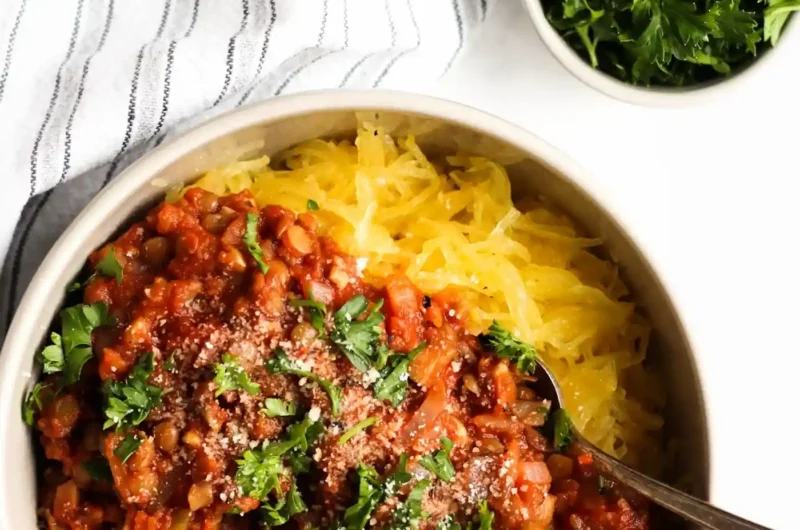
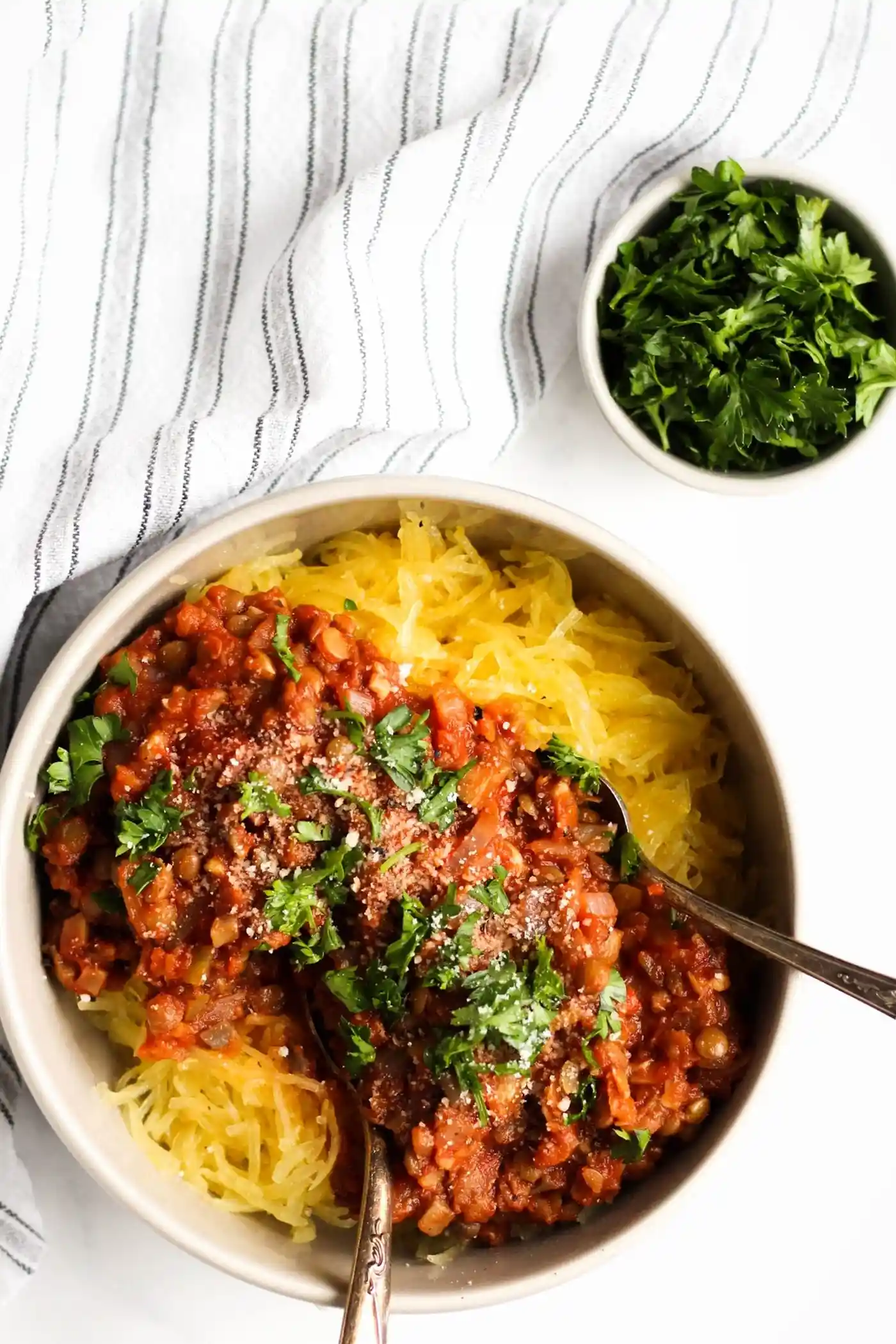
This recipe combines nutrient-dense red lentils with roasted spaghetti squash for a hearty, plant-based meal. It is a simple preparation that utilizes common pantry staples to create a comforting texture and rich flavor.
List of ingredients
- 1 small spaghetti squash – chosen for its firm skin and medium size.
- 1 tbsp olive oil, divided – used for both roasting the squash and sautéing aromatics.
- salt and pepper – used to season the interior of the squash.
- 1/2 cup dried red lentils – split red lentils are preferred for their ability to soften quickly.
- 1 1/2 cups water – used for boiling the lentils until tender.
- 1/2 medium yellow onion, diced – providing a savory aromatic base.
- 1 clove garlic, minced – adding pungent depth to the sauce.
- 1 cup jarred pasta sauce – use your favorite brand or a low-sodium option.
- microbial-rennet parmesan cheese, optional – for an optional salty finish.
step-by-step instructions
- Prepare the Oven and Squash: Preheat your oven to 400F. Slice the spaghetti squash in half length-wise and use a spoon to scoop out all the seeds.
- Season and Roast: Drizzle the inside of the squash halves with olive oil and sprinkle with salt and pepper. Place the squash halves inside-down (skin-side up) on a baking sheet and bake for approximately 45 minutes, depending on the squash size.
- Cook the Lentils: While the squash is roasting, combine the red lentils and water in a saucepan. Bring to a boil, then reduce heat and simmer uncovered until the lentils are tender.
- Drain and Set Aside: Once the lentils are soft, drain any excess water and transfer them to a small bowl.
- Sauté Aromatics: In the same saucepan, heat 1/2 tbsp of olive oil over medium heat. Add the diced onion and minced garlic, sautéing until they become translucent and fragrant.
- Combine Sauce: Stir the cooked lentils and the jarred pasta sauce into the saucepan. Simmer the mixture until the sauce is thoroughly heated through.
- Prep the Squash Base: Once the squash is finished baking, use a fork to scrape the flesh out of the skin. The flesh will naturally separate into long, stringy strands.
- Assemble and Serve: Place the scraped squash strands into a bowl and top with the hot lentil bolognese. Sprinkle with optional parmesan cheese before serving.
Optimal Spaghetti Squash Preparation
Selecting the Best Squash
Choose a squash that feels heavy for its size and has a hard, matte yellow shell. Avoid any squash with soft spots or bruising on the skin, as this indicates internal decay. A medium-sized squash typically ensures more even cooking times across the flesh.
Effective Seed Removal
Use a sturdy metal spoon to scrape the center of the squash after cutting it in half. Ensure all the stringy pulp and seeds are removed to create a clean surface for the oil and seasoning. This prevents the seeds from burning in the oven and sticking to the flesh.
Determining Doneness
The squash is fully cooked when a fork easily pierces the thickest part of the flesh with little resistance. The edges of the squash may be slightly caramelized and brown, which adds a deeper flavor to the dish. If the strands do not separate easily, return the squash to the oven for another 5 to 10 minutes.
Preventing Excess Moisture
If the squash releases too much water after scraping, place the strands in a colander for a few minutes. You can also pat them gently with a paper towel to remove surface moisture. This prevents the lentil sauce from becoming watery when combined.
Lentil Sauce Cooking Techniques
Choosing the Right Lentil Type
Red lentils are ideal for this recipe because they break down during cooking, creating a thick, porridge-like consistency that mimics ground meat. Green or brown lentils hold their shape better, which changes the texture of the bolognese. If using green lentils, increase the simmering time by 10 to 15 minutes.
Preventing Mushy Lentils
Avoid over-boiling the lentils before adding them to the sauce. They should be tender but not completely disintegrated. Draining the excess water immediately after they reach the desired softness prevents them from continuing to cook in their own steam.
Developing Deep Flavor
Sautéing the onion and garlic until translucent is crucial for removing the raw taste of the aromatics. Allow the onions to soften completely before adding the garlic, as garlic burns more quickly and can become bitter. This creates a sweet and savory foundation for the pasta sauce.
Adjusting Sauce Consistency
If the final sauce is too thick, stir in a tablespoon of water or vegetable broth to loosen it. If it is too thin, allow it to simmer for an additional 5 minutes without a lid to reduce the liquid. This ensures the sauce clings well to the squash strands.
Customizations and Ingredient Variations
Adding Fresh Vegetables
Incorporate finely diced carrots or celery into the sauté step with the onions to create a traditional soffritto base. Diced mushrooms can also be added to increase the earthy flavor and provide a more substantial chew. Stir these in and cook until softened before adding the lentils.
Increasing Protein Content
For a higher protein count, you can mix in a small amount of crumbled firm tofu or cooked quinoa. These additions blend well with the texture of the red lentils and the tomato sauce. Ensure any added proteins are well-seasoned to match the bolognese profile.
Alternative Sauce Bases
If you do not have jarred pasta sauce, use a combination of crushed tomatoes, tomato paste, and dried oregano. Simmer this mixture for 10 minutes before adding the lentils to develop a richer taste. A pinch of sugar can be added to balance the acidity of the tomatoes.
Dairy-Free Cheese Alternatives
Substitute the parmesan with nutritional yeast for a nutty, cheesy flavor that remains entirely vegan. You can also use a plant-based parmesan alternative made from coconut oil and potato starch. These options provide the desired salty finish without using animal products.
Serving and Presentation Ideas
Adding Fresh Herb Garnishes
Freshly chopped basil or parsley added at the end provides a bright contrast to the rich tomato sauce. A sprinkle of chopped chives can also add a mild onion flavor. Always add fresh herbs after the heat is turned off to preserve their color and volatile oils.
Pairing with Side Dishes
Serve this dish with a side of steamed broccoli or a crisp green salad with a lemon vinaigrette. The acidity of a salad helps cut through the richness of the lentil sauce. Garlic bread made with a whole-grain baguette is another complementary option.
Alternative Base Options
While spaghetti squash is the primary base, this sauce also works well over zoodles (zucchini noodles) or cauliflower rice. For a more traditional version, use whole-wheat spaghetti or gluten-free brown rice pasta. This allows you to use leftover sauce for different meals throughout the week.
Storage and Reheating Instructions
Refrigeration Guidelines
Store the cooked lentils and sauce in an airtight glass container in the refrigerator for up to 4 days. Keep the roasted squash in a separate container to prevent it from absorbing too much sauce and becoming mushy. Label the containers with the date of preparation.
Freezing the Lentil Sauce
The lentil bolognese sauce freezes exceptionally well for up to 3 months. Portion the sauce into freezer-safe bags or containers, leaving a small amount of space at the top for expansion. Do not freeze the roasted spaghetti squash, as its texture becomes watery upon thawing.
Best Reheating Methods
To reheat the sauce, place it in a small pot over medium-low heat and add a splash of water to restore the consistency. For the squash, a quick toss in a skillet or a brief microwave session is best. Combine the two components only after both have been heated separately.
Troubleshooting Common Issues
Why is my squash too watery?
This usually happens if the squash is sliced too thin or if it is cooked skin-side up without being drained. Ensure you roast it inside-down to let the moisture evaporate. If it is still watery, strain the strands through a fine-mesh sieve before plating.
Why did my lentils stay hard?
Hard lentils are often the result of using old lentils or adding salt too early in the boiling process, which can toughen the skins. Ensure you use fresh red lentils and simmer them until they are naturally soft. If they remain hard, add a small amount of baking soda to the water to soften them.
How do I fix a bland sauce?
If the sauce lacks depth, add a teaspoon of soy sauce or a pinch of smoked paprika for umami and smokiness. A small squeeze of fresh lemon juice or a drop of apple cider vinegar can also brighten the flavors. Always taste the sauce before the final simmer.
Frequently Asked Questions
Can I use canned lentils instead of dried?
Yes, you can substitute the dried red lentils with one 15-ounce can of lentils. Drain and rinse the canned lentils thoroughly, then stir them directly into the sautéed onions and pasta sauce. Skip the boiling and draining steps entirely.
How do I prevent the squash from burning?
Ensure the squash is well-coated in olive oil and that the oven temperature is calibrated correctly. If the edges brown too quickly, cover the baking sheet loosely with aluminum foil. Check the squash every 15 minutes after the initial 30 minutes of roasting.
What is the best pasta sauce to use?
A simple marinara or a basil-infused tomato sauce works best for this recipe. Avoid sauces that already contain heavy cream or meat to keep the dish plant-based. Look for sauces with minimal added sugars and a high percentage of tomato puree.
Can I roast the squash in an air fryer?
Yes, you can roast spaghetti squash halves in an air fryer at 375F for about 25 to 35 minutes. Ensure the halves fit comfortably without touching the heating element. Check for doneness using the fork test every 10 minutes.
Print
Plant-Based Lentil Bolognese with Roasted Spaghetti Squash
- Total Time: 50 minutes
- Yield: 2 servings 1x
- Diet: Vegan, Vegetarian
Description
A super easy lentil ‘bolognese’ made with lentils, onion, garlic, and pasta sauce, served over roasted spaghetti squash for a healthy, plant-based comfort meal.
Ingredients
- 1 small spaghetti squash
- 1 tbsp olive oil (divided)
- salt and pepper
- 1/2 cup dried red lentils
- 1 1/2 cups water
- 1/2 medium yellow onion, diced
- 1 clove garlic, minced
- 1 cup jarred pasta sauce
- microbial-rennet parmesan cheese (optional)
Instructions
- Step: Preheat oven to 400F, slice spaghetti squash in half length-wise, scoop out seeds, drizzle with olive oil, sprinkle with salt and pepper, and bake inside-down on a baking sheet for approximately 45 minutes.
- Step: Bring lentils to a boil in water in a saucepan, reduce heat and simmer uncovered until tender, then drain excess water.
- Step: Heat ½ tbsp olive oil in the saucepan, sauté diced onion and minced garlic until translucent, then stir in cooked lentils and pasta sauce and simmer until hot.
- Step: Scrape the cooked squash out of the skin into a bowl and top with the lentil sauce mixture and optional microbial-rennet parmesan cheese.
Notes
To make this recipe even easier, you can substitute the dried red lentils for a can of lentils (drained and rinsed) and stir them directly into the sauce.
- Prep Time: 5 minutes
- Cook Time: 45 minutes
- Category: Main Course
- Method: Roasting and Simmering
- Cuisine: Vegan
Nutrition
- Serving Size: 1 serving
- Calories: 480 kcal
- Sugar: 8 g
- Sodium: 620 mg
- Fat: 12 g
- Saturated Fat: 2 g
- Unsaturated Fat: 10 g
- Trans Fat: 0 g
- Carbohydrates: 45 g
- Fiber: 15 g
- Protein: 13 g
- Cholesterol: 0 mg
Keywords: lentil bolognese, spaghetti squash, vegan dinner, plant-based protein, healthy comfort food