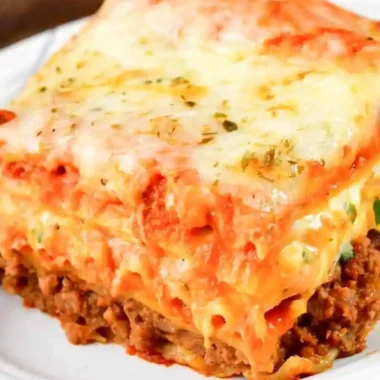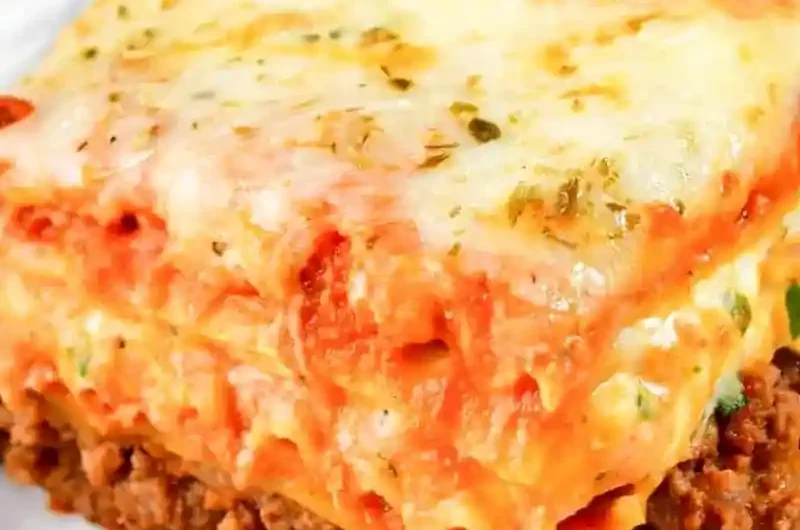
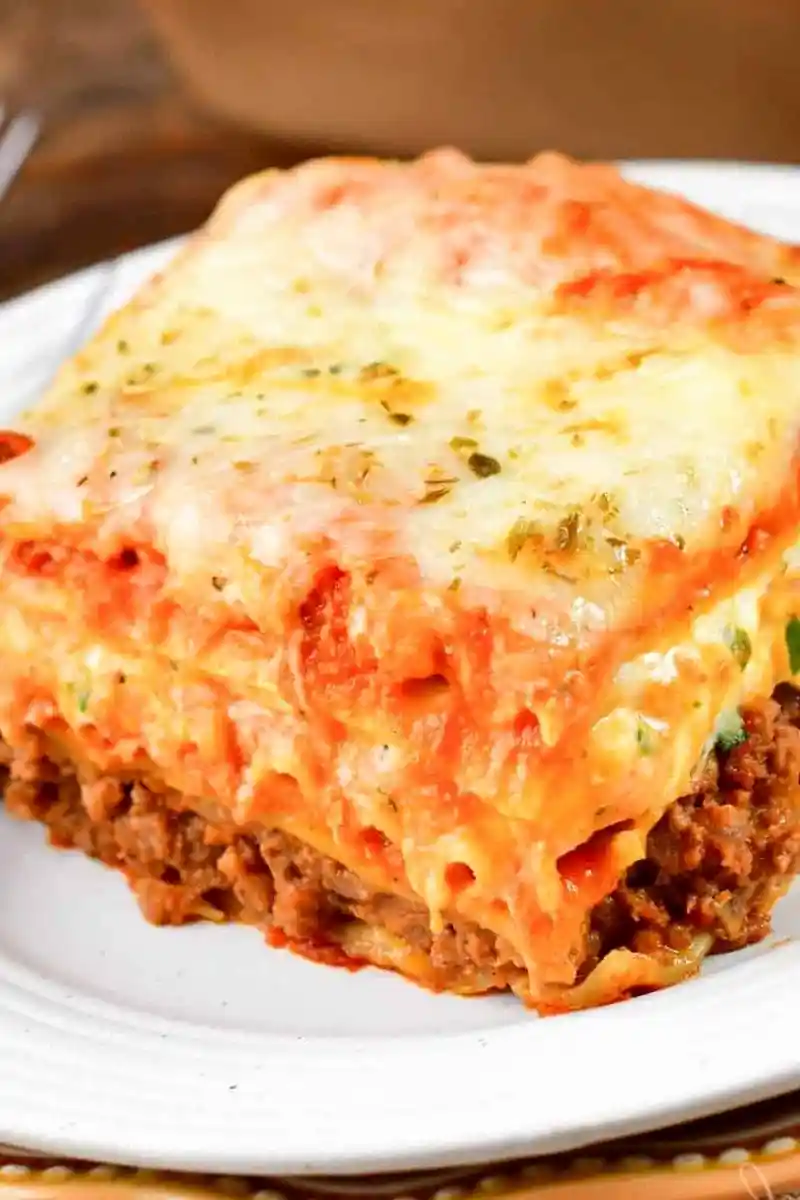
This hearty lasagna is a crowd-pleasing dinner that layers savory beef and creamy cheeses. Using oven-ready noodles simplifies the process for a stress-free meal that tastes authentic.
List of ingredients
- 4 1/2 cups marinara sauce (homemade or store-bought), divided – use for layers and base.
- 8-10 oz oven ready lasagna sheets – saves boiling time.
- 1 1/2 cups shredded Italian cheese mix (topping) – for the final crust.
- 1/2 tsp dry oregano (topping) – for aromatic finish.
- 2 tbsp olive oil – for sautéing.
- 1 yellow onion, diced – provides a savory base.
- 2 lbs ground beef (85/15 or 90/10 meat to fat ratio) – main protein.
- 1/2 tsp dry oregano – seasons the beef.
- 1/3 cup freshly grated Parmesan cheese – adds saltiness to the meat.
- salt – to taste.
- fresh cracked black pepper – to taste.
- 1 1/2 cups shredded Italian cheese mix – for the first beef layer.
- 20 oz whole milk ricotta – creamy filling base.
- 1 cup shredded Italian cheese mix – mixed into ricotta.
- 1/2 cup freshly grated Parmesan cheese – mixed into ricotta.
- 1 tbsp minced fresh Italian parsley (or regular parsley) – fresh herbal note.
- 2 tbsp minced fresh basil – aromatic herb.
- 1 tsp dry oregano – seasons the ricotta.
- 1 egg – binds the cheese mixture.
- salt – to taste.
step-by-step instructions
- Prepare the Oven: Preheat your oven to 350°F and lightly grease a 9×13 inch casserole dish to prevent sticking.
- Cook the Beef Mixture: Heat a medium pan over medium heat with olive oil and sauté diced onion until transparent. Add the ground beef, breaking up any lumps, and cook until browned. Season with salt, pepper, and 1/2 tsp oregano, then stir in 1 1/2 cups of marinara sauce and 1/3 cup grated Parmesan cheese.
- Prepare the Ricotta Filling: In a mixing bowl, combine the ricotta, 1 cup shredded Italian cheese, 1/2 cup Parmesan, minced parsley, minced basil, 1 tsp oregano, one egg, and salt. Mix thoroughly until the texture is consistent.
- Start the Base Layer: Spread 1 cup of marinara sauce evenly over the bottom of the prepared casserole dish.
- First Pasta Layer: Arrange lasagna noodles in an even layer over the sauce, overlapping the sheets by 1/4 to 1/2 inch for stability.
- Add Beef and Cheese: Spread the cooked beef mixture evenly over the noodles, then top with 1 1/2 cups of shredded Italian cheese mix.
- Second Pasta Layer: Add another layer of lasagna noodles, again overlapping the sheets slightly.
- Add Sauce and Ricotta: Spread 1 cup of marinara sauce over the noodles. Dollop the ricotta mixture over the sauce and spread it into an even layer using your hands or a spatula.
- Final Pasta Layer: Place the final layer of lasagna noodles over the ricotta mixture, maintaining the slight overlap.
- Top the Lasagna: Spread the remaining 1 cup of marinara sauce over the top noodles and cover with 1 1/2 cups of shredded Italian cheese mix. Sprinkle the 1/2 tsp of dry oregano over the cheese.
- Cover and Bake: Spray one side of an aluminum foil sheet with cooking spray and cover the dish, oiled side down. Bake for 35 minutes.
- Final Browning: Remove the foil and bake for an additional 10-15 minutes until the cheese is bubbly and browned.
Professional Baking Tips
Use Oven-Ready Noodles to Save Time
Oven-ready lasagna sheets are designed to cook directly in the sauce, which significantly reduces preparation time by eliminating the boiling and draining process. Because these noodles do not start hydrated, they absorb moisture from the marinara and ricotta layers during baking. It is essential to ensure the sauce is spread evenly so that no edges of the pasta remain dry or hard after cooking.
Overlap Pasta Sheets for Better Structure
When layering the pasta, allow the sheets to overlap by approximately 1/4 to 1/2 inch. This technique creates a more cohesive structure that prevents the layers from sliding apart when slicing. If you encounter small gaps in the corners of the dish, you can break a noodle sheet into smaller pieces to fill those spaces completely.
Select 85/15 Ground Beef for Juiciness
Using ground beef with an 85/15 meat-to-fat ratio provides the best balance of flavor and moisture. Leaner meats, such as 95/5, can become dry and crumbly during the long baking process. If the beef releases too much liquid while browning, you can drain a portion of the excess grease before adding the marinara sauce.
Grease Aluminum Foil to Prevent Sticking
Applying cooking spray to the underside of the aluminum foil prevents the cheese from sticking to the metal. Without this step, the top layer of cheese often pulls away from the lasagna when the foil is removed. This keeps the presentation clean and ensures the cheese remains on the dish.
Ingredient Substitutions and Enhancements
Replace Ricotta with Drained Cottage Cheese
Cottage cheese can be used as a high-protein alternative to ricotta, though it has a different texture and higher moisture content. To make this work, drain the cottage cheese through a fine-mesh sieve for 30 minutes to remove excess liquid. For a smoother consistency that mimics ricotta, pulse the cottage cheese in a blender or food processor for a few seconds.
Use Whole Milk Mozzarella for a Classic Stretch
While an Italian cheese mix is convenient, using whole milk mozzarella provides a superior melt and stretch. Combine it with fresh grated Parmesan to achieve a professional-grade flavor profile. The higher fat content in whole milk cheese prevents it from becoming rubbery during the browning phase.
Add Asiago or Fontina for Depth of Flavor
To enhance the cheesy profile, incorporate small amounts of Asiago or Fontina into the shredded mix. Asiago adds a sharp, nutty note that complements the beef, while Fontina provides a creamy, buttery quality. These additions create a more complex flavor palette than using mozzarella alone.
Preparation and Make-Ahead Strategies
Prepare Marinara Sauce in Advance
Making your spaghetti or marinara sauce 24 hours in advance allows the flavors to meld and develop. Once cooked, let the sauce cool completely before storing it in an airtight glass jar in the refrigerator. This saves significant time on the day of assembly and ensures a more consistent taste.
Assemble and Refrigerate Before Baking
You can fully assemble the lasagna without baking it and store it in the refrigerator for up to one day. Keep the dish tightly covered with plastic wrap to prevent the noodles from drying out. When you are ready to cook, add 5 to 10 minutes to the initial covered baking time to account for the cold temperature of the ingredients.
Freeze Unbaked Lasagna for Later Use
To freeze the meal, assemble it in a freezer-safe pan and wrap it tightly with plastic wrap, followed by a layer of aluminum foil. Label the package and freeze for up to six months. Thaw the lasagna in the refrigerator for 24 hours before baking, and add 15-20 minutes to the covered baking stage.
Storage and Reheating Methods
Store in the Original Casserole Dish
The easiest way to store leftovers is to keep them in the original baking dish. Ensure the lasagna has cooled completely before covering it with a tight lid or plastic wrap to avoid condensation. It will remain fresh and safe to eat in the refrigerator for 3 to 5 days.
Reheat Individual Portions in the Microwave
For single servings, place a slice on a microwave-safe plate and cover it with a damp paper towel. This helps steam the pasta and prevents the edges from becoming hard. Heat in short intervals, stirring or checking occasionally until the center is hot.
Warm Large Portions in the Oven
To reheat several slices at once, place them in a covered baking dish and heat in the oven at 325°F. Covering the dish with foil is critical to prevent the cheese from burning before the center is warmed. This method usually takes about 20 minutes to reach the desired temperature.
Common Lasagna Questions
What can I do with leftover ricotta?
Leftover ricotta is versatile and can be used in sweet or savory dishes. Try incorporating it into pancakes or doughnuts for a moist texture, or stir it into a quiche or breakfast egg muffins. It also works well as a stuffing for French toast or as a base for a quick lunch flatbread.
How long does cooked lasagna last in the fridge?
Cooked lasagna is generally safe to eat for 3 to 5 days when stored in an airtight container at 40°F or below. To maximize quality, avoid leaving the dish at room temperature for more than two hours after baking.
Do I need to boil the noodles first?
No, this recipe specifically uses oven-ready sheets which are designed to hydrate during the baking process. If you choose to use traditional lasagna noodles instead, you must boil them according to the package directions before layering.
How do I prevent the lasagna from being too watery?
Wateriness usually comes from undercooked beef or high-moisture cheeses. Ensure the beef is well-browned and any excess liquid is drained. If using cottage cheese instead of ricotta, make sure it is thoroughly drained in a sieve before mixing.
Troubleshooting Common Issues
Fixing Dry Layers
If your lasagna comes out dry, it is often due to an insufficient amount of sauce or an oven temperature that is too high. Ensure you are using the full 4 1/2 cups of marinara and that the noodles are completely covered. If the edges are dry, try baking the dish in a slightly more humid environment or adding a tablespoon of water to the corners.
Managing Excess Grease from Beef
Too much fat in the beef layer can lead to a greasy finish that separates from the sauce. After browning the beef and before adding the marinara, tilt the pan and spoon out the excess oil. This ensures the meat layer remains savory without becoming oily.
Preventing Burned Cheese on Top
If the cheese browns too quickly before the interior is hot, check that you are using the foil cover for the first 35 minutes. If it still burns, lower the oven temperature by 25°F and extend the baking time slightly. You can also add a small amount of extra sauce on top of the cheese to protect it from direct heat.
Print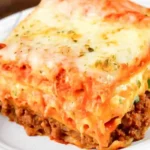
Classic Beef and Cheese Lasagna
- Total Time: 84 minutes
- Yield: 9 servings 1x
- Diet: General
Description
This classic lasagna recipe is like a little black dress – it’ll never go out of style and will always make you happy! Enjoy layers of ground beef, pasta, ricotta cheese mixture, easy homemade spaghetti sauce, and more cheese in every bite.
Ingredients
- 4 1/2 cups marinara sauce
- 8–10 oz oven ready lasagna sheets
- 1 1/2 cups shredded Italian cheese mix
- 1/2 tsp dry oregano
- 2 tbsp olive oil
- 1 yellow onion, diced
- 2 lbs ground beef (85/15 or 90/10 meat to fat ratio)
- 1/2 tsp dry oregano
- 1/3 cup freshly grated Parmesan cheese
- salt
- fresh cracked black pepper
- 1 1/2 cups shredded Italian cheese mix
- 20 oz whole milk ricotta
- 1 cup shredded Italian cheese mix
- 1/2 cup freshly grated Parmesan cheese
- 1 tbsp minced fresh Italian parsley
- 2 tbsp minced fresh basil
- 1 tsp dry oregano
- 1 egg
- salt
Instructions
- Step: Preheat oven to 350°F and grease 9×13 casserole dish.
- Step: Heat a medium cooking pan over medium heat. Add oil and saute diced onion until transparent.
- Step: Add ground beef and cook, breaking up all the lumps, until just done.
- Step: Season with salt, pepper, and oregano.
- Step: Mix in 1 1/2 cups of marinara sauce and 1/3 cup grated Parmesan cheese.
- Step: Combine all ingredients for the ricotta layer in a mixing bowl and mix very well.
- Step: Spread 1 cup of marinara sauce over the bottom of the casserole dish.
- Step: Layer lasagna noodles in one even layer.
- Step: Spread beef mixture over the pasta sheets evenly.
- Step: Spread 1 1/2 cups of shredded Italian cheese mix.
- Step: Layer lasagna noodles in one even layer.
- Step: Spread 1 cup of marinara sauce over pasta sheets evenly.
- Step: Spread ricotta mixture evenly.
- Step: Layer lasagna noodles in one even layer.
- Step: Spread 1 cup of marinara sauce over pasta sheets, evenly.
- Step: Spread 1 1/2 cups of shredded Italian cheese mix over the sauce evenly.
- Step: Sprinkle some oregano over the top.
- Step: Spray one side of aluminum foil sheet with cooking spray and cover the casserole dish with foil, oiled side down.
- Step: Bake covered for about 35 minutes.
- Step: Take off the foil and bake for another 10-15 minutes.
Notes
Use oven-ready noodles to save time. Overlap pasta sheets by 1/4 to 1/2 inch to cover the pan. Spraying the aluminum foil prevents the cheese from sticking during the baking process.
- Prep Time: 20 minutes
- Cook Time: 64 minutes
- Category: Main Course
- Method: Baking
- Cuisine: Italian
Nutrition
- Serving Size: 1 slice
- Calories: 741 kcal
- Sugar: 7 g
- Sodium: 1311 mg
- Fat: 48 g
- Saturated Fat: 22 g
- Unsaturated Fat: 26 g
- Trans Fat: 0 g
- Carbohydrates: 30 g
- Fiber: 2 g
- Protein: 45 g
- Cholesterol: 166 mg
Keywords: homemade lasagna, classic lasagna, Italian dinner, beef lasagna, oven-ready lasagna