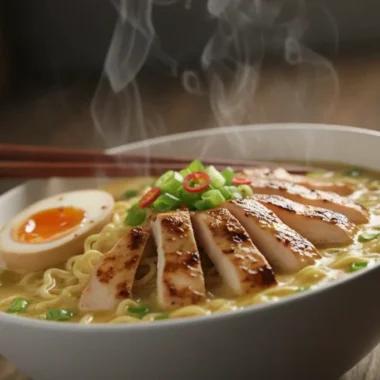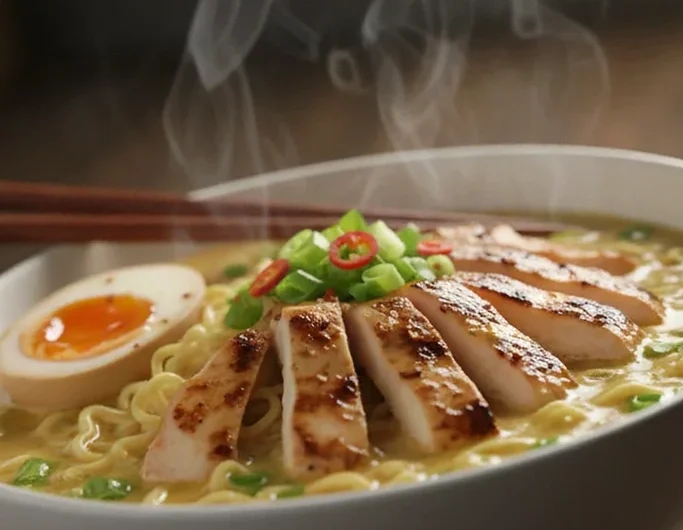
This creamy garlic chicken ramen is a rich and satisfying meal that combines tender protein with a velvety broth. It is an excellent choice for a quick weeknight dinner that delivers a professional restaurant-style result at home.
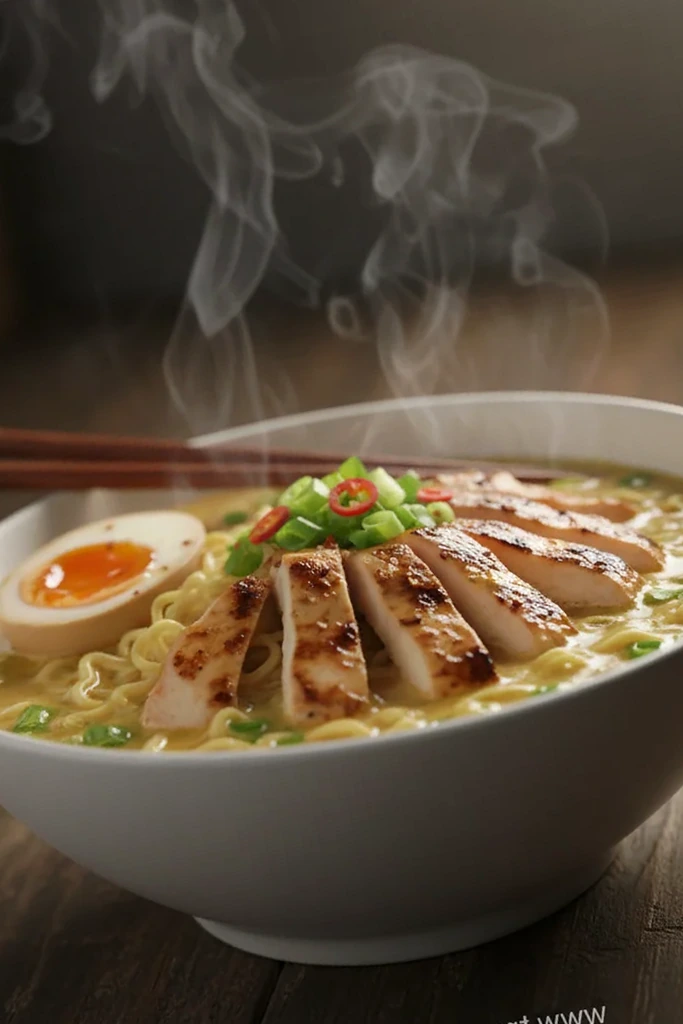
List of ingredients
- 1 lb chicken thighs, bone-in, skin-on, cut into bite-size pieces – provides a richer flavor than breast meat.
- 200 g fresh ramen noodles – ensures a springy and authentic texture.
- 3 tbsp unsalted butter – used to sear the chicken and create a nutty base.
- 4 cloves garlic, minced – adds a pungent and aromatic depth to the sauce.
- 2 cups low-sodium chicken broth – serves as the savory liquid foundation.
- 1 cup heavy cream – creates the signature silky and thick consistency.
- 2 tbsp soy sauce – contributes essential saltiness and umami.
- 1 tsp sesame oil – adds a toasted, nutty aroma to the final dish.
- 2 green onions, thinly sliced – used as a fresh garnish for color and bite.
- Sesame seeds – adds a subtle crunch to the topping.
- Fresh cilantro leaves – provides a bright, herbal contrast.
- A drizzle of chili oil – optional for adding a touch of heat.
step-by-step instructions
- Sear the chicken: Season the chicken pieces with a pinch of salt and pepper. Melt butter in a large pot over medium-high heat, place chicken skin-side down, and cook for about 4 minutes until golden before flipping and setting them aside.
- Sauté the garlic: Add the minced garlic to the same pot and stir for approximately 30 seconds until fragrant. Immediately pour in the chicken broth and soy sauce, scraping the bottom of the pot to incorporate the browned bits.
- Prepare the creamy base: Bring the broth to a gentle simmer, then stir in the heavy cream and sesame oil. Return the seared chicken to the pot and let it simmer for 5 minutes to allow the flavors to meld.
- Cook the ramen: Add the ramen noodles to the pot and cook according to the package directions, typically 3-4 minutes. If the broth becomes too thick, stir in a small amount of reserved noodle water to loosen it.
- Finish and serve: Taste the broth and adjust the seasoning with extra soy sauce or salt if needed. Ladle the ramen into bowls and garnish with sliced green onions, sesame seeds, cilantro, and chili oil.
Professional Cooking Techniques
Properly Searing Chicken Thighs
To get the most flavor, ensure the chicken skin is patted dry with paper towels before seasoning. Place the pieces skin-side down in hot butter without overcrowding the pan to prevent steaming. This ensures a deep golden-brown crust that adds significant richness to the resulting broth.
Preventing Garlic from Burning
Garlic contains natural sugars that burn quickly, which can introduce a bitter taste to the ramen. Sauté the minced garlic for no more than 30 to 60 seconds over medium heat. Have your broth ready to pour in immediately to stop the cooking process once the garlic is fragrant.
Deglazing the Pot for Maximum Flavor
The brown bits stuck to the bottom of the pot after searing the chicken are called fond and are packed with flavor. When you add the chicken broth and soy sauce, use a wooden spoon or whisk to scrape these bits off. This process incorporates those caramelized proteins directly into the soup base.
Maintaining Noodle Texture
Avoid overcooking the ramen noodles, as they can quickly become mushy and lose their structure. Cook them just until they are al dente, meaning they still have a slight firmness in the center. Since the noodles continue to cook in the hot broth after serving, removing them slightly early preserves the best bite.
Ingredient Alternatives and Substitutions
Using Chicken Breast instead of Thighs
If you prefer lean meat, you can substitute chicken breast for thighs. However, breast meat cooks faster and dries out more easily, so reduce the simmering time. Slice the breast into thin strips and sear them quickly on high heat to maintain juiciness.
Plant-Based Protein Options
For a meat-free version, replace the chicken with extra-firm tofu or tempeh. Press the tofu for 20 minutes to remove excess moisture, then cube and sear it in butter or oil until golden. Use vegetable broth instead of chicken broth to keep the dish completely plant-based.
Dairy-Free Cream Substitutes
To make this recipe dairy-free, replace the heavy cream with full-fat canned coconut milk or cashew cream. Coconut milk adds a slight sweetness that complements the soy and garlic, while cashew cream offers a more neutral flavor. Ensure these are stirred in at the end to prevent separation.
Gluten-Free Noodle Choices
For a gluten-free option, use rice noodles, shirataki noodles, or certified gluten-free ramen noodles. Note that rice noodles may require separate boiling before being added to the broth. Adjust the cooking time based on the specific type of noodle to avoid overcooking.
Substituting Soy Sauce
If you need a soy-free alternative, coconut aminos or tamari are excellent replacements. Coconut aminos provide a similar umami profile but are slightly sweeter and lower in sodium. Tamari is a great option for those seeking a richer, more traditional soy flavor without the wheat.
Ways to Customize Your Bowl
Adding a Spicy Kick
While chili oil is a garnish, you can integrate heat into the broth by adding a teaspoon of sriracha or gochujang during the simmering process. A pinch of red pepper flakes added with the garlic also provides a subtle, warming heat throughout the soup.
Mediterranean-Inspired Twist
For a unique fusion, stir in chopped sun-dried tomatoes and sliced black olives during the final simmer. Top the dish with a sprinkle of crumbled feta cheese instead of sesame seeds. This adds a salty, tangy dimension that contrasts well with the creamy garlic base.
Integrating Fresh Vegetables
Boost the nutritional value by adding bok choy, spinach, or sliced carrots to the pot. Add hard vegetables like carrots early in the simmering process and leafy greens like spinach during the last minute of cooking. This adds color and a fresh, crisp texture to the meal.
Adding a Soft-Boiled Egg
A traditional ramen topping is the ajitsuke tamago, or marinated soft-boiled egg. Boil an egg for 6.5 minutes, shock it in an ice bath, peel, and marinate in a mix of soy sauce and mirin for a few hours. Slice it in half and place it on top of the ramen before serving.
Serving and Pairing Suggestions
Best Beverage Pairings
Pair this rich ramen with a light, chilled sparkling water infused with a slice of lemon to cleanse the palate. A cold green tea or an iced oolong tea also works well, as the tannins help cut through the richness of the heavy cream and butter.
Complementary Side Dishes
Serve the ramen with a side of steamed edamame sprinkled with sea salt for added protein. A simple cucumber salad tossed in rice vinegar, sesame oil, and a pinch of sugar provides a refreshing, acidic contrast to the creamy broth.
Plating for Visual Appeal
Use deep ceramic bowls to keep the broth hot and prevent splashing. Arrange the chicken on one side of the bowl and the noodles on the other, then carefully place the green onions and cilantro on top. Finish with a precise drizzle of chili oil for a professional, colorful look.
Storing and Reheating Instructions
Refrigerator Storage
Store leftover ramen in airtight containers in the refrigerator for up to three days. It is highly recommended to store the cooked noodles separately from the broth to prevent them from absorbing all the liquid and becoming bloated. This keeps the texture of both components intact.
Freezing the Broth and Meat
The creamy broth and cooked chicken can be frozen for up to two months. Pour the broth into freezer-safe bags or containers, leaving room for expansion. Avoid freezing the noodles, as they will lose their texture and become mushy upon thawing.
Best Reheating Methods
Reheat the broth and chicken in a small pot over medium heat, stirring occasionally to ensure the cream does not separate. If the sauce has thickened too much during storage, add a splash of water or chicken broth to restore the original consistency. Heat the noodles separately in boiling water for 30 seconds before combining.
Advanced Preparation Tips
Prepping the Chicken
To save time on cooking day, you can season and sear the chicken thighs up to 24 hours in advance. Store the browned chicken in a sealed container in the fridge. When ready to eat, simply add the pre-cooked chicken back into the broth during the final five minutes of simmering.
Preparing the Broth Base
You can create a concentrated garlic and broth base ahead of time by sautéing the garlic and simmering it with the chicken broth and soy sauce. Store this liquid in the fridge and simply add the heavy cream, sesame oil, and noodles when you are ready to serve the meal.
Noodle Management
If using fresh noodles that are clumped together, gently separate them by hand before adding them to the pot. This ensures that every strand is evenly coated in the creamy sauce and prevents raw spots in the center of the noodle mass.
Troubleshooting Common Issues
Broth Too Thick
If the broth becomes too thick or paste-like, it is usually due to the starch from the noodles or the reduction of the cream. Stir in a tablespoon of water, chicken broth, or reserved noodle water. Do this gradually until the sauce reaches a pourable, silky consistency.
Broth Too Thin
If the broth feels too watery, let it simmer for an additional 3 to 5 minutes without a lid to allow more liquid to evaporate. Alternatively, you can whisk in a small amount of cornstarch slurry (cornstarch mixed with water) to thicken the sauce quickly.
Bitter Garlic Taste
A bitter taste is almost always caused by burnt garlic. If this happens, you cannot remove the bitterness, but you can balance it by adding a tiny pinch of sugar or a splash of rice vinegar. To avoid this in the future, lower the heat before adding the garlic.
Overcooked Noodles
Noodles that have become mushy are often the result of cooking them too long in the broth. To fix this for future batches, try boiling the noodles separately and adding them to the bowl just before pouring the hot broth over them. This gives you total control over the texture.
Frequently Asked Questions
Can I use dried noodles?
Yes, dried ramen noodles work well, though they may require a slightly longer cooking time than fresh ones. Boil them separately first or add them to the broth, following the package instructions for the correct texture.
How long does it stay fresh?
The dish is best enjoyed immediately. However, if stored in an airtight container in the refrigerator, the broth and chicken will remain fresh for up to three days, provided the noodles are stored separately.
Can I make this in a slow cooker?
You can slow-cook the chicken and broth on low for 6-8 hours, but do not add the cream or noodles to the slow cooker. Stir in the heavy cream and cook the noodles on the stovetop at the very end to maintain the proper emulsion and texture.
How do I stop the cream from curdling?
Curdling happens when cream is boiled too vigorously or added to an extremely acidic base. Bring the broth to a gentle simmer rather than a rolling boil, and stir the cream in steadily over medium heat to ensure a smooth integration.
Print
Creamy Garlic Chicken Ramen
- Total Time: 40 minutes
- Yield: 4 servings 1x
- Diet: General
Description
Silky ramen with garlic‑infused broth, chicken, and a creamy finish.
Ingredients
- 1 lb chicken thighs, bone‑in, skin‑on, cut into bite‑size pieces
- 200 g fresh ramen noodles
- 3 tbsp unsalted butter
- 4 cloves garlic, minced
- 2 cups low‑sodium chicken broth
- 1 cup heavy cream
- 2 tbsp soy sauce
- 1 tsp sesame oil
- 2 green onions, thinly sliced
- Sesame seeds
- Fresh cilantro leaves
- A drizzle of chili oil
Instructions
- Step: Season the chicken pieces with a pinch of salt and pepper. In a large pot, melt butter over medium‑high heat, then place the chicken skin side down; cook until golden, about 4 minutes, then flip and set aside.
- Step: Add minced garlic to the same pot, stirring for 30 seconds until fragrant—watch closely so it doesn’t brown. Pour in chicken broth and soy sauce, scraping up any browned bits.
- Step: Bring the broth to a gentle simmer, then stir in heavy cream and sesame oil. Return the chicken to the pot, letting it simmer for 5 minutes while the flavors meld.
- Step: Add the ramen noodles, cooking according to package directions (usually 3‑4 minutes). If the broth thickens too much, add a splash of reserved noodle water.
- Step: Taste and adjust seasoning with extra soy sauce or a pinch of salt. Ladle into bowls, garnish with green onions, sesame seeds, and a drizzle of chili oil if desired.
Notes
For extra depth, finish with a whisper of toasted nori strips. If you prefer a lighter broth, substitute half the cream with low‑fat milk. Avoid stirring too vigorously after adding cream to keep the silkiness intact.
- Prep Time: 15 minutes
- Cook Time: 25 minutes
- Category: Main Course
- Method: Stovetop
- Cuisine: Japanese-American Fusion
Nutrition
- Serving Size: 1 bowl
- Calories: 560 kcal
- Sugar: 4 g
- Sodium: 720 mg
- Fat: 28 g
- Saturated Fat: 12 g
- Unsaturated Fat: 16 g
- Trans Fat: 0 g
- Carbohydrates: 45 g
- Fiber: 2 g
- Protein: 32 g
- Cholesterol: 110 mg
Keywords: creamy garlic chicken ramen, Japanese-American fusion, comforting noodles, quick dinner