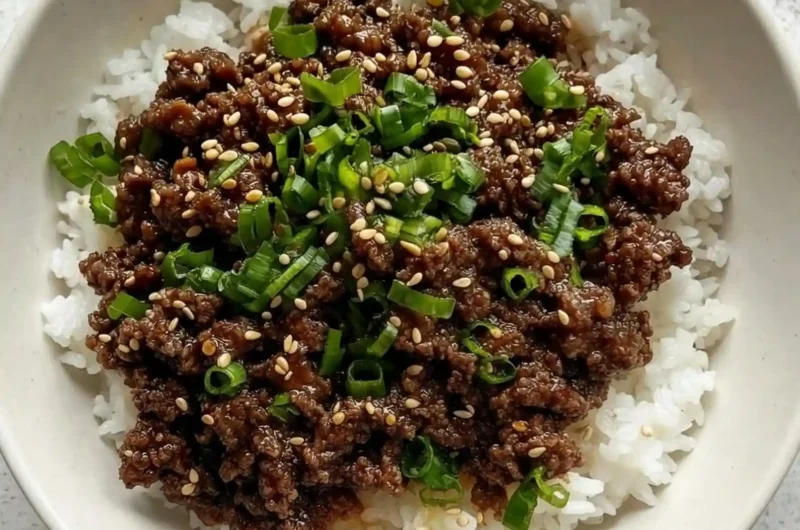
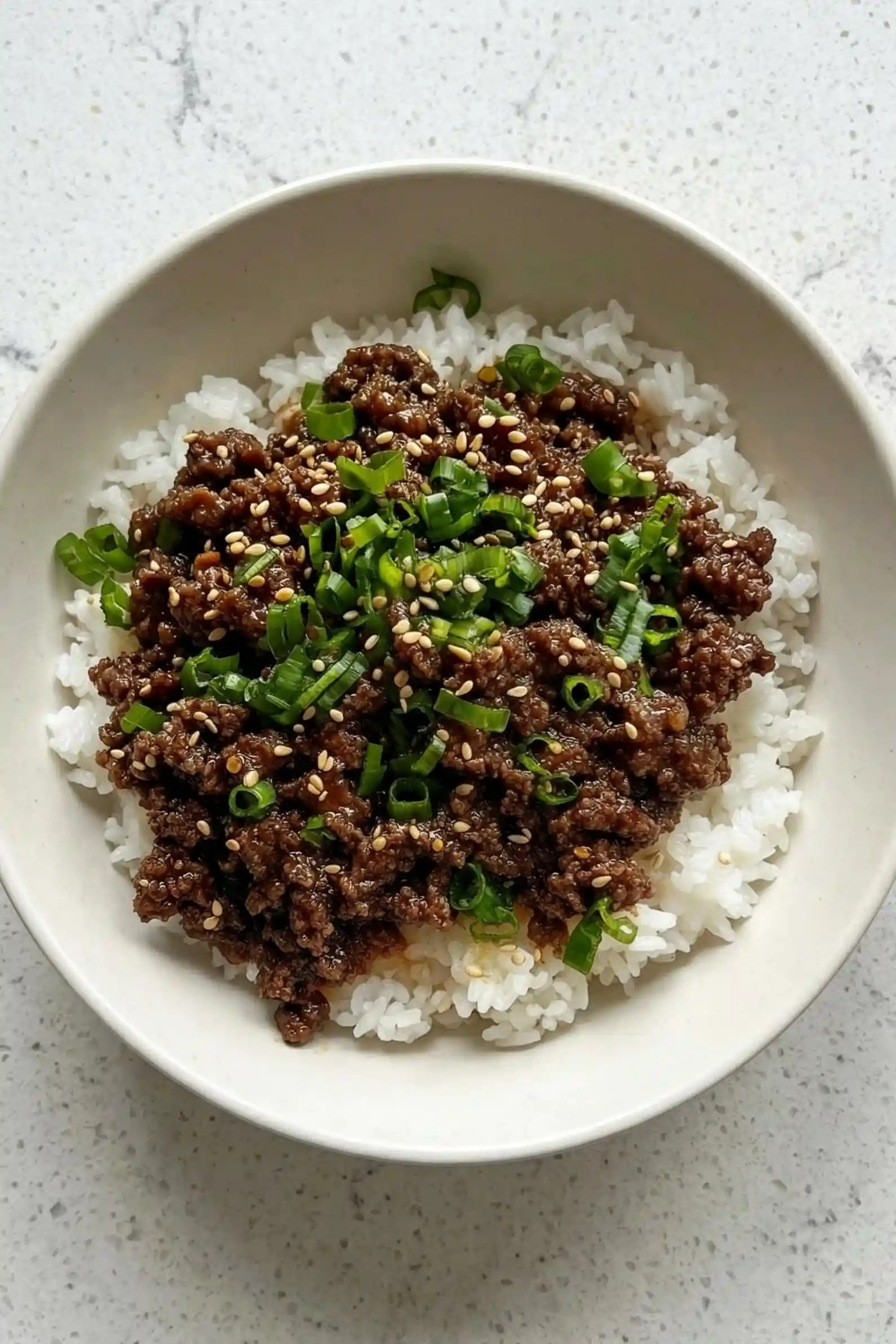
This fast-cooking Korean-inspired beef bowl is an ideal solution for busy weeknight dinners or healthy meal prep. It combines savory soy sauce and sweet brown sugar to create a rich glaze over tender ground beef.
List of ingredients
- 1 lb ground beef (lean) – provides the savory protein base.
- 5 cloves garlic (minced) – adds sharp, aromatic depth.
- 1 tbsp fresh ginger (grated) – brings a warm, zesty flavor.
- 2 tbsp sesame oil – provides a distinct nutty aroma.
- 1/2 cup reduced-sodium soy sauce – the primary salty, umami element.
- 1/3 cup light brown sugar – balances the salt and creates a glaze.
- 1/4 tsp red pepper flakes (crushed) – adds a subtle hint of heat.
- 6 green onions (chopped, divided) – provides freshness and color.
- 4 cups cooked white rice – the fluffy base for the beef.
- 1 tbsp sesame seeds – adds a light crunch for garnish.
step-by-step instructions
- Brown the beef: Heat a large skillet over medium-high heat. Add the ground beef, breaking it apart with a spatula, and cook until fully browned, then drain any excess grease from the pan.
- Aromatize: Stir in the minced garlic, grated ginger, and sesame oil. Cook for about 2 minutes, stirring frequently to prevent the garlic from burning.
- Glaze: Pour in the soy sauce, brown sugar, and red pepper flakes. Mix well to ensure the sugar is fully dissolved and combined with the liquids.
- Reduce: Continue cooking for approximately 7 minutes. Allow the sauce to simmer and thicken until it forms a glossy coating on the beef.
- Finish: Stir in half of the chopped green onions and remove the skillet from the heat.
- Assemble: Scoop cooked white rice into bowls and top with the glazed beef. Garnish with sesame seeds and the remaining fresh green onions.
Techniques for Better Results
Achieving a Proper Brown on the Beef
Heat your skillet until a drop of water sizzles immediately before adding the meat. This high initial temperature ensures the beef browns effectively rather than steaming in its own juices. Proper browning creates deeper flavor through the Maillard reaction.
The Importance of Draining Excess Fat
Carefully pour off the liquid fat after the beef has browned but before adding the aromatics. Too much grease in the pan prevents the soy and sugar glaze from adhering to the meat. This step ensures the sauce is thick and glossy rather than oily.
Timing Garlic and Ginger for Maximum Aroma
Add the garlic and ginger only after the meat is browned and the fat is drained. Cook them for no more than two minutes to release their essential oils without scorching. Burnt garlic can introduce a bitter taste that overpowers the sweetness of the glaze.
Simmering for a Glossy Glaze
Do not rush the final seven minutes of cooking. This simmering period allows the water in the soy sauce to evaporate, concentrating the sugars and salts. This process is what transforms the liquid into a sticky glaze that clings to every piece of beef.
Protein and Base Substitutions
Substituting Ground Turkey or Chicken
Lean ground turkey or chicken can be used as a lighter protein alternative. Because these meats are leaner, you may need to add an extra teaspoon of sesame oil to prevent them from drying out. The sauce flavors remain equally effective with these proteins.
Gluten-Free Soy Sauce Alternatives
For a gluten-free version, replace the soy sauce with tamari or coconut aminos. Tamari provides a similar salt profile, while coconut aminos are naturally sweeter. If using coconut aminos, consider reducing the brown sugar by one tablespoon to maintain balance.
Using Cauliflower Rice for Low-Carb Needs
Swap white rice for steamed or sautéed cauliflower rice to reduce the carbohydrate content. Sauté the cauliflower rice in a separate pan with a touch of oil until tender but not mushy. This provides a light, nutrient-dense base that complements the rich beef.
Zucchini Noodles as a Fresh Alternative
Serve the beef over spiralized zucchini noodles for a refreshing twist. Quickly flash-fry the noodles for one to two minutes just before serving to avoid releasing too much water. This keeps the texture crisp and prevents the sauce from becoming diluted.
Flavor Variations and Add-Ins
Increasing Heat with Sriracha or Chili Paste
To add a more intense spicy kick, stir in a tablespoon of Sriracha or Gochujang (Korean chili paste) during the glazing step. These additions introduce a complex, fermented heat that pairs well with the sweetness. Adjust the amount based on your personal spice tolerance.
Using Honey Instead of Brown Sugar
Substitute the light brown sugar with honey or maple syrup for a different sweetness profile. Honey creates a thicker, stickier glaze and adds a floral note to the dish. Be mindful that honey burns faster, so keep the heat at a steady medium.
Incorporating Shredded Carrots and Bell Peppers
Add finely diced carrots and bell peppers to the skillet immediately after browning the beef. Sauté them for three to four minutes before adding the sauce to ensure they are tender-crisp. This increases the nutritional value and adds vibrant colors to the bowl.
Adding Steamed Broccoli or Snap Peas
Stir in steamed broccoli florets or sugar snap peas at the very end of the cooking process. Adding them late preserves their bright green color and snap. This keeps the meal balanced with a fresh, crunchy element to contrast the soft rice.
Serving and Pairing Suggestions
Creating Fresh Lettuce Wraps
Instead of rice, spoon the beef into chilled Romaine lettuce hearts or Butter lettuce leaves. This turns the meal into a handheld wrap that is light and refreshing. It is an excellent option for those seeking a crunchier texture without the grains.
Adding a Fried Egg Topping
Place a sunny-side-up egg on top of the beef and rice bowl. The creamy yolk breaks and mixes with the savory glaze, creating a rich, sauce-like consistency. This addition increases the protein content and adds a gourmet feel to the meal.
Pairing with Quick-Pickled Cucumbers
Serve the bowl with a side of cucumbers sliced thin and marinated in rice vinegar, sugar, and salt. The acidity of the pickles cuts through the richness of the beef and sesame oil. This provides a palate-cleansing contrast in every bite.
Selecting the Right Rice Variety
While long-grain white rice is standard, jasmine rice offers a fragrant aroma and stickier texture. Basmati rice provides a fluffier, more separate grain. Brown rice is a great choice for those wanting more fiber and a nuttier taste.
Storage and Meal Prep Guidance
Refrigerating for Weekly Lunches
Store the cooked beef in an airtight container in the refrigerator for up to four days. It is best to store the beef and the rice in separate containers to prevent the rice from absorbing all the sauce. This keeps the textures distinct and appealing.
Freezing the Beef Mixture
The cooked beef mixture can be frozen for up to three months. Allow the meat to cool completely to room temperature before transferring it to a freezer-safe bag or container. Press the air out of the bag to prevent freezer burn.
Thawing and Reheating for Freshness
Thaw frozen beef overnight in the refrigerator for the best quality. Reheat the beef in a skillet over medium heat, adding a splash of water or beef broth to loosen the glaze. Alternatively, use a microwave in short intervals, stirring in between.
Managing Rice Texture During Reheating
When reheating rice in the microwave, add a tablespoon of water and cover the bowl with a damp paper towel. This creates steam that re-hydrates the grains, preventing them from becoming hard or dry. Heat until steaming through.
Common Cooking Questions
Can I make this ahead of time?
Yes, this recipe is ideal for make-ahead preparation. The flavors of the garlic, ginger, and soy sauce actually deepen as the meat sits in the refrigerator. Simply reheat the beef and serve over fresh rice when you are ready to eat.
How do I make this dish less sweet?
If you prefer a more savory flavor, reduce the brown sugar to two tablespoons. You can also add an extra tablespoon of soy sauce or a pinch of salt to enhance the umami profile. Taste the sauce during the simmering process and adjust accordingly.
Is this recipe suitable for children?
This dish is generally child-friendly due to its sweet and savory balance. The heat from the red pepper flakes is very mild, but you can omit them entirely for children who are sensitive to spice. The soft texture of the beef and rice is usually appealing to kids.
Can I use dried ginger instead of fresh?
Yes, you can use dried ground ginger if fresh ginger is unavailable. Use a ratio of one teaspoon of dried ginger for every tablespoon of fresh grated ginger. Note that dried ginger has a more concentrated, less zesty flavor than the fresh root.
Print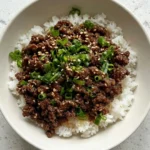
Savory Korean-Style Ground Beef Bowls
- Total Time: 25 minutes
- Yield: 4 servings 1x
- Diet: Dairy-Free
Description
This Korean beef bowl is a quick and easy dinner packed with sweet, savory, and slightly spicy flavors. Juicy ground beef is cooked with garlic, ginger, soy sauce, and brown sugar for an irresistible caramelized glaze.
Ingredients
- 1 lb ground beef (lean)
- 5 cloves garlic (minced)
- 1 tbsp fresh ginger (grated)
- 2 tbsp sesame oil
- 1/2 cup reduced-sodium soy sauce
- 1/3 cup light brown sugar
- 1/4 tsp red pepper flakes (crushed)
- 6 green onions (chopped, divided)
- 4 cups cooked white rice
- 1 tbsp sesame seeds
Instructions
- Step: Heat a large skillet over medium-high heat and cook the ground beef, breaking it apart, until browned. Drain excess grease.
- Step: Add garlic, ginger, and sesame oil to the skillet and cook for about 2 minutes until fragrant.
- Step: Stir in soy sauce, brown sugar, and red pepper flakes, mixing well to combine.
- Step: Continue cooking for about 7 minutes, allowing the sauce to thicken and coat the beef.
- Step: Stir in half of the chopped green onions and mix well.
- Step: Serve the beef over cooked rice and garnish with sesame seeds and remaining green onions.
Notes
You can adjust the sweetness or spice level by adding more brown sugar or red pepper flakes to taste. For a lower-carb option, serve the beef over cauliflower rice or zucchini noodles instead of regular rice.
- Prep Time: 10 minutes
- Cook Time: 15 minutes
- Category: Main Course
- Method: Stovetop
- Cuisine: Korean-inspired
Nutrition
- Serving Size: 1 bowl
- Calories: 668 kcal
- Sugar: 19 g
- Sodium: 1236 mg
- Fat: 31 g
- Saturated Fat: 10 g
- Unsaturated Fat: 17 g
- Trans Fat: 1 g
- Carbohydrates: 68 g
- Fiber: 2 g
- Protein: 28 g
- Cholesterol: 81 mg
Keywords: easy dinner, ground beef recipe, Korean beef bowl, quick weeknight meal, rice bowl