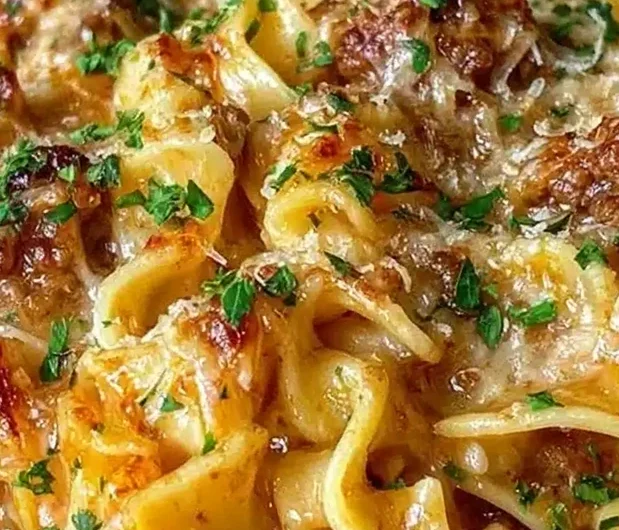
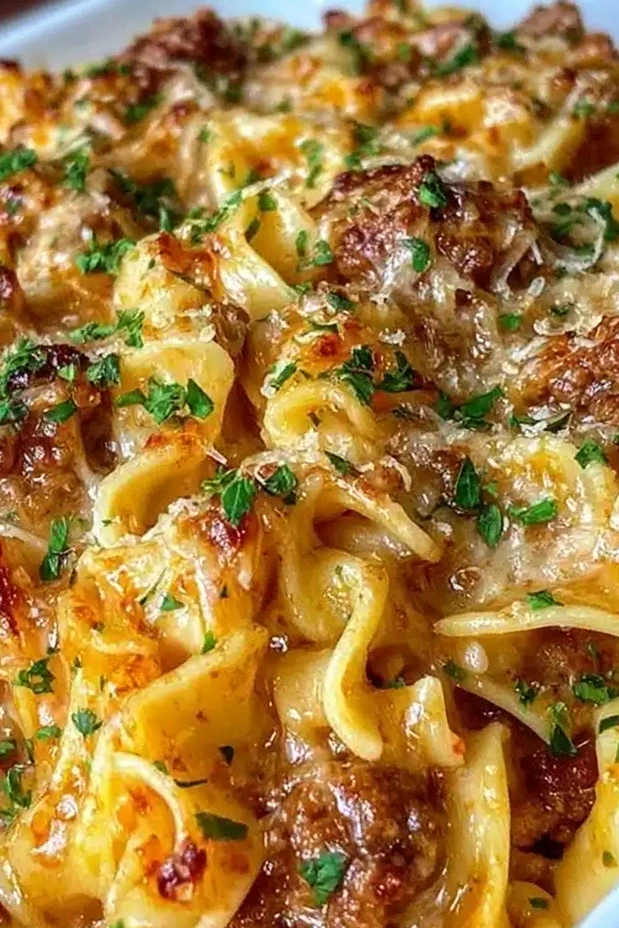
This beef noodle casserole is a hearty, one-dish meal that combines savory ground beef with a rich cheese sauce. It is designed for quick preparation and provides a filling dinner with minimal cleanup.
List of ingredients
- 1 pound ground beef (80/20 recommended) – provides balance of flavor and moisture.
- 12 ounces egg noodles (or any short pasta like rotini or shells) – holds the creamy sauce well.
- 1 medium yellow onion, diced (about 150g) – adds a savory base.
- 3 cloves garlic, minced – enhances the aromatic depth.
- 1 ½ cups low sodium beef broth – creates the sauce base while controlling salt.
- 14 ounces canned diced tomatoes – adds acidity and moisture.
- ½ cup sour cream – contributes creaminess and a slight tang.
- 2 cups shredded sharp cheddar cheese (reserve ½ cup for topping) – provides a bold, cheesy flavor.
- 1 tablespoon Worcestershire sauce – adds a savory umami kick.
- 1 teaspoon Italian seasoning – a herb blend to round out the flavor.
- Salt and pepper to taste – essential for seasoning the meat and sauce.
- 1 tablespoon olive oil – used for sautéing vegetables.
- Optional: 1 cup frozen peas or chopped mushrooms – adds nutritional value and texture.
step-by-step instructions
- Boil the pasta: Bring a large pot of salted water to a boil. Add egg noodles and cook until al dente, about 8 minutes. Drain and set aside.
- Sauté the aromatics: Heat olive oil in a large skillet over medium heat. Add diced onion and cook for 3 minutes until softened, then add garlic and cook for 1 minute until fragrant.
- Brown the meat: Add ground beef to the skillet, breaking it up with a spoon. Cook until no longer pink, about 4 minutes, and drain excess fat if needed.
- Simmer the sauce: Stir in beef broth, diced tomatoes with juices, Worcestershire sauce, Italian seasoning, salt, and pepper. Simmer for 3-4 minutes until flavors meld and liquid reduces slightly.
- Cream the mixture: Remove the skillet from heat. Stir in sour cream and 1 ½ cups shredded cheddar cheese until smooth and creamy.
- Combine and transfer: Add cooked noodles to the beef mixture and gently toss to coat. Pour the mixture into a 9×13-inch baking dish and spread evenly.
- Add the topping: Sprinkle the reserved ½ cup cheddar cheese evenly over the top of the casserole.
- Bake: Place in a preheated 350°F (175°C) oven for 25-30 minutes until the cheese is bubbly and golden.
- Rest: Let the casserole rest for about 5 minutes before serving to allow it to set.
Cooking Techniques for Best Results
Preventing Overcooked Pasta
Cook your egg noodles for 1-2 minutes less than the package instructions for al dente. Because the pasta continues to cook while baking in the oven, starting with firm noodles prevents them from becoming mushy. This ensures the dish maintains a proper structural integrity.
Optimizing the Beef Browning Process
Use medium-high heat to brown the beef and break it into small, uniform crumbles with a wooden spoon. Proper browning creates a Maillard reaction, which adds deeper flavor to the overall casserole. Avoid crowding the pan too much to ensure the meat sears rather than steams.
Efficiently Removing Excess Grease
After browning the beef, tilt the skillet and use a spoon or a paper towel to remove excess fat. Too much grease can separate from the cheese sauce during baking, leaving an oily layer on top. This step ensures a cleaner, creamier consistency.
Integrating Sour Cream Properly
Always remove the skillet from the heat source before stirring in the sour cream. High heat can cause the dairy to break or curdle, which ruins the smooth texture of the sauce. Stirring it in off-heat maintains the emulsion and creaminess.
Concentrating the Sauce Flavor
Allow the beef broth and diced tomatoes to simmer for the full 3-4 minutes before adding the cheese. This reduces the water content and concentrates the savory flavors. A thicker sauce clings better to the noodles and prevents a watery bottom in the baking dish.
Selecting the Right Baking Dish
A 9×13-inch glass or ceramic baking dish is ideal for this recipe due to even heat distribution. Glass dishes allow you to monitor the bubbling bottom of the casserole. Ensure the dish is deep enough to prevent the sauce from overflowing during the bubbling phase.
Proper Resting Time
Allowing the casserole to rest for 5 minutes after removing it from the oven is critical. This allows the cheese and sauce to thicken slightly as they cool. Resting makes it easier to scoop out clean portions without the contents sliding apart.
Ingredient Substitutions and Alternatives
Using Ground Turkey or Chicken
You can replace ground beef with ground turkey or chicken for a leaner protein option. Since these meats are milder, consider adding an extra pinch of salt or a dash more Italian seasoning. Follow the same browning and simmering process as the beef.
Substituting Egg Noodles with Short Pasta
If you do not have egg noodles, rotini, penne, or shells are excellent alternatives. These shapes are sturdy and capture the cheese sauce in their ridges. Adjust the boiling time according to the specific pasta type to ensure it remains al dente.
Creating a Meatless Version
For a vegetarian alternative, replace the ground beef with a mix of sautéed mushrooms and brown lentils. Use vegetable broth instead of beef broth to maintain the savory profile. The earthy flavor of mushrooms mimics the richness of beef.
Swapping Sharp Cheddar for Other Cheeses
While sharp cheddar is recommended for its bold taste, you can use Monterey Jack for a meltier texture. A blend of mozzarella and parmesan can also be used for a stretchier, saltier crust. Use a medium-hard cheese that melts well without separating.
Adding Heat with Red Pepper Flakes
To add a spicy element, stir in half a teaspoon of red pepper flakes when sautéing the garlic. This provides a subtle background heat that cuts through the richness of the cheese and sour cream. Adjust the amount based on your spice tolerance.
Low-Carb Vegetable Noodles
Replace the traditional pasta with spiralized zucchini or roasted spaghetti squash for a lower-carb version. Reduce the amount of beef broth by a quarter cup, as vegetable noodles release more water. Shorten the oven bake time to avoid overcooking the vegetables.
Alternative Creamy Elements
If sour cream is unavailable, Greek yogurt provides a similar tang and creamy texture. For a dairy-free option, use a cashew-based cream or a thick vegan sour cream alternative. Ensure the substitute is thick enough to maintain the sauce’s viscosity.
Enhancing the Tomato Component
You can substitute diced tomatoes with tomato sauce or crushed tomatoes for a smoother texture. Diced tomatoes provide chunks of fruit and a rustic feel, while sauce creates a more uniform coating. The acidity remains the same regardless of the form.
Flavor Variations and Add-ins
Incorporating Frozen Peas
Adding one cup of frozen peas during the mixing stage introduces color and a pop of sweetness. There is no need to thaw the peas first, as they will cook through during the baking process. This is an easy way to add vegetables to the meal.
Adding Sautéed Mushrooms
Finely chopped mushrooms can be sautéed with the onions to add an earthy, umami depth. Mushrooms blend well with the beef and enhance the heartiness of the casserole. Sauté them until they release their moisture before adding the beef.
Using a Different Herb Profile
While Italian seasoning is standard, you can use a mix of fresh thyme and rosemary for a more woodland flavor. Fresh parsley added at the end as a garnish provides a bright contrast to the heavy cheese. Use dried herbs during the simmer and fresh herbs for finishing.
Adding Diced Bell Peppers
Diced red or green bell peppers can be sautéed with the onions for added sweetness and crunch. Peppers add a variety of textures and make the dish more visually appealing. Ensure they are softened before adding the liquid components.
Integrating Corn for Texture
Adding a half-cup of canned or frozen corn adds a sweet contrast to the savory beef. Corn pairs exceptionally well with cheddar cheese and adds a slight crunch to the soft noodles. Mix the corn in just before transferring the mixture to the baking dish.
Serving and Pairing Suggestions
Pairing with Garlic Bread
Toasted garlic bread is a classic accompaniment that helps scoop up any remaining cheese sauce. Use a baguette sliced lengthwise, brushed with garlic butter, and broiled until golden. The crunch of the bread balances the softness of the casserole.
Serving with a Crisp Green Salad
A fresh garden salad with a lemon-based vinaigrette provides a necessary acidic contrast to the rich fats in the dish. Use mixed greens, cucumbers, and radishes for a refreshing side. This prevents the meal from feeling too heavy.
Adding Steamed Broccoli or Green Beans
Roasted or steamed green vegetables like broccoli or green beans add nutritional balance. The bitterness of broccoli complements the creaminess of the cheddar sauce. Serve these on the side or stir them directly into the mix before baking.
Customizing with a Toppings Bar
Offer guests a variety of toppings such as chopped green onions, extra shredded cheese, or a dash of hot sauce. Freshly cracked black pepper can also enhance the flavor of each serving. This allows individuals to adjust the taste to their preference.
Storage and Reheating Advice
Refrigerating Leftovers
Store any remaining casserole in an airtight container in the refrigerator for up to four days. Because the noodles absorb sauce over time, the dish will thicken as it chills. Ensure the container is sealed tightly to prevent the beef from drying out.
Optimal Reheating Methods
When reheating in the microwave, add a splash of beef broth or water to restore the creaminess. Heat in short intervals and stir occasionally to distribute the heat evenly. For oven reheating, cover with foil to prevent the cheese from burning.
Freezing Instructions
This casserole freezes well if cooled completely before being wrapped in plastic wrap and aluminum foil. It can be stored in the freezer for up to three months. Avoid freezing if you have used highly delicate vegetable substitutes like zucchini noodles.
Thawing and Baking from Frozen
Thaw the frozen casserole in the refrigerator overnight before reheating. Once thawed, bake at 350°F until heated through, adding a few extra minutes to the time. If baking from frozen, lower the temperature to 325°F and increase the time to ensure the center is hot.
Preventing Sauce Separation During Reheating
Avoid overheating the casserole on a high-power setting, which can cause the cheese and sour cream to separate. Use a medium-low heat setting on the stove or a medium power setting in the microwave. Stirring gently helps maintain the emulsion.
Troubleshooting Common Issues
Addressing a Watery Casserole
A watery consistency usually occurs if the sauce was not simmered long enough before the noodles were added. To fix this in future batches, ensure the liquid reduces by about a third before stirring in the dairy. Also, ensure canned tomatoes are not overly liquid.
Fixing Mushy Noodles
If the noodles are too soft, it is likely they were overcooked during the initial boiling phase. Always pull the pasta off the heat while it still has a firm bite. For the current batch, bake for a few minutes less to prevent further softening.
Correcting Bland Flavor
If the dish tastes flat, increase the amount of salt or add a small splash of Worcestershire sauce after baking. A squeeze of fresh lemon juice or a teaspoon of apple cider vinegar can also brighten the flavors. Always taste the sauce before adding the noodles.
Managing Burnt Cheese Topping
If the cheese browns too quickly before the center is hot, cover the baking dish with aluminum foil. This traps the heat inside while protecting the top from direct exposure. Check the center with a thermometer to ensure it reaches 165°F.
Frequently Asked Questions
Can I use ground turkey instead of beef?
Yes, ground turkey is a great substitute that makes the dish lighter. Since turkey is leaner and milder, you may want to add a bit more seasoning or salt to maintain the savory profile.
Can I substitute regular pasta for egg noodles?
Absolutely. Any short pasta like rotini, penne, or shells will work perfectly. While egg noodles are traditional and softer, other shapes provide a different texture and hold the sauce well.
How do I prevent the casserole from drying out when reheating?
Add a tablespoon of beef broth or water before reheating. This replaces the moisture lost during the initial baking and refrigeration process, bringing back the creamy consistency.
Can I make this casserole ahead of time?
Yes, you can assemble the entire dish and refrigerate it for up to 24 hours before baking. If baking from a chilled state, add 5-10 minutes to the total oven time.
My casserole turned out watery. What went wrong?
This usually happens if the beef broth and tomatoes weren’t simmered enough to reduce. In the future, ensure the sauce is thick and glossy before stirring in the cheese and sour cream.
Can I freeze leftover beef noodle casserole?
Yes, it freezes well for up to three months. Ensure it is completely cooled and wrapped tightly to prevent freezer burn, then thaw in the fridge before reheating.
Is there a vegetarian version of this casserole?
Yes, replace the beef with sautéed mushrooms and lentils, and use vegetable broth. All other ingredients, including the cheese and sour cream, remain the same for a hearty meatless meal.
Print
Creamy Ground Beef and Noodle Bake
- Total Time: 55 minutes
- Yield: 6 servings 1x
- Diet: General
Description
A warm, cheesy, and hearty beef noodle casserole perfect for easy, cozy family dinners. This one-pan dish combines tender noodles, savory ground beef, and a creamy cheese sauce for a comforting meal.
Ingredients
- 1 pound ground beef (80/20 recommended)
- 12 ounces egg noodles (or any short pasta like rotini or shells)
- 1 medium yellow onion, diced (about 150g)
- 3 cloves garlic, minced
- 1 ½ cups low sodium beef broth
- 14 ounces canned diced tomatoes
- ½ cup sour cream
- 2 cups shredded sharp cheddar cheese (reserve ½ cup for topping)
- 1 tablespoon Worcestershire sauce
- 1 teaspoon Italian seasoning
- Salt and pepper to taste
- 1 tablespoon olive oil
- 1 cup frozen peas or chopped mushrooms (optional)
Instructions
- Step: Bring a large pot of salted water to a boil. Add egg noodles and cook until al dente, about 8 minutes. Drain and set aside.
- Step: Heat olive oil in a large skillet over medium heat. Add diced onion and cook for 3 minutes until softened. Add garlic and cook for 1 minute until fragrant.
- Step: Add ground beef to the skillet, breaking it up with a spoon. Cook until no longer pink, about 4 minutes. Drain excess fat if needed.
- Step: Stir in beef broth, diced tomatoes with juices, Worcestershire sauce, Italian seasoning, salt, and pepper. Simmer for 3-4 minutes until flavors meld and liquid reduces slightly.
- Step: Remove skillet from heat. Stir in sour cream and 1 ½ cups shredded cheddar cheese until smooth and creamy.
- Step: Add cooked noodles to the beef mixture and gently toss to coat. Pour mixture into a 9×13-inch baking dish and spread evenly.
- Step: Sprinkle reserved ½ cup cheddar cheese evenly over the casserole.
- Step: Bake in a preheated 350°F (175°C) oven for 25-30 minutes until bubbly and golden on top.
- Step: Let casserole rest for about 5 minutes before serving.
Notes
Do not overcook noodles as they will continue cooking in the oven. Drain excess beef fat for a cleaner flavor. Sharp cheddar provides the best depth of flavor. This dish can be assembled and refrigerated for up to 24 hours; add 5-10 minutes to the bake time if chilled. If the sauce is too thick, add a splash of beef broth; if too thin, simmer longer on the stove.
- Prep Time: 15 minutes
- Cook Time: 40 minutes
- Category: Main Course
- Method: Baking
- Cuisine: American
Nutrition
- Serving Size: 1/6th of casserole
- Calories: 480 kcal
- Sugar: 6 g
- Sodium: 520 mg
- Fat: 25 g
- Saturated Fat: 12 g
- Unsaturated Fat: 13 g
- Trans Fat: 0 g
- Carbohydrates: 36 g
- Fiber: 2 g
- Protein: 26 g
- Cholesterol: 75 mg
Keywords: beef noodle casserole, easy family dinner, comfort food, cheesy casserole, ground beef recipe, one-pan meal