
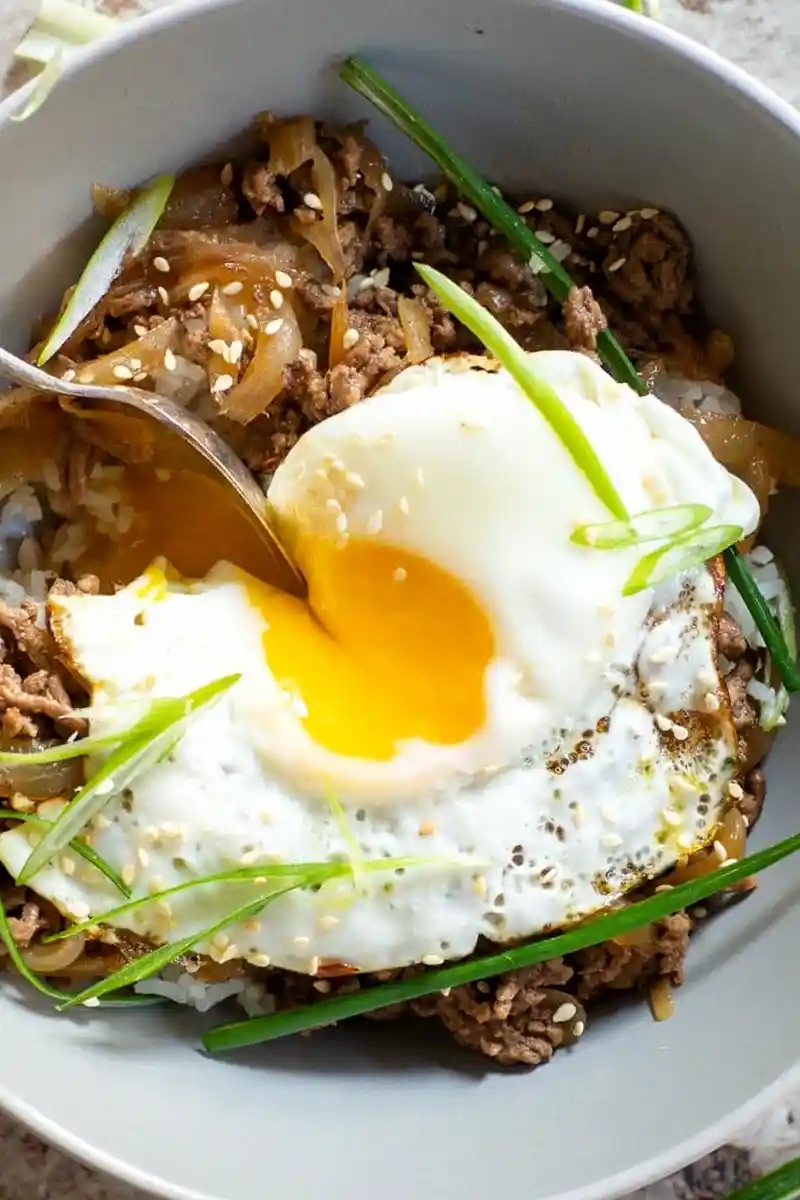
This ground beef gyudon is a quick and hearty Japanese-inspired meal perfect for busy weeknights. It combines savory beef and sweet caramelized onions over a bed of fluffy rice for a satisfying dinner.
List of ingredients
- 2 medium yellow onions, thinly sliced (about 3 cups) – provides a sweet, aromatic base.
- 2 tbsp avocado oil – used for sautéing the onions.
- 1 lb lean ground beef – the primary protein source.
- 2 tsp honey – adds a subtle sweetness to the sauce.
- 1/4-1/2 tsp fine sea salt – enhances the overall flavor profile.
- 2 tbsp rice vinegar – adds a necessary acidic balance.
- 2 tbsp coconut aminos – provides a savory, salty depth.
- 1 cup water – creates the simmering liquid for the beef.
- 4 eggs – served on top for added richness.
- 1 and 1/2 cups uncooked rice of choice (or 4 cups cooked) – the base of the bowl.
- Chopped green onions and sesame seeds (optional) – used for final garnish.
step-by-step instructions
- Sauté the onions: Heat avocado oil in a large skillet over medium-high heat. Add the sliced onions and cook, stirring often, for about 10 minutes until they are softened and starting to caramelize.
- Brown the meat: Stir in the ground beef, honey, and salt. Cook and crumble the beef with a spoon until it is fully browned, which typically takes 5-7 minutes.
- Simmer the mixture: Pour in the coconut aminos, rice vinegar, and water. Bring the liquid to a simmer and let it cook for 10 minutes to allow the flavors to meld.
- Prepare sides: While the beef is simmering, cook the rice according to the package instructions. Heat a separate skillet to cook the eggs sunny-side up or to your preferred doneness.
- Assemble the bowls: Spoon the cooked rice into four bowls. Top each portion of rice with a quarter of the beef and onion mixture.
- Final touch: Place one egg on top of each bowl and garnish with chopped green onions and sesame seeds before serving.
Professional Cooking Tips
Select the Right Ground Beef Fat Ratio
Using lean or extra-lean ground beef is recommended to prevent the sauce from becoming overly greasy. If you only have standard ground beef, be sure to drain the excess rendered fat after browning the meat but before adding the liquid ingredients.
Achieve Perfect Onion Caramelization
The key to the flavor of this dish is the sweetness of the onions. Avoid rushing the first step; let the onions cook slowly over medium-high heat until they are golden brown and translucent to maximize their natural sugars.
Control the Salt Levels
The amount of salt needed can vary depending on the brand of coconut aminos or soy sauce you use. Start with a smaller pinch of salt and taste the sauce during the final simmering stage, adding more only if necessary.
Manage Rice Texture
For the most authentic experience, use a short-grain Japanese rice, which has a slightly sticky texture that holds the sauce well. If using long-grain rice like Basmati or Jasmine, ensure it is steamed until fluffy but not mushy.
Ingredient Substitutions
Replacing Coconut Aminos with Soy Sauce
You can easily substitute coconut aminos with soy sauce or tamari. Keep in mind that soy sauce is typically saltier, so you should reduce or omit the added sea salt in the recipe and taste as you go.
Using Sugar Instead of Honey
If you do not have honey, granulated white sugar or brown sugar works as a direct replacement. Use the same measurement of two teaspoons to maintain the sweet and savory balance of the sauce.
Alternative Cooking Oils
Avocado oil is preferred for its high smoke point, but any neutral oil will work. Canola, vegetable, or grapeseed oil are all suitable alternatives that will not alter the taste of the dish.
Substituting Rice Vinegar
Unseasoned rice vinegar is the best choice for this recipe. If you only have seasoned rice vinegar, which contains added sugar and salt, reduce the amount of honey and salt called for in the beef mixture.
Customizing Your Bowls
Adding Nutrient-Dense Vegetables
You can increase the volume of the meal by adding sliced mushrooms or carrots during the onion sautéing phase. For leafy greens like spinach, kale, or bok choy, stir them in during the last two minutes of simmering until just wilted.
Varying the Egg Style
While sunny-side up eggs provide a rich yolk that creates a natural sauce, you can also use poached eggs or soft-boiled eggs. Some prefer a jammy egg sliced in half and placed on top for a cleaner presentation.
Introducing Spicy Elements
To add heat to the dish, stir in a teaspoon of Sriracha or red pepper flakes during the simmering process. Alternatively, garnish the finished bowl with sliced fresh jalapeños or a drizzle of chili oil.
Using Different Protein Options
While ground beef is the primary ingredient, this sauce profile works well with ground turkey or ground chicken. If using poultry, you may need to add an extra tablespoon of oil as these meats are leaner than beef.
Serving and Pairing Ideas
Complementary Side Dishes
Pair these bowls with a side of sautéed spinach and carrots for a balanced meal. A simple green salad with a ginger-soy dressing or steamed broccoli also complements the savory flavors of the beef.
Using Traditional Garnishes
Adding pickled red ginger provides a sharp, acidic contrast that cuts through the richness of the beef and egg. This is a traditional accompaniment for gyudon and enhances the overall dining experience.
Incorporating Crunchy Textures
For added texture, sprinkle toasted almond slivers or cashew pieces over the top of the bowl. The nuttiness pairs well with the honey-soy glaze and adds a satisfying crunch to each bite.
Presentation Styles
To make the dish look professional, use deep bowls and arrange the beef in a neat mound in the center of the rice. Carefully place the egg on top and sprinkle the sesame seeds and green onions in a concentrated circle around the egg.
Storage and Reheating Advice
Refrigeration and Freezing
Store the leftover beef and onion mixture in an airtight container in the refrigerator for up to four days. This mixture can also be frozen for up to three months, provided it is sealed tightly to prevent freezer burn.
Proper Reheating Methods
The best way to reheat the beef is in the microwave on medium power or in a skillet over low heat with a splash of water. This prevents the sauce from evaporating and keeps the meat tender.
Handling Leftover Eggs
Do not store the cooked eggs with the beef and rice, as they do not reheat well and can become rubbery. Always fry or poach fresh eggs just before serving the reheated leftovers.
Preparing Rice for Later
If you are prepping the rice in advance, store it in a sealed container with a damp paper towel on top. This helps the rice retain moisture and prevents it from drying out during the reheating process.
Troubleshooting Common Issues
Managing Excess Grease
If you notice a layer of oil floating on top of the sauce, use a spoon to skim off the fat or blot it with a clean paper towel. This ensures the sauce remains a glaze rather than an oily liquid.
Fixing a Sauce That is Too Sweet
If the honey makes the dish too sweet for your preference, add an extra teaspoon of rice vinegar. The acidity will balance the sugar and bring the flavor profile back into harmony.
Preventing the Beef from Clumping
To ensure the beef is crumbled evenly, use a wooden spoon or meat masher while browning. Break the meat into small pieces early in the process so that the honey and salt can coat every bit of meat.
Stopping the Sauce from Burning
Because honey contains sugar, it can burn if the heat is too high. Ensure you have the water and coconut aminos ready to go so that the liquid is added shortly after the beef is browned.
Frequently Asked Questions
Can I make this in a slow cooker?
Yes, you can place the sliced onions and ground beef in a slow cooker with the sauce ingredients. Cook on low for 6-8 hours, though you will need to brown the beef in a skillet first for the best flavor.
Is this recipe gluten-free?
This recipe is gluten-free as long as you use coconut aminos or a certified gluten-free tamari. Standard soy sauce contains wheat and would make the dish unsuitable for those avoiding gluten.
How do I keep the egg yolk runny?
Cook the eggs over medium-low heat and cover the skillet with a lid for the last minute of cooking. This allows the steam to set the whites while keeping the yolk liquid and creamy.
Can I use brown rice instead of white rice?
Brown rice is a great healthy alternative. Just keep in mind that brown rice takes longer to cook, so start the rice preparation earlier than suggested in the instructions.
What is the best way to slice onions for this dish?
Cut the onion in half from root to stem, then slice thinly across the grain into half-moons. This shape allows the onions to soften evenly and integrate well with the ground beef.
Print
Ground Beef Gyudon Bowls
- Total Time: 30 minutes
- Yield: 4 servings 1x
- Diet: General
Description
Tender onions and ground beef cooked in a sweet and savory sauce, these Japanese-inspired beef and rice bowls are a spin on the flavors of Gyudon. Adapted to use easy to find ingredients and ground beef, these hearty bowls are a simple and delicious comfort food.
Ingredients
- 2 medium yellow onions, thinly sliced (about 3 cups)
- 2 tbsp avocado oil
- 1 lb lean ground beef
- 2 tsp honey
- 1/4–1/2 tsp fine sea salt
- 2 tbsp rice vinegar
- 2 tbsp coconut aminos
- 1 cup water
- 4 eggs
- 1 and 1/2 cups uncooked rice of choice (or 4 cups cooked)
- chopped green onions, for serving (optional)
- sesame seeds, for serving (optional)
Instructions
- Step 1: In a large skillet over medium-high heat, add the avocado oil and onions. Cook, stirring often until softened and starting to caramelize, about 10 minutes.
- Step 2: Add the ground beef, honey and salt and cook, stirring to crumble until browned, about 5-7 minutes.
- Step 3: Add the coconut aminos, rice vinegar and water and bring to a simmer for 10 minutes.
- Step 4: Meanwhile, prepare the rice as per package directions and prepare a skillet for cooking the eggs. When the beef is almost done simmering, cook the eggs sunny-side up or as desired.
- Step 5: Assemble the bowls. Divide the rice between 4 bowls and top each bowl with a quarter of the beef/onion mixture. Top each with an egg.
- Step 6: Serve. Garnish with green onions and sesame seeds.
Notes
Store leftovers in an airtight container in the refrigerator for up to 4 days or freeze for up to 3 months. Only cook enough eggs for the amount you are planning to eat and cook additional eggs fresh for serving. Tamari or soy sauce can be used in place of coconut aminos.
- Prep Time: 5 minutes
- Cook Time: 25 minutes
- Category: Main Course
- Method: Stovetop
- Cuisine: Asian Inspired
Nutrition
- Serving Size: 1 bowl
- Calories: 595 kcal
- Sugar: 5 g
- Sodium: 461 mg
- Fat: 17 g
- Saturated Fat: 5 g
- Unsaturated Fat: 11 g
- Trans Fat: 0.4 g
- Carbohydrates: 70 g
- Fiber: 2 g
- Protein: 36 g
- Cholesterol: 234 mg
Keywords: ground beef, gyudon, Japanese-inspired, beef bowls, rice bowls, easy dinner