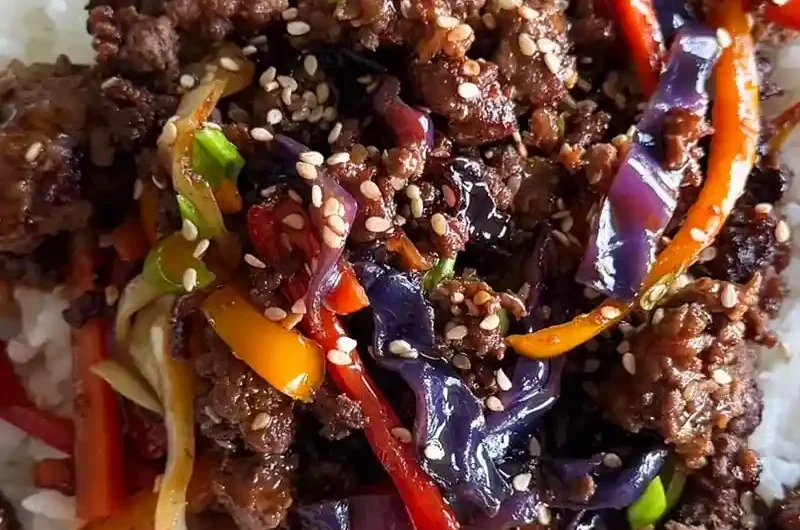
This quick-cooking meal combines savory protein and crisp vegetables in a rich glaze. It is an efficient dinner option that takes under 30 minutes from start to finish.
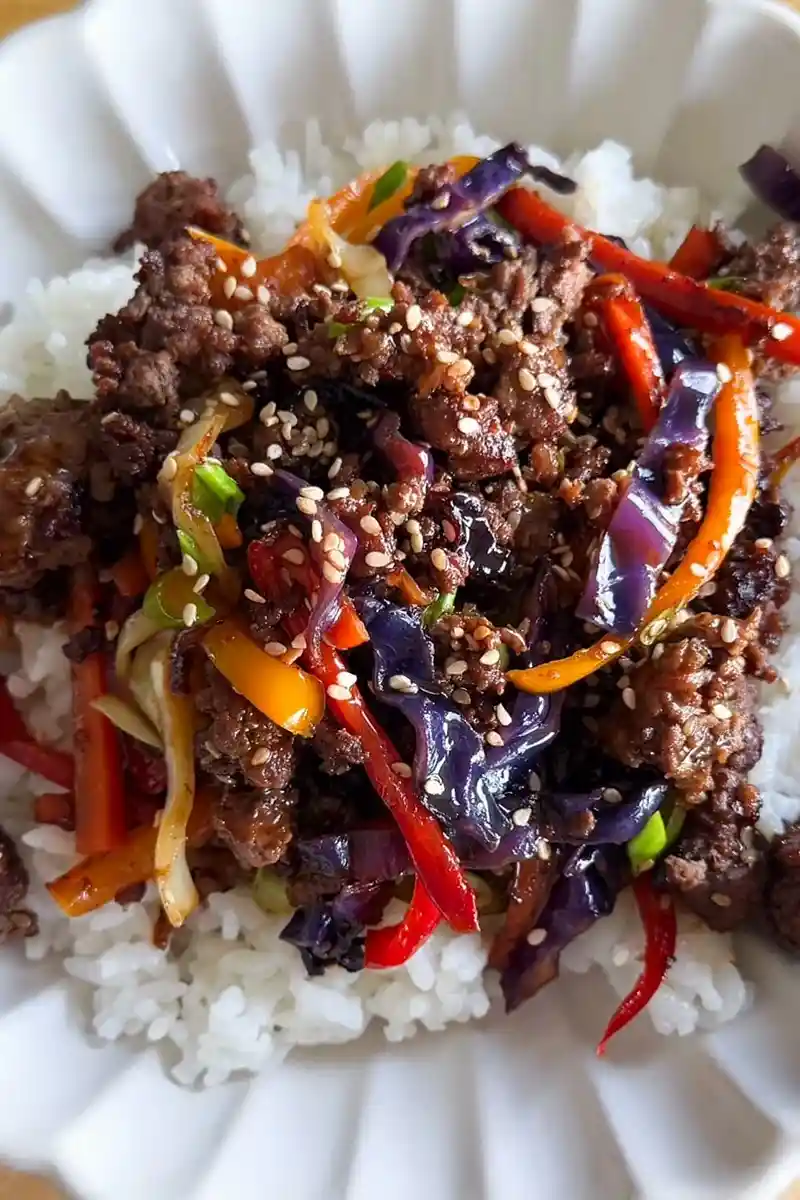
List of ingredients
- 1 lb ground beef – use 80/20 for better flavor or 90/10 for a leaner option.
- 1 cup bell pepper – julienned into thin strips, any color.
- 1 cup cabbage – julienned, a mix of green and purple provides better color.
- 1 cup carrots – julienned into thin matchsticks.
- 1/2 cup onion – julienned into thin strips.
- 1 tbsp garlic – finely minced.
- 1/2 cup teriyaki sauce – store-bought or homemade.
- 1 tbsp honey – provides a thick, glossy sweetness.
- 1 tbsp chili crisp – optional, adds heat and umami.
- 1 tbsp sesame oil – used for sautéing and flavoring.
- 1/4 cup water or stock – use only if the sauce becomes too thick.
- Cooked rice – for the base of the bowl.
- Sesame seeds and green onions – optional for garnish.
step-by-step instructions
- Brown the beef: Heat sesame oil in a large skillet over medium-high heat. Add ground beef and cook, breaking it up with a spoon, leaving it undisturbed for a few minutes to allow it to crisp and brown fully (about 5-6 minutes).
- Sauté aromatics: Stir in the minced garlic and julienned onions. Cook for approximately 2 minutes until the onions are translucent.
- Cook the vegetables: Add the julienned bell peppers, carrots, and cabbage. Sauté for 3-4 minutes until the vegetables are slightly tender but retain a crisp texture.
- Simmer with glaze: Pour in the teriyaki sauce, chili crisp, honey, and an additional tablespoon of sesame oil. Stir well and simmer for 2-3 minutes until the sauce thickens and coats the beef and vegetables. Add 1/4 cup of water or stock if the mixture is too dry.
- Assemble and serve: Spoon the beef and vegetable mixture over bowls of cooked rice. Top with sesame seeds, sliced green onions, and additional chili oil if desired.
Optimizing the Cooking Process
Choosing the Right Beef Fat Ratio
The fat content of your ground beef significantly affects the final texture. An 80/20 blend provides more moisture and a deeper flavor, which helps the teriyaki sauce adhere to the meat. If using a leaner 90/10 beef, you may need to add a small amount of extra oil to prevent the meat from becoming dry during the browning phase.
Mastering the Meat Sear
To achieve a professional result, avoid stirring the beef constantly. Allow the meat to sit undisturbed in the hot oil for 2-3 minutes before breaking it apart. This creates a brown crust through the Maillard reaction, which adds a savory depth that balances the sweetness of the teriyaki glaze.
Maintaining Vegetable Texture
Overcooking the vegetables leads to a mushy consistency and loss of color. Add the carrots first as they are the densest, followed by the peppers and cabbage. Sauté them quickly over medium-high heat to ensure they remain crisp-tender, which provides a necessary textural contrast to the soft ground beef.
Managing Sauce Viscosity
The honey and the sugars in the teriyaki sauce will thicken quickly as they simmer. If the sauce becomes too sticky or clings too tightly to the pan, stir in water or beef stock one tablespoon at a time. This loosens the glaze while maintaining the glossy appearance without diluting the flavor too much.
Customizations and Substitutions
Using Alternative Proteins
While ground beef is traditional, this recipe works well with ground turkey or ground chicken. When using poultry, increase the amount of sesame oil by one teaspoon, as these meats have less natural fat than beef. Ensure the poultry is browned thoroughly to avoid a pale appearance.
Varying the Vegetable Mix
You can adapt the vegetable component based on what is available in your refrigerator. Broccoli florets, snap peas, or sliced zucchini are excellent substitutes for cabbage or carrots. If using denser vegetables like broccoli, add them to the pan two minutes earlier than the other vegetables to ensure they cook through.
Sweetener Alternatives
If honey is unavailable, maple syrup or agave nectar serve as effective replacements. Maple syrup adds a slightly woody note that complements the beef, while agave is more neutral. For a lower-sugar option, a small amount of brown sugar or a sugar-free syrup can be used, though the glaze may be less thick.
Low-Sodium Modifications
To reduce salt intake, use a low-sodium teriyaki sauce or make your own using low-sodium soy sauce, ginger, and garlic. You can further balance the flavor by adding a splash of rice vinegar, which provides acidity to offset the saltiness without requiring more sodium.
Serving and Presentation Ideas
Exploring Grain Bases
While white jasmine rice is the standard, brown rice offers more fiber and a nuttier taste. For a different texture, try quinoa or farro, which hold up well under the heavy sauce. Cauliflower rice is a suitable low-carb alternative that absorbs the teriyaki glaze effectively.
Low-Carb Lettuce Wrap Option
Instead of rice, serve the teriyaki beef in large butter lettuce or romaine leaves. This transforms the meal into a lighter appetizer or a low-carbohydrate dinner. Place the beef mixture in the center of the leaf and top with extra green onions for a fresh contrast.
Adding Texture with Garnishes
Toasted sesame seeds add a subtle crunch and a roasted aroma to the dish. Sliced green onions provide a sharp, fresh bite that cuts through the richness of the beef and honey. For additional heat, a drizzle of sriracha or extra chili crisp on top adds visual appeal and spicy depth.
Suggested Side Dishes
Pair these bowls with a side of steamed edamame or a simple cucumber salad with rice vinegar. A side of pickled ginger also complements the Japanese-inspired flavors of the teriyaki glaze. These sides add acidity and freshness to the overall meal profile.
Storage and Reheating Guidelines
Refrigeration Methods
Store leftover beef and vegetables in an airtight glass or plastic container. Keep the cooked rice in a separate container to prevent it from absorbing all the sauce and becoming mushy. The mixture will stay fresh in the refrigerator for up to 4 days.
Freezing for Meal Prep
The beef and vegetable mixture freezes well, though the vegetables will lose some of their crispness upon thawing. Cool the mixture completely before placing it in freezer-safe bags. Thaw overnight in the refrigerator before reheating to maintain the best possible quality.
Microwave Reheating Tips
To reheat in the microwave, place a portion of rice and beef in a bowl and add a teaspoon of water over the top. Cover the bowl with a damp paper towel to trap steam, which prevents the beef from drying out. Heat on high for 1-2 minutes, stirring halfway through.
Stovetop Reheating for Texture
For the best texture, reheat the mixture in a skillet over medium heat. Add a small splash of water or beef stock to loosen the glaze as it warms. This method allows you to re-caramelize the beef slightly and prevents the sauce from becoming too thick or gummy.
Meal Preparation Strategies
Advance Vegetable Preparation
Julienning the carrots, cabbage, peppers, and onions in advance saves significant time during the cooking process. Store the pre-cut vegetables in a sealed container with a damp paper towel to keep them crisp. This allows you to move directly from the refrigerator to the pan.
Bulk Cooking Grains
Cook a large batch of rice at the beginning of the week to streamline assembly. Once cooled, store the rice in the fridge. When reheating, the steam from the teriyaki beef will help refresh the rice grains, making them fluffy again.
Portioning for Freshness
If preparing for the work week, divide the beef mixture and rice into individual containers immediately after cooking. This reduces the number of times the food is handled and stored, which helps maintain the quality and safety of the ingredients.
Efficient Assembly Workflow
Organize your ingredients using the mise en place technique. Have your minced garlic, measured sauces, and chopped vegetables ready in bowls before turning on the heat. This prevents the garlic from burning while you are busy chopping other vegetables.
Troubleshooting Common Issues
Correcting Overly Sweet Sauce
If the combination of honey and teriyaki sauce is too sweet, balance it with acidity. Add a teaspoon of rice vinegar or a squeeze of fresh lime juice. The acid cuts through the sugar and brightens the overall flavor profile of the dish.
Preventing Beef from Steaming
If you add too much meat to the pan at once, the temperature will drop, and the beef will release moisture and steam rather than brown. To avoid this, cook the beef in two smaller batches if your skillet is not large enough, ensuring each batch gets a deep brown sear.
Managing Excess Oil
If the beef releases a significant amount of fat, use a spoon or paper towel to remove excess oil before adding the garlic and onions. Too much oil in the pan can prevent the sauce from emulsifying and may leave the final dish feeling greasy.
Adjusting Heat Levels
Chili crisp varies greatly in spice level depending on the brand. If the dish is too spicy, add an extra tablespoon of honey or a splash of water to dilute the heat. If it is not spicy enough, stir in red pepper flakes or a small amount of sriracha at the end of the simmering process.
Frequently Asked Questions
Can I use a frozen vegetable mix?
Yes, you can use a frozen stir-fry vegetable mix. Thaw and drain the vegetables first to remove excess water, otherwise, the beef will steam and the sauce will become watery. Sauté the frozen vegetables on high heat to evaporate any remaining moisture before adding the sauce.
Which rice is best for teriyaki bowls?
Short-grain white rice or jasmine rice are the best choices because they have a slightly sticky texture that holds onto the sauce. Brown rice is a healthier alternative, though it requires a longer cooking time and has a firmer texture.
How do I make this dish spicy?
Increase the amount of chili crisp or add fresh sliced jalapeños during the vegetable sauté phase. You can also stir in a teaspoon of sriracha or gochujang into the teriyaki glaze for a more integrated, spicy heat.
Can I make this in a slow cooker?
This recipe is not suited for a slow cooker because the vegetables would become mushy over several hours. The dish is designed as a fast stir-fry to maintain the integrity of the vegetables and the sear of the beef.
Print
Ground Beef Teriyaki Bowls
- Total Time: 30 minutes
- Yield: 4 servings 1x
- Diet: General
Description
These Teriyaki Beef Bowls are a go-to weeknight dinner. Quick, easy, and full of flavor. Juicy ground beef, crisp veggies, and a rich, savoury teriyaki glaze come together in under 30 minutes. Serve it over rice or make it a lettuce wrap for a meal that hits every time.
Ingredients
- 1 lb ground beef
- 1 cup bell pepper, julienned
- 1 cup cabbage, julienned
- 1 cup carrots, julienned
- ½ cup onion, julienned
- 1 tbsp garlic, minced
- ½ cup teriyaki sauce
- 1 tbsp honey
- 1 tbsp chili crisp
- 1 tbsp sesame oil
- ¼ cup water or stock
- Cooked rice, for serving
- Sesame seeds and green onions, for garnish
Instructions
- Cook the ground beef: Heat sesame oil in a large skillet over medium-high heat. Add the ground beef and cook, breaking it up with a spoon. Leave it alone to crisp up and fully cooked, about 5–6 minutes.
- Add the garlic and onions: Add the minced garlic and the onions, saute for 2 minutes.
- Sauté the vegetables: Add the bell pepper, carrots and cabbage to the pan. Sauté for 3–4 minutes until the veggies are slightly tender but still crisp.
- Add the sauce: Pour in the teriyaki sauce, chili crisp, honey, and sesame oil. Stir well to combine and let everything simmer for 2–3 minutes, allowing the sauce to thicken slightly and coat the beef and veggies. Pro tip: If it’s too dry, add ¼ cup of water or stock.
- Serve: Spoon the teriyaki beef mixture over cooked rice. Garnish with sesame seeds and chopped green onions, and chili oil if desired.
Notes
You can double the sauce if you prefer your bowls extra saucy. Store in airtight containers for up to 4 days in the fridge. Keep vegetables crisp-tender for the best texture and color.
- Prep Time: 10 minutes
- Cook Time: 20 minutes
- Category: Stir fry
- Method: Stir fry
- Cuisine: Stir fry
Nutrition
- Serving Size: 1 bowl
- Calories: 510 kcal
- Sugar: 14 g
- Sodium: 920 mg
- Fat: 18 g
- Saturated Fat: 7 g
- Unsaturated Fat: 11 g
- Trans Fat: 0 g
- Carbohydrates: 42 g
- Fiber: 5 g
- Protein: 28 g
- Cholesterol: 85 mg
Keywords: teriyaki beef bowls, ground beef, stir fry, weeknight dinner, quick meals