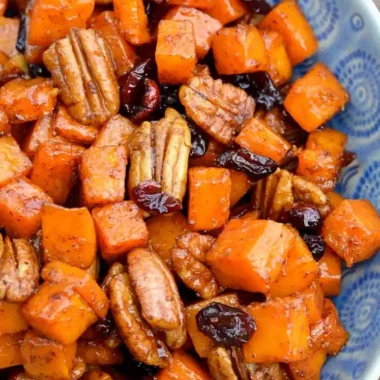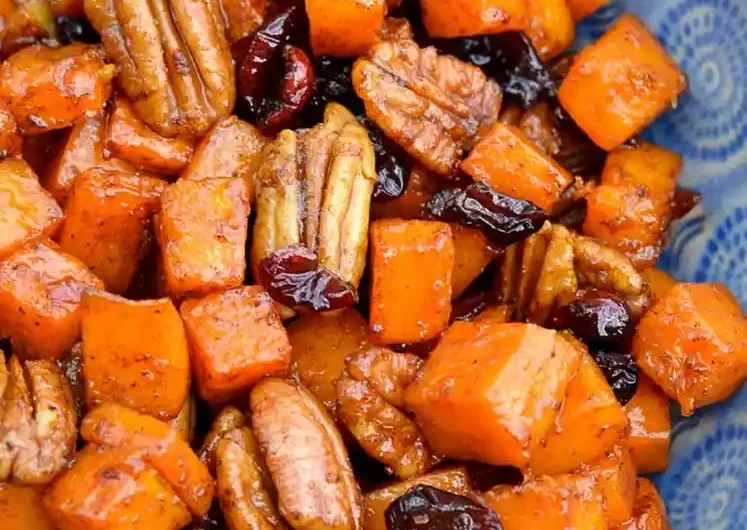
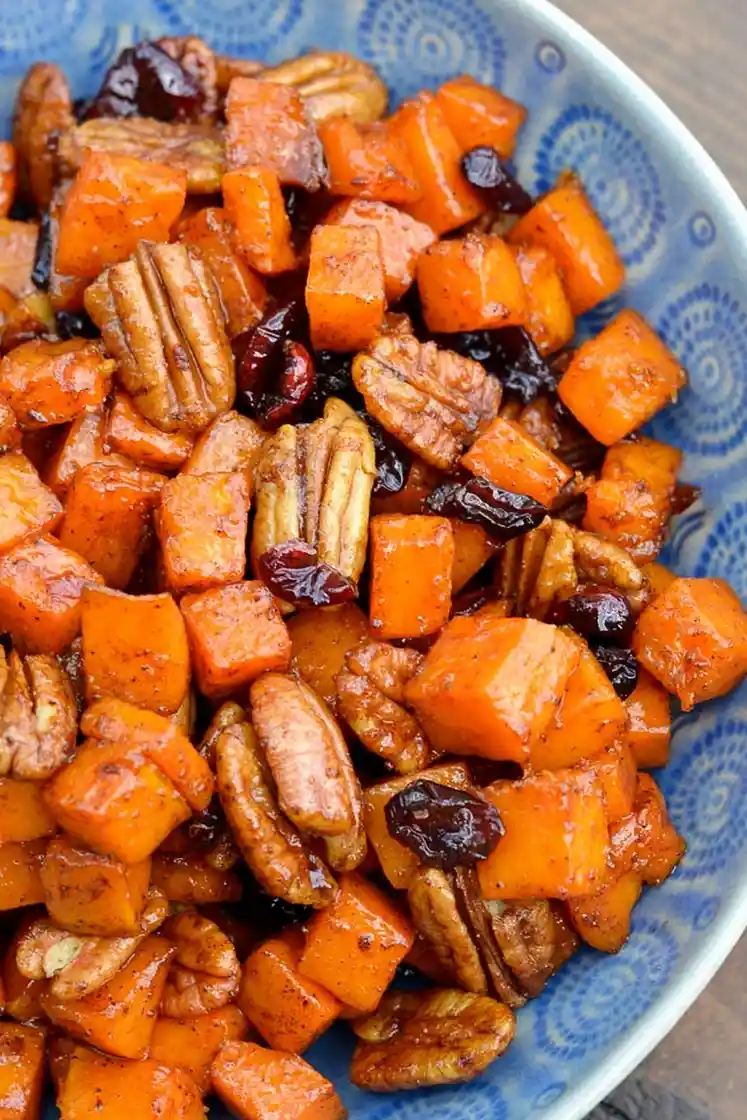
This roasted butternut squash side dish combines sweet brown sugar and warm cinnamon for a festive flavor profile. It takes only 30 minutes to cook and works well for both weeknight dinners and holiday celebrations.
List of ingredients
- 1 large butternut squash (or 2 small, providing 4-5 cups of cubed squash)
- 3 tablespoons butter – salted butter works best
- 2 1/2 tablespoons brown sugar – adds a caramelized sweetness
- 1 1/2 teaspoon cinnamon – provides warm autumn flavor
- 1/2 teaspoon salt – enhances the natural sugars
- 1/2 teaspoon pepper – adds a subtle savory depth
- 1/4 teaspoon cayenne pepper (optional) – adds a slight spicy kick
- 1/2 cup pecans – unroasted whole or pieces
- 1/3 cup dried cranberries – sweetened or unsweetened
step-by-step instructions
- Prepare the Oven: Preheat your oven to 400 degrees F. Ensure the oven rack is in the center position for even heat distribution.
- Mix the Glaze: Melt the butter in a small microwave-safe bowl. Stir in the brown sugar, cinnamon, salt, pepper, and optional cayenne pepper until smooth.
- Season the Squash: Toss the cubed butternut squash in 3/4 of the prepared melted butter mixture. Spread the cubes in a single layer on a baking sheet lined with parchment paper.
- First Roast: Bake the squash for 20 minutes. Avoid overcrowding the pan to ensure the squash roasts rather than steams.
- Combine Add-ins: Remove the pan from the oven and stir the squash cubes. In a separate bowl, toss the pecans and dried cranberries with the remaining 1/4 of the butter mixture.
- Final Roast: Add the pecan and cranberry mixture to the baking sheet. Roast for another 10 minutes, stirring halfway through to prevent the pecans from burning.
Butternut Squash Preparation Techniques
Using a Microwave to Soften the Rind
The skin of a butternut squash is very tough and can be difficult to cut. Pierce the squash several times with a fork and microwave it for 2 minutes. This slightly softens the exterior without cooking the inside, making peeling much safer.
Cutting Uniform Cubes for Even Cooking
Dice the squash into roughly 1-inch cubes. Keeping the pieces as close to the same size as possible ensures that every cube finishes cooking at the same time. Smaller cubes will cook faster, while larger ones may remain hard in the center.
Peeling the Squash Skin Safely
Use a sturdy vegetable peeler to remove the skin after the squash has been softened or halved. Cut off about a half-inch from the top and bottom ends first to create a flat surface. This prevents the squash from rolling while you peel and dice.
Ingredient Substitutions and Variations
Replacing Brown Sugar with Maple Syrup
You can substitute brown sugar with pure maple syrup for a more woody sweetness. Use a 1:1 ratio by volume, although you may need to roast the squash for an extra 5 minutes as syrup has more moisture than sugar.
Using Walnuts or Almonds Instead of Pecans
Walnuts provide a slightly more bitter, earthy contrast to the sweet glaze. Sliced almonds offer a crunchier texture. Toast these nuts lightly if they are raw to enhance their flavor before adding them to the pan.
Fresh Cranberries Versus Dried Cranberries
If using fresh cranberries, add them at the beginning of the roasting process instead of the end. Fresh berries require more time and heat to burst and soften compared to their dried counterparts.
Dairy-Free Butter Alternatives
For a plant-based version, use a high-quality vegan butter stick or coconut oil. These alternatives melt similarly to dairy butter and carry the cinnamon and sugar glaze effectively across the squash.
Swapping Butternut for Other Winter Squash
Hubbard or acorn squash can be used as a replacement. Note that acorn squash has a slightly different flavor and skin texture, so ensure you peel it thoroughly if you prefer a smooth consistency.
Expert Roasting Tips
Preventing Pan Overcrowding
Spread the squash cubes in a single layer with space between them. If the pan is too crowded, the vegetables will release steam and become mushy rather than developing a caramelized exterior.
Managing Pecan Roast Time
Pecans contain high amounts of natural oils and can burn quickly at 400 degrees F. Stir the pan every five minutes during the final stage of roasting to ensure the nuts brown evenly without scorching.
Choosing the Right Oven Temperature
A temperature of 400 degrees F is ideal for achieving a crisp exterior and a soft interior. If you prefer a slower caramelization with less browning, you can lower the heat to 375 degrees F and increase the cook time by 10 minutes.
The Role of Parchment Paper
Lining your baking sheet with parchment paper prevents the brown sugar glaze from sticking to the metal. This not only makes cleanup easier but also prevents the sugar from burning and sticking to the squash cubes.
Serving and Pairing Suggestions
Pairing with Roasted Poultry
This side dish balances perfectly with roast chicken or turkey. The sweetness of the cinnamon and brown sugar cuts through the savory, salty flavors of roasted meats and gravy.
Creating a Festive Breakfast Bowl
Leftover roasted squash can be served as a breakfast base. Top the squash with a dollop of Greek yogurt, a drizzle of honey, and a sprinkle of chia seeds for a nutrient-dense morning meal.
Adding Fresh Herbs for Contrast
Garnish the finished dish with fresh thyme or chopped parsley. The earthy notes of thyme complement the cinnamon, while parsley adds a bright color and a fresh flavor contrast to the sweetness.
Combining with Bitter Leafy Greens
Serve the roasted squash over a bed of fresh arugula or sautéed kale. The natural bitterness of the greens balances the rich glaze and provides a balanced nutritional profile to the plate.
Storage and Reheating Instructions
Refrigerating Cooked Squash
Place the cooled squash in an airtight glass container. It will stay fresh in the refrigerator for 3 to 4 days. Keep the pecans separate if you prefer them to stay crunchy.
Freezing for Long-Term Storage
Cooked butternut squash can be frozen for up to 3 months. To maintain texture, flash-freeze the cubes on a tray before transferring them to a freezer-safe vacuum bag to prevent clumping.
Restoring Texture in the Oven
To reheat, spread the squash on a baking sheet and bake at 350 degrees F until warmed through. This method is superior to the microwave as it helps restore the caramelized edges of the cubes.
Quick Microwave Reheating
For a faster option, heat the squash in short 30-second intervals. Stir between bursts to avoid hot spots and prevent the sugar glaze from bubbling over or burning.
Troubleshooting Common Issues
Fixing Mushy Squash Textures
If the squash becomes too soft, it is likely due to overcrowding the pan or cutting the cubes too small. Ensure there is ample airflow around each piece to allow moisture to evaporate during roasting.
Handling Burnt Brown Sugar Glaze
Sugar can burn if the oven is too hot or if the pan is left in too long. If you notice the edges turning black, remove the pan immediately and scrape off any burnt bits to avoid a bitter taste.
Solving Under-Roasted Centers
If the centers are still hard, your cubes may be too large or the oven temperature too low. Try cutting the squash into exactly 1-inch pieces and ensure your oven is fully preheated before adding the pan.
Essential Equipment Guide
Selecting the Best Baking Sheet
Use a large, rimmed baking sheet to prevent the melted butter and sugar from dripping into the oven. A larger pan allows for better spacing, which is critical for achieving a proper roast.
Using a Large Mixing Bowl
A large bowl is necessary for tossing the squash in the glaze. This ensures that every side of every cube is evenly coated, preventing some pieces from drying out in the oven.
The Benefit of a Y-Peeler
A Y-shaped vegetable peeler is often more ergonomic for large squashes. It allows for longer strokes, which makes the peeling process faster and reduces the risk of cutting into the squash flesh.
Nutritional Information
Beta-Carotene in Butternut Squash
Butternut squash is rich in beta-carotene, which the body converts into Vitamin A. This nutrient is essential for maintaining healthy vision and supporting the immune system.
Healthy Fats from Pecans
Pecans provide heart-healthy monounsaturated fats and omega-3 fatty acids. These fats help the body absorb the fat-soluble vitamins found in the squash.
Antioxidants in Dried Cranberries
Cranberries contain proanthocyanidins, which are powerful antioxidants. These compounds help protect cells from oxidative stress and add a tart balance to the sweet glaze.
Frequently Asked Questions
Can I leave the skin on the squash?
Yes, the skin is edible, but it remains quite tough even after roasting. Peeling the squash provides a much smoother, melt-in-your-mouth texture that is generally preferred for this recipe.
Is butternut squash the same as pumpkin?
While both are winter squashes, butternut squash is generally sweeter and has a creamier texture than pumpkin. It also has a distinct nuttiness that pairs exceptionally well with cinnamon.
How should I store raw cubed squash?
Store raw, peeled, and cubed squash in an airtight container or bag in the refrigerator. It will maintain its quality for about 2 days before it should be cooked.
Can I use white sugar instead of brown sugar?
You can use white sugar, but the flavor will be different. Brown sugar contains molasses, which provides a deep, caramelized flavor that white sugar cannot replicate.
Print
Cinnamon-Glazed Butternut Squash with Toasted Pecans and Cranberries
- Total Time: 35 minutes
- Yield: 6 servings 1x
- Diet: Vegetarian
Description
This 30-minute Roasted Butternut Squash with Cranberries and Pecans is easy enough to add to a weeknight meal but tasty enough to add to a holiday spread!
Ingredients
- 1 large butternut squash (or 2 small (4–5 cups cubed squash))
- 3 tablespoons butter
- 2 1/2 tablespoons brown sugar
- 1 1/2 teaspoon cinnamon
- 1/2 teaspoon salt
- 1/2 teaspoon pepper
- 1/4 teaspoon cayenne pepper (optional)
- 1/2 cup pecans
- 1/3 cup dried cranberries
Instructions
- Step: Preheat the oven to 400 degrees F.
- Step: Melt the butter in a small bowl. Combine the brown sugar, cinnamon, salt, pepper and cayenne if using.
- Step: Toss the squash cubes in 3/4 of the melted butter mixture. Spread on a parchment paper lined baking sheet. Bake the squash 20 minutes.
- Step: After 20 minutes, stir the squash well.
- Step: In a bowl combine the pecans and cranberries with the remaining butter mixture. Add the pecans and cranberries to the baking sheet in a single layer.
- Step: Roast another 10 minutes, stirring half way through so the pecans do not over cook.
Notes
The squash can be meal prepped 3-4 days ahead and stored in the fridge, or frozen for up to 3 months. To reheat, bake at 350 degrees F until warmed throughout.
- Prep Time: 5 minutes
- Cook Time: 30 minutes
- Category: Side Dishes
- Method: Roasting
- Cuisine: American
Nutrition
- Serving Size: 0.75 cup
- Calories: 205 kcal
- Sugar: 12.8 g
- Sodium: 245.3 mg
- Fat: 12.5 g
- Saturated Fat: 4.5 g
- Unsaturated Fat: 8.0 g
- Trans Fat: 0 g
- Carbohydrates: 25.3 g
- Fiber: 3.9 g
- Protein: 2 g
- Cholesterol: 15.3 mg
Keywords: roasted butternut squash, cranberries, pecans, side dish, holiday side, autumn recipe