
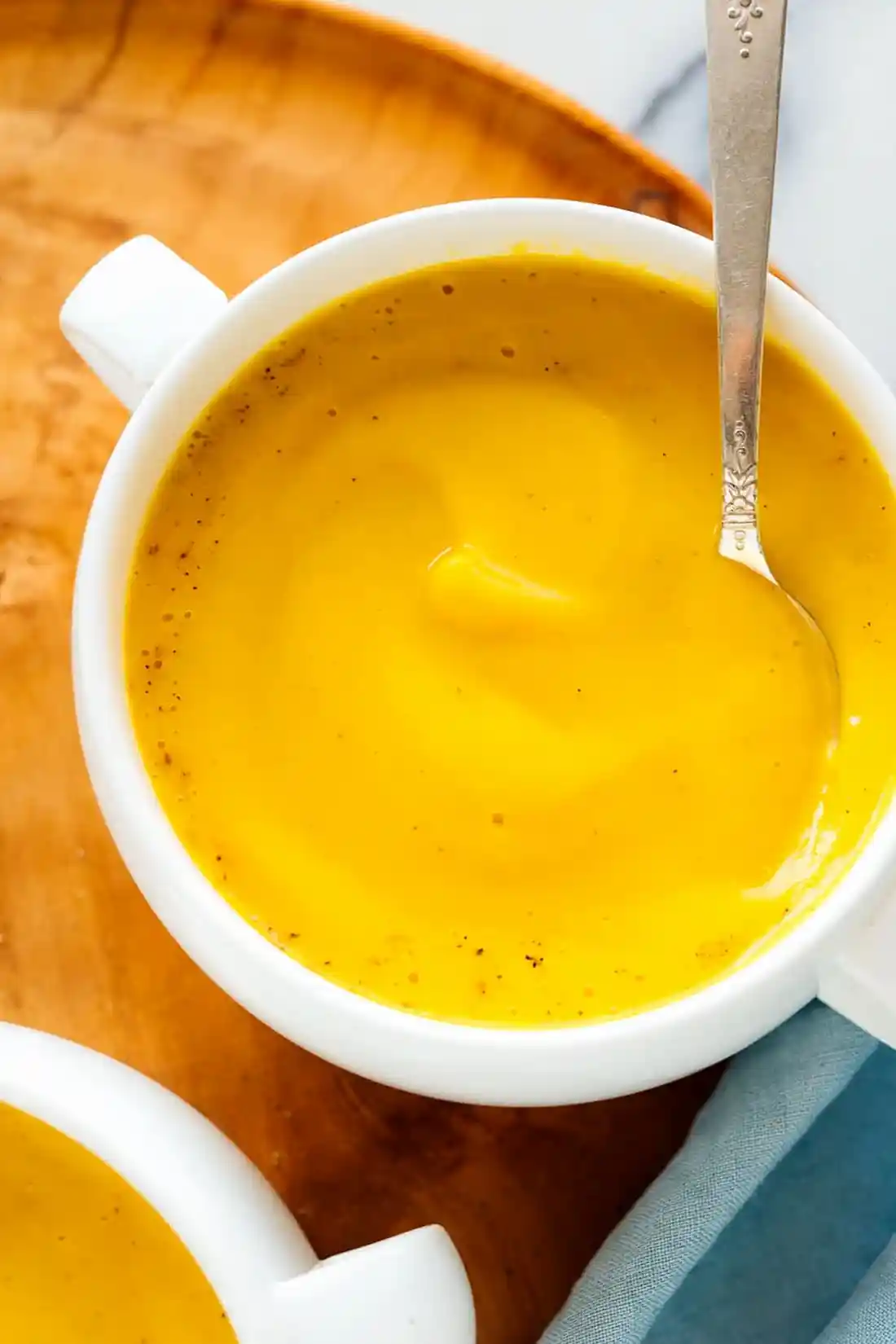
This homemade roasted butternut squash soup provides a deeply comforting and naturally creamy profile without the need for heavy dairy. By roasting the squash first, you unlock an intense, caramelized sweetness that defines the flavor of this classic bowl. It is the perfect centerpiece for a chilly evening or a sophisticated start to a holiday meal.
List of ingredients
- 1 large butternut squash (about 3 pounds), halved vertically and seeds removed
- 1 tablespoon olive oil, plus more for drizzling
- 1/2 cup chopped shallot (about 1 large shallot bulb)
- 1 teaspoon salt
- 4 garlic cloves, pressed or minced
- 1 teaspoon maple syrup
- 1/8 teaspoon ground nutmeg
- Freshly ground black pepper, to taste
- 3 to 4 cups (24 to 32 ounces) vegetable broth, as needed
- 1 to 2 tablespoons butter, to taste
step-by-step instructions
- Step: Preheat the oven to 425 degrees Fahrenheit and line a rimmed baking sheet with parchment paper. Place the butternut squash on the pan and drizzle each half with just enough olive oil to lightly coat the squash on the inside (about 1/2 teaspoon each). Rub the oil over the inside of the squash and sprinkle it with salt and pepper.
- Step: Turn the squash face down and roast until it is tender and completely cooked through, about 40 to 50 minutes. Set the squash aside until it’s cool enough to handle, about 10 minutes.
- Step: In a large soup pot, warm 1 tablespoon olive oil over medium heat. Add the chopped shallot and 1 teaspoon salt. Cook, stirring often, until the shallot has softened and is starting to turn golden on the edges, about 3 to 4 minutes. Add the garlic and cook until fragrant, about 1 minute, stirring frequently.
- Step: Use a large spoon to scoop the butternut squash flesh into your blender. Discard the tough skin. Add the maple syrup, nutmeg and a few twists of freshly ground black pepper to the blender. Pour in 3 cups vegetable broth.
- Step: Securely fasten the lid. Blend on high until the soup is ultra creamy and warmed through.
- Step: If you would like to thin out your soup a bit more, stir in the remaining cup of broth. Add 1 to 2 tablespoons butter or olive oil, to taste, and blend well. Taste and stir in more salt and pepper, if necessary.
- Step: If your soup is piping hot, pour it into serving bowls. If not, pour it back into your soup pot and warm the soup over medium heat, stirring often, until it is nice and steamy.
Refining the Preparation
Achieving a Silky Texture Through Blending
The secret to achieving the signature texture of this soup is the use of a high-speed stand blender rather than an immersion tool. A powerful blender breaks down the roasted fibers of the squash more thoroughly, resulting in an aerated, velvety mouthfeel that mimics a cream-based soup. If you find the blender is struggling, add the broth in small, measured increments to help the vortex pull the squash down toward the blades.
Managing Your Prep Time
Efficient kitchen management involves starting the oven first to ensure the squash is roasting while you tackle the chopping tasks. Since the squash takes nearly an hour to cook, you have ample time to gather your broth, prep your shallots, and clean your workspace. Using a sharp, heavy-duty chef’s knife makes slicing the raw squash much safer and faster, ensuring you keep your focus on the process.
Selecting the Best Butternut Squash
When selecting a squash at the market, look for one that feels heavy for its size, which indicates a high moisture content and dense flesh. The skin should be matte and free of deep gouges or soft spots that could lead to premature decay. A smooth, firm exterior ensures that you get the most flavor out of every pound you purchase for this recipe.
Refinements and Culinary Adjustments
Adjusting Consistency with Broth
Different squash varieties vary in water content, which means the amount of broth required may shift from batch to batch. Start with 3 cups and evaluate the thickness before adding the final cup of liquid. If you prefer a thicker, bisque-like soup, start with slightly less liquid and increase only if the mixture appears too heavy for your liking.
Flavor Enhancements for Deep Complexity
While the nutmeg and maple syrup are essential for highlighting the butternut’s natural profile, you can experiment with subtle additions to customize the flavor. A tiny pinch of ground ginger can offer a bright, citrusy spark, while a dash of smoked paprika provides a subtle campfire finish that pairs beautifully with the roasted notes. Always add these spices in small quantities, tasting after each addition to avoid overpowering the delicate squash.
Selecting a Suitable Vegetable Broth
The quality of your vegetable broth directly influences the depth of the soup’s base. Choose a high-quality, low-sodium broth so that you have total control over the final salt level. If you find your broth is too thin or watery, consider using a roasted vegetable stock that features mirepoix or leeks to build a more substantial foundation.
Serving Recommendations
Enhancing the Presentation with Toppings
Though the soup is delicious on its own, adding a variety of textures makes it more engaging. Toasted pepitas offer a satisfying, nutty crunch, while a light drizzle of herb-infused oil adds a professional pop of color. For those who enjoy a bit of spice, a light dusting of crushed red pepper flakes or even a swirl of coconut milk can provide contrast against the sweetness of the squash.
Pairing Suggestions for Complete Meals
This soup pairs exceptionally well with a crusty loaf of sourdough bread or a side of massaged kale salad. The acidity from a vinaigrette in a salad helps to cut through the richness of the soup, creating a balanced dining experience. If you are serving this for a hearty lunch, a warm sandwich with sharp cheddar and sliced apples complements the autumnal theme perfectly.
Maintenance and Storage Logistics
Managing Leftovers for Future Meals
This recipe is an ideal candidate for batch cooking because the flavors continue to develop after a night in the refrigerator. Store your leftovers in an airtight glass container to prevent any absorption of other scents from the fridge. Properly chilled, the soup will retain its peak quality for up to four days, making it a reliable solution for busy weekday evenings.
Freezing the Soup for Long-Term Storage
If you have more soup than you can consume in a few days, freezing is a simple and effective storage method. Allow the soup to cool completely to room temperature before transferring it into freezer-safe containers, leaving a small amount of headspace at the top for expansion. Properly sealed, the soup maintains its integrity for approximately three months without significant changes in flavor or texture.
Gentle Reheating Techniques
When you are ready to serve frozen soup, thaw it in the refrigerator overnight to ensure even heating. Reheat the soup on the stovetop over low to medium heat, stirring frequently to ensure the heat is distributed evenly throughout. Avoid using a microwave for large portions, as it can create hot spots and occasionally affect the emulsification of the butter, potentially causing the soup to look separated.
Common Queries Addressed
How do I safely cut through the tough squash skin?
To slice the squash safely, trim off the top and bottom ends to create flat surfaces that provide stability. Stand the squash upright and use a large, sharp knife to cut through the center, applying steady, downward pressure. If the squash is particularly stubborn, you can microwave it for two minutes to soften the skin slightly, which makes the initial cut much easier.
Can I make this recipe vegan?
Yes, this recipe is easily made vegan by substituting the butter with an equal amount of high-quality extra virgin olive oil. The olive oil adds a distinct, sophisticated flavor that works beautifully with the roasted vegetables. You can also use a vegan-certified vegetable broth to ensure all ingredients are strictly plant-based.
Is it possible to use an immersion blender instead?
You can use an immersion blender if you prefer fewer dishes, though you should expect a slightly more rustic texture. Simply combine all ingredients in the pot and blend until the squash is broken down, but note that it may not achieve the same ultra-smooth consistency as a high-performance stand blender. If you go this route, ensure you simmer the components for an extra ten minutes to soften everything before you begin blending.
Why did my soup turn out too thick?
If your soup is thicker than desired, it is likely because the squash had less water content or was roasted until very dry. Simply thin the soup by stirring in an extra half-cup of warm vegetable broth at a time until you reach your ideal consistency. This is a common occurrence, and adding liquid is a simple fix that will not dilute the concentrated flavor of the roasted squash.
Print
Roasted Butternut Squash Soup
- Total Time: 65 minutes
- Yield: 4 servings 1x
- Diet: Vegetarian
Description
This homemade butternut squash soup is the best I’ve ever tasted! This recipe is super creamy (yet cream-less) and full of delicious butternut flavor. Leftover soup tastes even better the next day. Recipe yields about 4 bowls or 6 cups of soup.
Ingredients
- 1 large butternut squash (about 3 pounds), halved vertically and seeds removed
- 1 tablespoon olive oil, plus more for drizzling
- 1/2 cup chopped shallot (about 1 large shallot bulb)
- 1 teaspoon salt
- 4 garlic cloves, pressed or minced
- 1 teaspoon maple syrup
- 1/8 teaspoon ground nutmeg
- Freshly ground black pepper, to taste
- 3 to 4 cups (24 to 32 ounces) vegetable broth, as needed
- 1 to 2 tablespoons butter, to taste
Instructions
- Step: Preheat the oven to 425 degrees Fahrenheit and line a rimmed baking sheet with parchment paper. Place the butternut squash on the pan and drizzle each half with just enough olive oil to lightly coat the squash on the inside (about 1/2 teaspoon each). Rub the oil over the inside of the squash and sprinkle it with salt and pepper.
- Step: Turn the squash face down and roast until it is tender and completely cooked through, about 40 to 50 minutes. Set the squash aside until it’s cool enough to handle, about 10 minutes.
- Step: In a large soup pot, warm 1 tablespoon olive oil over medium heat. Add the chopped shallot and 1 teaspoon salt. Cook, stirring often, until the shallot has softened and is starting to turn golden on the edges, about 3 to 4 minutes. Add the garlic and cook until fragrant, about 1 minute, stirring frequently.
- Step: Use a large spoon to scoop the butternut squash flesh into your blender. Discard the tough skin. Add the maple syrup, nutmeg and a few twists of freshly ground black pepper to the blender. Pour in 3 cups vegetable broth.
- Step: Securely fasten the lid. Blend on high until the soup is ultra creamy and warmed through.
- Step: If you would like to thin out your soup a bit more, stir in the remaining cup of broth. Add 1 to 2 tablespoons butter or olive oil, to taste, and blend well. Taste and stir in more salt and pepper, if necessary.
- Step: If your soup is piping hot, pour it into serving bowls. If not, pour it back into your soup pot and warm the soup over medium heat, stirring often, until it is nice and steamy.
Notes
To slice squash safely: Place a damp towel under your cutting board, remove ends, stand upright, and slice vertically. For dairy-free/vegan: substitute olive oil for butter. For immersion blender method: simmer squash and ingredients in the pot for 15-20 minutes before blending.
- Prep Time: 10 minutes
- Cook Time: 55 minutes
- Category: Soup
- Method: Roasted and blended
- Cuisine: American
Nutrition
- Serving Size: 1.5 cups
- Calories: 185 kcal
- Sugar: 7 g
- Sodium: 750 mg
- Fat: 8 g
- Saturated Fat: 3 g
- Unsaturated Fat: 4 g
- Trans Fat: 0 g
- Carbohydrates: 28 g
- Fiber: 5 g
- Protein: 4 g
- Cholesterol: 10 mg
Keywords: butternut squash, soup, roasted, vegetable, creamy, autumn, winter