
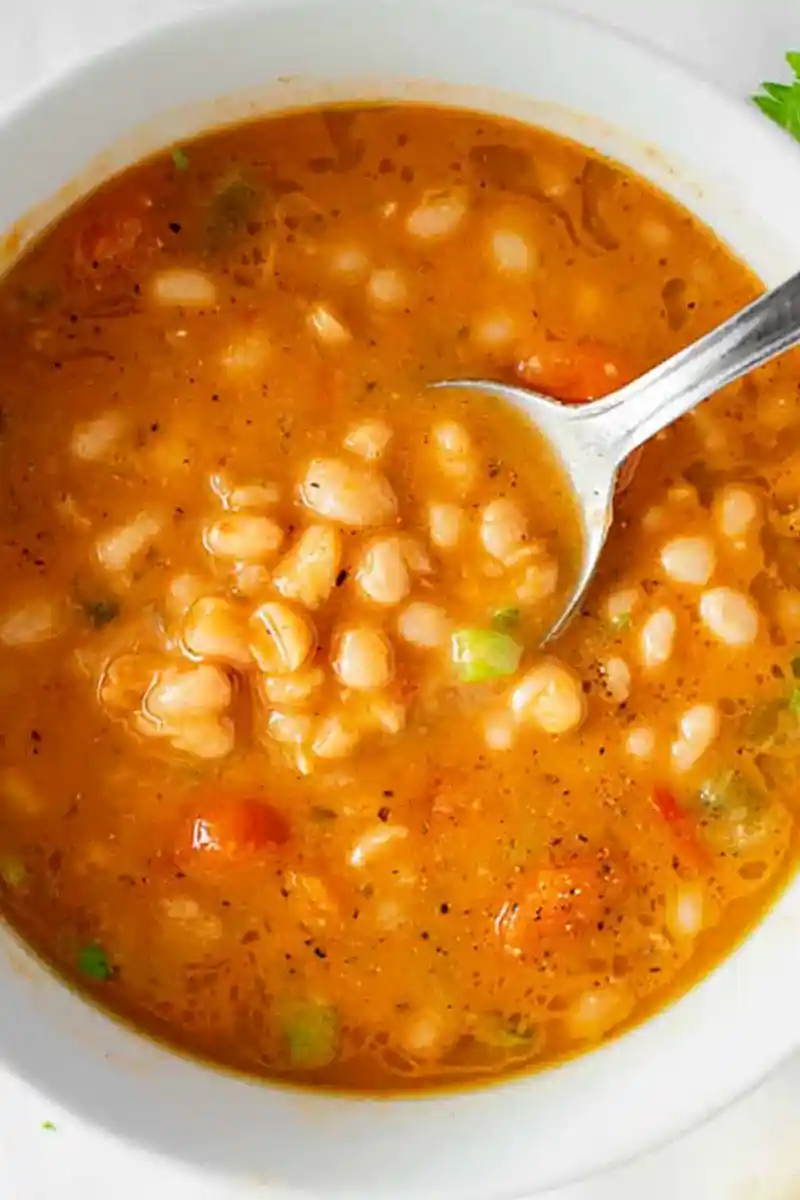
This traditional Greek white bean and tomato soup is a hearty, nourishing meal designed for comfort. It uses simple, fresh ingredients to create a thick and velvety consistency that is perfect for colder weather.
List of ingredients
- 500 grams dried Cannellini beans – or any small white beans for a creamy texture.
- 2.5 liters boiling hot water – can be replaced with half water and half vegetable stock for extra depth.
- 160 grams onion – one large onion, finely chopped.
- 1 bay leaf – adds a subtle herbal aroma.
- 2 carrots – sliced into 0.5 cm (1/4 inch) thick rounds.
- 150 grams chopped celery – include some leaves for added flavor.
- 150 grams extra ripe tomato – hand grated with the skin discarded.
- 1 tablespoon tomato paste – concentrates the tomato flavor.
- 160 ml extra virgin olive oil – plus extra for drizzling before serving.
- Freshly ground pepper – to taste.
- Hot red pepper flakes or 1 small chili pepper – optional for a spicy kick.
step-by-step instructions
- Prepare the beans: Soak the dried beans in plenty of water at room temperature for approximately 1 hour. Fill a large pot halfway with water, add the beans, and bring to a boil over high heat. Cook for 2-3 minutes, then drain them using a strainer without rinsing with cold water to keep the skins intact.
- Initial bean simmer: Place the drained beans back into the cooking pot. Pour in 10 cups (2.5 liters) of boiling hot water or vegetable stock. Add the bay leaf and chopped onion, season with salt, bring to a boil, then lower the heat to simmer covered for about 1 hour.
- Incorporate vegetables: Add the tomato paste, hand-grated tomato, chopped celery, sliced carrots, and olive oil to the pot. If you prefer a spicy soup, add the chili pepper or red pepper flakes at this stage. Season the mixture with freshly ground pepper.
- Final cooking process: Increase the heat to medium and simmer while covered for another 30 minutes, stirring occasionally every 10 minutes. Raise the heat to medium-high (or keep on medium for gas stoves) and stir frequently until the soup reaches a thick, creamy consistency.
- Resting and serving: Remove the pot from the heat and let the soup stand for 15 minutes, partly covered. This allows the flavors to meld and the texture to thicken further. Serve each bowl with a drizzle of raw extra virgin olive oil, plenty of pepper, and optional red pepper flakes.
Alternative Cooking Methods
Using a Pressure Cooker
To speed up the process, bring the beans to a boil in 2-3 liters of water for 3-4 minutes and drain. Place the beans and 1 liter of water or vegetable stock into a pressure cooker and cook for about 35 minutes. Release the steam, check for tenderness, and then finish the soup on the stovetop by adding the remaining ingredients and simmering until thick.
Using a Slow Cooker
First, boil the beans in water for 3-4 minutes and drain them in a strainer. Transfer the beans to a slow cooker along with all other recipe ingredients and 6 cups of water. Set the device to cook on low for approximately 8 hours or on high for 4-5 hours to achieve a tender bean consistency.
Techniques for Achieving the Perfect Texture
The Role of Extra Virgin Olive Oil
High-quality extra virgin olive oil is essential for the signature velvety thickness of this soup. When cooked slowly and stirred frequently, the oil emulsifies with the bean starch to create a rich consistency. Avoid using refined oils, as they lack the body and flavor necessary for this traditional result.
Blender Method for Extra Creaminess
If you prefer an even thicker soup, use a ladle to remove a small portion of the cooked beans and liquid. Blend this mixture in a small food processor or blender until completely smooth, then stir it back into the main pot. This releases more starch and creates a creamy base without adding dairy.
Proper Bean Preparation and Soaking
Soaking dried beans for at least one hour reduces cooking time and makes the legumes easier to digest. While some prefer overnight soaking, a shorter soak prevents the beans from breaking apart too quickly during the simmer. Always avoid rinsing beans with cold water after the initial boil to ensure the skins remain on the bean.
Ingredient Substitutions and Variations
Alternative White Bean Choices
While Cannellini beans are traditional, Great Northern beans or Navy beans work well as substitutes. Cannellini beans are generally creamier, whereas Navy beans are smaller and can provide a slightly different texture. Ensure the beans are fresh to avoid excessively long cooking times.
Enhancing the Tomato Base
If your fresh tomatoes are not sufficiently ripe, you can add a teaspoon of sugar to balance the acidity. For a deeper flavor, consider adding a small amount of sun-dried tomato paste or a pinch of smoked paprika. This adds complexity to the base without altering the fundamental Greek profile.
Vegetable Swaps for Celery and Carrots
If celery is unavailable, you can increase the amount of carrots or add a small amount of parsnip for a similar earthy flavor. Adding a handful of chopped spinach or kale during the last 10 minutes of cooking can introduce more nutrients and a pop of color to the dish.
Serving and Pairing Suggestions
Traditional Greek Accompaniments
This soup is traditionally served with salty sides to contrast the creaminess of the beans. Feta cheese, brined olives, and thinly sliced raw red onions are classic additions. These salty elements cut through the richness of the olive oil and tomato base.
Bread Pairings for Dipping
A crusty, rustic sourdough or a traditional Greek country loaf is ideal for dipping into the thick soup. Toasted bread rubbed with a clove of raw garlic provides an aromatic contrast that complements the bean and tomato flavors perfectly.
Adding Fresh Herb Garnishes
While the bay leaf provides the primary herbal note during cooking, finishing the soup with fresh herbs can elevate the dish. Finely chopped fresh parsley or a sprinkle of dried oregano added just before serving adds a fresh, aromatic layer to the meal.
Storage and Preservation
Refrigerator Storage Guidelines
Store any leftover soup in an airtight container in the refrigerator for up to 3 to 5 days. The soup will naturally thicken as it cools, often becoming almost like a stew. This makes it an excellent make-ahead meal for the work week.
Freezing and Thawing Instructions
This soup freezes well due to its hearty ingredients. Place it in freezer-safe containers, leaving a bit of room at the top for expansion, and store for up to 3 months. Thaw the soup in the refrigerator overnight before reheating to maintain the best texture.
Best Practices for Reheating
Reheat the soup slowly over medium-low heat on the stovetop to avoid scorching the bottom. Since the soup thickens significantly during storage, add a splash of water or vegetable stock to bring it back to the desired consistency. Stir frequently to re-emulsify the olive oil.
Troubleshooting and Common Questions
Why are my beans still hard after cooking?
Hard beans are usually the result of old beans or water that is too hard (high mineral content). If the beans aren’t tender after the initial simmer, add a pinch of baking soda to the water, which helps break down the pectin in the bean skins. Alternatively, increase the simmering time by another 20-30 minutes.
How do I fix a soup that is too thin?
If the soup is too watery, increase the heat to medium-high and stir vigorously for several minutes to encourage the beans to release more starch. You can also use the blender method mentioned previously by pureeing a small portion of the beans and stirring them back into the pot.
Can I use canned beans instead of dried?
Canned beans can be used in a pinch, but the soup will lack the thickness provided by the starch released from dried beans. If using canned beans, skip the soaking and first boil, and reduce the overall simmering time significantly. Be sure to rinse canned beans thoroughly to remove excess sodium.
Is it necessary to grate the tomatoes by hand?
Hand grating the tomato allows you to easily discard the skin and seeds, resulting in a smoother texture. If you prefer using a food processor, be careful not to over-process the tomatoes into a thin juice. For the best results, pulse them briefly and strain out any large skin pieces.
How do I prevent the soup from sticking to the pot?
Because of the starch in the beans and the tomato paste, this soup can thicken quickly and stick to the bottom. Use a heavy-bottomed pot to distribute heat evenly and stir frequently, especially during the final thickening stage. If it sticks, add a small amount of hot water to loosen the mixture.
Print
Fasolatha – Greek White Bean and Tomato Soup
- Total Time: 125 minutes
- Yield: 5 servings 1x
- Diet: Vegetarian
Description
Fasolatha is a white bean and tomato soup with a nice and thick texture, made from scratch using fresh ingredients.
Ingredients
- 500 grams dried Cannellini beans
- 2.5 liters boiling hot water or vegetable stock
- 160 grams onion, finely chopped
- 1 bay leaf
- 2 carrots, sliced 0.5 cm thick
- 150 grams chopped celery
- 150 grams extra ripe tomato, hand grated
- 1 tablespoon tomato paste
- 160 ml extra virgin olive oil
- freshly ground pepper
- hot red pepper flakes or 1 small chili pepper (optional)
Instructions
- Prepare the Beans: Soak beans in water for about 1 hour at room temperature.
- Blanch: Boil beans in water for 2-3 minutes, then drain in a strainer.
- First Simmer: Place beans in a pot with 10 cups boiling water or vegetable stock, bay leaf, and onion. Season with salt and simmer covered for 1 hour.
- Add Vegetables: Stir in tomato paste, grated tomato, celery, carrots, olive oil, and chili pepper if using. Season with ground pepper.
- Second Simmer: Simmer covered for 30 minutes, stirring every 10 minutes.
- Thicken: Increase heat to medium-high and stir often until the soup thickens.
- Rest: Let the soup stand for 15 minutes partly covered before serving.
Notes
For an extra thick and creamy texture, blend a small amount of the soup in a food processor and stir it back into the pot.
- Prep Time: 5 minutes
- Cook Time: 120 minutes
- Category: Main Course
- Method: Stovetop
- Cuisine: Greek
Nutrition
- Serving Size: 1 serving
- Calories: 458 kcal
- Sugar: 4 g
- Sodium: 70 mg
- Fat: 33 g
- Saturated Fat: 5 g
- Unsaturated Fat: 28 g
- Trans Fat: 0 g
- Carbohydrates: 34 g
- Fiber: 13 g
- Protein: 9 g
- Cholesterol: 0 mg
Keywords: Fasolatha, Greek bean soup, white bean soup, tomato bean soup, healthy Greek recipes