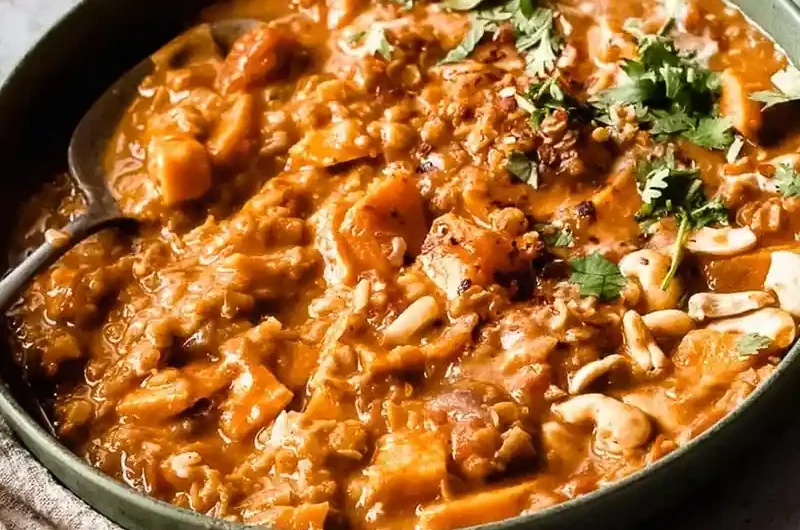
This one-pot meal combines hearty root vegetables and plant-based protein for a satisfying dinner. It is ready in under 30 minutes, making it ideal for busy weeknights.
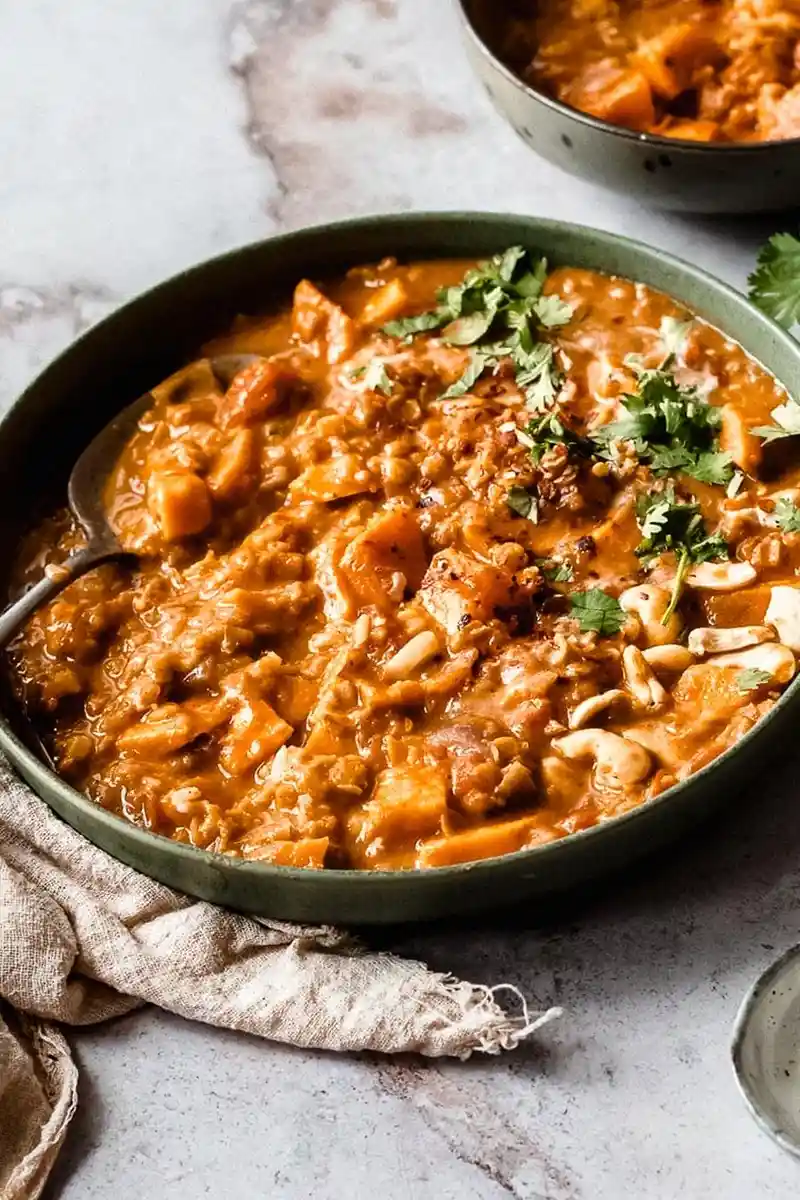
List of ingredients
- 2 tbsp olive oil (sub soy sauce for an oil-free recipe) – for sautéing aromatics.
- 1 red onion, chopped – provides a sweet, sharp base.
- 3 cloves garlic, chopped – adds aromatic depth.
- 1 big (or 2 small) sweet potatoes, diced – for heartiness and natural sweetness.
- ½ cup red lentils – a primary source of plant-based protein.
- 1 ½ cups veggie broth – the cooking liquid for the lentils and potatoes.
- 1 tsp yellow curry powder – provides the core curry flavor.
- ½ tsp ground coriander powder – adds a slight citrusy note.
- ½ tsp cumin powder – adds earthy warmth.
- ½ tsp garam masala powder – provides aromatic complexity.
- 1x 15 oz tin chopped tomatoes – adds acidity and body to the sauce.
- 1x 15 oz can creamy coconut milk – creates a rich and creamy texture.
- side dish of choice (rice, naan…) – for serving.
step-by-step instructions
- Sauté Aromatics: Heat some olive oil in a large saucepan over medium heat. Add onion and garlic and fry until translucent.
- Prep Lentils: In the meantime, give the lentils a good wash in a sieve to remove any debris.
- Combine Base Ingredients: Add sweet potato cubes, lentils, veggie broth, spices, chopped tomatoes and a pinch of salt to the pan.
- First Simmer: Bring the mixture to a boil, then reduce heat and let simmer with a lid on for about 10-12 minutes.
- Add Creaminess: Stir in the coconut milk and let simmer without a lid for another 10 minutes. You can add baby spinach leaves, kale, or olives at this stage if desired.
- Final Touch: Taste the curry and adjust the seasoning with salt or pepper as needed.
- Serve: Plate with your choice of side dish, such as rice or naan, and finish with a drizzle of fresh lime juice and chopped cashews.
Selecting the Best Lentils for Texture
Using Red Lentils for Thickness
Red lentils are split and hull-less, which causes them to break down during the cooking process. This creates a naturally thick, porridge-like consistency that binds the curry together without needing additional thickeners.
Adjusting for Green or Brown Lentils
Green or brown lentils hold their shape much better than red lentils. If you use these, you will need to increase the amount of veggie broth and extend the simmering time by 15-20 minutes to ensure they are tender.
Working with Yellow Lentils
Yellow lentils behave similarly to red lentils and will soften significantly. They offer a slightly milder flavor profile, which allows the other spices to stand out more prominently.
Using Canned Lentils for Speed
Canned lentils are pre-cooked and only need to be heated through. Skip the veggie broth and simmer the potatoes in the tomatoes and coconut milk first, then stir in the canned lentils at the very end.
Vegetable Substitutions and Additions
Replacing Sweet Potatoes with Squash
Butternut squash or pumpkin are excellent alternatives to sweet potatoes. They provide a similar starchy texture and sweetness, making them a seamless 1:1 replacement in this recipe.
Using Different Onion Varieties
While red onion is recommended for its distinct taste, yellow or white onions work perfectly well. Yellow onions provide a more balanced, traditional savory base for Indian-style dishes.
Adding Leafy Greens for Nutrition
Stirring in baby spinach or kale during the last 5 minutes of cooking adds color and vitamins. These greens wilt quickly in the heat of the curry, maintaining a bit of texture without overcooking.
Incorporating Extra Root Vegetables
Diced carrots or parsnips can be added along with the sweet potatoes. These vegetables provide additional earthiness and nutrients while fitting the flavor profile of the curry.
Customizing the Spice Profile
Increasing the Heat Level
If you prefer a spicier dish, replace the mild curry powder with a hot variety. Alternatively, add a pinch of red chili flakes or a finely diced fresh serrano pepper during the sautéing stage.
Enhancing the Aromatic Depth
Adding a small piece of grated fresh ginger along with the garlic increases the aromatic intensity. Ginger provides a zesty warmth that complements the creamy coconut milk.
Balancing with Fresh Lime
Freshly squeezed lime juice added just before serving cuts through the richness of the coconut milk. This acidity brightens the overall flavor and balances the heavy spices.
Using a Custom Spice Blend
If you do not have pre-mixed curry powder, you can create one using turmeric, cumin, and coriander. Ensure the turmeric is used sparingly to avoid a bitter taste while achieving the yellow color.
Optimal Serving Suggestions
Choosing the Right Rice
Brown rice is a nutritious option that provides a nutty flavor and extra fiber. For a lower-calorie version, cauliflower rice works well as a light base for the heavy curry.
Preparing the Perfect Naan
Warm your naan bread in a dry pan or oven until lightly charred. Brushing the bread with a small amount of oil or garlic butter enhances the flavor of the meal.
Adding Crunchy Toppings
Chopped cashews or slivered almonds add a necessary textural contrast to the soft lentils and potatoes. Toasting the nuts in a pan for 2 minutes before adding them increases their flavor.
Pairing with Fresh Salads
A crisp cucumber and tomato salad with a lemon vinaigrette serves as a refreshing starter. The coolness of the salad balances the warmth and spice of the curry.
Storage and Preservation Guide
Refrigeration Best Practices
Store the curry in an airtight glass container once it has cooled to room temperature. This prevents condensation and keeps the flavors fresh for 4 to 5 days.
Freezing for Long-Term Use
This curry is freezer-friendly and can be stored for up to 3 months. Use freezer-safe bags and squeeze out as much air as possible to prevent freezer burn.
Managing Portion Control
Freeze the curry in individual portions rather than one large block. This allows you to thaw and reheat only what you need, preserving the quality of the remaining servings.
Avoiding Texture Loss during Storage
Be aware that lentils may absorb more liquid as they sit in the fridge. Do not be alarmed if the curry looks thicker the next day; it will return to its original consistency upon reheating.
Reheating and Serving Tips
Stovetop Reheating Method
Place the chilled curry in a saucepan over medium-low heat. Add a splash of water or vegetable broth to loosen the sauce and stir frequently to prevent sticking.
Microwave Reheating Instructions
Heat the curry in a microwave-safe bowl, covering it loosely with a lid to trap steam. Heat in 1-minute intervals, stirring in between to ensure even warming.
Restoring the Creamy Texture
If the coconut milk has separated during reheating, stir vigorously once the curry is hot. Adding a teaspoon of fresh coconut cream can also restore the luxurious mouthfeel.
Adding Fresh Garnishes after Heating
Always add fresh cilantro or lime juice after reheating. Heating these ingredients can dull their flavor or cause the greens to turn brown.
Troubleshooting Common Issues
Handling a Curry That Is Too Thick
If the lentils have absorbed too much liquid, the curry may become overly dense. Gradually stir in extra vegetable broth or water until the desired consistency is reached.
Correcting a Bland Flavor
If the curry tastes flat, it likely needs more salt or acidity. Add a pinch more salt or an extra squeeze of lime juice to wake up the spices.
Fixing Undercooked Sweet Potatoes
If the potatoes are still firm after the simmering process, put the lid back on and simmer for another 5 minutes. The trapped steam will cook the centers of the potatoes more efficiently.
Preventing Coconut Milk Curdling
To prevent the coconut milk from separating, avoid boiling the curry vigorously after adding the milk. Keep the heat at a gentle simmer to maintain a smooth emulsion.
Frequently Asked Questions
Can I use an instant pot to prepare this curry?
Yes, you can use a pressure cooker for this recipe. Sauté the aromatics using the sauté function, then pressure cook the lentils and potatoes for about 5-7 minutes before stirring in the coconut milk.
Is this recipe suitable for meal prep?
Yes, this dish is excellent for meal prep as the flavors often deepen overnight. Store the curry separately from the rice to prevent the rice from becoming mushy.
Can I make this recipe nut-free?
Absolutely. Simply omit the chopped cashews on top. You can replace them with toasted sunflower seeds or pumpkin seeds for a similar crunch.
What can I use instead of coconut milk?
You can use a dairy-free yogurt or a mixture of cashew cream and water. Note that this will alter the flavor profile and may require a bit more vegetable broth to keep the sauce fluid.
Print
Sweet Potato Red Lentil and Coconut Curry Recipe
- Total Time: 25 minutes
- Yield: 2 servings 1x
- Diet: Vegan, Gluten-free
Description
This Sweet Potato Lentil Curry is the perfect one-pot meal when you’re after a really healthy yet easy recipe. It combines sweet potatoes and lentils with some delicious curry flavors and is ready in less than 30 minutes.
Ingredients
- 2 tbsp olive oil
- 1 red onion, chopped
- 3 cloves garlic, chopped
- 1 big (or 2 small) sweet potatoes, diced
- ½ cup red lentils
- 1 ½ cups veggie broth
- 1 tsp yellow curry powder
- ½ tsp ground coriander powder
- ½ tsp cumin powder
- ½ tsp garam masala powder
- 1 15 oz tin chopped tomatoes
- 1 15 oz can creamy coconut milk
- Side dish of choice (rice, naan)
Instructions
- Step: Heat olive oil in a large saucepan over medium heat.
- Step: Add onion and garlic and fry until translucent.
- Step: Wash the lentils in a sieve.
- Step: Add sweet potato cubes, lentils, veggie broth, spices, chopped tomatoes, and a pinch of salt.
- Step: Bring to boil, then reduce heat and simmer with a lid on for 10-12 minutes.
- Step: Add coconut milk and simmer without a lid for another 10 minutes.
- Step: Taste and adjust seasoning.
- Step: Serve with side dish of choice and a drizzle of fresh lime juice.
Notes
You can use yellow or green lentils, but adjust the broth and cooking time accordingly. For an oil-free version, substitute olive oil with soy sauce. Store in an airtight container for 3-4 days or freeze for longer storage.
- Prep Time: 10 minutes
- Cook Time: 15 minutes
- Category: Main Course
- Method: Simmering
- Cuisine: Indian
Nutrition
- Serving Size: 1 serving
- Calories: 430 kcal
- Sugar: 9 g
- Sodium: 70 mg
- Fat: 15 g
- Saturated Fat: 2 g
- Unsaturated Fat: 13 g
- Trans Fat: 0 g
- Carbohydrates: 60 g
- Fiber: 20 g
- Protein: 15 g
- Cholesterol: 0 mg
Keywords: sweet potato, red lentil, coconut curry, vegan, gluten-free, one-pot, Indian cuisine