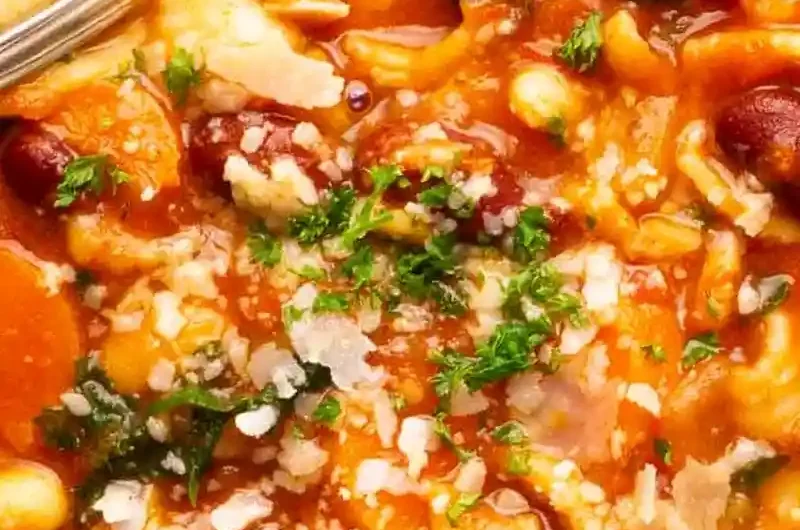
This nutrient-dense minestrone combines fresh vegetables, protein-rich beans, and tender pasta in a savory tomato base. It is a budget-friendly, one-pot meal ideal for weeknight dinners or large-batch meal preparation.
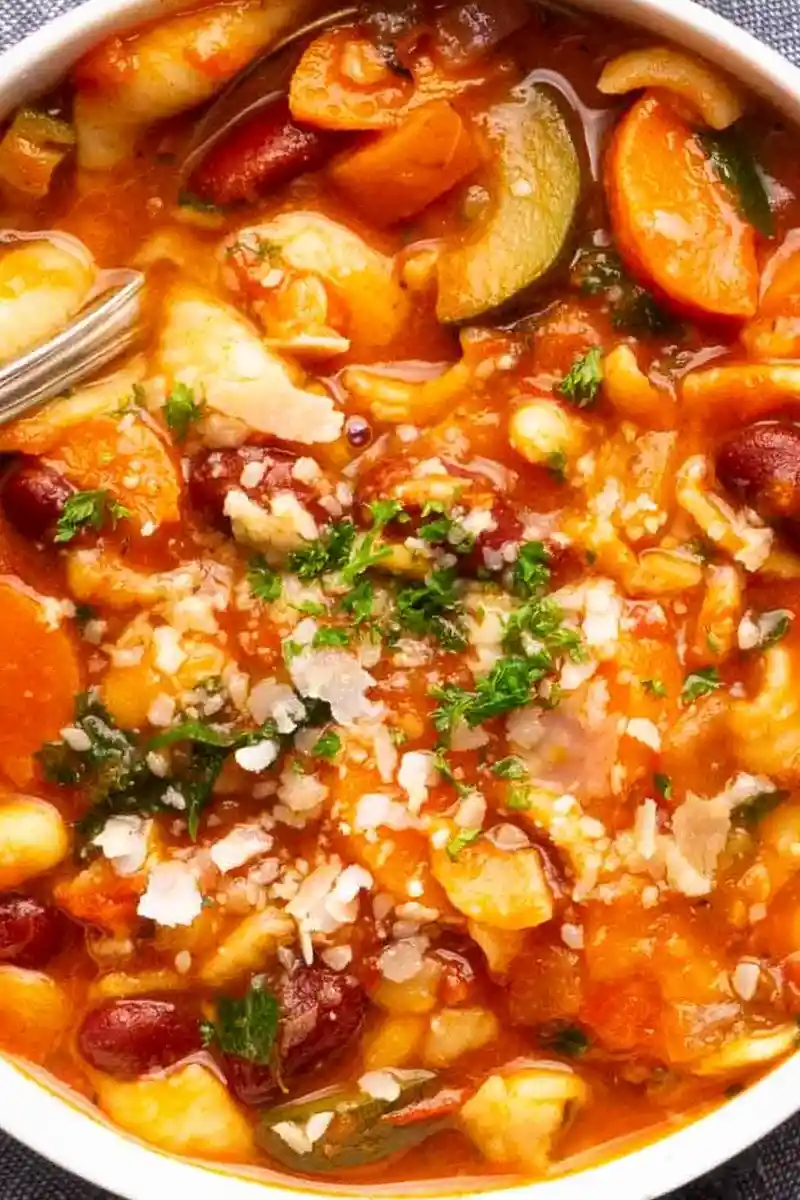
List of ingredients
- 1 tablespoon Olive Oil – used for sautéing the aromatic base.
- 1 medium Onion, diced – provides a foundational savory flavor.
- 2 ribs Celery, diced – adds a subtle earthy saltiness.
- 3 medium Carrots, diced – contributes natural sweetness and color.
- 3 cloves Garlic, minced – adds pungent aromatic depth.
- 1 (15-ounce can) Red Kidney Beans, rinsed and drained – adds protein and hearty texture.
- 1 (15-ounce can) White Kidney Beans, rinsed and drained – provides creamy texture and plant-based protein.
- 1 teaspoon Dried Oregano (or 2 teaspoons fresh) – delivers classic herbal notes.
- 1 teaspoon Italian Seasoning – a blend of herbs for traditional flavor.
- 1 teaspoon Salt, or more to taste – enhances all other flavors in the pot.
- ½ teaspoon Black Pepper – adds a mild spicy warmth.
- 1 (28-ounce can) Crushed Tomatoes – creates a thick, rich tomato broth.
- 6 cups Vegetable Broth – the liquid base; adjust amount for desired thickness.
- 1 cup Shell Pasta, or pasta of choice – adds substance and carbohydrates.
- ½ pound Zucchini (2 small, halved and sliced) – adds freshness and soft texture.
- 2 cups Fresh Spinach or Kale, finely chopped – provides essential nutrients and color.
- Fresh Parsley, Croutons, Parmesan Cheese – optional toppings for added texture and tang.
step-by-step instructions
- Sauté Aromatics: Heat a 4.5-quart soup pot over medium-high heat and add the olive oil. Sauté the diced onion, celery, carrots, and minced garlic until the vegetables are tender and translucent.
- Combine Base: Stir in the red kidney beans, white kidney beans, oregano, Italian seasoning, salt, pepper, crushed tomatoes, and vegetable broth. Bring the mixture to a brief boil to integrate the flavors.
- Simmer Pasta and Zucchini: Reduce the heat to low or medium-low. Add the shell pasta and sliced zucchini, then simmer for approximately 15 minutes or until the pasta reaches your preferred tenderness.
- Add Greens: During the final 5 minutes of the simmering process, stir in the finely chopped spinach or kale until just wilted.
- Finish and Serve: Remove the pot from heat. Serve the soup warm in bowls, garnished with fresh parsley, croutons, or grated Parmesan cheese.
- Storage: Allow the soup to cool completely. Refrigerate in an airtight container for up to 5 days, or freeze in freezer-safe containers for up to 3 months.
Professional Cooking Techniques for Better Flavor
Maximize Flavor Through Sautéing
Do not rush the initial sautéing of the onions, carrots, and celery. Cooking these aromatics until they are soft allows their natural sugars to release and create a deeper flavor foundation for the broth. This step prevents the soup from tasting like raw vegetables.
Preventing Pasta Overcooking
Pasta continues to cook even after the heat is turned off due to residual heat in the broth. To keep the shells al dente, remove the soup from the burner about one minute before the pasta is fully done. This ensures the texture remains firm through the serving process.
Controlling Broth Consistency
The amount of liquid can vary based on the type of pasta used, as some shapes absorb more water than others. If the soup becomes too thick after simmering, stir in an additional half cup of vegetable broth. If it is too thin, simmer it for a few extra minutes without a lid.
Rinsing Canned Beans Correctly
Always rinse canned beans under cold water using a fine-mesh strainer before adding them to the pot. This removes the excess sodium and the viscous starchy liquid from the canning process. Rinsing results in a cleaner taste and a clearer broth.
Managing Zucchini Texture
Slice the zucchini into uniform half-moons to ensure they all cook at the same rate. Adding them at the same time as the pasta prevents them from disintegrating into the broth. This keeps the vegetable chunks distinct and visually appealing.
Using Fresh Herbs for Brightness
While dried herbs provide the base flavor, adding fresh parsley at the very end adds a bright, grassy note. Stir the fresh herbs in just before serving to prevent them from browning or losing their volatile oils during the boil.
Ingredient Substitutions and Alternatives
Alternative Bean Selections
If red or white kidney beans are unavailable, use cannellini beans or chickpeas. Cannellini beans offer a creamier texture, while chickpeas provide a firmer bite. Both options maintain the protein profile of the original recipe.
Pasta Shape Variations
Small shells are ideal for scooping broth, but ditalini, macaroni, or orzo also work well. If using a very small pasta like orzo, reduce the simmering time to avoid mushiness. For larger shapes, ensure they are cut or chosen to fit easily on a spoon.
Leafy Green Swaps
Fresh spinach is mild and wilts quickly, making it a great choice. For a heartier texture and more robust flavor, use Lacinato kale or Swiss chard. If using kale, stir it in 2-3 minutes earlier than spinach as it takes longer to soften.
Tomato Product Alternatives
Crushed tomatoes provide a thick consistency, but diced tomatoes can be used for a chunkier texture. If using whole peeled tomatoes, crush them by hand or with a spoon before adding them to the pot. Tomato puree can be used for an even smoother broth.
Broth Options for Different Diets
Vegetable broth is the standard for this plant-based version. You can use a low-sodium version to control salt levels or a mushroom-based broth for a more savory, umami-rich profile. Ensure any broth used is free from animal-derived additives.
Oil Substitutions for Sautéing
While olive oil is traditional for Italian soups, avocado oil is a great alternative due to its high smoke point. Refined coconut oil can be used, though it may add a very slight sweetness. Avoid using butter if you want to keep the recipe entirely plant-based.
Customizing Your Minestrone Soup
Adding Seasonal Vegetables
Depending on the time of year, you can add diced cauliflower, broccoli florets, or green beans. Add harder vegetables like cauliflower at the same time as the carrots to ensure they are fully tender. Softer vegetables should be added with the zucchini.
Increasing Protein Levels
For those who want more protein, stir in cooked lentils or white beans. You can also add shredded cooked chicken breast during the final five minutes of simmering. This turns the soup into a more substantial main course.
Adding a Spicy Element
To add heat, stir in a pinch of red chili flakes or a dash of cayenne pepper during the sautéing phase. This distributes the spice evenly through the oil and broth. Alternatively, serve the soup with a side of hot sauce.
Enhancing the Umami Profile
A tablespoon of tomato paste stirred in with the garlic can intensify the tomato flavor. Adding a small amount of nutritional yeast or a splash of soy sauce can also deepen the savory notes without adding meat. These additions create a more complex broth.
Using Different Seasoning Blends
While Italian seasoning is standard, you can substitute it with a mix of dried basil, thyme, and rosemary. Fresh rosemary should be used sparingly as its flavor is very potent. Adjust the ratios based on which herb profile you prefer.
Adding Acidity for Balance
A squeeze of fresh lemon juice or a teaspoon of apple cider vinegar stirred in at the end can brighten the soup. Acidity cuts through the richness of the beans and tomatoes. This is a professional trick to make the flavors pop.
Storage, Freezing, and Reheating Advice
Refrigeration Best Practices
Store the cooled soup in airtight glass or BPA-free plastic containers. Keep it in the coldest part of the refrigerator to maintain freshness for up to five days. Stir the soup well before reheating to redistribute the ingredients.
Freezing the Soup Safely
Portion the cooled soup into freezer-safe bags or containers, leaving about an inch of headspace for expansion. The soup will remain high quality for up to three months in the freezer. Label each container with the date of preparation.
Preventing Pasta Mushiness During Freezing
Pasta tends to absorb liquid and become soft when frozen and reheated. To avoid this, cook the pasta separately and store it in a different container. Add a portion of cooked pasta to the bowl and pour the hot soup over it when serving.
Thawing and Reheating Methods
Thaw frozen soup in the refrigerator overnight for the safest results. Reheat on the stovetop over medium heat, stirring occasionally to prevent the bottom from burning. If using a microwave, heat in short intervals and stir in between.
Adjusting Liquid After Storage
It is common for the pasta and beans to absorb more broth while sitting in the fridge. When reheating, you will likely need to add a splash of vegetable broth or water to restore the original consistency. Stir gently to avoid breaking the vegetables.
Managing Freezer Burn
To prevent freezer burn, remove as much air as possible from freezer bags by pressing down on the contents before sealing. Using vacuum-seal bags is the most effective way to preserve the flavor and texture of the soup for long periods.
Serving Ideas and Pairings
Complementary Bread Pairings
Serve this soup with toasted sourdough or a crusty French baguette. Garlic bread is another classic pairing that complements the tomato base. For a lighter option, use toasted whole-grain crostini rubbed with a raw garlic clove.
Cheese and Topping Combinations
Grated Parmesan or Pecorino Romano adds a salty, sharp contrast to the sweet vegetables. A dollop of vegan cashew cream or a sprinkle of nutritional yeast can provide a similar creamy effect for plant-based diets. Freshly cracked black pepper on top adds a final layer of flavor.
Side Salad Suggestions
A simple arugula salad with a lemon-olive oil vinaigrette balances the heartiness of the soup. A Caprese salad with fresh mozzarella, tomatoes, and basil also fits the Italian theme. These sides add a fresh, crisp element to the meal.
Using the Soup as a Starter
If serving as an appetizer, use smaller bowls and omit the pasta to keep it lighter. This allows the soup to open the appetite without filling the guests up too quickly. Serve with a single piece of artisanal bread.
Troubleshooting Common Soup Issues
Fixing a Bland Flavor
If the soup tastes flat, it usually needs more salt or acidity. Start by adding a small amount of salt, then taste again. If it still lacks depth, stir in a teaspoon of lemon juice or red wine vinegar to brighten the profile.
Addressing Overcooked Vegetables
If the vegetables become too soft, you can partially blend a small portion of the soup. Take one cup of the mixture, blend it until smooth, and stir it back into the pot. This thickens the broth and masks the overly soft texture.
Dealing with Excess Liquid
If the broth is too watery, simmer the soup with the lid off for an additional 10-15 minutes. This allows water to evaporate, concentrating the flavors and thickening the base. Avoid boiling vigorously, as this can break the pasta.
Correcting Bitter Tastes
Bitterness can occur if garlic is burnt during the sautéing phase. To neutralize this, add a small pinch of sugar or a teaspoon of maple syrup. This balances the bitter notes without making the soup taste sweet.
Preventing Separation of Ingredients
If you notice the oil separating from the broth, stir the soup vigorously before serving. This emulsifies the ingredients and ensures every spoonful has a consistent texture. Using a whisk can help integrate the fats and liquids.
Managing Grainy Texture
A grainy texture often comes from poorly rinsed beans or low-quality crushed tomatoes. To fix this, you can pass the tomato base through a sieve before adding the other ingredients. Always ensure you rinse your beans thoroughly in the future.
Frequently Asked Questions
Can I use a pressure cooker for this recipe?
Yes, you can. Use the sauté function for the aromatics, then add all ingredients except the spinach and zucchini. Pressure cook on high for 1 minute for thin pasta or 2 minutes for thicker pasta, then quick-release the steam and stir in the zucchini and spinach at the end.
Is this recipe naturally vegan?
The recipe is vegan if you omit the Parmesan cheese garnish. You can replace the cheese with nutritional yeast or a plant-based Parmesan alternative to maintain the salty, cheesy flavor while keeping it strictly vegan.
How do I keep the pasta firm?
The best way to keep pasta firm is to cook it separately and add it to the bowl just before serving. If cooking in the pot, follow the simmering time strictly and turn off the heat while the pasta is still slightly underdone.
Which zucchini variety works best?
Standard green zucchini is the best choice for this soup due to its mild flavor and ability to hold its shape. Yellow zucchini can also be used for additional color, though it may be slightly softer when cooked.
Can I substitute the crushed tomatoes for paste?
You cannot replace the entire can of crushed tomatoes with paste, as the paste is too concentrated. However, you can use 2 tablespoons of tomato paste and increase the vegetable broth by 2 cups to achieve a similar base.
How long does the soup last in the fridge?
When stored in an airtight container, the soup remains safe and tasty for up to 5 days. Because of the pasta, the texture will change over time, so it is recommended to store the pasta separately if keeping it for more than 48 hours.
Print
Hearty Italian-Style Vegetable Minestrone
- Total Time: 50 minutes
- Yield: 12 cups 1x
- Diet: Vegan, Vegetarian
Description
This hearty minestrone soup recipe is a comforting tomato broth soup loaded with fresh vegetables, beans, and pasta, inspired by the famous Olive Garden minestrone!
Ingredients
- 1 tablespoon Olive Oil
- 1 medium Onion, diced
- 2 ribs Celery, diced
- 3 medium Carrots, diced
- 3 cloves Garlic, minced
- 1 (15-ounce can) Red Kidney Beans, rinsed and drained
- 1 (15-ounce can) White Kidney Beans, rinsed and drained
- 1 teaspoon Dried Oregano
- 1 teaspoon Italian Seasoning
- 1 teaspoon Salt
- ½ teaspoon Black Pepper
- 1 (28-ounce can) Crushed Tomatoes
- 6 cups Vegetable Broth
- 1 cup Shell Pasta
- ½ pound Zucchini, halved and sliced
- 2 cups Fresh Spinach or Kale, finely chopped
- Fresh Parsley, Croutons, Parmesan Cheese (microbial-rennet)
Instructions
- Step 1: Heat a 4.5-quart soup pot over medium-high heat and add OLIVE OIL.
- Step 2: Sauté ONION, CELERY, CARROTS, and GARLIC until tender.
- Step 3: Stir in KIDNEY BEANS, WHITE BEANS, OREGANO, ITALIAN SEASONING, SALT, PEPPER, CRUSHED TOMATOES, and VEGETABLE BROTH. Bring to a boil briefly.
- Step 4: Reduce heat, add SHELL PASTA and ZUCCHINI, and simmer for 15 minutes, or until the pasta is tender.
- Step 5: In the last 5 minutes, stir in the SPINACH.
- Step 6: Serve warm, garnished with your favorite toppings.
Notes
To store, cool completely and refrigerate in an airtight container for up to 5 days or freeze for up to 3 months.
- Prep Time: 10 minutes
- Cook Time: 40 minutes
- Category: Soup
- Method: Stovetop
- Cuisine: Italian
Nutrition
- Serving Size: 1 cup
- Calories: 65 kcal
- Sugar: 3 g
- Sodium: 687 mg
- Fat: 1 g
- Saturated Fat: 0.2 g
- Unsaturated Fat: 0.8 g
- Trans Fat: 0 g
- Carbohydrates: 12 g
- Fiber: 1 g
- Protein: 2 g
- Cholesterol: 0 mg
Keywords: minestrone soup, Italian soup, vegetable soup, budget-friendly dinner, Olive Garden inspired