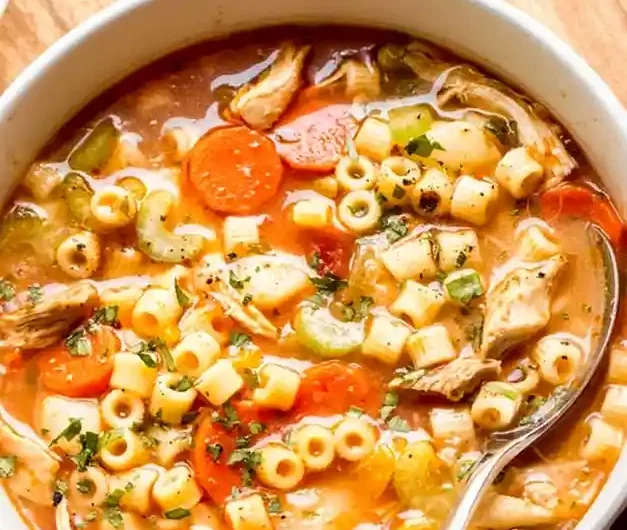
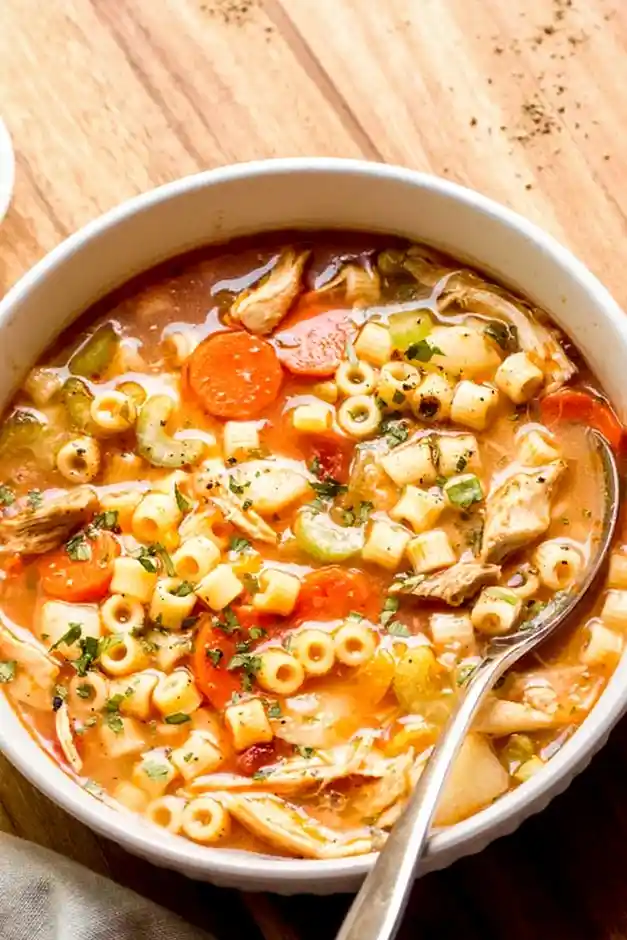
This hearty Italian-style soup combines tender chicken, rustic vegetables, and ditalini pasta in a savory broth. It is a convenient one-pot meal that delivers rich flavor through a simple simmer-and-shred method.
List of ingredients
- 4 bone-in-skin-on chicken thighs, 2 pounds – provides a rich base and tender meat.
- 1 medium onion, chopped, about 1 cup – adds foundational sweetness.
- 3 celery ribs, chopped, about 2 cups – contributes an earthy aroma.
- 3 medium carrots, chopped, about 1 1/2 cups – adds color and natural sweetness.
- 1 large yellow bell pepper, chopped – provides a mild, sweet pepper flavor.
- 2 medium russet potatoes (1 pound), peeled and cut into 3/4-inch cubes – adds heartiness and thickness.
- 4 cloves garlic, chopped – enhances the savory profile.
- 1 (14.5 oz) can no-salt diced tomatoes – adds acidity and body.
- 2 dry bay leaves – infuses the broth with herbal depth.
- 1 Tbsp. kosher salt – essential for seasoning the proteins and vegetables.
- 1 (32 oz) carton low-sodium chicken stock – creates a flavorful liquid base.
- 4 cups water (or chicken stock) – adjusts the soup consistency.
- 1/2 cup dry ditalini pasta – a small tubular pasta ideal for soups.
- 1/2 cup fresh chopped Italian parsley – adds a bright, fresh finish.
- Fresh black pepper, to taste – provides a sharp, spicy contrast.
step-by-step instructions
- Combine Base: In a large soup pot, at least 6-quart, combine chicken, onions, celery, carrots, bell pepper, potatoes, garlic, tomatoes, bay leaves, and salt.
- Simmer: Add chicken stock and water. Season to taste with black pepper. Cover and bring to a boil. Reduce heat to low and simmer, partially covered, for 30 minutes or until chicken is tender and easily falling off the bones.
- Prepare Pasta: Remove chicken from the pot with a pair of tongs. Add pasta to the soup and continue cooking for 13-15 minutes, partially covered, until pasta is tender. Stir the soup a couple of times so the pasta does not stick to the bottom.
- Process Chicken: Meanwhile shred the chicken with two forks, discarding the skin and bones. Return shredded chicken to the pot. Taste the vegetables, especially the potatoes, to ensure they are fully cooked.
- Final Touch: Discard the bay leaves. Stir in the fresh parsley and serve immediately.
Flavor Optimization Techniques
Adding a Splash of Acidity
To brighten the heavy flavors of the chicken and potatoes, stir in a teaspoon of lemon juice or apple cider vinegar just before serving. This acid cuts through the fat of the chicken thighs and enhances the natural flavor of the vegetables. It provides a professional balance to the savory broth.
Using Dried Spice Enhancements
You can increase the depth of the broth by adding half a teaspoon to a full teaspoon of onion powder, garlic powder, or dried parsley. These spices should be added during the initial simmer phase to ensure they fully integrate. This creates a more complex taste profile without adding significant prep time.
Adjusting Black Pepper Levels
For a spicier version of this soup, increase the black pepper to approximately 1.5 teaspoons. Using freshly cracked peppercorns provides a more potent and aromatic heat than pre-ground pepper. This is particularly effective if you want to emulate a more robust restaurant-style taste.
Ingredient Alternatives and Swaps
Choosing Different Pasta Shapes
While ditalini is traditional, you can substitute it with orzo or tubetti pasta. Orzo will create a slightly creamier texture, while tubetti maintains a more rustic feel. Always adjust the cooking time based on the specific pasta’s package instructions to avoid overcooking.
Selecting Alternative Chicken Cuts
Chicken drumsticks are a suitable alternative to thighs as they also contain bone and skin for flavor. Avoid using chicken breasts, as they tend to dry out during the long simmering process and do not produce as rich a broth. The collagen in dark meat is essential for the soup’s body.
Swapping Out Fresh Herbs
If fresh parsley is unavailable, fresh basil can be used as a fragrant alternative. For a more earthy tone, a small amount of chopped fresh thyme or oregano works well. Always stir in fresh herbs at the very end to preserve their color and volatile oils.
Using Different Potato Varieties
Russet potatoes provide a starchy texture that slightly thickens the broth as they cook. If you prefer potatoes that hold their shape better, try Yukon Gold or red potatoes. Cut them into uniform cubes to ensure they all reach doneness at the same time.
Substituting the Bell Pepper
Yellow bell pepper offers a mild sweetness, but red bell pepper can be used for a slightly sweeter, bolder taste. Green bell pepper will introduce a more bitter, sharp note to the soup. All three colors are interchangeable depending on the flavor profile you prefer.
Refining the Soup Consistency
How to Thicken the Liquid
If you prefer a thicker consistency, create a slurry by mixing one tablespoon of flour with 2-3 tablespoons of the hot soup liquid. Stir this smooth mixture back into the pot and bring it to a simmer for a few minutes. This adds a light velvetiness to the broth without using cream.
Preventing Pasta Overcooking
Pasta continues to absorb liquid even after the heat is turned off. To prevent it from becoming mushy, cook it until it is just barely al dente. If you are making a large batch, consider cooking the pasta separately and adding it to individual bowls.
Maintaining Vegetable Texture
Ensure the potatoes and carrots are cut into consistent sizes to avoid having some pieces mushy and others raw. If you prefer very firm vegetables, you can add the potatoes 10 minutes after the initial simmer starts. This gives the chicken the full cook time while keeping the tubers intact.
Serving and Pairing Recommendations
Ideal Bread Accompaniments
Pair this soup with crusty sourdough garlic bread or a toasted baguette. The crunch of the bread provides a necessary textural contrast to the soft vegetables and pasta. A slice of buttered ciabatta is also an excellent choice for soaking up the broth.
Pairing with Crisp Salads
A fresh Caesar salad with cucumbers or a kale salad with cranberries balances the warmth of the soup. The acidity of a vinaigrette helps cleanse the palate between spoonfuls of the rich chicken broth. Use a light lemon-based dressing to complement the Italian theme.
Adding Light Side Dishes
For a more substantial meal, serve the soup alongside a hummus and veggie sandwich on whole-grain bread. Alternatively, a side of roasted spaghetti squash provides a nutritious, low-carb accompaniment. These sides turn the soup into a full-course dinner.
Preservation and Reheating Methods
Safe Refrigeration Practices
Store leftover soup in an airtight glass or BPA-free plastic container in the refrigerator. It will remain fresh for 4 to 5 days. Ensure the soup is cooled slightly before sealing to prevent excessive condensation from affecting the taste.
Long-Term Freezer Storage
This soup can be frozen for up to 3 months for future use. To achieve the best results, freeze the soup without the pasta, as cooked pasta becomes mushy and disintegrates during the freezing and thawing process. Label the container with the date of preparation.
Optimal Reheating Temperatures
Thaw frozen soup in the refrigerator overnight before reheating. Heat the soup in a pot over medium heat on the stove or in a microwave-safe bowl. Stir occasionally to ensure the heat is distributed evenly and the vegetables do not stick.
Managing Pasta in Leftovers
Because pasta absorbs broth over time, leftover soup often becomes too thick. Add a splash of chicken stock or water when reheating to restore the original consistency. If you froze the soup without pasta, boil a fresh batch of ditalini and stir it in just before serving.
Common Cooking Challenges
Correcting Under-Seasoned Broth
If the soup tastes bland after the first simmer, gradually add small amounts of kosher salt. Salt enhances all the other flavors in the pot, so it is the first thing to adjust. Always taste the broth before adding the pasta, as the pasta itself may contain salt.
Avoiding Stuck Pasta
Ditalini pasta is prone to sticking to the bottom of the pot due to its starch content. Stir the soup every few minutes while the pasta is cooking to keep the grains moving. Using a wide-bottomed pot also helps distribute the pasta more evenly.
Fixing Mushy Vegetables
Mushy vegetables usually occur if the soup is boiled too vigorously for too long. Maintain a gentle simmer where only a few bubbles break the surface. If you find your vegetables are too soft, reduce the simmering time by 5 minutes in your next batch.
Frequently Asked Questions
Can I use chicken breasts instead of thighs?
It is not recommended because chicken breasts lack the fat and connective tissue found in thighs. This results in a thinner broth and meat that can become dry and stringy during the simmering process.
What is the best substitute for ditalini pasta?
Orzo, tubetti, or small shells are the best substitutes. The goal is to use a small pasta shape that fits easily onto a spoon along with the chopped vegetables.
How do I reduce the sodium content further?
Use a completely salt-free chicken stock and replace the kosher salt with a small amount of lemon juice or a dash of low-sodium soy sauce for umami. You can also rinse the canned diced tomatoes if they contain added salt.
Is a 6-quart pot strictly necessary?
Yes, a 6-quart pot is necessary to accommodate the volume of the chicken, vegetables, and 8 cups of liquid without boiling over. A smaller pot will make stirring difficult and may lead to uneven cooking.
Can this be adapted for a slow cooker?
You can adapt this by placing all ingredients except the pasta and parsley in a slow cooker. Cook on low for 6-8 hours or high for 3-4 hours. Shred the chicken and add the pasta during the last 30 minutes of cooking.
Print
Sicilian Chicken Soup
- Total Time: 55 minutes
- Yield: 8 servings 1x
- Diet: Dairy Free
Description
Chicken soup has never been easier! Warm up with a huge bowl on a cold winter day. All from scratch with tender chunks of veggies, ditalini pasta, and shredded chicken. Yum!
Ingredients
- 4 bone-in-skin-on chicken thighs, 2 pounds
- 1 medium onion, chopped, about 1 cup
- 3 celery ribs, chopped, about 2 cups
- 3 medium carrots, chopped, about 1 1/2 cups
- 1 large yellow bell pepper, chopped
- 2 medium russet potatoes (1 pound), peeled and cut into 3/4-inch cubes
- 4 cloves garlic, chopped
- 1 (14.5 oz) can no-salt diced tomatoes
- 2 dry bay leaves
- 1 Tbsp. kosher salt
- 1 (32. oz) carton low-sodium chicken stock
- 4 cups water (or chicken stock)
- 1/2 cup dry ditalini pasta
- 1/2 cup fresh chopped Italian parsley
- Fresh black pepper, to taste
Instructions
- Step 1: In a large soup pot, at least 6-quart, combine chicken, onions, celery, carrots, bell pepper, potatoes, garlic, tomatoes, bay leaves, and salt.
- Step 2: Add chicken stock and water. Season to taste with black pepper. Cover and bring to a boil. Reduce heat to low and simmer, partially covered, for 30 minutes or until chicken is tender and easily falling off the bones. Remove chicken from the pot with a pair of tongs.
- Step 3: Add pasta to the soup and continue cooking for 13-15 minutes, partially covered, until pasta is tender. Stir the soup couple times so the pasta does not stick.
- Step 4: Shred the chicken with two forks, discarding the skin and bones. Return shredded chicken to the pot and taste the veggies for doneness.
- Step 5: Discard the bay leaves. Stir in parsley and serve.
Notes
Another option for chicken is using drumsticks; chicken breast is not recommended. Adjust salt to taste before adding pasta. For a spicier version, add 1 1/2 teaspoons of black pepper.
- Prep Time: 10 minutes
- Cook Time: 45 minutes
- Category: Soup
- Method: Simmer
- Cuisine: Italian
Nutrition
- Serving Size: 1 serving
- Calories: 260 kcal
- Sugar: 4.6 g
- Sodium: 177.3 mg
- Fat: 4.1 g
- Saturated Fat: 1.2 g
- Unsaturated Fat: 2.9 g
- Trans Fat: 0 g
- Carbohydrates: 19.9 g
- Fiber: 3.1 g
- Protein: 34.7 g
- Cholesterol: 103.4 mg
Keywords: Sicilian chicken soup, Carrabba’s copycat, Italian chicken soup, one-pot soup, comfort food