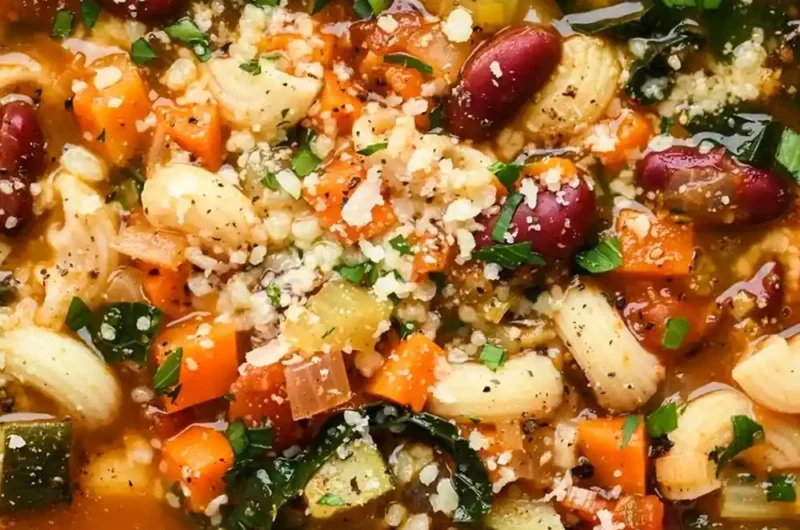
This gluten-free minestrone is a nutrient-dense meal filled with fresh vegetables and hearty beans. It comes together in under an hour using pantry staples to create deep Italian-inspired flavors.
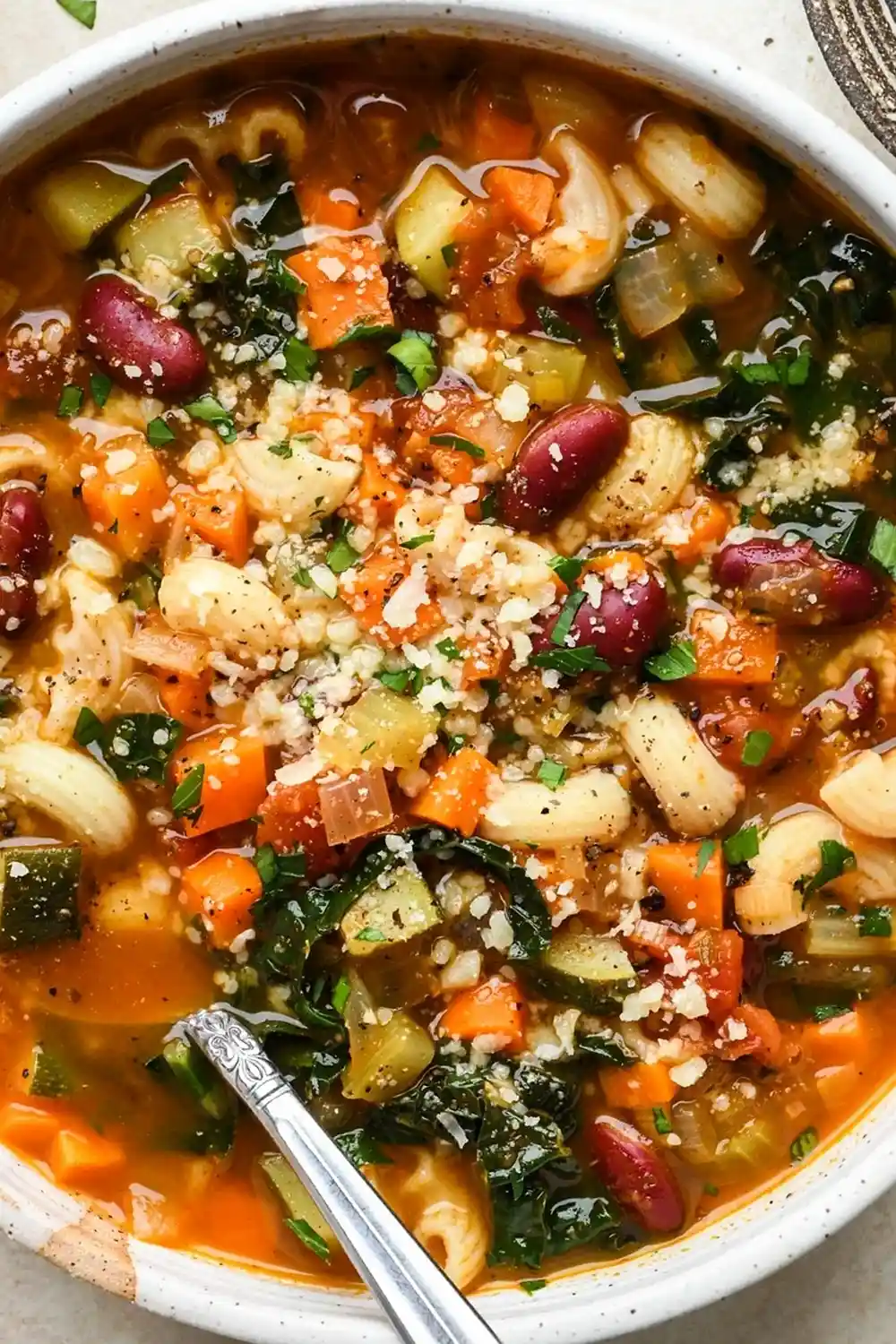
List of ingredients
- 3 tablespoons olive oil – used for sautéing aromatics.
- 1 medium yellow onion, finely diced – provides a sweet flavor base.
- 3 large carrots, peeled and diced – adds color and natural sweetness.
- 3 stalks of celery, diced – essential for the mirepoix base.
- 1 leek, white and green parts only, thinly sliced into half moons – adds a mild, buttery onion flavor.
- 5 cloves of garlic, chopped – provides pungent aromatic depth.
- 1 teaspoon kosher salt – enhances all vegetable flavors.
- 1 medium zucchini, diced – adds soft texture and freshness.
- 3 tablespoons tomato paste – thickens the broth and adds concentrated tomato flavor.
- 2 teaspoons dried oregano – brings a classic Mediterranean herb profile.
- 1 teaspoon poultry seasoning or all-purpose seasoning – adds savory complexity.
- Pinch of chili flakes (optional) – adds a subtle hint of heat.
- 1/4 teaspoon black pepper, or to taste – provides a basic spicy kick.
- 1 14 ounce can diced fire roasted tomatoes – adds smoky depth and acidity.
- 6 cups vegetable or chicken broth – the liquid base for the soup.
- 1 bunch lacinato kale, washed and chopped or cut into thin ribbons – provides earthy greens.
- 1 14 ounce can kidney beans, drained and rinsed – adds protein and heartiness.
- 2 tablespoons chopped fresh parsley – used for a fresh herbal finish.
- 6 ounces gluten free elbow macaroni – the heartier filling element.
- Fresh herbs and parmesan cheese or dairy free parmesan – used for garnishing.
step-by-step instructions
- Sauté the base: Heat olive oil over medium heat in a large soup pot. Add diced onions, carrots, celery, sliced leeks, chopped garlic, and 1 teaspoon salt. Sauté for 12-14 minutes, stirring occasionally, until onions are translucent and vegetables begin to caramelize.
- Develop the flavor: Stir in the diced zucchini, tomato paste, dried oregano, poultry seasoning, chili flakes, and black pepper. Sauté for an additional 3-4 minutes until the tomato paste darkens slightly and the zucchini starts to soften.
- Simmer the broth: Pour in the fire roasted tomatoes and broth, then bring the mixture to a boil. Reduce the heat to a simmer and cook uncovered on low for 15-20 minutes until the zucchini is tender and the soup has reduced slightly.
- Prepare the pasta: While the soup is simmering, cook the gluten-free elbow macaroni in a separate pot according to the package instructions. Drain the pasta well and set it aside.
- Add final greens and beans: Stir the drained kidney beans, chopped kale, and fresh parsley into the soup. Return the pot to a simmer and cook for 4-5 minutes until the kale is wilted but remains bright green. Season with additional salt and pepper to taste.
- Assemble and serve: If serving the entire pot immediately, stir in the cooked pasta. Otherwise, place a portion of pasta in individual bowls and ladle the hot soup over the top to prevent the noodles from overcooking. Garnish with parmesan cheese and fresh herbs.
Vegetable Preparation and Selection
Choosing the Best Lacinato Kale
Lacinato kale, also known as dinosaur kale, is preferred for its tender leaves and deep flavor. When selecting a bunch, look for dark green, firm leaves without yellowing or wilting. Be sure to remove the tough center ribs before chopping the leaves into thin ribbons.
Prepping Leeks to Remove Grit
Leeks often trap sand and dirt between their layers. To clean them, slice the leeks first and then place the slices in a bowl of cold water. Swish them around, let the grit sink to the bottom, and scoop the leeks out with a slotted spoon.
Uniform Dicing for Even Cooking
Dicing your carrots, celery, and zucchini into consistent sizes ensures they cook at the same rate. This prevents some pieces from becoming mushy while others remain hard. Aim for pieces roughly the size of a pea for the best texture.
Flavor Enhancement Strategies
Caramelizing Aromatics for Depth
Taking the full 12-14 minutes to sauté the onions, carrots, and celery is crucial. This process, known as caramelization, develops the natural sugars in the vegetables. It creates a sweet, rich foundation that prevents the soup from tasting like plain boiled vegetables.
Concentrating the Tomato Paste
Frying the tomato paste with the vegetables before adding liquid removes the raw, metallic taste often found in canned products. This step concentrates the sugars and deepens the color of the broth. It results in a more professional, layered flavor profile.
Utilizing Fire Roasted Tomatoes
Using fire roasted tomatoes instead of plain diced tomatoes adds a subtle charred flavor. This mimics the taste of vegetables roasted over an open flame. It adds a level of complexity and smokiness that balances the sweetness of the carrots and leeks.
Balancing Salt and Acidity
Always taste your soup at the end of the cooking process. If the broth feels flat, a small pinch of salt or a squeeze of fresh lemon juice can brighten the flavors. The acidity from the tomatoes usually suffices, but adjustments based on your broth’s sodium content are often necessary.
Ingredient Substitutions
Alternative Greens to Kale
If you do not have lacinato kale, baby spinach or Swiss chard are excellent replacements. Spinach wilts much faster than kale, so add it at the very last minute. Swiss chard provides a slightly saltier, more earthy flavor that complements the kidney beans.
Choosing Different Legumes
While kidney beans are traditional, cannellini beans or chickpeas work well. Cannellini beans offer a creamier texture and a milder taste. Chickpeas add a firmer bite and a nuttier flavor to the overall dish.
GF Pasta Alternatives
Elbow macaroni is used here, but any short gluten-free pasta like fusilli or penne works. Brown rice pasta typically holds its shape best during reheating. Chickpea or lentil pasta can be used to increase the protein content of the meal.
Broth Variations for Different Diets
Vegetable broth is the standard for a vegetarian version, while chicken broth adds a richer, savorier note. For a lighter version, you can use a mixture of low-sodium broth and water. Always ensure your broth is free from additives that do not align with your dietary needs.
Serving and Presentation Ideas
Pairing with Crusty Bread
Serve this soup with a side of toasted gluten-free sourdough or a crusty baguette. Rubbing a raw garlic clove on toasted bread adds an extra layer of flavor. This provides a satisfying crunch that contrasts with the soft vegetables and pasta.
Garnish Options for Extra Flavor
Beyond parmesan, try adding a dollop of pesto or a swirl of extra virgin olive oil on top. Freshly cracked black pepper and a sprinkle of red pepper flakes can add a customized level of heat. A few leaves of fresh basil can provide a sweet, aromatic finish.
Adding Protein for a Heartier Meal
To make the soup more filling, consider adding cooked chicken breast or sliced turkey sausage. Brown the meat in the pot before starting the vegetables to lock in the juices. This transforms the soup from a light meal into a heavy, protein-rich dinner.
Storage and Reheating Guide
Cooling and Refrigerating Correctly
Allow the soup to cool to room temperature before transferring it to an airtight container. This prevents condensation from forming, which can dilute the broth. Store the soup in the refrigerator for up to five days.
Freezer-Friendly Storage Methods
To freeze the soup, omit the pasta and kale during the initial cooking process. Store the vegetable and bean base in freezer-safe bags or containers for up to three months. Add fresh greens and cooked pasta when reheating the soup for the best texture.
Best Practices for Reheating GF Pasta
Gluten-free pasta tends to absorb liquid and become mushy when reheated. To avoid this, store the pasta in a separate container from the broth. Heat the soup first, then add the pasta and microwave or simmer for just one minute.
Troubleshooting Common Issues
Fixing a Soup That Is Too Thick
If the soup becomes too thick after sitting in the fridge, the pasta or beans may have absorbed the liquid. Stir in a splash of vegetable broth or water while reheating. This restores the original consistency without diluting the flavor too much.
Managing Overcooked Vegetables
To prevent zucchini and kale from becoming overcooked, follow the timing strictly. Zucchini should be added after the initial aromatic sauté. Kale should only be simmered for a few minutes to maintain its structural integrity and vibrant color.
Correcting a Bland Broth
If the soup lacks depth, check your salt levels first. If it is still bland, stir in a teaspoon of soy sauce or a small amount of nutritional yeast for umami. These ingredients add a savory depth that mimics long-simmered stocks.
Frequently Asked Questions
Can I make this soup in a slow cooker?
Yes, you can adapt this for a slow cooker. Sauté the vegetables and tomato paste in a pan first for flavor, then transfer everything except the pasta and kale to the crockpot. Cook on low for 6-8 hours and stir in the greens and pre-cooked pasta at the end.
Why is my GF pasta getting gummy?
Gluten-free pasta releases more starch than wheat pasta, which can thicken the soup and create a gummy texture. Cooking the pasta separately and adding it only at the time of serving prevents the starch from leaking into the broth.
How do I make this soup vegan?
This recipe is naturally vegan if you use vegetable broth. Simply replace the parmesan cheese with a dairy-free parmesan alternative or nutritional yeast. Ensure your poultry seasoning is a plant-based blend of herbs.
Can I use frozen vegetables?
You can use frozen diced carrots and celery, but you will lose some of the caramelization benefits. Add frozen zucchini or peas during the final simmering stage rather than the initial sauté. This prevents them from breaking down too much.
Print
Classic Minestrone Soup with Gluten-Free Noodles
- Total Time: 55 minutes
- Yield: 6 servings 1x
- Diet: Gluten-Free, Vegetarian
Description
This gluten free minestrone soup features a variety of flavorful and wholesome vegetables like carrots, celery, onions, zucchini, and kale. An Italian inspired recipe with lovely complex layers of flavor thanks to a few dried spices and tomato paste that can be made in less than an hour.
Ingredients
- 3 tablespoons olive oil
- 1 medium yellow onion, finely diced
- 3 large carrots, peeled and diced
- 3 stalks of celery, diced
- 1 leek, white and green parts only, thinly sliced into half moons
- 5 cloves of garlic, chopped
- 1 teaspoon kosher salt
- 1 medium zucchini, diced
- 3 tablespoons tomato paste
- 2 teaspoons dried oregano
- 1 teaspoon poultry seasoning or all-purpose seasoning
- Pinch of chili flakes (optional)
- 1/4 teaspoon black pepper, or to taste
- 1 14 ounce can diced fire roasted tomatoes
- 6 cups vegetable broth
- 1 bunch lacinato kale, washed and chopped or cut into thin ribbons
- 1 14 ounce can kidney beans, drained and rinsed
- 2 tablespoons chopped fresh parsley
- 6 ounces gluten free elbow macaroni
- Fresh herbs and microbial-rennet parmesan cheese or dairy free parmesan to serve
Instructions
- Sauté the vegetables and aromatics: Heat 3 tablespoons olive oil over medium heat in a large soup pot. Add onions, carrots, celery, leek, garlic, and 1 teaspoon kosher salt. Sauté for 12-14 minutes, stirring occasionally – until onions are translucent and veggies start caramelizing. Add zucchini, tomato paste, dried oregano, poultry seasoning, chili flakes (if using), and black pepper, and sauté for another 3-4 minutes, until tomato paste has darkened slightly, and zucchini has started to soften.
- Add the liquids: Add fire roasted tomatoes and broth and bring to a boil. Reduce to a simmer and cook uncovered on low for 15-20 minutes – until zucchini is tender and soup is reduced slightly.
- Cook the pasta: While soup is simmering, cook pasta according to package instructions. Drain and set aside.
- Add beans and kale and season the soup: Add kidney beans, kale, and parsley to the soup. Return to a simmer and cook for another 4-5 minutes – until greens are wilted but still bright green. Season to taste with salt and pepper.
- Decide when to add the pasta: If you’re planning to serve all the soup at once add the pasta to the soup. Otherwise, place desired amount of pasta in a soup bowl before ladling the hot soup over the top.
- Serve and enjoy: Top with parmesan or dairy free parmesan and fresh herbs if desired, and dig in!
Notes
Storage: Store in an airtight container in the refrigerator for up to 5 days. Freezing: Freeze the soup without the pasta; add freshly cooked pasta after thawing. Reheating: Reheat in the microwave or over low heat on the stovetop.
- Prep Time: 15 minutes
- Cook Time: 40 minutes
- Category: Soup
- Method: Stovetop
- Cuisine: Italian
Nutrition
- Serving Size: 1 serving
- Calories: 285 kcal
- Sugar: 7 g
- Sodium: 890 mg
- Fat: 9 g
- Saturated Fat: 1.2 g
- Unsaturated Fat: 7.8 g
- Trans Fat: 0 g
- Carbohydrates: 38 g
- Fiber: 9 g
- Protein: 11 g
- Cholesterol: 0 mg
Keywords: minestrone soup, gluten-free, vegetable soup, Italian, vegan, healthy dinner, kale soup