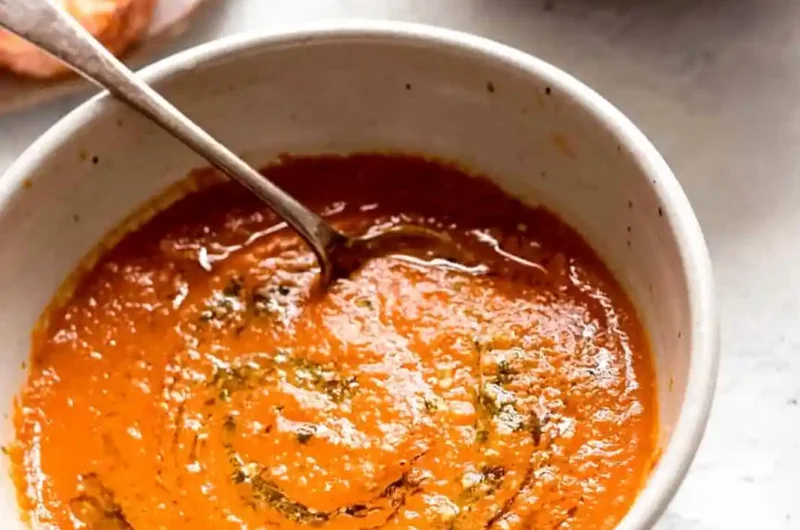
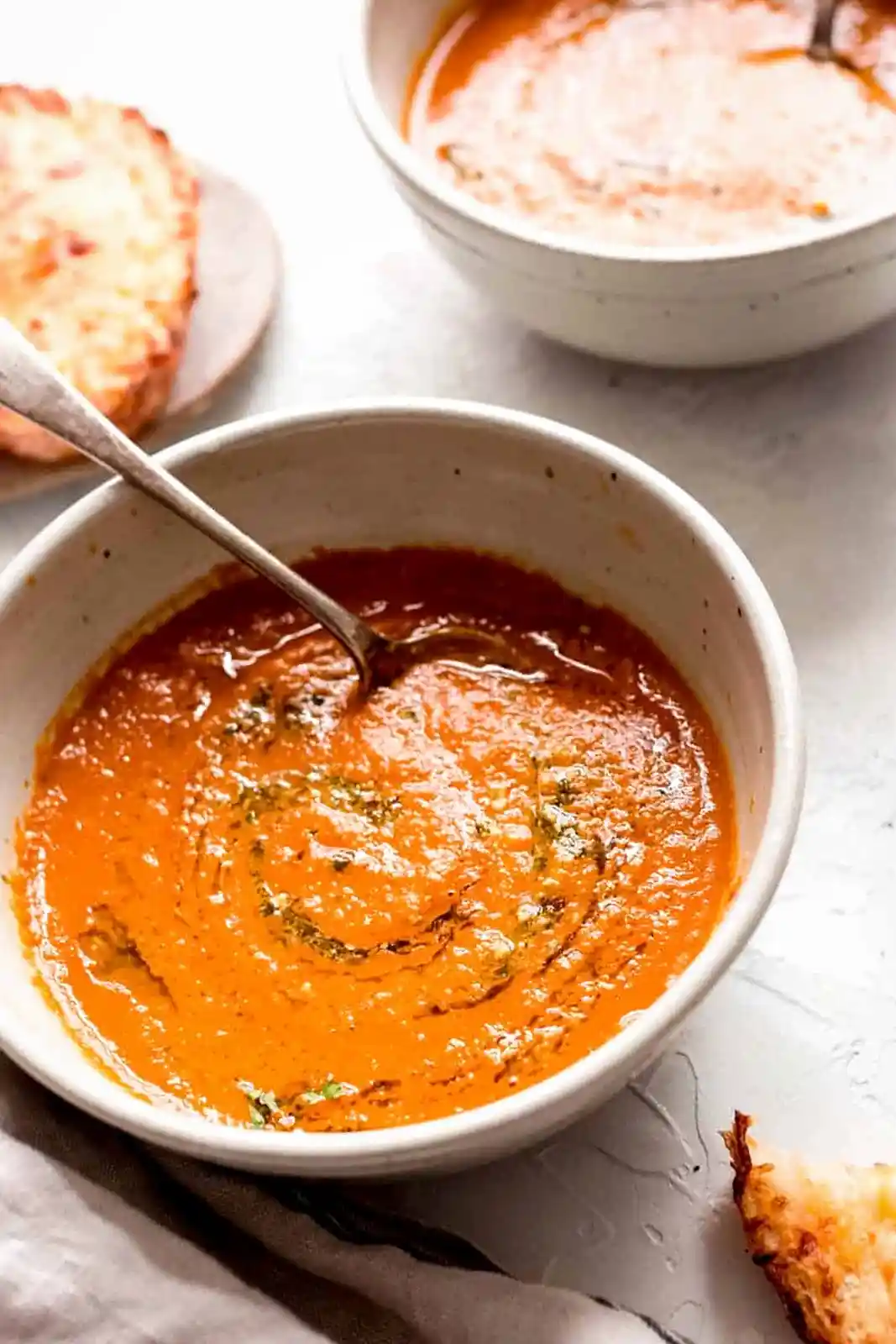
This rich and creamy tomato basil soup is made without the use of heavy cream or added sugars. By roasting the vegetables, you achieve a deep, natural sweetness and a luxurious texture.
List of ingredients
- 3 lbs. tomatoes (2 lbs. Roma cut in half and 1 lb. whole cherry tomatoes) – provides the base and natural sweetness.
- 1 medium onion (cut into chunks) – adds aromatic depth.
- 6-10 garlic cloves – adds savory, pungent flavor.
- 3 large carrots (peeled and cut in half) – contributes natural sugars and thickness.
- 1/3 cup olive oil – used for roasting and emulsification.
- Salt and pepper – to taste for basic seasoning.
- 4 cups vegetable stock or chicken stock – provides the liquid base.
- 2 tablespoons balsamic vinegar – adds a tangy acidity.
- 1/4 to 1/2 teaspoon red pepper flakes – adds a subtle hint of heat.
- 2-4 tablespoons homemade or store-bought basil pesto – the secret ingredient for creaminess and herbal depth.
step-by-step instructions
- Roast the vegetables: Position a rack in the center of the oven and preheat it to 375°F. Place the tomatoes, onions, garlic, and carrots on one large baking sheet, allowing some overlap. Drizzle with olive oil and add a generous pinch of salt and pepper, tossing well to coat. Bake for 1 hour, tossing the ingredients around the 30-minute mark to ensure even roasting.
- Blend the mixture: Transfer the roasted vegetables and all pan juices into a blender. Process until the mixture is completely smooth. For high-power blenders, this can be done in one batch. For standard blenders, process in smaller batches and add a small amount of broth to assist with blending. If using an immersion blender, transfer all ingredients to a pot and blend directly there.
- Simmer the soup: Pour the puree into a large dutch oven over medium heat. Stir in the stock and heat for 5-7 minutes until the soup is hot throughout. Mix in the balsamic vinegar, red pepper flakes, and at least two tablespoons of basil pesto. Taste the soup and add more pesto (up to 4 tablespoons) if a stronger basil flavor is desired. Adjust final salt and pepper seasoning before serving.
Optimizing the Roasting Process
Maintaining Correct Oven Temperature
Ensuring your oven is fully preheated to 375°F is critical for the Maillard reaction. This process caramelizes the natural sugars in the carrots and tomatoes, creating a depth of flavor that cannot be achieved through simmering alone.
Managing Baking Sheet Space
Use a large half-sheet pan to avoid overcrowding the vegetables too much. While some overlap is acceptable, leaving enough space allows the hot air to circulate, ensuring the vegetables roast rather than steam.
Tossing for Even Caramelization
Stirring the vegetables halfway through the hour prevents the items on the bottom from burning. This redistribution ensures that the olive oil coats all surfaces and that every piece of garlic and onion browns evenly.
Recognizing Done Vegetables
The vegetables are ready when the tomato skins are slightly shriveled and the onion chunks have browned edges. This indicates that the water content has reduced and the flavors have concentrated.
Blending for Maximum Smoothness
Utilizing High-Speed Blenders
High-speed blenders can break down the fiber of the carrots and onion skins completely. This results in a velvety texture that mimics the consistency of a cream-based bisque without adding dairy.
Processing in Small Batches
If using a standard blender, fill the canister only halfway to prevent overflow. Adding a splash of vegetable stock helps create a vortex, which ensures no large chunks of roasted garlic or carrot remain.
The Immersion Blender Advantage
Using a hand blender directly in the dutch oven reduces the number of dishes and minimizes heat loss. Move the blender in a slow, circular motion to ensure the puree is fully integrated with the stock.
Straining for a Refined Texture
For an ultra-smooth, restaurant-style finish, pass the blended soup through a fine-mesh sieve. This removes any remaining seeds or small bits of skin from the tomatoes.
Flavor Balancing Techniques
The Role of Balsamic Vinegar
Balsamic vinegar provides a complex acidity that cuts through the richness of the olive oil and pesto. Add it at the end of the cooking process to maintain its bright flavor profile.
Controlling Heat with Red Pepper Flakes
The red pepper flakes provide a back-end warmth rather than an intense spice. Adjust the quantity based on preference; 1/4 teaspoon is subtle, while 1/2 teaspoon is more noticeable.
Integrating Basil Pesto for Texture
Pesto contains pine nuts and parmesan cheese, which act as natural emulsifiers. These ingredients provide a creamy mouthfeel and a savory depth that replaces the need for heavy cream.
Adjusting Salt and Pepper Levels
Because store-bought pesto and stocks vary in sodium content, always taste the soup after adding all ingredients. Add salt in small increments at the very end to avoid over-seasoning.
Ingredient Substitutions
Alternative Tomato Varieties
While Roma tomatoes are preferred for their lower water content, heirloom tomatoes can be used for a more complex flavor. If using very juicy tomatoes, you may need to roast them for an additional 10-15 minutes.
Substituting Root Vegetables
If carrots are unavailable, parsnips or yellow squash can be used to provide thickness. Parsnips add a slightly nuttier, earthier tone to the finished soup.
Dairy-Free Pesto Options
To make this recipe vegan, replace the standard pesto with a dairy-free version. Look for pestos that use nutritional yeast or extra pine nuts instead of parmesan cheese.
Selecting the Right Stock
Vegetable stock provides a clean, light taste, while chicken stock adds a more savory, hearty base. Low-sodium versions are recommended to allow for better control over the final seasoning.
Serving and Pairing Ideas
Classic Grilled Cheese Pairing
A sourdough grilled cheese sandwich with sharp cheddar provides a salty contrast to the sweet roasted tomatoes. Dip the sandwich directly into the soup to combine the flavors.
Preparing Garlic Baguette Toasts
Top baguette slices with provolone cheese, garlic powder, and Italian seasoning. Bake at 400°F for 5 minutes until the cheese bubbles for a crunchy accompaniment.
Fresh Garnish Applications
Adding a leaf of fresh basil or a swirl of extra olive oil on top enhances the visual presentation. A few cracks of fresh black pepper provide an immediate aromatic hit upon serving.
Adding Protein for a Full Meal
For a more filling meal, add cooked chickpeas or shredded chicken to the bowl. These proteins complement the basil and tomato flavors without overpowering the soup.
Storage and Preservation
Refrigeration Guidelines
Store the soup in airtight glass containers in the refrigerator for up to 5 days. Ensure the soup has cooled to room temperature before sealing to prevent condensation buildup.
Freezing for Long-Term Use
This soup freezes exceptionally well for up to 3 months. Portion the soup into freezer-safe bags or containers, leaving a small amount of space at the top for expansion.
Proper Thawing Process
Thaw frozen soup slowly in the refrigerator overnight. This preserves the emulsion and prevents the pesto ingredients from separating during the thawing process.
Identifying Storage Signs
Check the soup for a fresh, tangy aroma upon opening. If the color has faded significantly or the scent has changed, discard the soup.
Reheating Instructions
Stovetop Reheating Method
Place the soup in a small pot over medium-low heat. Stir frequently to ensure the pesto and oils are re-emulsified and the soup heats evenly without scorching the bottom.
Microwave Reheating Tips
Heat the soup in a microwave-safe bowl in 1-minute intervals. Stir between each interval to distribute the heat and prevent hot spots.
Adjusting Consistency After Reheating
Soup often thickens during storage. Stir in a tablespoon of water or vegetable stock during reheating to return the soup to its original creamy consistency.
Avoiding Overheating
Do not bring the soup to a rolling boil during reheating. Excessive heat can cause the basil flavor to mute and may cause the dairy in the pesto to separate.
Make-Ahead Strategies
Pre-Roasting the Vegetables
You can roast the tomatoes, onions, carrots, and garlic up to two days in advance. Store the roasted mixture and pan juices in a sealed container in the fridge.
Preparing the Base Puree
Blend the roasted vegetables with the stock and store the puree. When ready to serve, simply heat the puree and stir in the vinegar, red pepper flakes, and pesto.
Batch Cooking for Meal Prep
Make a double batch of the soup to cover multiple lunches for the week. This saves time and ensures a healthy, cream-free meal is always available.
Planning the Pesto Addition
If preparing the soup for a party, add the pesto just before serving. This keeps the basil flavor bright and vibrant for the guests.
Troubleshooting Common Issues
Fixing Excessive Acidity
If the soup tastes too tart from the balsamic vinegar, add a small pinch of sugar or more pesto. The fats in the pesto help neutralize the sharp acidic notes.
Handling a Too-Thick Texture
If the soup is too dense, stir in additional vegetable stock one-quarter cup at a time. Continue stirring over low heat until the desired consistency is reached.
Correcting Bland Flavor
If the soup lacks depth, increase the amount of balsamic vinegar or add a pinch more salt. Sometimes a small amount of additional pesto is all that is needed to wake up the flavors.
Managing Pesto Separation
If the oil from the pesto separates during heating, whisk the soup vigorously over medium heat. This helps re-incorporate the fats into the vegetable puree.
Frequently Asked Questions
Can I use canned tomatoes instead of fresh?
Canned tomatoes can be used, but the soup will lack the caramelized flavor from roasting. If using canned, simmer them with the carrots and onions first, though the texture will be slightly different.
Is this soup gluten-free?
Yes, this soup is naturally gluten-free provided that your chosen vegetable stock and store-bought pesto do not contain gluten-based thickeners or additives.
How do I make the soup spicier?
Increase the red pepper flakes to 1 full teaspoon or stir in a pinch of cayenne pepper. You can also add a dash of hot sauce directly into the individual serving bowls.
Can I omit the carrots?
Omitting the carrots will make the soup thinner and less sweet. If you remove them, you may need to add a small amount of cornstarch slurry or a potato to maintain the creaminess.
Print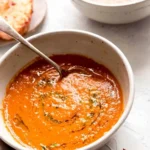
Secret Ingredient Tomato Basil Soup
- Total Time: 80 minutes
- Yield: 8 servings 1x
- Diet: Vegetarian
Description
Enjoy a creamy, luxurious tomato basil soup without the guilt! There is no cream, sugar, or any unnecessary additives in my Tomato Basil Soup! Plus, the secret ingredient makes this soup so so good!
Ingredients
- 3 lbs. tomatoes (2 lbs. Roma, cut in half + 1lb. whole cherry)
- 1 medium onion, cut into chunks
- 6–10 garlic cloves
- 3 large carrots, peeled and cut in half
- ⅓ cup olive oil
- salt and pepper
- 4 cups vegetable stock
- 2 tablespoons balsamic vinegar
- ¼–½ teaspoon red pepper flakes
- 2–4 tablespoons basil pesto
Instructions
- ROAST: Position a rack in the center of the oven and preheat to 375ºF. Place tomatoes, onions, garlic, and carrots on a large baking sheet, drizzle with olive oil, salt, and pepper, and bake for 1 hour, tossing at 30 minutes.
- BLEND: Transfer the roasted ingredients and juices to a blender and blend until completely smooth.
- SOUP: Transfer puree to a large dutch oven over medium heat. Add vegetable broth and heat for 5-7 minutes. Stir in balsamic vinegar, red pepper flakes, and 2-4 tablespoons of pesto. Season with salt and pepper as desired.
Notes
For a vegan version, replace the pesto with vegan basil pesto. To make cheese toasts: Top baguette slices with provolone cheese, salt, garlic powder, and Italian seasoning, then bake at 400ºF for 4-5 minutes.
- Prep Time: 10 minutes
- Cook Time: 70 minutes
- Category: Soups & Stews
- Method: Roasting
- Cuisine: Italian
Nutrition
- Serving Size: 1 serving
- Calories: 160 kcal
- Sugar: 8 g
- Sodium: 480 mg
- Fat: 12 g
- Saturated Fat: 2 g
- Unsaturated Fat: 10 g
- Trans Fat: 0 g
- Carbohydrates: 14 g
- Fiber: 3 g
- Protein: 2 g
- Cholesterol: 0 mg
Keywords: tomato basil soup, roasted tomato soup, creamless tomato soup, healthy soup