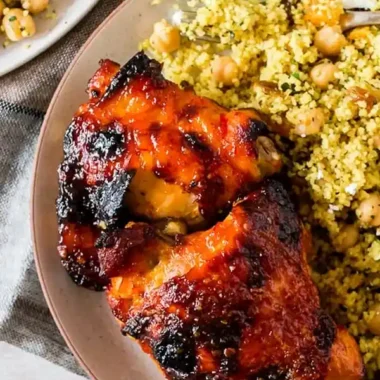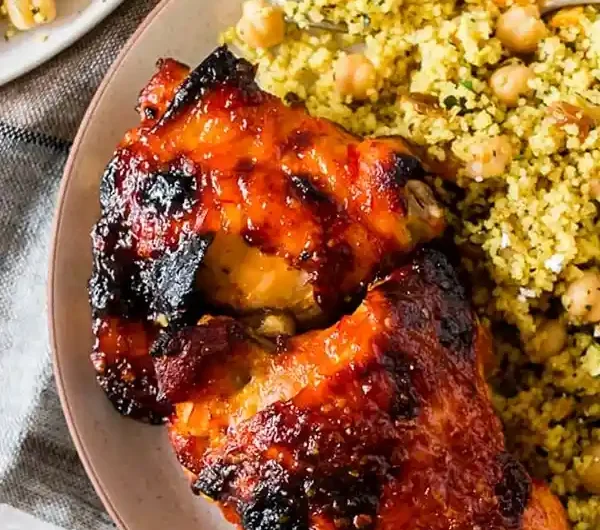
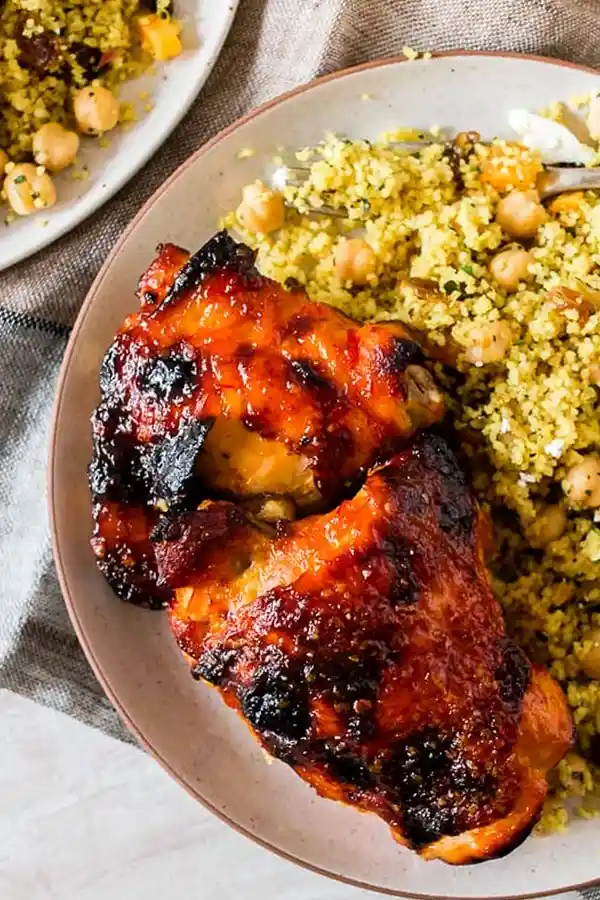
These oven-roasted chicken thighs combine a bold North African spice paste with a touch of sweetness for a rich flavor profile. The sheet pan method ensures a crispy exterior while keeping the meat juicy and tender. This recipe is an efficient way to bring intense, complex flavors to a weeknight dinner.
List of ingredients
- 2 tablespoons unsalted butter, melted – provides richness and helps the glaze adhere.
- 2 tablespoons honey – adds a sticky sweetness that balances the heat.
- 2 tablespoon harissa – a spicy North African chili pepper paste.
- 1 tablespoon lemon juice – adds essential acidity to brighten the spices.
- 6 chicken thighs, bone-in, skin-on – ensures maximum juiciness and a crispy crust.
- Kosher salt, to taste – enhances all the other flavors in the glaze.
step-by-step instructions
- Prepare the oven: Preheat your oven to 400 degrees F. Line a rimmed baking sheet with parchment paper, a Silpat liner, or aluminum foil to prevent sticking and simplify cleanup.
- Create the glaze: In a small mixing bowl, whisk together the melted butter, honey, harissa paste, and fresh lemon juice until the mixture is smooth and well combined.
- Coat the chicken: Place the chicken thighs on the prepared baking sheet. Baste both the top and bottom of each thigh thoroughly with the harissa mixture, then arrange them skin-side up on the pan.
- Bake and baste: Roast in the oven for approximately 30 minutes. During the cooking process, baste the chicken thighs with the remaining glaze 1-2 times to build a thick, flavorful crust.
- Monitor browning: Keep a close eye on the skin during the final few minutes of cooking. If the honey in the glaze causes the skin to brown too quickly, loosely tent the chicken with foil to prevent burning.
Enhancing Your Flavor Profile
Selecting Your Harissa Heat Level
Harissa is available in various heat intensities, typically labeled as mild, medium, or hot. For those new to North African flavors, a mild version provides the characteristic garlic and cumin notes without overpowering heat. If you prefer a more pungent experience, use a hot variety or add a pinch of cayenne pepper.
The Role of Honey in Caramelization
Honey contains natural sugars that undergo caramelization when exposed to the 400 degree F oven heat. This process creates the sticky, glossy finish and a deep sweetness that offsets the spicy peppers. Be mindful that honey burns faster than other sugars, necessitating close monitoring near the end of the bake.
Incorporating Acidity with Fresh Lemon
Lemon juice provides a necessary acidic contrast to the heavy fats of the butter and chicken skin. This acidity cuts through the richness and prevents the glaze from tasting overly sweet or one-dimensional. Using fresh lemon juice is preferable to bottled concentrate for a cleaner, brighter taste.
Using Butter for a Silky Finish
Melted butter serves as the fat base for the glaze, allowing the spices and honey to emulsify into a smooth sauce. This fat helps conduct heat across the surface of the skin, promoting a more even golden-brown color. It also contributes to a velvety mouthfeel in every bite.
Achieving the Perfect Roast
Why Bone-In Thighs Are Superior
Using chicken thighs with the bone intact allows for better heat conduction to the center of the meat. The bone acts as a heat reservoir, ensuring the chicken cooks through without the exterior drying out. Additionally, the skin provides a natural barrier that locks in moisture during the roasting process.
Managing Oven Heat to Prevent Burning
Because the glaze contains honey and butter, it is susceptible to burning if the oven temperature fluctuates. Ensure your oven is fully preheated to 400 degrees F before adding the meat. Using a middle rack position prevents the bottom of the thighs from scorching while allowing the top to brown.
The Technique of Basting During Cooking
Basting refers to brushing the remaining glaze over the chicken while it is already in the oven. This layering technique builds a thicker coating of flavor and keeps the skin moist. Applying the glaze every 10 to 15 minutes results in a more intense concentration of harissa and honey.
Using Foil Tents for Even Cooking
Tenting involves placing a piece of aluminum foil loosely over the chicken without sealing it. This blocks direct radiant heat from the top element of the oven, slowing down the browning of the skin. This is critical if the honey is caramelizing too quickly before the internal temperature reaches 165 degrees F.
Optimizing Your Sheet Pan Setup
Using a rimmed baking sheet is essential to catch the rendered chicken fat and dripping glaze. Parchment paper is the best option for preventing the honey-based sauce from sticking to the pan. If using foil, a light spray of oil can further prevent the skin from tearing when you remove the chicken.
Ingredient Swaps and Customizations
Replacing Butter with Plant-Based Fats
If you prefer to avoid butter, refined coconut oil is an excellent substitute as it has a high smoke point. Margarine can also be used for a similar flavor and texture. Olive oil is an option, though it may result in a slightly less creamy glaze than butter.
Adjusting for Boneless Chicken Thighs
Boneless, skinless thighs will cook significantly faster than bone-in versions. Reduce the roasting time to approximately 20-25 minutes to avoid drying out the meat. Since there is no skin to crisp, focus on frequent basting to ensure the meat remains coated in sauce.
Substituting Honey with Other Sweeteners
Maple syrup can replace honey for a slightly more earthy, autumnal sweetness. Brown sugar dissolved in a teaspoon of water also works well to achieve the same sticky consistency. Agave nectar is another alternative, though it is slightly less viscous than honey.
Alternative Spices for Harissa Substitutes
If harissa is unavailable, you can create a rough substitute by mixing smoked paprika, ground cumin, garlic powder, and a pinch of chili flakes. Stir in a small amount of tomato paste to mimic the texture and depth of the original paste. This ensures the dish maintains its spicy, smoky character.
Adjusting Salt Levels for Different Diets
To reduce sodium, replace kosher salt with a salt-free seasoning blend containing garlic and onion powder. Be aware that some store-bought harissa pastes already contain significant amounts of salt. Taste the glaze before adding extra salt to avoid over-seasoning the dish.
Ideal Side Dish Pairings
Preparing Moroccan Couscous with Chickpeas
Couscous is a traditional pairing that absorbs the spicy runoff from the chicken. Steam the couscous with a pinch of salt and stir in canned chickpeas for added protein and texture. Adding a handful of chopped parsley or mint can provide a fresh contrast to the roasted meat.
Cooking Fluffy White Rice for Balance
Basmati or Jasmine rice provides a neutral base that balances the intensity of the harissa glaze. Use a 1:2 rice-to-water ratio and simmer on low heat until the grains are tender and separate. A squeeze of lime juice stirred into the finished rice complements the lemon in the chicken glaze.
Adding Roasted Root Vegetables to the Pan
Carrots, parsnips, and sweet potatoes can be roasted on the same sheet pan as the chicken. Toss the vegetables in a bit of the harissa glaze before adding them to the pan. Ensure the vegetables are cut into uniform sizes so they cook through in the same 30-minute window.
Pairing with Fresh Cucumber Salads
A cold cucumber salad with vinegar and dill provides a refreshing temperature and flavor contrast. The coolness of the cucumber helps soothe the palate after the spicy harissa. This pairing adds a necessary crispness to the meal’s overall texture.
Incorporating Air Fryer Brussels Sprouts
Brussels sprouts roasted in an air fryer until charred offer a bitter note that cuts through the sweet honey. Toss them with olive oil and salt before air frying at 375 degrees F for 12 minutes. These add a nutrient-dense green element to the platter.
Storage and Preservation Tips
Correct Refrigeration for Maximum Freshness
Store leftover chicken thighs in an airtight glass or plastic container. Ensure the chicken has cooled slightly before sealing to prevent excess condensation from making the skin soggy. Keep the container in the coldest part of the refrigerator, usually the back of the main shelf.
Safe Freezing and Thawing Methods
Cooked harissa chicken can be frozen for up to three months. Wrap each thigh individually in freezer-safe foil or plastic wrap before placing them in a heavy-duty freezer bag. Thaw the chicken slowly in the refrigerator for 24 hours before reheating to maintain the best texture.
Recommended Storage Container Types
Glass containers are preferred for storing this recipe as they do not absorb the strong odors of garlic and chili. Airtight seals are crucial to prevent the chicken from absorbing other smells from the fridge. Avoid using thin plastic bags, as they may allow air to penetrate and dry out the meat.
Determining When Leftovers are Past Prime
Cooked chicken is generally safe to eat for 3 to 4 days when stored at 40 degrees F or below. Discard the chicken if it develops a sour smell or if the glaze becomes excessively slimy. When in doubt, the aroma is the most reliable indicator of spoilage.
Effective Reheating Techniques
Using the Microwave with Steam
Place the chicken in a microwave-safe dish and cover it loosely with a damp paper towel. This creates a small amount of steam that prevents the meat from becoming rubbery. Heat in 1-minute intervals until the internal temperature is steaming hot.
Restoring Crispiness in the Oven
To bring back the crispy skin, reheat the thighs in a 350 degree F oven for 10 to 15 minutes. Place them on a wire rack over a baking sheet to allow hot air to circulate around the entire piece of meat. This method is superior to the microwave for maintaining the original texture.
Reheating in an Air Fryer
An air fryer is the fastest way to restore the crunch of the skin. Heat the chicken at 375 degrees F for 3 to 5 minutes. Be careful not to overheat, as the honey in the glaze can burn quickly during this process.
Avoiding Overcooking During Reheating
The goal of reheating is to warm the meat without continuing the cooking process. Avoid high heat for extended periods, which can make the chicken thighs dry and stringy. Stop heating as soon as the center of the thigh is warm to the touch.
Troubleshooting Your Results
Fixing Skin That Won’t Get Crispy
If the skin remains soft, it may be due to excess moisture or overcrowded pan space. Ensure there is at least an inch of space between each thigh to allow air to circulate. You can also broil the chicken for 2 minutes at the very end for a quick sear.
Managing an Overly Spicy Glaze
If the harissa is too hot for your preference, stir an extra tablespoon of honey or a dollop of Greek yogurt into the remaining sauce. Adding a bit more butter can also help coat the tongue and reduce the perception of heat. Serve the chicken with a side of cool sour cream to neutralize the spice.
Resolving Underdone Meat Near the Bone
Chicken thighs sometimes remain pink near the bone even when the skin is dark. If this happens, cover the pan with foil and return it to the oven for another 5 to 10 minutes. Use a meat thermometer to ensure the thickest part of the thigh reaches 165 degrees F.
Handling a Burnt Honey Glaze
If the glaze burns, gently scrape off the blackened bits with a knife before serving. To prevent this next time, reduce the oven temperature to 375 degrees F and increase the cooking time. Tenting with foil earlier in the process is the most effective preventative measure.
Correcting a Too-Thin Sauce
If the glaze feels too runny, simmer the remaining mixture in a small saucepan over medium heat for 3 to 5 minutes. This reduces the water content and concentrates the sugars, making it thicker. Brush this reduced glaze onto the chicken during the final 5 minutes of roasting.
Common Questions About Harissa Chicken
What is harissa exactly?
Harissa is a spicy North African chili paste made from roasted red peppers, Baklouti peppers, garlic, caraway, coriander, and cumin. It is prized for its smoky, pungent flavor and is commonly used as a marinade or condiment.
Can I use this glaze on other proteins?
Yes, this honey-harissa mixture works well on salmon, shrimp, or tofu. Since these proteins cook faster than chicken, reduce the roasting time and watch closely to ensure the honey does not burn.
Do I need to marinate the chicken overnight?
While overnight marinating can deepen the flavor, it is not required for this recipe. The basting method used during roasting is sufficient to infuse the meat with the spices and sweetness.
Is this recipe suitable for a slow cooker?
This recipe is designed for roasting to achieve crispy skin, which is not possible in a slow cooker. To use a slow cooker, cook the meat in the glaze on low for 6 hours, then transfer to a broiler for 5 minutes to crisp the skin.
Can I make this recipe dairy-free?
Yes, simply replace the unsalted butter with an equal amount of refined coconut oil or olive oil. The recipe will maintain its flavor profile while becoming suitable for those avoiding dairy products.
Print
Honey Harissa Roasted Chicken Thighs
- Total Time: 40 minutes
- Yield: 4 servings 1x
- Diet: General
Description
These harissa chicken thighs are spicy, sweet and PACKED full of flavor. They are baked on a sheet pan and come out super crispy.
Ingredients
- 2 tablespoons unsalted butter, melted
- 2 tablespoons honey
- 2 tablespoons harissa
- 1 tablespoon lemon juice
- 6 chicken thighs, bone in, skin on
- Kosher salt, to taste
Instructions
- Step: Preheat the oven to 400 degrees F and line a rimmed baking sheet with parchment paper, Silpat liner, or foil, set aside.
- Step: In a small bowl whisk together butter, honey, harissa, and lemon juice.
- Step: Lay chicken thighs onto your prepared baking dish and baste each chicken thigh (top and bottom) with the harissa mixture and place back on the sheet pan, skin side up.
- Step: Add to the oven, and cook for about 30 minutes, basting the chicken thighs with the remaining harissa mixture 1-2 times while baking.
- Step: Keep an eye on the chicken near the end of cooking time to make sure the skin doesn’t burn. If the skin starts to brown too fast tent the chicken with foil.
Notes
Using bone-in skin-on chicken thighs ensures the meat stays juicy. Because the glaze contains honey, it can burn quickly; watch closely and tent with foil if necessary.
- Prep Time: 10 minutes
- Cook Time: 30 minutes
- Category: Main Course
- Method: Baking
- Cuisine: African
Nutrition
- Serving Size: 1 serving
- Calories: 524 kcal
- Sugar: 9 g
- Sodium: 601 mg
- Fat: 34 g
- Saturated Fat: 12 g
- Unsaturated Fat: 22 g
- Trans Fat: 0 g
- Carbohydrates: 11 g
- Fiber: 1 g
- Protein: 46 g
- Cholesterol: 265 mg
Keywords: harissa chicken thighs, sheet pan chicken, spicy chicken, African chicken