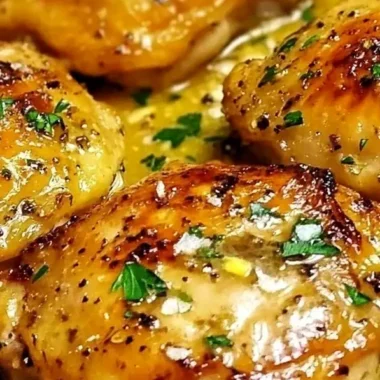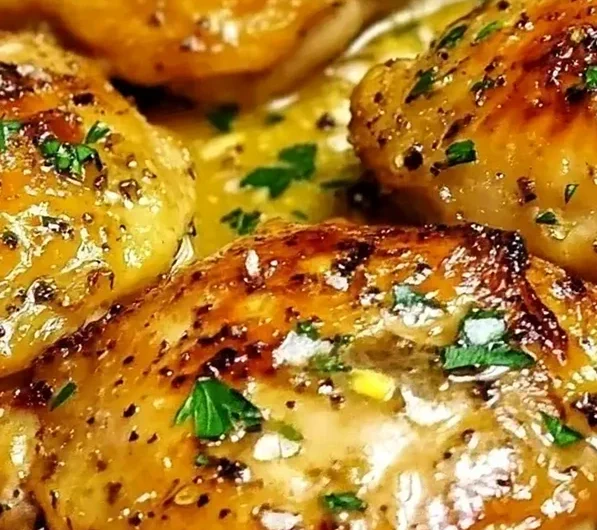
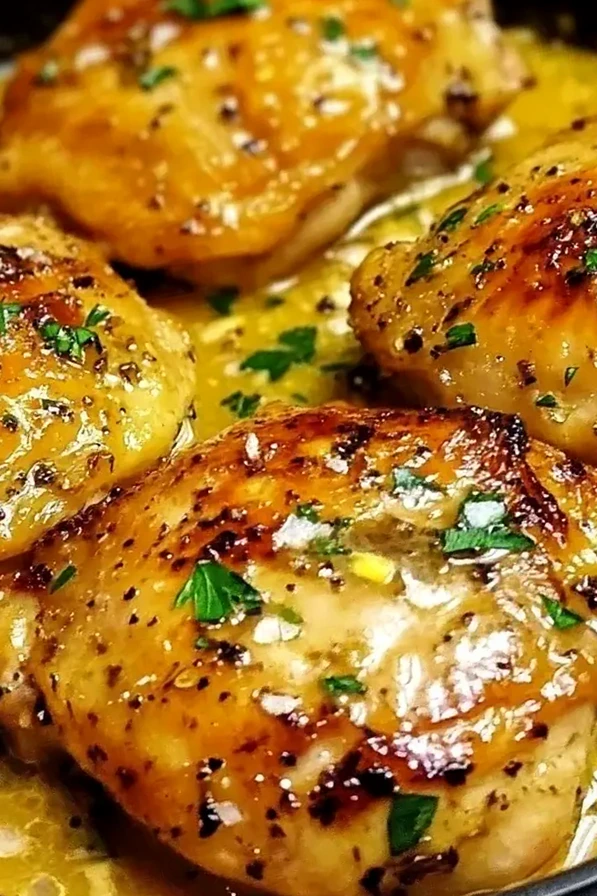
This skillet-based chicken dish combines a crisp sear with a velvety lemon-garlic sauce. It is a fast way to achieve restaurant-quality results using simple pantry staples and a single pan.
List of ingredients
- 6 boneless chicken thighs (about 1½ pounds) – skin-on is preferred for maximum crispiness.
- 2 tablespoons olive oil – used for high-heat searing.
- ½ teaspoon garlic powder – adds a base layer of savory flavor.
- ½ teaspoon onion powder – provides a subtle aromatic sweetness.
- ½ teaspoon paprika – used for color and a mild earthy taste.
- Kosher salt and freshly ground black pepper – adjusted to taste for seasoning.
- 1 tablespoon butter – used for sautéing aromatics and enriching the sauce.
- 1 small shallot, finely minced – provides a delicate onion flavor.
- 3 cloves garlic, minced – the primary aromatic for the creamy sauce.
- ½ cup chicken broth – provides the liquid base for deglazing the pan.
- 1 tablespoon fresh lemon juice – adds essential acidity to balance the cream.
- 2 sprigs fresh thyme – adds a woody, herbal note to the sauce.
- ¼ teaspoon crushed red pepper flakes – adds a subtle hint of heat.
- ⅓ cup heavy cream – creates a thick, luscious texture.
- Fresh parsley, chopped – used as a fresh garnish before serving.
step-by-step instructions
- Prepare the meat: Pat chicken thighs dry with paper towels to help them crisp up when seared.
- Season the chicken: In a small bowl, combine garlic powder, onion powder, paprika, salt, and pepper. Rub evenly over the chicken.
- Sear the thighs: Heat olive oil in a cast iron skillet over medium heat. Add chicken thighs skin-side down and cook for 5 minutes until golden. Flip and cook another 8–10 minutes until the internal temperature reaches 165°F.
- Sauté aromatics: Remove chicken and set aside. In the same skillet, melt butter and sauté shallots and garlic for about 1 minute until fragrant.
- Deglaze the pan: Stir in chicken broth, lemon juice, thyme sprigs, and red pepper flakes. Reduce heat to low.
- Thicken the sauce: Add heavy cream and simmer for about 5 minutes until the sauce thickens.
- Final assembly: Return chicken to the skillet, spoon sauce over the top, garnish with parsley, and serve hot.
Techniques for Achieving a Perfect Sear
The Importance of Patting Meat Dry
Moisture on the surface of the chicken creates steam when it hits the hot oil. This steam prevents the meat from reaching the temperature necessary for the Maillard reaction. By removing surface water, you ensure a deep golden-brown crust.
Utilizing a Cast Iron Skillet
Cast iron is ideal because of its superior heat retention. Once heated, it maintains a consistent temperature even after the cold meat is added. This prevents the pan from cooling down, which would otherwise cause the chicken to boil in its own juices.
Avoiding Pan Overcrowding
If too many thighs are placed in the pan at once, the temperature drops significantly. This leads to the release of moisture and prevents the skin from crisping. Cook in batches if your skillet is too small to accommodate the meat with space in between.
Managing Medium Heat Levels
Cooking on too high a heat can burn the spices and the skin before the interior is cooked. Medium heat allows the fat in the chicken skin to render slowly. This process results in a thinner, crispier skin and more juicy meat.
Ingredient Substitutions and Alternatives
Using Bone-In Chicken Thighs
You can substitute boneless thighs with bone-in versions for more flavor. However, you must increase the cooking time on the stove and may need to finish the chicken in the oven. Ensure the internal temperature reaches 165°F at the thickest part.
Lighter Cream Substitutions
For a less rich sauce, you can use half-and-half or whole milk. Note that these options have lower fat content and will not thicken as naturally as heavy cream. You may need to simmer the sauce longer or add a small cornstarch slurry to achieve the desired consistency.
Dried Thyme vs. Fresh Thyme
If fresh thyme is unavailable, use dried thyme as a replacement. Use approximately one-third of the amount of dried herbs compared to fresh. Add the dried thyme during the deglazing step to allow the flavor to bloom in the hot liquid.
Replacing Shallots with Other Aromatics
Red onion or yellow onion can be used if shallots are not available. Finely mince the onion to ensure it cooks quickly and integrates into the sauce. Shallots are preferred for their milder, sweeter profile, but onions provide a similar savory base.
Serving Suggestions and Side Pairings
Starchy Accompaniments for Sauce
Mashed potatoes are a classic pairing because they soak up the creamy garlic sauce. Alternatively, steamed basmati or jasmine rice provides a neutral base that highlights the lemon and thyme. Buttered egg noodles are another excellent option for a comforting meal.
Fresh Vegetable Pairings
Roasted asparagus or sautéed spinach complements the richness of the cream sauce. Steamed broccoli or glazed carrots add a pop of color and nutritional balance. These vegetables provide a crisp contrast to the tender chicken.
Low-Carb Serving Options
Cauliflower mash or sautéed zoodles (zucchini noodles) are great low-carb alternatives. Roasted Brussels sprouts also pair well with the acidity of the lemon sauce. These options keep the meal light while maintaining the flavor profile.
Bread for Dipping
A toasted baguette or crusty sourdough bread is highly recommended. This allows you to scoop up the remaining sauce from the plate. Warm the bread with a bit of garlic butter for an extra layer of flavor.
Storage and Reheating Guidelines
Refrigeration Procedures
Store leftover chicken and sauce in an airtight container in the refrigerator. The dish will remain fresh and safe to eat for up to three days. Ensure the container is fully sealed to prevent the cream sauce from absorbing fridge odors.
Proper Stovetop Reheating
Reheat the chicken and sauce gently in a skillet over low to medium heat. Adding a splash of chicken broth or water helps loosen the sauce as it warms. Avoid high heat, which can cause the cream to separate or the chicken to overcook.
Preventing Sauce Separation
Cream-based sauces can sometimes split during reheating. To prevent this, stir the sauce constantly while warming it on low heat. If the sauce breaks, whisk in a teaspoon of warm water or cream to re-emulsify the fats.
Freezing Considerations
It is generally not recommended to freeze this dish because the cream sauce may change texture. Upon thawing, the sauce often becomes grainy or separates. If you must freeze it, freeze the seared chicken separately and make a fresh sauce upon reheating.
Common Cooking Troubleshooting
Fixing a Thin Sauce
If the sauce has not thickened enough after five minutes, continue to simmer it on low heat. The reduction process evaporates excess water and concentrates the fats. You can also stir in a small knob of cold butter at the end for a thicker, glossier finish.
Managing Overcooked Chicken
Overcooked chicken becomes dry and stringy. To prevent this, always use a meat thermometer to check for 165°F. If the meat is overdone, serve it with extra sauce to add moisture back into the dish.
Correcting Broken Emulsions
A broken sauce occurs when the fat separates from the liquid. This is usually caused by excessive heat. To fix this, remove the pan from the heat and whisk in a small amount of cold heavy cream or broth until the sauce smooths out.
Addressing Lack of Browning
If the chicken is not browning, the pan may not be hot enough. Increase the heat slightly and avoid moving the chicken too often. Let the meat sit undisturbed for several minutes to allow the crust to form naturally.
Frequently Asked Questions
Can I make this in an oven instead of a skillet?
While the skillet method provides the best sear, you can sear the chicken in an oven-safe pan and then move it to the oven at 400°F until cooked. Prepare the sauce separately on the stove and pour it over the chicken before serving.
Is this recipe suitable for meal prep?
Yes, this dish stores well for a few days. It is best to store the chicken and sauce together so the meat stays moist. Reheat gently to maintain the creamy texture of the sauce.
Can I use chicken breasts instead of thighs?
You can use breasts, but they cook much faster and dry out more easily. Reduce the searing time and monitor the internal temperature closely. Thighs are recommended because their higher fat content makes them more forgiving and juicy.
How do I adjust the spice level of the sauce?
The red pepper flakes provide a mild heat. For a spicier version, increase the amount of flakes or add a pinch of cayenne pepper. For a milder taste, remove the flakes entirely or replace them with a pinch of white pepper.
Print
Creamy Garlic and Lemon Chicken Thighs
- Total Time: 30 minutes
- Yield: 4 servings 1x
- Diet: General
Description
This Bobby Flay’s Chicken Thighs Recipe features perfectly seared, juicy chicken thighs in a rich, creamy garlic sauce with lemon and thyme. It’s a quick, one-skillet meal that’s bursting with flavor and perfect for weeknights or special dinners alike.
Ingredients
- 6 boneless chicken thighs (about 1½ pounds)
- 2 tablespoons olive oil
- ½ teaspoon garlic powder
- ½ teaspoon onion powder
- ½ teaspoon paprika
- Kosher salt and freshly ground black pepper, to taste
- 1 tablespoon butter
- 1 small shallot, finely minced
- 3 cloves garlic, minced
- ½ cup chicken broth
- 1 tablespoon fresh lemon juice
- 2 sprigs fresh thyme
- ¼ teaspoon crushed red pepper flakes
- ⅓ cup heavy cream
- Fresh parsley, chopped, for garnish
Instructions
- Step 1: Pat chicken thighs dry with paper towels to help them crisp up when seared.
- Step 2: In a small bowl, combine garlic powder, onion powder, paprika, salt, and pepper. Rub evenly over the chicken.
- Step 3: Heat olive oil in a cast iron skillet over medium heat. Add chicken thighs skin-side down and cook for 5 minutes until golden. Flip and cook another 8–10 minutes until the internal temperature reaches 165°F.
- Step 4: Remove chicken and set aside. In the same skillet, melt butter and sauté shallots and garlic for about 1 minute until fragrant.
- Step 5: Stir in chicken broth, lemon juice, thyme sprigs, and red pepper flakes. Reduce heat to low.
- Step 6: Add heavy cream and simmer for about 5 minutes until the sauce thickens.
- Step 7: Return chicken to the skillet, spoon sauce over the top, garnish with parsley, and serve hot.
Notes
Make sure to dry the chicken well for optimal browning. This sauce is excellent with mashed potatoes, rice, or crusty bread. Feel free to substitute bone-in chicken thighs; just adjust cook time accordingly.
- Prep Time: 10 minutes
- Cook Time: 20 minutes
- Category: Dinner
- Method: Skillet
- Cuisine: American
Nutrition
- Serving Size: 1 chicken thigh with sauce
- Calories: 365 kcal
- Sugar: 1 g
- Sodium: 410 mg
- Fat: 25 g
- Saturated Fat: 9 g
- Unsaturated Fat: 14 g
- Trans Fat: 0 g
- Carbohydrates: 3 g
- Fiber: 0 g
- Protein: 28 g
- Cholesterol: 120 mg
Keywords: Bobby Flay, chicken thighs, creamy garlic sauce, one-pan dinner, skillet chicken