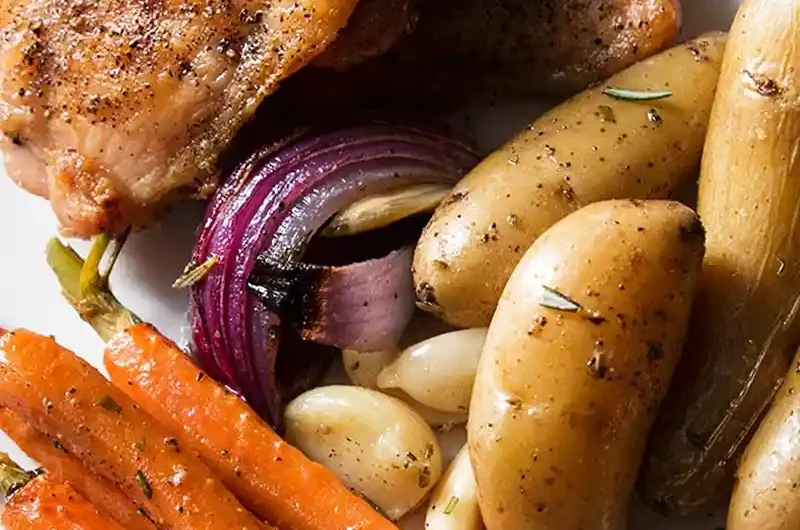
This efficient sheet-pan dinner combines juicy, skin-on chicken thighs with a medley of roasted root vegetables. It is a practical solution for healthy weeknight meals that minimizes cleanup while maximizing flavor.
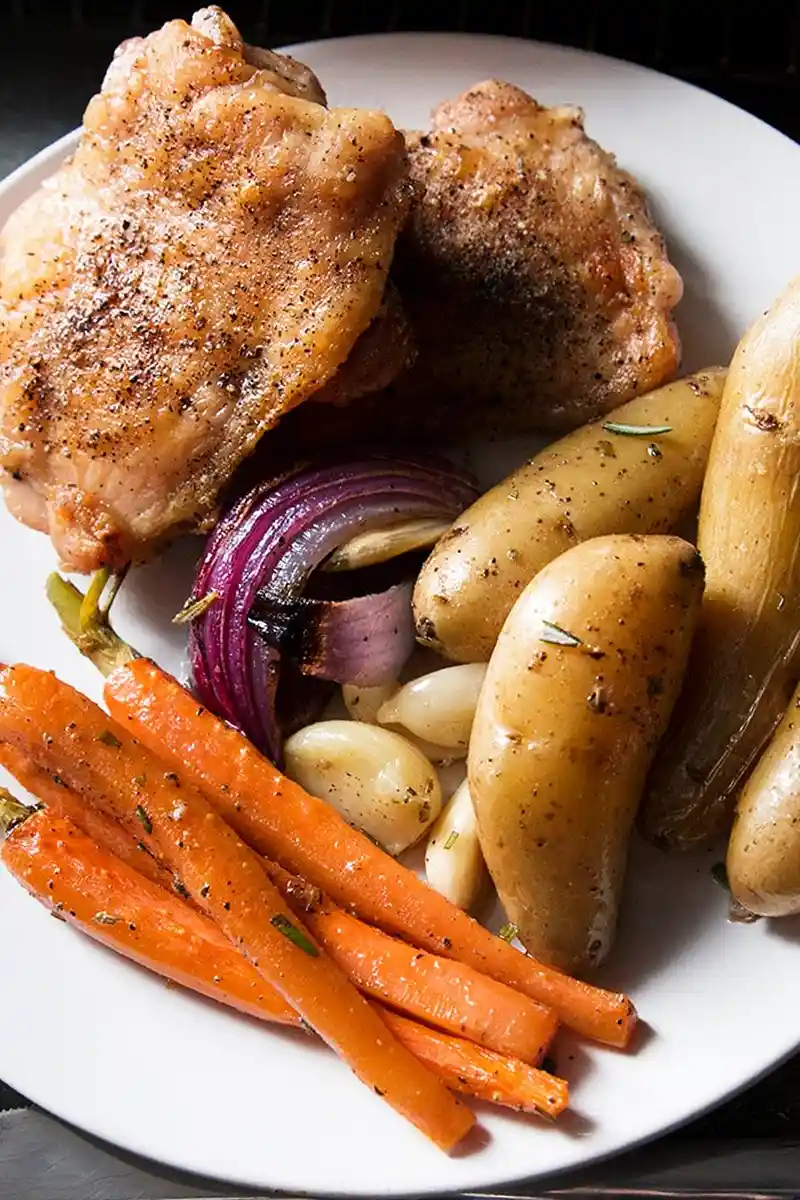
List of ingredients
- 1 lb fingerling potato – ensures a creamy interior and crispy exterior.
- ½ lb carrot – adds natural sweetness and color.
- 1 medium red onion, thickly sliced – provides a savory, caramelized base.
- 2 teaspoons salt – used for seasoning both vegetables and meat.
- 1 ½ teaspoons black pepper – adds a mild heat to the dish.
- 1 teaspoon dried rosemary, finely chopped – delivers an earthy, aromatic flavor.
- 1 tablespoon olive oil – helps the vegetables roast and prevents sticking.
- 4 cloves garlic – adds deep, pungent aromatic notes.
- 6 chicken thighs, skin-on – provides moisture and rich flavor.
step-by-step instructions
- Prepare the base: Assemble potatoes, carrots, onion, and garlic on a parchment-lined baking sheet.
- Season the vegetables: Drizzle with olive oil and sprinkle with rosemary, and half the black pepper and salt. Roll around and rub to coat everything evenly.
- Season the poultry: Sprinkle remaining salt and pepper on either side of each chicken thigh.
- Arrange the tray: Arrange chicken thighs skin-side up on top of the vegetables.
- Roast: Roast at 425°F (220°C) for about 40-50 minutes or until the chicken reads 165°F (73°C) internal temperature and skin is crispy.
Optimizing Your Roasting Technique
Preheating the Oven Thoroughly
Allow your oven to reach the full 425°F before sliding the tray inside. Starting with a hot oven ensures that the chicken skin begins searing immediately, which is essential for achieving a golden-brown, crispy texture. If the oven is too cool, the meat may steam instead of roast, leading to rubbery skin.
Using Parchment Paper for Easy Cleanup
Lining your baking sheet with parchment paper prevents the olive oil and vegetable sugars from bonding to the metal pan. This not only makes cleaning significantly faster but also prevents the garlic and onions from scorching directly against the hot metal. Avoid using wax paper, as it will melt under high heat.
Managing Baking Sheet Space
Ensure there is enough space between the chicken thighs and the vegetables to allow air to circulate. Crowding the pan creates excess steam, which can lead to soggy vegetables and pale chicken skin. If you have a small tray, it is better to use two separate sheets than to overload one.
Achieving the Perfect Internal Temperature
Use an instant-read meat thermometer to check the thickest part of the thigh without hitting the bone. While the recipe suggests 165°F, chicken thighs are often more tender and juicy when cooked to 175°F because their connective tissues break down further. This ensures the meat pulls away from the bone easily.
Ingredient Substitutions for Customization
Switching Fingerling Potatoes for Other Varieties
If fingerling potatoes are unavailable, baby red potatoes or Yukon Gold potatoes are excellent alternatives. Cut them into uniform 1-inch pieces to ensure they cook at the same rate as the carrots. Avoid using large russet potatoes unless you cut them quite small, as they have a higher starch content and a different texture.
Using Different Root Vegetables
You can replace the carrots with parsnips, rutabaga, or turnips for a slightly different flavor profile. Parsnips offer a nuttier sweetness, while turnips provide a more peppery taste. Ensure all replacement vegetables are cut to a similar thickness as the original carrots to maintain consistent roasting times.
Alternative Fresh Herb Options
While rosemary is a classic pairing, fresh thyme or sage can be used interchangeably. Thyme provides a lighter, more lemony note, whereas sage offers a bold, autumnal flavor. If using fresh herbs instead of dried, increase the quantity to three teaspoons to account for the difference in potency.
Substituting Olive Oil for Other Fats
Avocado oil is a great substitute because it has a higher smoke point than olive oil, making it very stable at 425°F. Grapeseed oil is another neutral option that won’t alter the flavor of the dish. Avoid using butter for the initial roasting as it can burn at these high temperatures.
Flavor Variations to Try
Adding a Lemon Garlic Profile
For a brighter taste, zest one lemon over the vegetables before roasting and squeeze the juice over the chicken once it comes out of the oven. The acidity of the lemon cuts through the richness of the chicken skin. You can also add thinly sliced lemon rounds to the tray for an aesthetic touch.
Creating a Spicy Paprika Twist
Mix one teaspoon of smoked paprika into the oil and salt mixture before coating the vegetables. This adds a deep, woody flavor and a vibrant red color to the carrots and potatoes. For more heat, add a pinch of cayenne pepper to the seasoning rub.
Incorporating a Balsamic Glaze
During the last 10 minutes of roasting, drizzle a small amount of balsamic glaze over the carrots and onions. The sugars in the glaze will caramelize and create a sweet and tangy contrast to the savory chicken. Be careful not to add it too early, or the sugars may burn.
Honey Roasted Version
Whisk one tablespoon of honey into the olive oil before tossing the vegetables. This creates a glossy coating and enhances the natural sweetness of the red onions and carrots. The honey helps the vegetables brown more quickly and adds a subtle depth to the overall flavor.
Serving Suggestions
Pairing with Whole Grains
Serve this one-tray meal alongside a scoop of quinoa, farro, or wild rice to soak up the natural juices from the chicken. The nutty flavor of these grains complements the roasted rosemary perfectly. This addition increases the fiber content and makes the meal more filling.
Adding a Fresh Side Salad
Balance the richness of the roasted meal with a light arugula or baby spinach salad. Use a simple dressing of lemon juice and olive oil to keep the palate refreshed. A handful of cherry tomatoes or cucumber slices in the salad adds a necessary crunch.
Using a Squeeze of Fresh Lemon
Right before serving, squeeze a wedge of fresh lemon over the entire tray. The citric acid brightens the flavors of the garlic and rosemary. This simple step transforms the dish from a heavy roast to a more balanced meal.
Serving with a Yogurt Dipping Sauce
A side of Greek yogurt mixed with minced garlic, lemon juice, and chopped parsley works well as a dip for the potatoes. The cool, creamy texture of the yogurt contrasts the heat of the roasted vegetables. It also adds a boost of protein to the meal.
Storage and Reheating Guide
Refrigeration Guidelines
Store leftovers in an airtight container in the refrigerator for up to 3 to 4 days. Keep the chicken and vegetables together or separate them if you prefer different reheating times. Ensure the food is cooled slightly before sealing the lid to prevent excess condensation.
Freezing the Roasted Components
Roasted chicken thighs freeze well, but the potatoes and carrots may lose their texture. If freezing, wrap the chicken tightly in foil and place it in a freezer bag for up to 3 months. Thaw in the refrigerator overnight before reheating.
Best Reheating Methods
To maintain the crispiness of the chicken skin, reheat the meal in an oven or air fryer at 350°F for 10-15 minutes. Avoid the microwave if possible, as it will make the chicken skin rubbery and the vegetables mushy. If using a microwave, use a lower power setting and heat in short bursts.
Preventing Dryness During Reheating
Add a small splash of vegetable broth or water to the bottom of the reheating dish. This creates a small amount of steam that keeps the chicken moist without making the skin soggy. Cover the dish loosely with foil during the first few minutes of oven reheating.
Make-Ahead Strategies
Pre-Cutting the Vegetables
You can chop the carrots, onions, and potatoes up to 24 hours in advance. Store the cut potatoes in a bowl of cold water in the fridge to prevent them from oxidizing and turning brown. Drain and pat them completely dry before adding the oil and seasonings.
Dry Brining the Chicken
Season the chicken thighs with salt and pepper a few hours before cooking and leave them uncovered in the fridge. This process, known as dry brining, draws moisture out of the skin, which leads to a much crispier result after roasting. It also allows the salt to penetrate deeper into the meat.
Preparing the Baking Tray
You can assemble the vegetable base on the parchment-lined tray and keep it refrigerated until you are ready to roast. Just add the seasoned chicken on top immediately before putting the tray in the oven. This reduces your active prep time on the day of the meal.
Organizing Ingredients for Efficiency
Use a mise en place approach by measuring out the salt, pepper, and rosemary into small bowls before starting. This prevents you from forgetting an ingredient while you are busy tossing the vegetables. It ensures a smooth workflow and consistent seasoning across the tray.
Troubleshooting Common Issues
Chicken Skin Not Crisping
If the skin is not crisping, ensure you have patted the chicken dry with paper towels before seasoning. Excess moisture on the skin creates steam, which prevents the fat from rendering and browning. You can also turn on the broiler for the last 2-3 minutes of cooking to add a final char.
Vegetables Remaining Too Hard
If the chicken is done but the vegetables are still firm, it is likely due to inconsistent cutting sizes. Ensure all root vegetables are cut into uniform pieces. If this happens, remove the chicken to a plate and return the vegetables to the oven for another 10 minutes.
Overcooked Chicken Thighs
Overcooking happens when the oven temperature is too high or the meat is left in too long. Always rely on a thermometer rather than a timer, as oven calibrations vary. If the chicken becomes dry, serve it with a sauce or gravy to add moisture back into the meat.
Garlic Burning Quickly
Whole cloves of garlic are less likely to burn than minced garlic. If you find your garlic is charring too quickly, tuck the cloves underneath the vegetables or the chicken. This protects them from the direct heat while allowing them to soften and become aromatic.
Frequently Asked Questions
Can I use chicken breasts instead?
Yes, but you must adjust the cooking time. Chicken breasts cook much faster than thighs and can dry out quickly at 425°F. Reduce the roasting time to 20-25 minutes or cut the breasts into larger chunks to match the vegetable cooking time.
Do I need to peel the carrots?
Peeling is optional depending on your preference. If you are using organic or young carrots, simply scrubbing them clean is sufficient. The skin adds extra nutrients and a more rustic appearance to the final dish.
Can I use a different oil?
Yes, any high-smoke point oil will work. Avocado oil, grapeseed oil, or refined coconut oil are all suitable replacements for olive oil. Avoid using extra-virgin olive oil if you are worried about it smoking, as refined olive oil handles high heat better.
Is it possible to add greens to the tray?
You can add greens like broccoli, asparagus, or Brussels sprouts, but they cook much faster than root vegetables. Add these vegetables to the tray during the last 15-20 minutes of roasting to prevent them from burning.
) Print
One-Tray Roasted Chicken Thighs and Root Vegetables
- Total Time: 1 hour 5 minutes
- Yield: 3 servings 1x
- Diet: Gluten-Free, Dairy-Free
Description
This simple and flavorful one-tray meal features juicy roasted chicken thighs and a variety of colorful vegetables.
Ingredients
- 1 lb fingerling potato
- ½ lb carrot
- 1 medium red onion, thickly sliced
- 2 teaspoons salt
- 1 ½ teaspoons black pepper
- 1 teaspoon dried rosemary, finely chopped
- 1 tablespoon olive oil
- 4 cloves garlic
- 6 chicken thighs, skin-on
Instructions
- Assemble: Assemble potatoes, carrots, onion, and garlic on a parchment-lined baking sheet.
- Coat: Drizzle with olive oil and sprinkle with rosemary, and half the black pepper and salt. Roll around and rub to coat everything evenly.
- Season: Sprinkle remaining salt and pepper on either side of each chicken thigh.
- Arrange: Arrange chicken thighs skin-side up on top of the vegetables.
- Roast: Roast at 425˚F (220˚C) for about 40-50 minutes or until the chicken reads 165˚F (73˚C) internal temperature and skin is crispy.
- Serve: Enjoy!
Notes
Ensure the chicken reaches an internal temperature of 165°F for safety and optimal juiciness.
- Prep Time: 15 minutes
- Cook Time: 50 minutes
- Category: Dinner
- Method: Baking
- Cuisine: North American
Nutrition
- Serving Size: 1 serving
- Calories: 685 kcal
- Sugar: 6 g
- Sodium: 600 mg
- Fat: 24 g
- Saturated Fat: 7 g
- Unsaturated Fat: 17 g
- Trans Fat: 0 g
- Carbohydrates: 42 g
- Fiber: 5 g
- Protein: 76 g
- Cholesterol: 180 mg
Keywords: Dinner, Chicken, Budget, High-Fiber, High-Protein, One-Pan, Meal Prep, Weeknight, Baking, Kid-Friendly, Healthy, Gluten-Free, Dairy-Free, Comfort Food, North American