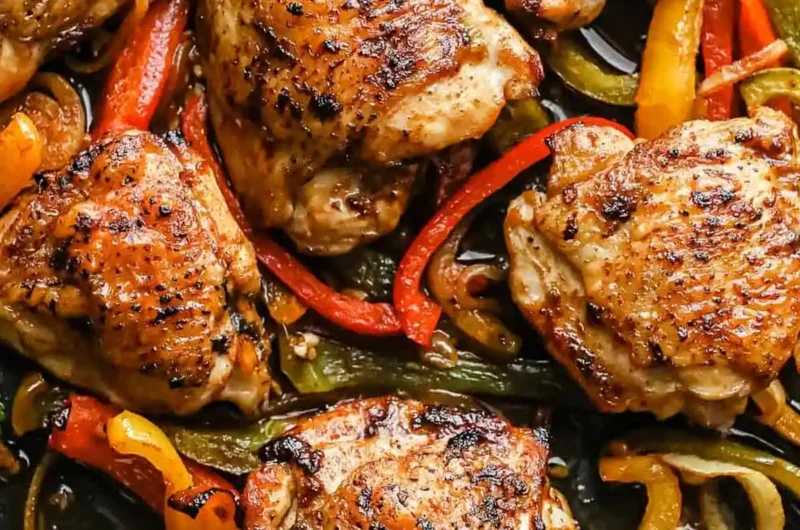
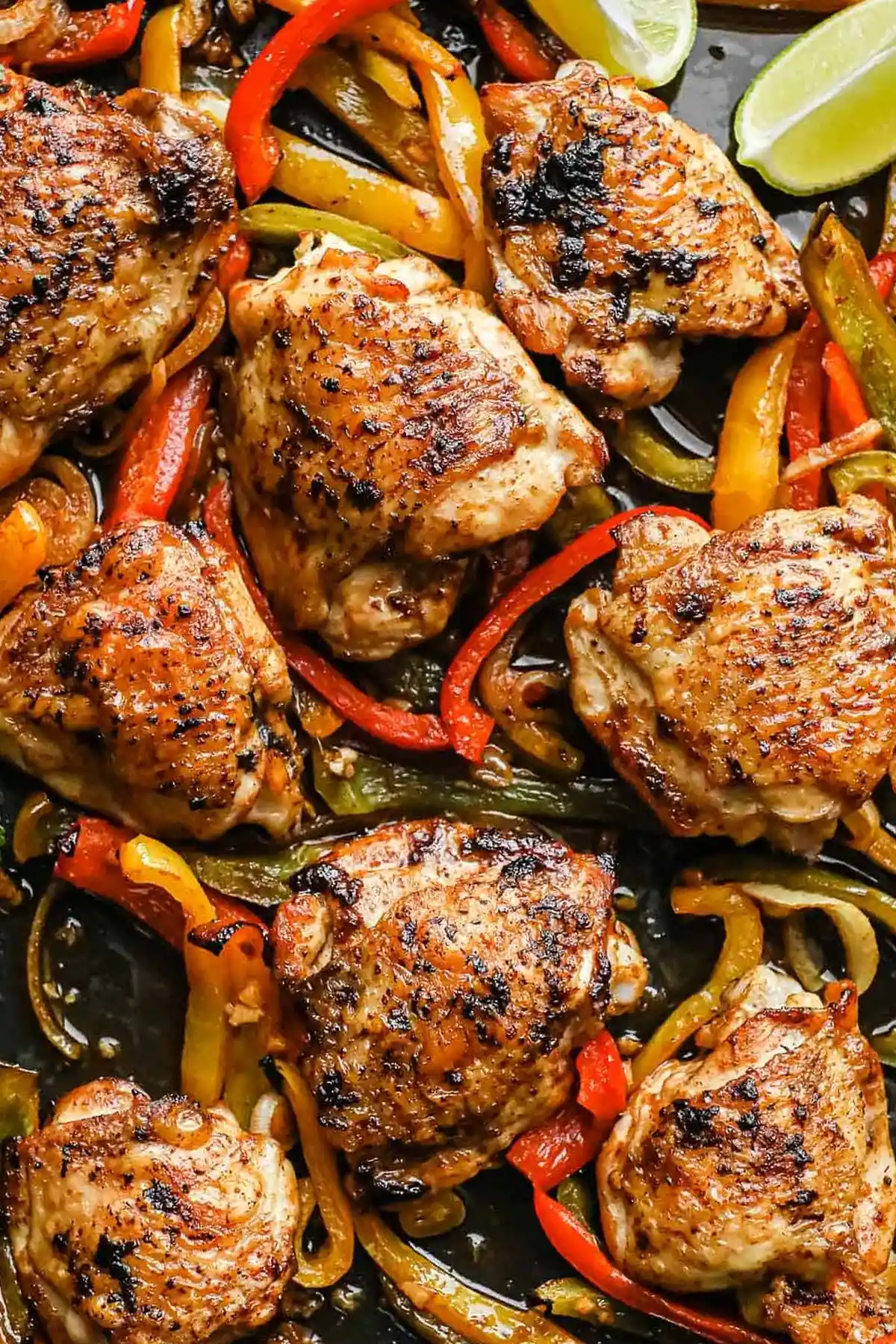
These sheet pan chicken fajitas provide a high-protein, low-carb meal that simplifies cleanup by using a single baking tray. By searing the chicken first and finishing it in the oven with peppers and onions, you achieve a perfect balance of crispy skin and tender interiors.
List of ingredients
- 1 medium red bell pepper, seeded and sliced – adds sweetness and color.
- 1 medium yellow bell pepper, seeded and sliced – provides a mild, sweet flavor.
- 1 medium green bell pepper, seeded and sliced – adds a slight bitterness and classic fajita taste.
- 1 small onion, sliced – creates a savory base when caramelized.
- 4 cloves garlic, minced – provides aromatic depth.
- 3 tablespoons olive oil, divided – used for tossing vegetables and searing chicken.
- 1 tablespoon fresh lime juice – adds necessary acidity to balance the spices.
- 4 tablespoons Fajita Seasoning or Taco Seasoning – the primary flavor profile for the dish.
- 8 bone-in, skin-on chicken thighs (about 2 pounds) – ensures juicy meat and crispy skin.
- 1 lime, cut into wedges, for serving (optional) – for a final burst of freshness.
- Handful of torn fresh cilantro, or 2 green onions, sliced, for garnish (optional) – adds a fresh, herbal finish.
step-by-step instructions
- Prepare the vegetables: Put the bell peppers, onion, garlic, 2 tablespoons of the oil, the lime juice, and 2 tablespoons of the fajita seasoning in a large mixing bowl. Toss the vegetables until they are evenly coated. Lay the vegetables in a thin layer across a rimmed baking sheet.
- Preheat the oven: Set your oven to 400°F to ensure it is fully heated before the chicken is added to the pan.
- Sear the chicken: Heat the remaining tablespoon of oil in a large cast-iron skillet over medium-high heat. Season the chicken thighs on both sides with the remaining seasoning. Add the chicken to the pan and sear on both sides until the skin is crispy and golden brown. Note that the chicken will not be fully cooked at this stage.
- Bake and serve: Transfer the seared chicken thighs to the sheet pan with the vegetables. Bake for 15 minutes, or until the chicken is cooked all the way through and the vegetables are tender. Serve with lime wedges and garnish with cilantro or sliced green onions if desired.
Alternative Protein Choices
Using Boneless Chicken Thighs
Boneless chicken thighs are a faster alternative to bone-in versions. Because they lack the bone, the cooking time in the oven should be reduced by approximately 5 to 8 minutes to prevent overcooking. Maintain the searing process in the skillet to ensure a rich flavor.
Substituting Chicken Breast
For a leaner option, use chicken breasts cut into thick strips. Since breast meat dries out faster, reduce the baking time to 10-12 minutes. Ensure the strips are of uniform size so they cook evenly across the sheet pan.
Switching to Beef Steak
Flank steak or skirt steak can be used for a traditional beef fajita experience. Slice the steak against the grain into thin strips and sear quickly over high heat. Reduce the oven time to 8-10 minutes to avoid toughening the meat.
Preparing Shrimp Fajitas
Shrimp cooks significantly faster than chicken. Skip the oven baking step for the protein and simply sear the shrimp in the skillet for 2 minutes per side. Add the cooked shrimp to the baked vegetables just before serving.
Utilizing Rotisserie Chicken
Shredded rotisserie chicken is ideal for a quick meal. Omit the searing and baking steps for the meat. Simply toss the pre-cooked chicken with the vegetables on the sheet pan for the last 5 minutes of baking to heat through.
Vegetable Customizations
Incorporating Red Onions
Red onions offer a more pungent and slightly sweeter flavor than white onions. They also provide a vibrant purple color that enhances the visual appeal of the dish. Slice them into thick wedges to ensure they do not burn during the roasting process.
Adding Sliced Mushrooms
Button or cremini mushrooms add a savory, earthy quality to the fajitas. They absorb the fajita seasoning and lime juice well. Toss them in the mixing bowl with the bell peppers before spreading them on the baking sheet.
Using Shredded Brussels Sprouts
For added nutritional density, include thinly shredded Brussels sprouts. These roast beautifully at 400°F and provide a nutty contrast to the sweet peppers. They should be spread in a single layer to avoid steaming.
Adding Cabbage Strips
Thinly sliced green or red cabbage adds a satisfying crunch to the meal. Cabbage holds its structure better than peppers during the baking process. Mix it with the other vegetables for a more voluminous serving.
Including Pickled Jalapeños
For those who prefer more heat, add sliced pickled jalapeños to the pan. The acidity of the pickling liquid complements the lime juice. Add them during the last 5 minutes of baking to prevent them from shriveling.
Experimenting with Pepper Colors
While the recipe uses red, yellow, and green, orange peppers add a distinct sweetness. You can use any combination of bell peppers available. Using a variety of colors ensures a broader range of vitamin C and antioxidants.
Adding Zucchini Slices
Zucchini provides a mild flavor and a soft texture that pairs well with the chicken. Cut them into half-moons about half an inch thick. Be mindful that zucchini releases more moisture, which may slightly steam the other vegetables.
Flavor and Seasoning Adjustments
Creating a Homemade Fajita Blend
If you do not have pre-made seasoning, combine chili powder, cumin, paprika, garlic powder, and onion powder. Add salt and black pepper to taste. This allows you to control the sodium levels and the intensity of the heat.
Marinating with Taco Sauce
Instead of dry seasoning, you can coat the chicken in a thick taco sauce. This adds moisture and a deeper, more complex flavor profile. Apply the sauce generously to both sides of the thighs before searing them in the skillet.
Increasing Acidity with Extra Lime
Adding an extra tablespoon of lime juice to the vegetable mix brightens the entire dish. The citric acid helps break down the fibers in the onions and peppers. It also cuts through the richness of the chicken skin.
Adding Smoked Paprika for Depth
Smoked paprika provides a woody, charred flavor that mimics a grill. Add one teaspoon of smoked paprika to the vegetable mixture. This is especially useful when using an oven instead of an open flame.
Controlling the Heat Level
To increase the spice, add a pinch of cayenne pepper or red pepper flakes to the seasoning. For a milder version, omit the cayenne and increase the amount of paprika. Adjust the heat based on your preference and the heat level of your pre-made seasoning.
Technical Cooking Guides
Benefits of the Cast-Iron Skillet
A cast-iron skillet is superior for searing because it retains heat more efficiently than non-stick pans. This creates a better Maillard reaction, resulting in a deeper brown crust on the chicken skin. Ensure the pan is smoking slightly before adding the oil.
Selecting the Right Baking Sheet
Always use a rimmed baking sheet to prevent the olive oil and juices from leaking into the oven. A larger pan prevents overcrowding, which allows the vegetables to roast rather than steam. If the pan is too small, the vegetables will release water and become mushy.
Adapting the Recipe for an Air Fryer
In an air fryer, cook the vegetables first at 375°F for 5 to 7 minutes. Remove the vegetables and cook the chicken thighs for approximately 20 minutes. Combine them at the end to ensure everything is heated through and crispy.
Managing Oven Rack Position
Place the baking sheet on the middle or upper-middle rack. This ensures the chicken skin gets direct heat from above while the vegetables roast from below. Avoid the bottom rack, as the vegetables may burn before the chicken is cooked.
Serving and Pairing Suggestions
Choosing Low-Carb Tortilla Options
Use almond flour or coconut flour tortillas to keep the meal keto-friendly. For an even lower-carb approach, use large Romaine lettuce leaves or butter lettuce cups. These provide a fresh crunch that complements the warm fajitas.
Pairing with Guacamole and Avocado
Fresh guacamole adds a creamy texture and healthy fats to the dish. Mash ripe avocados with lime juice, salt, and diced cilantro. This cooling element balances the heat from the fajita seasoning.
Serving with Sour Cream or Greek Yogurt
A dollop of full-fat sour cream or plain Greek yogurt provides a tangy contrast. Greek yogurt is a great substitute for those seeking more protein. Use it as a dipping sauce or spread it directly on the tortillas.
Adding Roasted Tomatillo Salsa Verde
Salsa verde offers a tart, tangy flavor profile that differs from traditional red salsa. The roasted tomatillos add an acidic brightness that cuts through the fat of the chicken thighs. Serve it chilled on the side.
Combining with Fresh Pineapple Salsa
If you are not restricting carbs, pineapple salsa adds a tropical sweetness. The contrast between the sweet pineapple and the spicy chicken is a classic combination. Mix diced pineapple with red onion, jalapeño, and lime juice.
Adding Shredded Cheese
Melted Monterey Jack or Cheddar cheese can be sprinkled over the chicken during the last 2 minutes of baking. This creates a gooey layer that binds the chicken and vegetables together. Use a shredded variety for faster melting.
Storage and Reheating Methods
Optimal Refrigeration Practices
Store leftover fajitas in an airtight glass container in the refrigerator for up to 4 days. Keep the chicken and vegetables together to allow the flavors to meld. Ensure the food is cooled slightly before sealing the lid to prevent excess condensation.
Restoring Texture in a Skillet
Reheating in a skillet on the stove-top is the best way to restore the chicken’s crispiness. Use a small amount of olive oil over medium heat. Sauté the mixture for 3-5 minutes until the chicken skin is sizzling again.
Using the Air Fryer for Reheating
The air fryer is excellent for reheating without making the vegetables soggy. Heat at 350°F for 3 to 5 minutes. This method effectively crisps the chicken skin while warming the peppers and onions.
Reheating with the Oven Broiler
Place the leftovers on a baking sheet under the broiler for 2 to 4 minutes. Monitor closely to avoid burning. This high-intensity heat quickly crisps the top of the chicken and caramelizes the vegetables.
Avoiding the Microwave
Avoid using a microwave for reheating if possible, as it often makes the chicken rubbery and the vegetables mushy. If you must use a microwave, heat in short 30-second bursts and cover with a damp paper towel.
Freezing Instructions
Fajitas can be frozen for up to 3 months in a freezer-safe bag. Thaw them in the refrigerator overnight before reheating. Use the skillet or oven method to ensure the texture is restored.
Frequently Asked Questions
Can I prepare the vegetables in advance?
Yes, you can slice the peppers and onions and store them in a sealed container for up to 2 days. Toss them with the oil and seasoning just before putting them on the baking sheet to keep them fresh.
What is the best way to slice peppers for even cooking?
Slice the peppers into uniform strips about a quarter-inch thick. This ensures they all reach the same level of tenderness at the same time, preventing some pieces from being burnt while others are raw.
How do I ensure the chicken is fully cooked?
Use a meat thermometer to check the thickest part of the chicken thigh. The internal temperature should reach 165°F. Bone-in thighs are more forgiving than breasts and remain juicy even if slightly overcooked.
Can this recipe be made without olive oil?
You can substitute olive oil with avocado oil or melted coconut oil. Avocado oil is particularly good for searing because it has a higher smoke point, which prevents the oil from burning at high temperatures.
Do I have to sear the chicken first?
While you can put the chicken in the oven raw, searing first is highly recommended. Searing creates a flavor layer and a crispy texture that cannot be achieved through baking alone.
Can I use frozen bell peppers?
Frozen peppers can be used, but they release more water than fresh ones. To prevent a soggy pan, roast the frozen peppers separately for a few minutes to remove excess moisture before adding the chicken.
What if my chicken thighs are very large?
If the thighs are exceptionally large, you may need to increase the baking time by 5 to 10 minutes. Ensure the vegetables are not overcrowding the pan, or move some vegetables to a second sheet to avoid overcooking them.
Print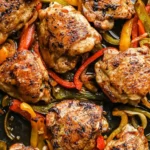
Keto Sheet Pan Chicken Fajitas
- Total Time: 45 minutes
- Yield: 4 servings 1x
- Diet: Keto, Diabetic
Description
These quick and easy keto Sheet Pan Chicken Fajitas are a delicious spin on traditional fajitas. The perfectly spiced chicken thighs are crispy on the outside, while tender and juicy on the inside, cooked with a medley of sliced peppers and onions.
Ingredients
- 1 medium red bell pepper, seeded and sliced
- 1 medium yellow bell pepper, seeded and sliced
- 1 medium green bell pepper, seeded and sliced
- 1 small onion, sliced
- 4 cloves garlic, minced
- 3 tablespoons olive oil, divided
- 1 tablespoon fresh lime juice
- 4 tablespoons Fajita Seasoning or Taco Seasoning
- 8 bone-in, skin-on chicken thighs (about 2 pounds)
- 1 lime, cut into wedges, for serving (optional)
- Handful of torn fresh cilantro, or 2 green onions, sliced, for garnish (optional)
Instructions
- Step 1: Put the bell peppers, onion, garlic, 2 tablespoons of the oil, the lime juice, and 2 tablespoons of the fajita seasoning in a large mixing bowl. Toss the vegetables until they are evenly coated. Lay the vegetables in a thin layer across a rimmed baking sheet.
- Step 2: Preheat the oven to 400°F.
- Step 3: Heat the remaining tablespoon of oil in a large cast-iron skillet over medium-high heat. Season the chicken thighs on both sides with the remaining seasoning. Add the chicken to the pan and sear on both sides until the skin is crispy and golden brown. (The chicken will not be fully cooked at this point.)
- Step 4: Transfer the chicken thighs to the sheet pan with the vegetables. Bake for 15 minutes, or until the chicken is cooked all the way through and the vegetables are tender. If desired, serve with lime wedges and garnish with cilantro or sliced green onions.
Notes
Store leftovers in the refrigerator for up to 4 days. Reheat in a skillet, air-fryer, or under the broiler to regain crispiness. You can substitute boneless chicken thighs, breasts, or rotisserie chicken, adjusting cook time accordingly.
- Prep Time: 15 minutes
- Cook Time: 30 minutes
- Category: Sheet Pan Meals
- Method: Baking
- Cuisine: Mexican
Nutrition
- Serving Size: 2 chicken thighs and ¼ of the veggies
- Calories: 489 kcal
- Sugar: 4 g
- Sodium: 620 mg
- Fat: 23 g
- Saturated Fat: 7 g
- Unsaturated Fat: 16 g
- Trans Fat: 0 g
- Carbohydrates: 7.6 g
- Fiber: 2.1 g
- Protein: 54 g
- Cholesterol: 155 mg
Keywords: keto, sheet pan, chicken fajitas, low carb, Mexican