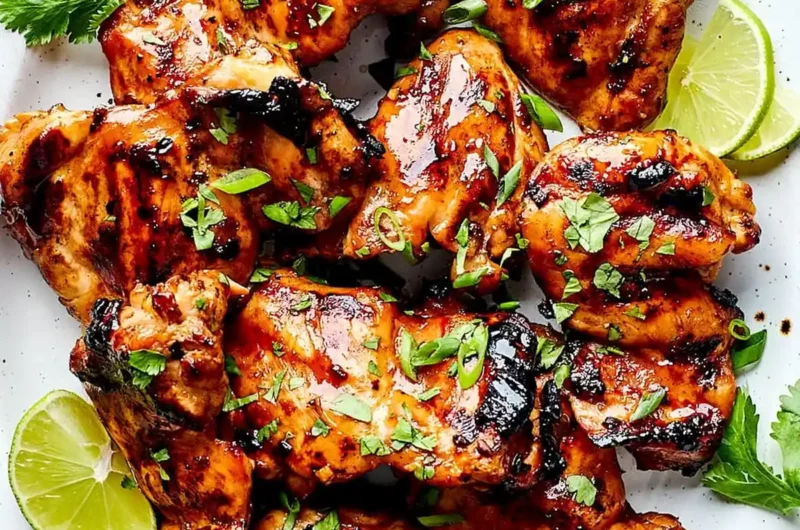
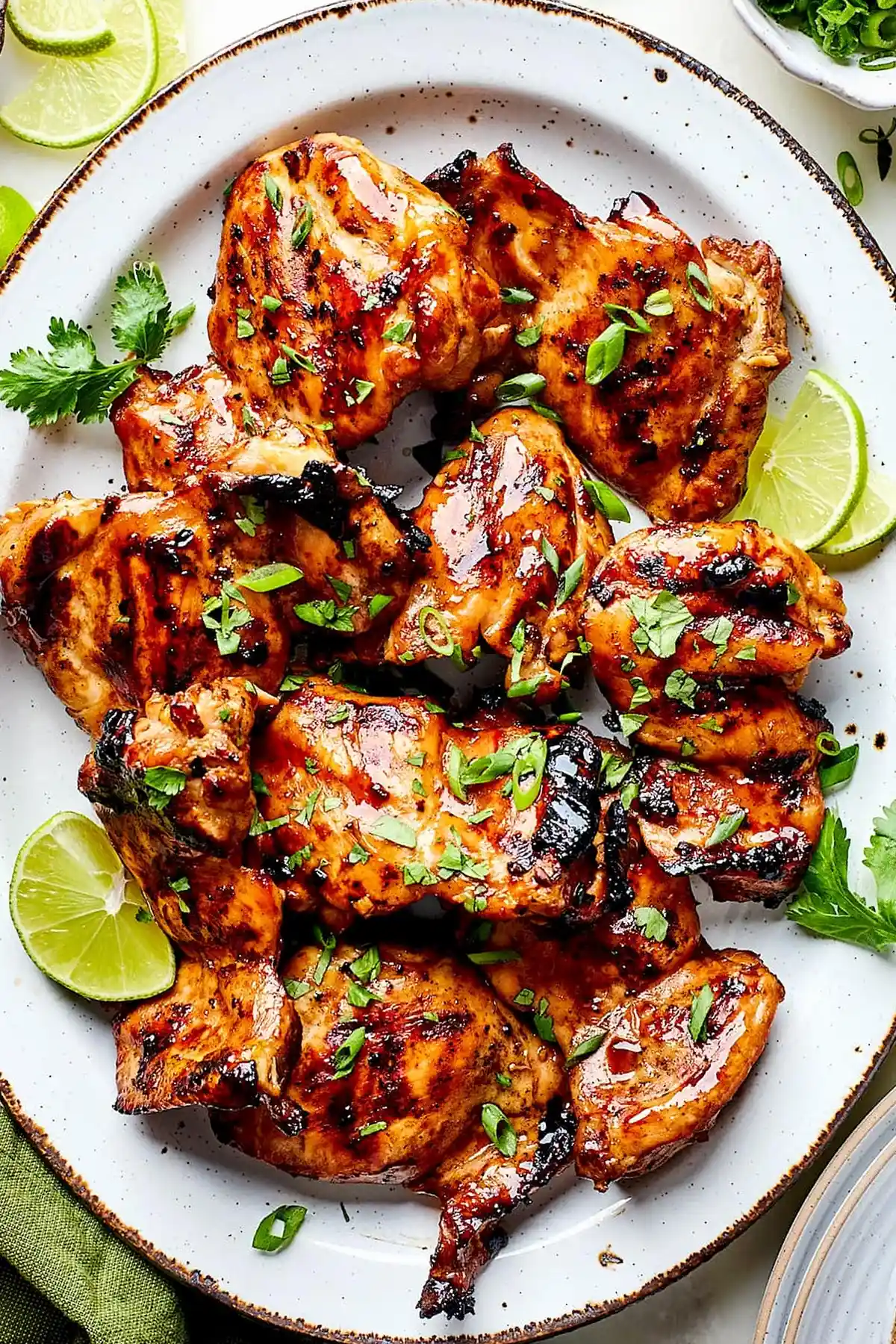
This grilled soy ginger chicken combines savory soy sauce with fresh ginger and lime for a juicy, flavor-packed result. It is an efficient meal option for busy weeknights or a high-impact dish for outdoor grilling events.
List of ingredients
- 1/3 cup lite soy sauce (or Tamari for gluten-free) – provides the salty base.
- 1/4 cup packed brown sugar – adds sweetness and helps with caramelization.
- 2 tablespoons olive oil – prevents sticking and adds richness.
- 1 tablespoon freshly grated ginger – gives a sharp, aromatic heat.
- Juice of 1 Lime – adds acidity to tenderize the meat.
- 3 cloves garlic, minced – enhances the depth of flavor.
- 1 teaspoon Siracha (or more for extra heat) – provides a subtle spicy kick.
- 2 1/2 pounds boneless chicken thighs (can use chicken breasts or drumsticks) – the main protein.
- Salt and pepper, to taste – for basic seasoning.
- Sliced green onions and chopped cilantro – used for fresh garnish.
step-by-step instructions
- Prepare the marinade: In a medium bowl, whisk together the soy sauce, brown sugar, oil, ginger, lime juice, garlic, and Siracha until the sugar is mostly dissolved.
- Marinate the chicken: Pour the prepared marinade into a reusable freezer bag along with the chicken pieces. Press out all excess air, seal the bag tightly, place it in a bowl for stability, and refrigerate for at least 1 hour or overnight.
- Heat the grill: Preheat your grill to high heat. Carefully brush the grill grates with oil to create a non-stick surface.
- Grill the chicken: Place the chicken on the hot grates and immediately discard the remaining marinade from the bag. Cook for 5 to 7 minutes per side until the meat is browned and the internal temperature reaches 165 degrees Fahrenheit.
- Garnish and serve: Transfer the grilled chicken to a serving platter. Garnish with sliced green onions and fresh chopped cilantro, then serve warm.
Professional Preparation Tips
Utilizing Fresh Ginger Root
Fresh ginger provides a significantly more potent and bright flavor than powdered versions. Use a microplane or a fine grater to process the ginger, which ensures it integrates smoothly into the marinade without leaving large, woody chunks. For convenience, keep your ginger root in the freezer and grate it while frozen.
Selecting the Optimal Chicken Cut
Boneless chicken thighs are recommended because their higher fat content makes them more forgiving on a high-heat grill. Chicken breasts can be used but require closer monitoring to avoid drying out. Drumsticks are a great budget-friendly option, though they will need additional grilling time due to the bone.
Optimizing Marination Intervals
While one hour is the minimum requirement, marinating overnight allows the soy and lime to penetrate deeper into the muscle fibers. This process breaks down connective tissues, resulting in a more tender piece of meat. Do not exceed 48 hours of marinating, as the lime juice can eventually make the texture of the chicken mushy.
Preparing Garlic for Maximum Infusion
Mincing the garlic finely or using a garlic press increases the surface area, allowing the oils to release into the marinade. This ensures that every piece of chicken receives an even distribution of garlic flavor. Avoid using pre-minced jarred garlic if possible, as it often contains preservatives that alter the taste.
Advanced Grilling Techniques
Preventing Meat from Sticking
Applying a thin layer of oil directly to the hot grill grates is the most effective way to prevent sticking. You can use a folded paper towel dipped in vegetable oil held by tongs to wipe the grates just before adding the chicken. Ensure the grates are very hot before the meat touches them to create an immediate sear.
Monitoring Internal Temperature
The only way to ensure chicken is safe and juicy is by using a digital meat thermometer. Aim for an internal temperature of 165 degrees Fahrenheit at the thickest part of the meat. Removing the chicken slightly before this point and letting it rest can prevent overcooking during the carry-over heating phase.
Using a Stovetop Grill Pan
If you lack an outdoor grill, a cast-iron grill pan is the best alternative for achieving char marks. Heat the pan over medium-high heat until a drop of water dances on the surface. Follow the same cooking times, but be aware that heat distribution may vary across the pan.
Managing Sugar Flare-ups
The brown sugar in the marinade can cause flare-ups when it drips onto the heat source. To manage this, keep a small area of the grill without direct heat to move the chicken to if flames become too intense. This prevents the outside of the chicken from charring before the inside is cooked.
Smart Ingredient Substitutions
Gluten-Free Soy Alternatives
Tamari is the ideal substitute for soy sauce for those avoiding gluten, as it provides a similar salty and fermented profile. Coconut aminos are another option, though they are slightly sweeter and less salty, which may require you to reduce the amount of brown sugar in the recipe.
Alternative Sweeteners
If you do not have brown sugar, honey or maple syrup can be used as a 1:1 replacement. Honey will create a thicker, stickier glaze on the chicken, while maple syrup adds a distinct woody sweetness. Be mindful that these liquid sweeteners may burn slightly faster than granulated sugar.
Adjusting the Spice Level
Sriracha provides a mild heat, but you can swap it for gochujang for a fermented, savory spice or sambal oelek for a pure chili flavor. For a completely mild version, omit the Sriracha entirely or replace it with a pinch of smoked paprika for color and depth without the heat.
Selecting High-Smoke Point Oils
While olive oil works well, avocado oil or grapeseed oil are superior for high-heat grilling due to their higher smoke points. This prevents the oil from breaking down and creating acrid smoke. Any neutral oil with a smoke point above 400 degrees Fahrenheit is a suitable choice.
Recommended Serving Ideas
Pairing with Aromatic Grains
Jasmine rice is the classic accompaniment, as its floral scent complements the ginger and soy. For a heartier option, try brown rice or quinoa, which provide more fiber and a nuttier taste. Mixing in some toasted sesame seeds can add a professional touch to the grains.
Fresh Vegetable Side Dishes
Steamed bok choy or sautéed snap peas provide a crisp texture and a fresh contrast to the rich marinade. Grilled zucchini spears or roasted carrots also pair well with the sweet and salty flavor profile of the chicken. Keep the vegetable seasoning light to let the chicken remain the star.
Integrating Bright Salads
An Asian-style cucumber salad with rice vinegar and sesame oil cuts through the richness of the chicken thighs. A shredded cabbage slaw with a lime-ginger dressing also adds a necessary crunch and acidity. These fresh elements balance the caramelized sugars of the grilled meat.
Platter Presentation Tips
Slice the grilled chicken thighs diagonally into thick strips to show the juicy interior. Arrange them on a platter and scatter the green onions and cilantro generously over the top. A side of extra lime wedges allows guests to add a final burst of acidity just before eating.
Storage and Reheating Guide
Refrigerator Storage Guidelines
Store leftover chicken in an airtight glass or plastic container to prevent it from absorbing other fridge odors. It will remain fresh and safe to eat for 3 to 4 days when kept at or below 40 degrees Fahrenheit. Keep the garnish separate until serving to prevent the herbs from wilting.
Freezing Instructions for Cooked Chicken
Cooked soy ginger chicken freezes well for up to three months. Wrap the chicken tightly in aluminum foil and place it inside a heavy-duty freezer bag to prevent freezer burn. Thaw the chicken in the refrigerator overnight before reheating for the best texture.
Optimal Reheating Methods
To avoid drying out the meat, reheat the chicken in a skillet over medium heat with a tablespoon of water or chicken broth. Cover the pan with a lid to create a steaming effect that restores moisture. Alternatively, use an oven at 325 degrees Fahrenheit until warmed through.
Avoiding Overcooking During Reheat
Avoid using the microwave on high power for long periods, as this often makes chicken rubbery. If using a microwave, use the medium power setting and heat in 30-second intervals. This gentle warming process preserves the integrity of the proteins and the flavor of the marinade.
Meal Prep Strategies
Batch Cooking for the Week
Grilling a large batch of this chicken on Sunday makes for easy lunches throughout the week. Since it tastes great cold or warm, it can be sliced and added to wraps, salads, or grain bowls. Portion the chicken into individual containers immediately after it has cooled to room temperature.
Pre-Marinating and Freezing
You can prepare the chicken and marinade in freezer bags weeks in advance. Place the raw chicken and marinade in the bag, seal it, and freeze immediately. The chicken will marinate as it thaws in the refrigerator the day before you plan to grill it.
Safe Marinating Containers
Always use food-grade reusable freezer bags or glass containers for marinating. Avoid using metal bowls that are not stainless steel, as the acidity of the lime juice and the salt in the soy sauce can react with certain metals. Glass is the most inert option for maintaining flavor purity.
Troubleshooting and FAQs
Why is my chicken sticking to the grill?
Sticking usually happens because the grill wasn’t hot enough or the grates weren’t properly oiled. Ensure the grill is preheated to high and use a brush or oiled towel to lubricate the surface. Additionally, avoid moving the chicken too early; it will naturally release from the grate once a proper sear has formed.
How can I fix the chicken if it tastes too salty?
If the soy sauce made the dish too salty, serve the chicken with a bland side like plain steamed rice or unsalted mashed potatoes. You can also squeeze extra fresh lime juice over the cooked meat to balance the salinity with acidity. For future batches, use a low-sodium soy sauce.
Can I use dried ginger instead of fresh?
While you can use ground ginger, the flavor is more concentrated and less bright than fresh ginger. Use about 1/4 teaspoon of ground ginger for every tablespoon of fresh ginger required. Be aware that the texture will be different, and the aromatic quality will be reduced.
What should I do if the marinade burns?
Burning occurs when the sugar in the marinade caramelizes too quickly over direct flame. If this happens, reduce the heat or move the chicken to a cooler part of the grill. You can scrape off the charred bits with a knife before serving to ensure a pleasant taste.
How do I know when the chicken is fully cooked?
The most reliable method is using a meat thermometer to reach 165 degrees Fahrenheit. Visually, the juices should run clear rather than pink when the thickest part is pierced. The meat should also feel firm to the touch when pressed with tongs.
Can I use this marinade for other proteins?
Yes, this soy ginger blend works excellently with salmon, shrimp, or firm tofu. Salmon requires a shorter marination time (30-60 minutes) to prevent the fish from breaking down. Shrimp should only be marinated for 30 minutes to avoid a rubbery texture.
} Print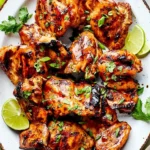
Grilled Soy Ginger Chicken
- Total Time: 1 hour 10 minutes
- Yield: 4 servings 1x
- Diet: General
Description
Ginger Chicken- this easy soy ginger grilled chicken is juicy, full of flavor, and easy to make. The sweet, salty, and slightly spicy soy ginger marinade will be your new favorite! This is a winner, winner chicken dinner!
Ingredients
- 1/3 cup lite soy sauce (or Tamari for gluten-free)
- 1/4 cup packed brown sugar
- 2 tablespoons olive oil
- 1 tablespoon freshly grated ginger
- Juice of 1 Lime
- 3 cloves garlic, minced
- 1 teaspoon Siracha
- 2 1/2 pounds boneless chicken thighs
- Salt and pepper, to taste
- Sliced green onions and chopped cilantro, for garnish
Instructions
- Step: First, make the marinade. In a medium bowl, whisk together the soy sauce, brown sugar, oil, ginger, lime juice, garlic, and Siracha.
- Step: Pour the marinade in a reusable freezer bag with the chicken. Press out the air and seal shut. Place the bag in a bowl and refrigerate for at least 1 hour or overnight.
- Step: Preheat the grill to high heat. Carefully brush the grill grates with oil to prevent the chicken from sticking. Place the chicken on the hot grill and discard the marinade. Cook for 5 to 7 minutes per side, until browned and cooked through, the internal temperature should be 165 degrees Fahrenheit.
- Step: Transfer the chicken to a platter and garnish with sliced green onions and cilantro. Serve warm.
Notes
You can marinate the chicken overnight, so this is a great meal prep recipe! If you don’t have an outdoor grill, you can use a grill pan and cook the chicken on the stovetop. If you use chicken breasts or drumsticks, the cooking time might vary slightly. Store leftover chicken in an airtight container in the fridge for 3 to 4 days.
- Prep Time: 1 hour
- Cook Time: 10 minutes
- Category: Main Course
- Method: Grilling
- Cuisine: Asian
Nutrition
- Serving Size: 1 serving
- Calories: 423 kcal
- Sugar: 11 g
- Sodium: 1363 mg
- Fat: 17 g
- Saturated Fat: 3 g
- Unsaturated Fat: 12 g
- Trans Fat: 0 g
- Carbohydrates: 16 g
- Fiber: 0.2 g
- Protein: 57 g
- Cholesterol: 269 mg
Keywords: chicken, grilling