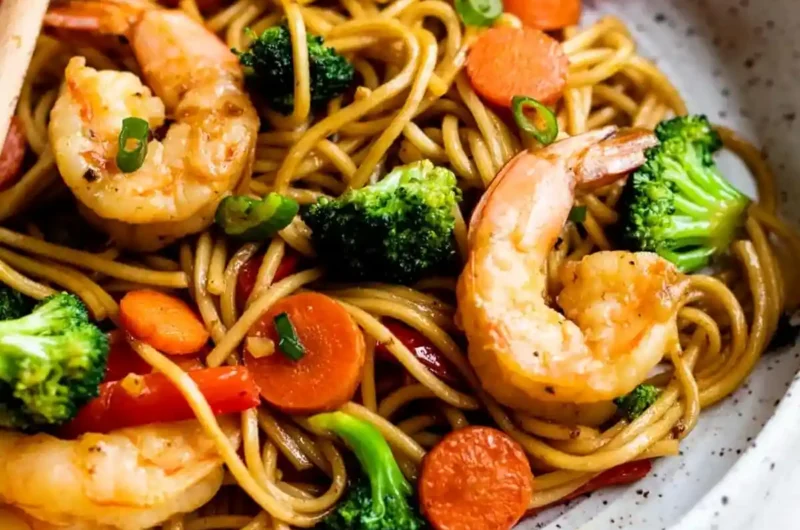
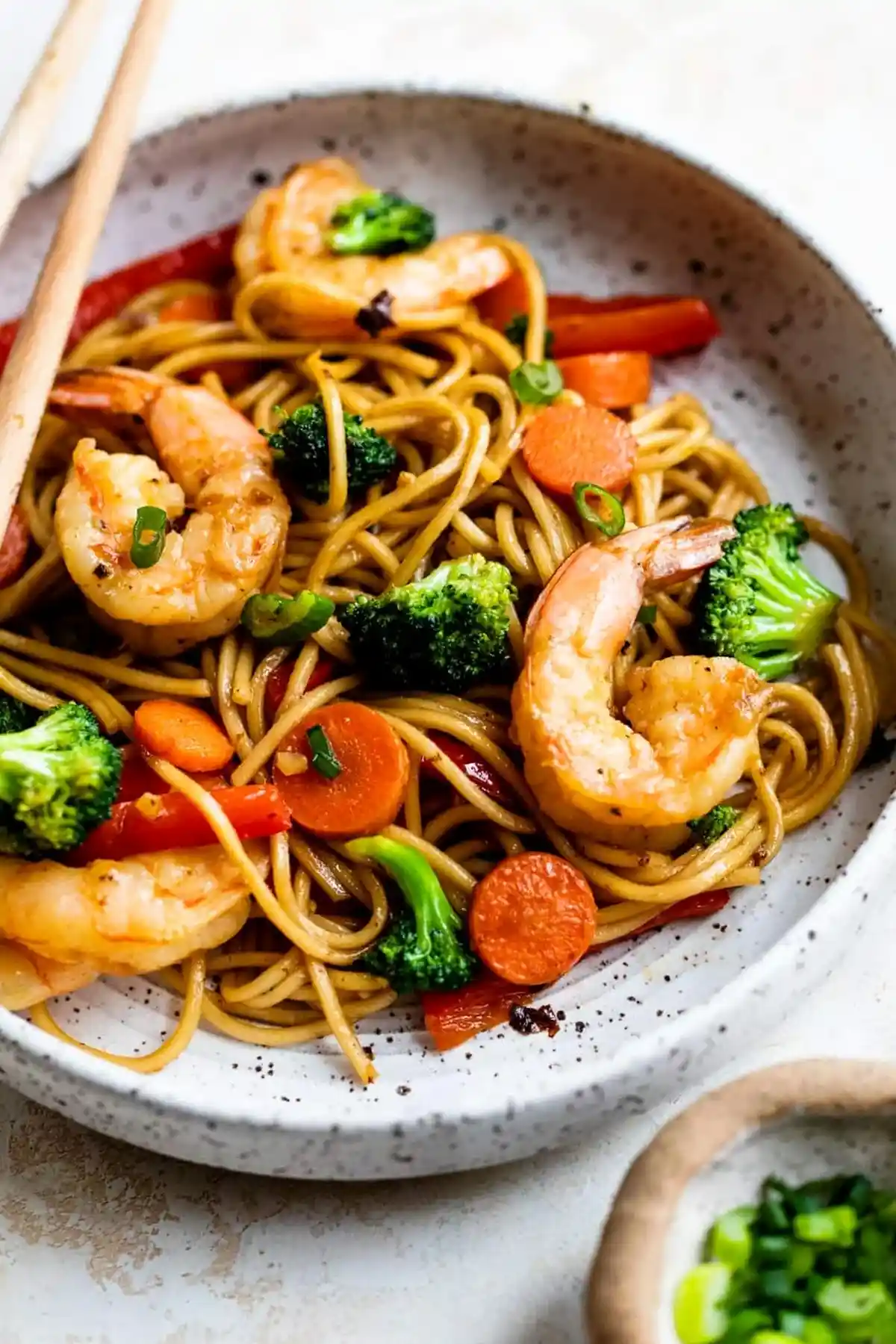
This vibrant shrimp lo mein brings the classic takeout experience directly to your kitchen in less than 30 minutes. By combining fresh, crisp vegetables with succulent shrimp and a savory umami sauce, you can create a balanced and satisfying meal that is far fresher than any delivery option.

List of ingredients
- 3 tbsp soy sauce – serves as the salty, savory base for the sauce.
- 1 tbsp hoisin sauce – adds depth and slight sweetness; swap with extra sugar if unavailable.
- 1 tsp brown sugar – balances the acidity of the soy sauce.
- 1 tsp sesame oil – provides a distinct toasted aroma and rich flavor profile.
- 1 lb. shrimp – ensure they are peeled and deveined for easier preparation.
- 2 tbsp avocado oil – a high-heat cooking oil perfect for sautéing and stir-frying.
- 1 red bell pepper – adds natural sweetness and a bright, crunchy texture.
- 1 carrot – slice thinly into rounds to ensure it cooks quickly alongside the other vegetables.
- 1 cup broccoli – cut into bite-sized florets for even cooking throughout.
- 2 garlic cloves – mince finely to release maximum flavor.
- 1/2 tsp fresh ginger – grate finely to provide a warm, aromatic kick.
- 5 oz. lo mein noodles – authentic egg noodles work best for absorbing the sauce.
- Green onion – optional, used for a fresh, sharp garnish before serving.
step-by-step instructions
- Prepare the sauce and noodles: Whisk together the soy sauce, hoisin sauce, brown sugar, and sesame oil in a small bowl until smooth. Simultaneously, cook your lo mein noodles in a pot of boiling water following the specific package directions, then drain them well.
- Sear the shrimp: Heat 1 tablespoon of avocado oil in a large skillet or wok over medium heat. Add the shrimp in a single layer and cook only until they turn opaque and pink; avoid overcooking to keep them tender. Remove the shrimp from the pan and set aside temporarily.
- Sauté the vegetables: Using the remaining tablespoon of oil in the same skillet, add the sliced bell peppers, carrots, and broccoli. Cook for 3 to 4 minutes until they are tender-crisp.
- Incorporate aromatics: Stir in the minced garlic and grated ginger, cooking for about 30 seconds until fragrant to prevent burning.
- Assemble the dish: Add the cooked shrimp back into the pan. Pour the prepared sauce mixture over the ingredients, stirring well to coat everything. Add the cooked noodles and use tongs to toss the mixture thoroughly until the noodles are evenly glazed.
- Final touches: Garnish your finished dish with sliced green onions if desired and serve immediately while hot.
Essential Preparation Techniques
Managing Noodle Texture
Avoid rinsing your noodles under cold water after draining them. The residual surface starch is crucial because it helps the savory sauce cling to the noodles rather than pooling at the bottom of the pan.
Preventing Overcooked Shrimp
Shrimp cook remarkably fast and can become rubbery if left on the heat too long. By removing them after the initial sear and adding them back at the very end, you ensure they remain juicy and tender.
Ensuring Uniform Cooking
Cut all your vegetables into similarly sized pieces before you begin the stir-fry process. This consistency ensures that the bell peppers, carrots, and broccoli all reach their optimal texture at the same time.
Customization and Variations
Protein Substitutions
If you prefer a different main protein, this recipe works exceptionally well with thinly sliced chicken breast, lean beef strips, or firm tofu. If using raw chicken or beef, ensure it is cooked through completely before adding the vegetables.
Vegetable Add-ins
Feel free to toss in additional vegetables like baby corn, snow peas, sliced mushrooms, or bok choy for extra crunch and nutrients. Always add denser vegetables first so they have enough time to soften while maintaining their structural integrity.
Introducing Spice
For those who prefer heat, incorporate a tablespoon of chili garlic sauce or a pinch of dried red pepper flakes into your liquid sauce mixture. You can also drizzle a small amount of chili oil over the finished bowl to adjust the spice level to your preference.
Addressing Dietary Needs
Making the Dish Gluten-Free
To prepare this recipe for those with gluten sensitivities, swap the soy sauce for tamari or coconut aminos. Ensure that your hoisin sauce is certified gluten-free, or substitute it with a gluten-free teriyaki glaze to maintain the flavor complexity.
Choosing Alternative Noodles
If traditional egg noodles are unavailable, you can substitute them with wide rice noodles, buckwheat soba noodles, or even standard spaghetti in a pinch. If using pasta, aim for an al dente texture so it does not become mushy when tossed with the sauce.
Storage and Reheating Advice
Correct Refrigeration Methods
Allow the leftovers to cool to room temperature before placing them in an airtight container. This helps prevent excessive moisture buildup, which can make the noodles soggy. Stored properly, the dish will remain fresh in the refrigerator for up to four days.
Effective Reheating Strategies
When reheating, use a skillet over medium heat rather than a microwave to maintain the best texture. If the noodles appear dry after sitting, add a small splash of vegetable broth or water to help loosen the sauce.
Frequently Asked Questions
Can I freeze this shrimp lo mein?
Yes, you can freeze the leftovers in a freezer-safe container for up to two months. Keep in mind that the vegetables may lose some of their crunch upon thawing and reheating.
Is it possible to use frozen vegetables?
Certainly, frozen vegetable medleys work well in this recipe. Be sure to thaw and pat them dry before adding them to the skillet to prevent them from steaming instead of sautéing.
What is the secret to a great stir-fry sauce?
The secret is balancing the saltiness of the soy sauce with a small amount of sugar and the aromatic qualities of ginger and garlic. Using toasted sesame oil also adds a professional depth of flavor that mimics restaurant-quality dishes.
How do I prevent the noodles from clumping?
Toss the cooked noodles with a tiny splash of oil immediately after draining if you are not using them right away. This light coating keeps the strands separate until they are ready to be combined with the sauce and vegetables.
Print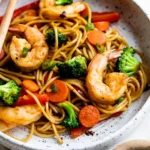
Easy Homemade Shrimp Lo Mein
- Total Time: PT25M
- Yield: 2 servings 1x
- Diet: Pescatarian
Description
This easy Shrimp Lo Mein recipe is even better than takeout! Shrimp, veggies, noodles, and an umami-forward sauce are tossed together in a skillet, leaving you with a flavorful meal in under 30 minutes.
Ingredients
- 3 tbsp soy sauce
- 1 tbsp hoisin sauce
- 1 tsp brown sugar
- 1 tsp sesame oil
- 1 lb. shrimp, peeled and deveined
- 2 tbsp avocado oil, divided
- 1 red bell pepper, thinly sliced
- 1 carrot, thinly sliced into rounds
- 1 cup broccoli, chopped into small florets
- 2 garlic cloves, minced
- 1/2 tsp fresh ginger, grated
- 5 oz. lo mein noodles
- Green onion for garnish (optional)
Instructions
- Step: Whisk the soy sauce, hoisin sauce, brown sugar, and sesame oil together in a small bowl; set aside.
- Step: Cook the noodles according to the package instructions.
- Step: Heat 1 tablespoon of oil in a large skillet over medium heat, add the shrimp, and cook until pink. Remove the shrimp with a slotted spoon.
- Step: Add the remaining oil to the skillet, then add the bell pepper, carrots, and broccoli and sauté for 3-4 minutes.
- Step: Add the minced garlic and grated ginger to the vegetables and sauté for 30 seconds.
- Step: Add the shrimp back into the skillet, pour in the sauce, and stir well.
- Step: Add the cooked noodles and use tongs to toss everything together. Garnish with green onion if desired.
Notes
If you do not have hoisin sauce, increase brown sugar to 1 tablespoon. If you cannot find lo mein noodles, whole wheat spaghetti or linguine make excellent substitutes. Nutritional values are estimated per serving.
- Prep Time: PT10M
- Cook Time: PT15M
- Category: Dinner
- Method: Stir-fry
- Cuisine: Asian-American
Nutrition
- Serving Size: 1 serving
- Calories: 472 kcal
- Sugar: 9 g
- Sodium: 1893 mg
- Fat: 18 g
- Saturated Fat: 2 g
- Unsaturated Fat: 14 g
- Trans Fat: 0 g
- Carbohydrates: 68 g
- Fiber: 5 g
- Protein: 12 g
- Cholesterol: 170 mg
Keywords: shrimp, lo mein, asian stir fry, dinner, 30 minute meal