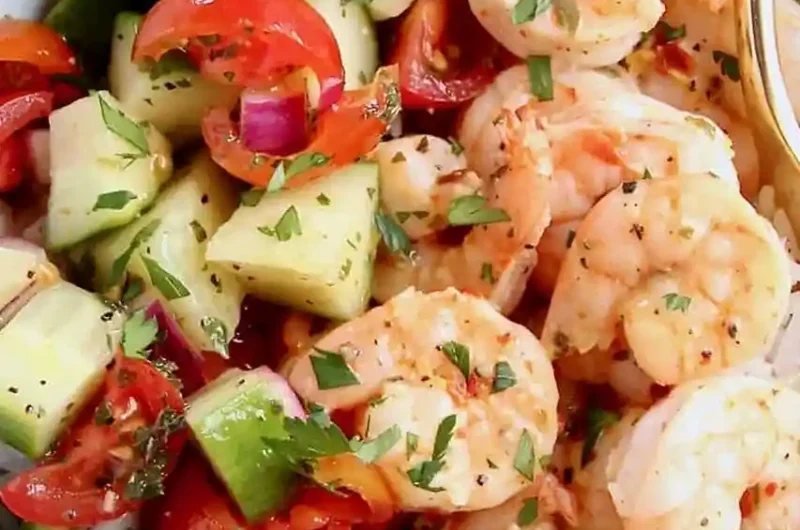
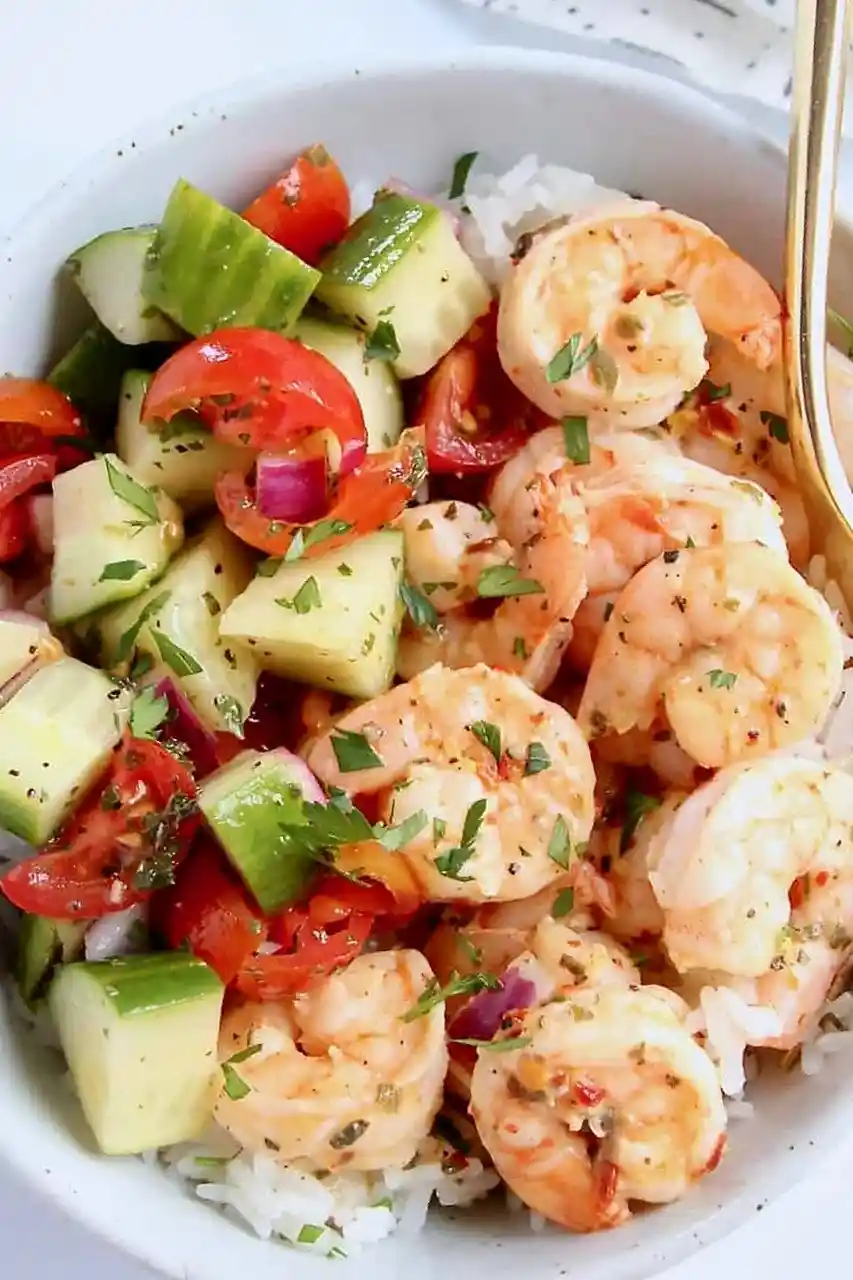
These vibrant Mediterranean shrimp bowls combine zesty citrus notes with aromatic herbs to create a balanced and satisfying meal. Designed for convenience, this recipe comes together in under 20 minutes, making it an ideal choice for busy weeknight dinners.

List of ingredients
- 1 tbsp olive oil – adds healthy fats and carries the aromatic spices.
- ½ tsp dried oregano – provides an earthy Mediterranean baseline.
- ¼ tsp crushed red pepper – introduces a subtle heat to the shrimp.
- 2 cloves garlic (minced) – adds pungent savory depth to the marinade.
- 2 tbsp lemon juice (divided) – provides necessary acidity to brighten the dish.
- 1 tsp lemon zest – releases fragrant citrus oils for deeper flavor.
- ½ lb large shrimp (peeled, deveined & tails removed) – the primary protein source.
- 2 cups cooked white rice – acts as a neutral base to soak up the juices.
- 2 tbsp fresh parsley (chopped) – adds a fresh, herbaceous finish.
- 1 cup tomato cucumber salsa – contributes a crisp, cooling texture.
- ¼ cup feta cheese (crumbled – optional topping) – introduces a creamy, salty profile.
step-by-step instructions
- Create the marinade: In a mixing bowl, combine olive oil, oregano, red pepper, minced garlic, 1 tablespoon of lemon juice, and the lemon zest. Add the shrimp and toss until they are evenly coated.
- Heat the skillet: Place a large skillet on the stove over medium heat. Allow it to get hot to ensure a nice sear on the seafood.
- Sauté the shrimp: Add the seasoned shrimp to the pan. Cook for 5 to 6 minutes, flipping halfway through, until they turn opaque and pink. Avoid overcrowding the pan to ensure even cooking.
- Season the rice: In a separate bowl, fluff the cooked white rice and stir in the remaining tablespoon of lemon juice along with one tablespoon of fresh parsley.
- Assemble the bowls: Divide the seasoned rice into two bowls. Top each with the cooked shrimp and a generous portion of the tomato cucumber salsa.
- Garnish and serve: Sprinkle the remaining parsley over the bowls. Add crumbled feta cheese if desired, or omit it for a dairy-free version.
Essential Preparation Advice
Understanding Shrimp Sizing
Shrimp cooking times vary significantly based on the size of the crustacean. Larger shrimp take longer to cook through, while smaller varieties require less time to prevent a rubbery texture. Always watch for the characteristic pink color and curled shape as your indicator for doneness.
Achieving Optimal Rice Texture
The base of your bowl should be light and fluffy to complement the delicate shrimp. Using day-old refrigerated rice works exceptionally well here, as it separates easily when heated in the skillet. If you are cooking fresh rice, ensure you fluff it with a fork immediately after the steam dissipates to prevent clumping.
Managing Moisture Levels
Ensure that your tomato cucumber salsa is drained of excess liquid before adding it to the bowl. If the vegetables are too wet, they can make the rice soggy and dilute the seasoning. Using a slotted spoon to serve the salsa helps maintain the integrity of the dish.
Substitutions and Dietary Adjustments
Plant-Based Protein Swaps
You can easily substitute the shrimp with chickpeas for a vegetarian alternative. Drain and rinse a 15-ounce can of chickpeas, then toss them in the same marinade ingredients. Roast the chickpeas in the oven at 400°F (200°C) for 20 minutes until they achieve a crispy, golden texture.
Lowering the Carbohydrate Content
For those monitoring carbohydrate intake, you can replace the white rice with cauliflower rice or sautéed zucchini noodles. This modification significantly lowers the carb count while adding extra volume and fiber to the bowl. Ensure you drain any liquid from the zucchini noodles before serving to keep the dish from becoming watery.
Dairy-Free Alternatives
The feta cheese is purely optional and adds a salty, tangy contrast to the shrimp. If you are lactose-intolerant or strictly dairy-free, simply omit the cheese. You can substitute the savory punch of the feta by adding a small amount of toasted pine nuts or sunflower seeds for a similar crunch and richness.
Serving and Storage Recommendations
Staggering Meal Components
If you are preparing these bowls in advance, store the shrimp and the rice in separate airtight containers in the refrigerator. Keeping the cucumber tomato salsa in a third container prevents the vegetables from softening too quickly. Combining the components just before serving ensures the freshest experience.
Handling Leftover Bowls
While fresh is best, you can store leftovers for up to two days. Reheat the shrimp and rice briefly in the microwave on low power, but remove the fresh salsa and parsley first, as they do not hold up well to heat. Alternatively, enjoy the shrimp cold as a protein-rich addition to a fresh garden salad the following day.
Common Kitchen Questions
How can I tell if the shrimp is properly cooked?
Shrimp should be firm and opaque throughout, with no translucent sections remaining. Once the shrimp curls into a ‘C’ shape, they are typically ready to eat; if they curl into an ‘O’ shape, they have likely been overcooked.
Can I use dried parsley instead of fresh?
Fresh parsley provides a brightness that dried herbs lack in this specific recipe. If you only have dried parsley, use only half the amount specified, as the flavor is more concentrated, and incorporate it during the marinade process rather than as a final garnish.
Is it necessary to use white rice?
While white rice is the traditional base, this recipe is quite versatile. Quinoa, brown rice, or farro are excellent alternatives that offer a nuttier flavor and a slightly firmer texture. Ensure you adjust the cooking time based on the specific grain you choose to use.
How do I prevent the garlic from burning?
Minced garlic can burn quickly at high temperatures, turning bitter. By mixing the garlic directly into the oil and lemon juice before it hits the pan, the liquid helps regulate the temperature. Always keep the heat at a steady medium level to prevent the aromatics from scorching.
Print
Mediterranean Shrimp Bowls
- Total Time: PT20M
- Yield: 2 bowls 1x
- Diet: Gluten-Free
Description
Delicious Mediterranean shrimp are flavored with oregano, lemon juice, and garlic in this easy bowl recipe. They are served on top of warm white rice, along with cucumber-tomato salsa and fresh parsley. This healthy, gluten-free meal is ready in just 20 minutes.
Ingredients
- 1 tbsp olive oil
- ½ tsp dried oregano
- ¼ tsp crushed red pepper
- 2 cloves garlic, minced
- 2 tbsp lemon juice, divided
- 1 tsp lemon zest
- ½ lb large shrimp, peeled, deveined, and tails removed
- 2 cups cooked white rice
- 2 tbsp fresh parsley, chopped
- 1 cup tomato cucumber salsa
- ¼ cup feta cheese, crumbled (optional)
Instructions
- Step: Add the olive oil, oregano, crushed red pepper, garlic, 1 tbsp lemon juice, 1 tsp lemon zest, and shrimp to a large bowl and toss to coat.
- Step: Heat a large skillet over medium heat.
- Step: Add the shrimp to the skillet and cook for 5-6 minutes, flipping halfway through.
- Step: In a large bowl, combine the cooked white rice with the remaining tablespoon of lemon juice and one tablespoon of fresh parsley.
- Step: Divide the rice between two bowls.
- Step: Top with the cooked shrimp and tomato cucumber salsa, then garnish with the remaining fresh parsley.
- Step: Optionally top with crumbled feta cheese; omit for a dairy-free version.
Notes
Feta cheese is an optional topping and is not included in the nutritional values. If using smaller shrimp, reduce cooking time by 1-2 minutes to prevent overcooking. The shrimp is done when it turns pink.
- Prep Time: PT10M
- Cook Time: PT10M
- Category: Main Course
- Method: Stovetop
- Cuisine: Mediterranean
Nutrition
- Serving Size: 1 bowl
- Calories: 436 kcal
- Sugar: 3 g
- Sodium: 1128 mg
- Fat: 12 g
- Saturated Fat: 2 g
- Unsaturated Fat: 9 g
- Trans Fat: 0 g
- Carbohydrates: 51 g
- Fiber: 2 g
- Protein: 29 g
- Cholesterol: 286 mg
Keywords: mediterranean, shrimp bowl, healthy, gluten-free, quick meal, seafood, easy dinner