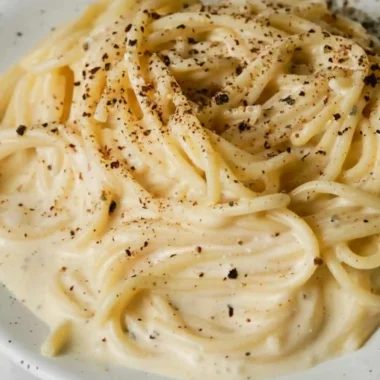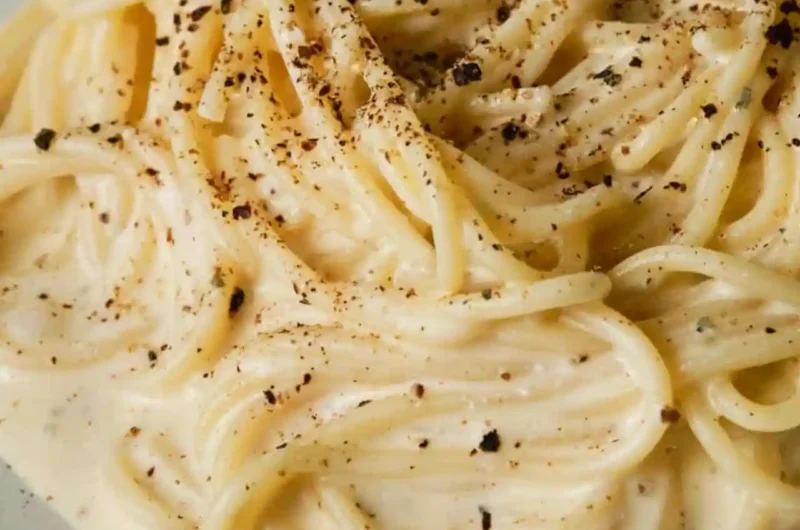
This Cacio E Pepe Boursin Pasta Twist delivers a silky, restaurant-quality experience in under twenty minutes using the magic of herb-infused cream cheese. By replacing the traditional technique of tempering eggs and cheese with the velvety consistency of Boursin, you create an emulsified sauce that coats every strand of pasta perfectly. It is a refined, foolproof method for achieving that signature peppery, creamy finish without the stress of split sauces.
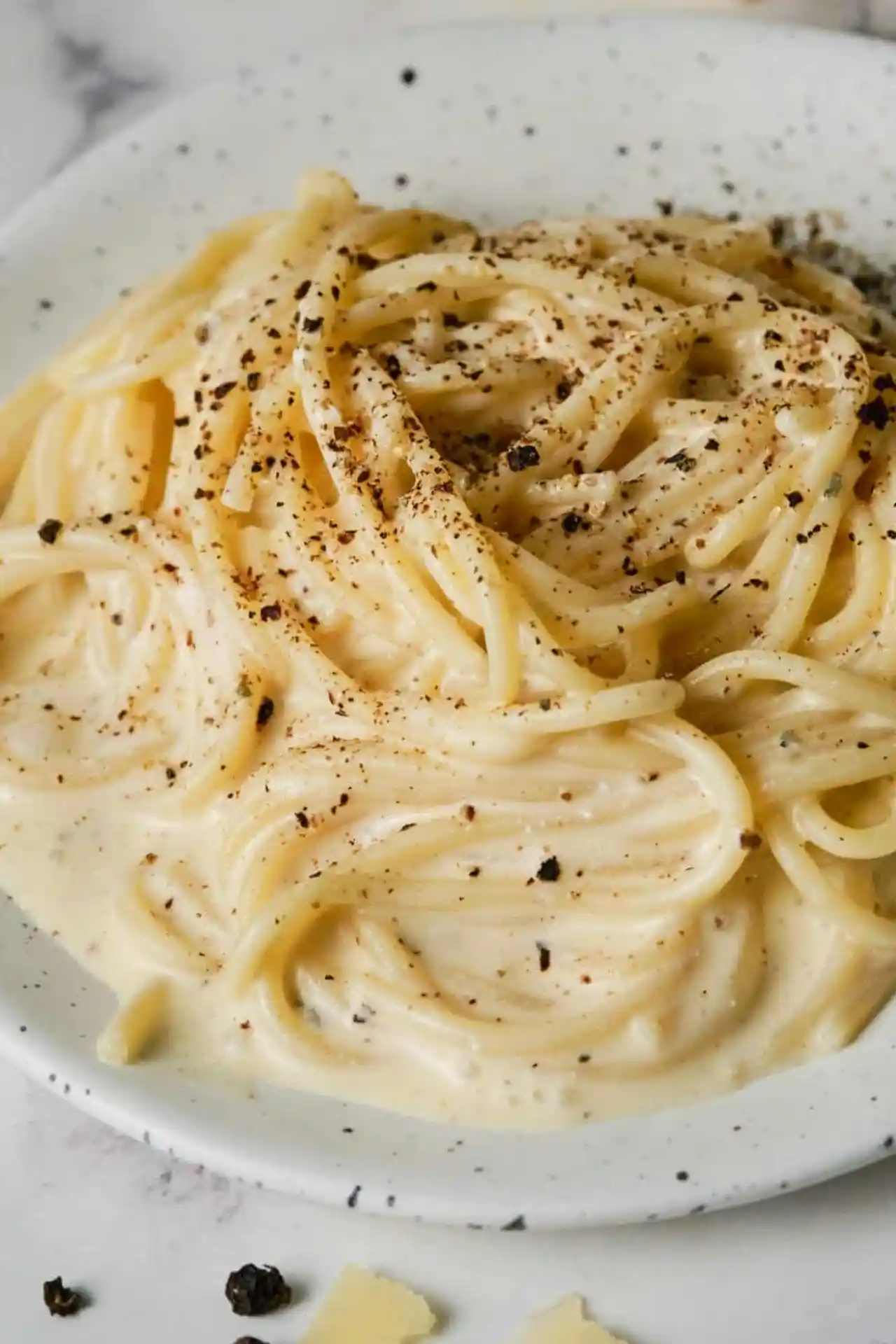
List of ingredients
- 4 ounces spaghetti
- 1 tablespoon black peppercorns, freshly ground, plus more for garnish
- 2 tablespoons butter
- 4 ounces Boursin cheese (garlic & herb or black pepper)
- 1/4 cup Parmesan or Pecorino cheese, grated, plus more for garnish
step-by-step instructions
- Step: In a large pot, bring salted water to boil. Add the spaghetti and cook it al dente according to the package instructions.
- Step: While the pasta is cooking, grind the peppercorns with a mortar and pestle to a fine consistency.
- Step: Melt the butter over medium-high heat in a large skillet. When foamy, add the black pepper and toast until fragrant, 1- 2 minutes. Turn off the heat.
- Step: Add the Boursin cheese and 1/2 cup of the pasta water. Whisk the sauce until smooth.
- Step: Add the Parmesan and mix well until combined. Stir in the cooked pasta and toss to combine.
- Step: Transfer to plates and sprinkle with some more grated cheese and black peppercorns. Enjoy!
Mastering the Emulsion Process
Understanding the Role of Starchy Water
The starch released into the boiling water is the essential glue for this dish. By reserving some of this liquid before draining, you gain a vital ingredient that helps the fats in the butter and the proteins in the Boursin fuse together. When added to the hot skillet, this liquid creates a temporary emulsion, transforming the individual components into a glossy, cohesive sauce that clings to the noodles rather than sliding off.
Why Low Heat Matters for Cheese
Direct high heat is the enemy of dairy-based pasta sauces, as it can cause the proteins to seize and separate, leading to a grainy or oily texture. By turning the heat down or even off before adding the Boursin, you allow the cheese to melt slowly and gently into the hot butter and water base. This controlled temperature approach maintains the integrity of the herbs and garlic found within the Boursin, ensuring the aromatics remain bright rather than scorched.
Refining the Pepper Profile
Toasting Methods for Maximum Impact
The intensity of your pepper directly defines the quality of this dish, which is why fresh grinding is strictly required. When you toast the cracked pepper in foaming butter, you are essentially extracting fat-soluble compounds that enhance the heat. Watch the pan closely during the toasting phase, as pepper can quickly transition from fragrant to burnt; once you see the butter deepen in color and the air fills with a sharp, spicy scent, move to the next step immediately.
Experimenting with Different Peppercorn Varieties
While standard black peppercorns are the classic choice, you can customize the heat profile by using different types of peppercorns. Tellicherry peppercorns offer a more robust and citrusy profile, while green peppercorns provide a milder, fresher, and more herbal taste. Combining a mix of colored peppercorns can add depth to the visual presentation of the plate, especially when they are freshly cracked over the final dish as a garnish.
Customization and Ingredient Variations
Incorporating Seasonal Fresh Produce
To lighten the richness of this meal, consider tossing in some quick-cooking vegetables during the last minute of pasta boiling. Tender spring peas, baby spinach leaves, or shaved asparagus spears will wilt or cook perfectly in the residual heat of the sauce. If you prefer roasted flavors, add pre-cooked florets of broccoli or sliced mushrooms during the final tossing stage to provide an earthy contrast to the garlic-herb sauce.
Choosing the Right Pasta Shape
While spaghetti is the traditional vehicle for Cacio E Pepe, the creamy nature of the Boursin-based sauce works exceptionally well with other shapes. Long noodles like fettuccine or linguine provide more surface area for the sauce to cling to, whereas short, tubular pasta shapes like rigatoni or fusilli act as vessels for the sauce. Regardless of the shape you choose, always aim for high-quality pasta to ensure it maintains the correct texture during the final toss in the skillet.
Practical Serving Strategies
The Importance of Warmed Dinnerware
Because the sauce is dairy-based, it can thicken rapidly as it cools, potentially leading to a gluey texture if it sits on a cold plate for too long. To keep your pasta as silky as possible, briefly warm your serving plates in a low oven or by rinsing them under very hot water before plating. This simple step keeps the butter and cheese emulsion fluid, preserving the luxurious mouthfeel of the dish from the first bite to the last.
Balancing the Plate with Acid
The richness of the Boursin and butter can be intense, so serving the dish with a side of bright, acidic vegetables can help cleanse the palate. A crisp arugula salad dressed with a sharp lemon vinaigrette or some quickly pickled radishes provides the perfect sharp counterpoint to the creamy pasta. If you want a more integrated approach, finish the dish with a very light squeeze of fresh lemon juice or a sprinkle of lemon zest to lift the flavors of the herbs.
Storage and Troubleshooting
Handling Leftovers Effectively
If you find yourself with leftovers, store the pasta in an airtight glass container to prevent it from picking up other refrigerator odors. When you are ready to enjoy it again, reheat the pasta gently in a saucepan over very low heat, adding a tablespoon of water or broth to help bring the sauce back to its original creamy consistency. Avoid using a microwave if possible, as it tends to heat unevenly and can easily break the delicate emulsion, causing the butter to separate from the cheese.
Solving Common Sauce Issues
If your sauce looks too thin and watery after adding the pasta water, increase the heat slightly and continue tossing the pasta; the agitation will help the starch thicken the liquid. Conversely, if your sauce is too thick or looks clumpy, add the reserved pasta water in very small, measured increments while whisking until you reach the desired silky finish. Always start with less water than you think you need, as you can add more but cannot easily remove excess liquid once the sauce is formed.
FAQ
Can I use a different type of cheese if I cannot find Boursin?
If Boursin is unavailable, you can create a similar base by blending softened cream cheese with a mixture of minced garlic, dried parsley, chives, and a pinch of black pepper. While it will not be identical to the store-bought version, it will provide the necessary structure for the creamy sauce.
Is there a way to add protein to this meal?
Yes, you can easily add protein by pan-searing thin slices of chicken breast or sautéing shrimp in the butter before adding the pepper. These additions pair well with the garlic and herb notes in the cheese, making the dish a more substantial main course for hungry diners.
Why does the sauce sometimes look oily?
An oily appearance usually indicates that the sauce was heated too quickly or to a temperature that was too high, causing the butter fat to separate. Ensure your heat is low when adding the cheese, and always finish the sauce by vigorously tossing the pasta to re-incorporate the fats with the starchy water and cheese proteins.
How far in advance can I prepare the components?
You can grate your cheese and grind your pepper hours ahead of time to make the cooking process faster. However, the sauce should be prepared and combined with the pasta immediately before serving to ensure the best texture, as the emulsion is freshest and most stable when prepared as a single event.
Print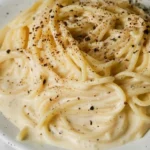
Cacio E Pepe Boursin Pasta Twist
- Total Time: 20 minutes
- Yield: 2 servings 1x
- Diet: Vegetarian
Description
Dive into this creamy, peppery Cacio E Pepe Boursin Pasta Twist recipe! Ready in 20 minutes, it’s a rich, quick spin on a classic for weeknights.
Ingredients
- 4 ounces spaghetti
- 1 tablespoon black peppercorns, freshly ground, plus more for garnish
- 2 tablespoons butter
- 4 ounces Boursin cheese (garlic & herb or black pepper)
- 1/4 cup Parmesan or Pecorino cheese, grated, plus more for garnish
Instructions
- Step: In a large pot, bring salted water to boil. Add the spaghetti and cook it al dente according to the package instructions.
- Step: While the pasta is cooking, grind the peppercorns with a mortar and pestle to a fine consistency.
- Step: Melt the butter over medium-high heat in a large skillet. When foamy, add the black pepper and toast until fragrant, 1- 2 minutes. Turn off the heat.
- Step: Add the Boursin cheese and 1/2 cup of the pasta water. Whisk the sauce until smooth.
- Step: Add the Parmesan and mix well until combined. Stir in the cooked pasta and toss to combine.
- Step: Transfer to plates and sprinkle with some more grated cheese and black peppercorns. Enjoy!
Notes
You can easily swap spaghetti for other pasta shapes like fettuccine or rigatoni. Leftovers can be stored in an airtight container for up to 3 days and reheated with a splash of water or broth.
- Prep Time: 5 minutes
- Cook Time: 15 minutes
- Category: Main Course
- Method: Stovetop
- Cuisine: Italian
Nutrition
- Serving Size: 1 serving
- Calories: 607 kcal
- Sugar: 2 g
- Sodium: 647 mg
- Fat: 39 g
- Saturated Fat: 25 g
- Unsaturated Fat: 14 g
- Trans Fat: 0 g
- Carbohydrates: 48 g
- Fiber: 3 g
- Protein: 16 g
- Cholesterol: 85 mg
Keywords: Cacio e Pepe, Pasta Twist, Boursin, Quick Pasta, Vegetarian