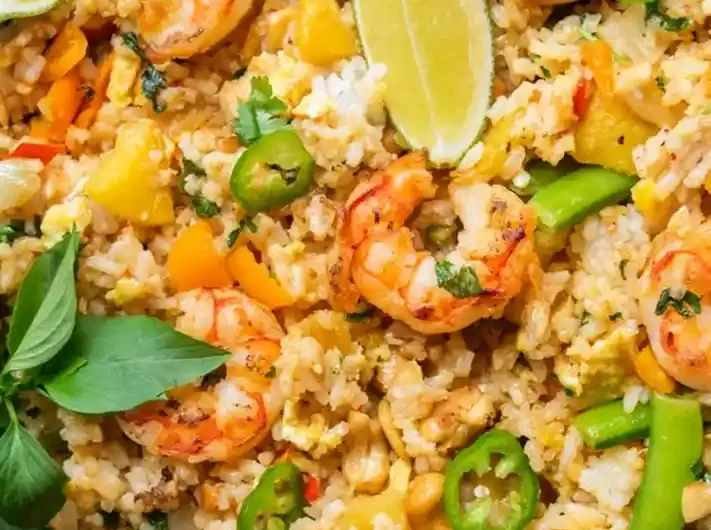
This vibrant fried rice dish brings together the natural sweetness of caramelized pineapple with the savory depth of fresh shrimp and aromatic Thai herbs. It offers a perfect balance of textures, from the crunch of toasted cashews to the crisp-tender snap of fresh vegetables, making it an ideal choice for a quick yet impressive weeknight meal. Designed to be finished in under twenty minutes, this recipe is a masterclass in efficient, high-heat cooking that results in a complex, restaurant-quality flavor profile right in your own kitchen.
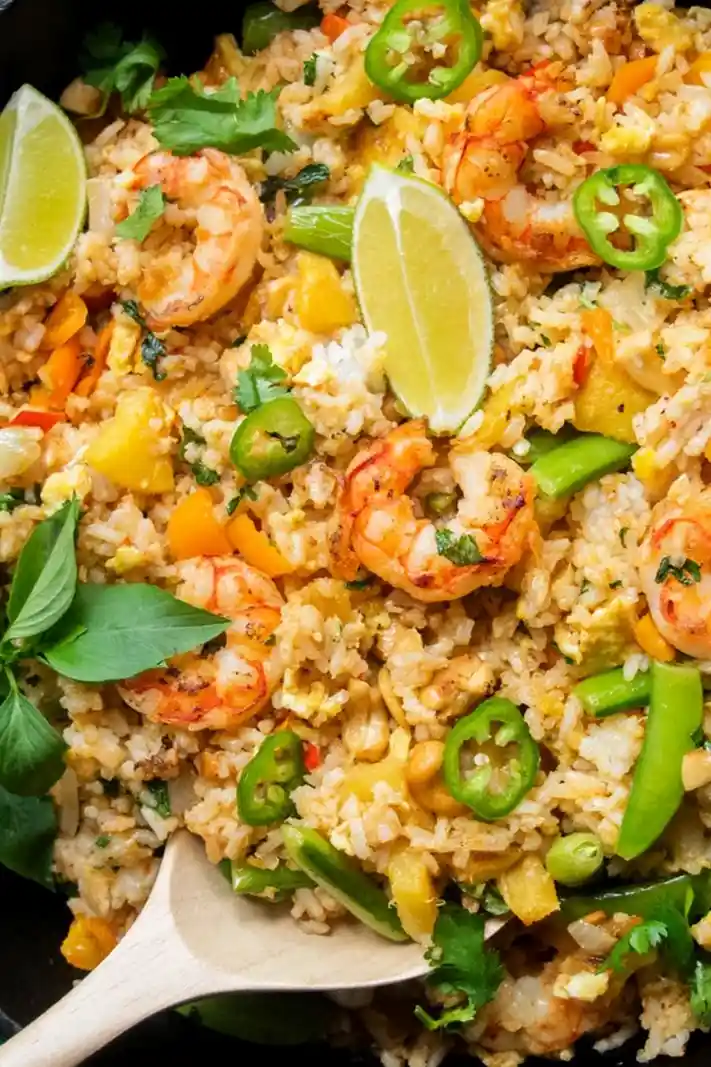
List of ingredients
- 2 tbsp canola oil, plus one tsp
- 1 tsp toasted sesame oil, plus a few dashes
- 3 eggs, beaten
- 1 whole pineapple, cubed into 1/2 inch pieces
- 1 medium green, red or yellow bell pepper, thinly sliced
- 1 cup frozen (thawed), or fresh sugar snap peas
- 6 scallions, sliced thinly (reserve greens for garnish)
- 2 tsp fresh grated ginger
- 1 lb medium or large shrimp, peeled and deveined
- 3/4 cup roughly chopped cashews
- 4 cloves garlic, sliced
- 3 cups white or brown rice, previously cooked and cooled
- 2 tsp fish sauce
- 2 tbsp sweet chili sauce
- 1 tsp sriracha
- 1/2 tsp low sodium soy sauce, or coconut aminos
- 1/2 cup chopped cilantro
- 1/2 cup chopped basil
- Additional cilantro and basil leaves
- Reserved scallion greens
- Thinly sliced jalapeños
- Sriracha
- Lime wedges
step-by-step instructions
- Step: Set a large bowl close to your work area. In a large frying pan, wok, or large skillet over medium-high heat, heat 1 tbsp canola oil, and scramble the eggs, until just set, about 2 minutes. Immediately transfer eggs to your bowl.
- Step: Add 1 tbsp canola oil and 1 tsp sesame oil to the pan, and fry pineapple on high heat, until pineapple is caramelized- about 3-4 minutes a side. Remove pineapple to bowl with eggs.
- Step: Reduce heat to medium and fry the peppers, 2-3 minutes, stirring occasionally, until they take on a bit of color, but remain crisp-tender. Remove to bowl.
- Step: Add a dash of sesame oil and the shrimp to the pan, and cook until just opaque, about 2 minutes per side. Remove to bowl with eggs, pineapple, and peppers.
- Step: Add a dash more of sesame oil and the snap peas, ginger, scallion tops (reserve greens for garnish), garlic and cashews to the pan. Cook 2-3 mins, stirring occasionally, until the garlic is fragrant and snap peas are crisp-tender. Remove all ingredients to the bowl with the eggs, pineapple, peppers and shrimp.
- Step: Increase heat to medium-high and add the remaining 1 tsp canola oil and a dash of sesame oil and press cooked rice down in an even layer, and cook- undisturbed for 2 minutes. Flip, and cook 2 minutes more.
- Step: Turn off the heat and stir the contents of the bowl back in with the rice. Stir in the fish sauce, sweet chili sauce, sriracha, soy sauce, and herbs.
- Step: Serve with additional herbs, sriracha, scallion greens, jalapeño or chilis, and lime wedges.
Essential Fried Rice Success Factors
Why Using Cold Rice Matters
The secret to perfect fried rice lies in the moisture content of the grain. Using freshly cooked, warm rice introduces excess steam into the pan, which leads to a gummy or clumpy final product rather than the distinct, individual grains that characterize good fried rice. By using rice that has been refrigerated for several hours or overnight, you allow the starches to firm up and the surface moisture to evaporate, ensuring the grains toast rather than steam when they hit the hot oil.
Selecting the Best Oil for Stir-Frying
Because this recipe utilizes high-heat techniques, selecting an oil with a high smoke point is critical to prevent burning. Canola oil serves as a reliable neutral base, while the addition of toasted sesame oil provides the specific aromatic profile associated with Thai-inspired cuisine. If you find yourself out of canola, other stable options include avocado oil, refined grapeseed oil, or peanut oil, all of which tolerate the high temperatures needed to caramelize the pineapple and crisp the rice without imparting unwanted flavors or producing excessive smoke.
Preparation and Workflow Efficiency
Mastering the Staged Cooking Technique
Cooking ingredients in batches is not merely a preference; it is a structural necessity for this recipe. Each component—from the eggs to the pineapple and the shrimp—requires a different amount of time and heat to reach its ideal state. By pulling each item out of the pan as it reaches perfection, you prevent overcooking the shrimp while ensuring the pineapple has sufficient space and time to brown properly. Keeping a large prep bowl near your station allows you to move quickly and keeps the cooking process smooth and stress-free.
The Importance of Prep Before Heat
Fried rice is an incredibly fast-paced cooking method, often leaving no time for chopping or measuring once the pan is on the stove. Before turning on your burner, verify that every ingredient is fully prepped, measured, and within arm’s reach. Having your sauces pre-mixed or in open containers and your vegetables chopped ensures you stay in control of the heat, preventing the ginger or garlic from burning while you scramble to find an ingredient.
Customization and Culinary Variations
Protein and Vegetable Substitutions
This dish is highly adaptable to whatever is currently in your refrigerator. If you prefer to change the protein, thinly sliced chicken breast or tofu cubes work exceptionally well as direct replacements for the shrimp. For vegetable variations, consider adding thinly sliced carrots, baby corn, or even shredded bok choy. These vegetables add their own unique textures and colors while absorbing the savory-sweet sauce components perfectly.
Adjusting the Flavor Profile
The balance of the dish can be tweaked to your personal palate preferences with very little effort. If you enjoy a punchier, more savory dish, add an extra splash of fish sauce, bearing in mind that this increases the salt content significantly. If you prefer a brighter, more vibrant finish, increase the quantity of fresh lime juice squeezed over the top immediately before serving, as the acidity cuts through the richness of the stir-fried ingredients.
Storage and Reheating Advice
Managing Leftover Fried Rice
While this dish is best enjoyed immediately upon preparation, leftovers can be stored successfully. Keep the fried rice in a tightly sealed airtight container in the refrigerator for up to three days. It is important to cool the rice completely before sealing it to avoid excess condensation, which can make the rice soggy when you eventually reheat it.
Optimal Reheating Methods
To restore the texture of your leftover fried rice, avoid the microwave if possible, as it tends to steam the rice and soften the crisp cashews. Instead, place a small amount of oil in a hot pan and stir-fry the leftovers over medium-high heat for 3-5 minutes until the dish is steaming hot throughout. If the rice seems dry, add a tiny splash of water or a few extra drops of soy sauce to loosen the grains and distribute the heat evenly.
Frequently Asked Questions
Can I use jasmine rice for this recipe?
Jasmine rice is an excellent choice for this dish due to its natural fragrance and light, airy texture. As with other rice varieties, ensure it is cooked and thoroughly chilled before frying to maintain the best possible consistency and avoid clumping.
Is there a way to make this dish without using a wok?
A large, deep stainless steel or non-stick skillet is a perfectly adequate substitute for a traditional wok. The most important factor is the surface area of the pan, which allows the rice to spread out and interact with the heat rather than stacking up and steaming. Ensure your pan is large enough to prevent overcrowding, which is key to achieving that desirable fried texture.
How can I make the dish less spicy?
The heat in this recipe is primarily controlled by the sriracha and the optional jalapeños. To reduce the spice level, simply omit the sriracha from the sauce mixture and serve it on the side for those who prefer more heat. Similarly, skipping the fresh jalapeño garnish will keep the dish mild and accessible for everyone at the table.
What is the best way to handle fresh pineapple?
When selecting a pineapple, look for one that feels heavy for its size and has a fragrant base. To prepare it, remove the crown and the outer skin, then slice it into planks before cutting into the required 1/2-inch pieces. Keeping the pieces uniform in size is crucial for ensuring that every piece of pineapple caramelizes at the same rate in the pan.
Print
Shrimp Pineapple Thai Fried Rice Recipe with Basil
- Total Time: 40 minutes
- Yield: 4 servings 1x
- Diet: Pescatarian
Description
With sweet, caramelized pineapple, succulent shrimp, crunchy cashews and plenty of fresh herbs- this Shrimp Pineapple Thai Fried Rice Recipe with Basil is way better than takeout, and comes together in just 20 minutes!
Ingredients
- 2 tbsp canola oil, plus one tsp
- 1 tsp toasted sesame oil, plus a few dashes
- 3 eggs, beaten
- 1 whole pineapple, cubed into 1/2 inch pieces
- 1 medium green, red or yellow bell pepper, thinly sliced
- 1 cup frozen (thawed), or fresh sugar snap peas
- 6 scallions, sliced thinly (reserve greens for garnish)
- 2 tsp fresh grated ginger
- 1 lb medium or large shrimp, peeled and deveined
- 3/4 cup roughly chopped cashews
- 4 cloves garlic, sliced
- 3 cups white or brown rice, previously cooked and cooled
- 2 tsp fish sauce
- 2 tbsp sweet chili sauce
- 1 tsp sriracha
- 1/2 tsp low sodium soy sauce, or coconut aminos
- 1/2 cup chopped cilantro
- 1/2 cup chopped basil
- Additional cilantro and basil leaves
- Reserved scallion greens
- Thinly sliced jalapeños
- Sriracha
- Lime wedges
Instructions
- Step: Set a large bowl close to your work area. In a large frying pan, wok, or large skillet over medium-high heat, heat 1 tbsp canola oil, and scramble the eggs, until just set, about 2 minutes. Immediately transfer eggs to your bowl.
- Step: Add 1 tbsp canola oil and 1 tsp sesame oil to the pan, and fry pineapple on high heat, until pineapple is caramelized- about 3-4 minutes a side. Remove pineapple to bowl with eggs.
- Step: Reduce heat to medium and fry the peppers, 2-3 minutes, stirring occasionally, until they take on a bit of color, but remain crisp-tender. Remove to bowl.
- Step: Add a dash of sesame oil and the shrimp to the pan, and cook until just opaque, about 2 minutes per side. Remove to bowl with eggs, pineapple, and peppers.
- Step: Add a dash more of sesame oil and the snap peas, ginger, scallion tops (reserve greens for garnish), garlic and cashews to the pan. Cook 2-3 mins, stirring occasionally, until the garlic is fragrant and snap peas are crisp-tender. Remove all ingredients to the bowl with the eggs, pineapple, peppers and shrimp.
- Step: Increase heat to medium-high and add the remaining 1 tsp canola oil and a dash of sesame oil and press cooked rice down in an even layer, and cook- undisturbed for 2 minutes. Flip, and cook 2 minutes more.
- Step: Turn off the heat and stir the contents of the bowl back in with the rice. Stir in the fish sauce, sweet chili sauce, sriracha, soy sauce, and herbs.
- Step: Serve with additional herbs, sriracha, scallion greens, jalapeño or chilis, and lime wedges.
Notes
Using cold, previously cooked rice is essential for the best texture. If you don’t have scallions, yellow onion is a suitable substitute.
- Prep Time: 20 minutes
- Cook Time: 20 minutes
- Category: Dinner
- Method: Stir-fry
- Cuisine: Asian Inspired
Nutrition
- Serving Size: 1 bowl
- Calories: 1010 kcal
- Sugar: 31 g
- Sodium: 1095 mg
- Fat: 27 g
- Saturated Fat: 5 g
- Unsaturated Fat: 20 g
- Trans Fat: 0.1 g
- Carbohydrates: 157 g
- Fiber: 11 g
- Protein: 38 g
- Cholesterol: 266 mg
Keywords: Thai fried rice, shrimp, pineapple, easy dinner, stir-fry, Asian inspired