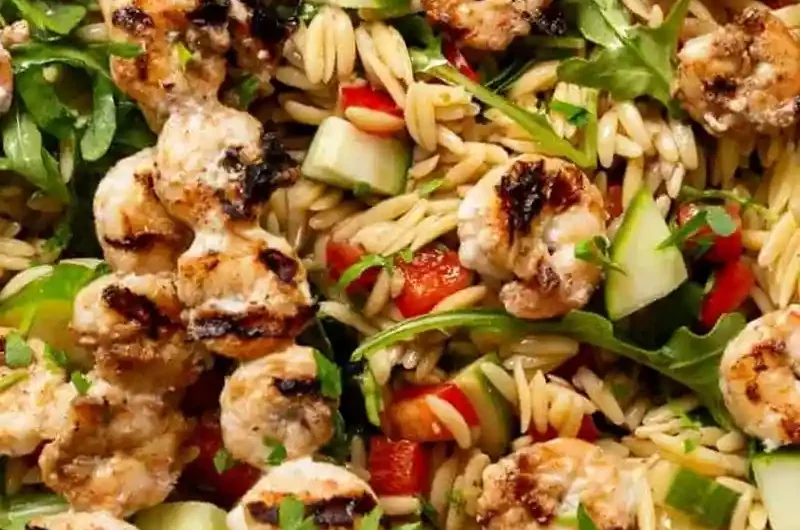
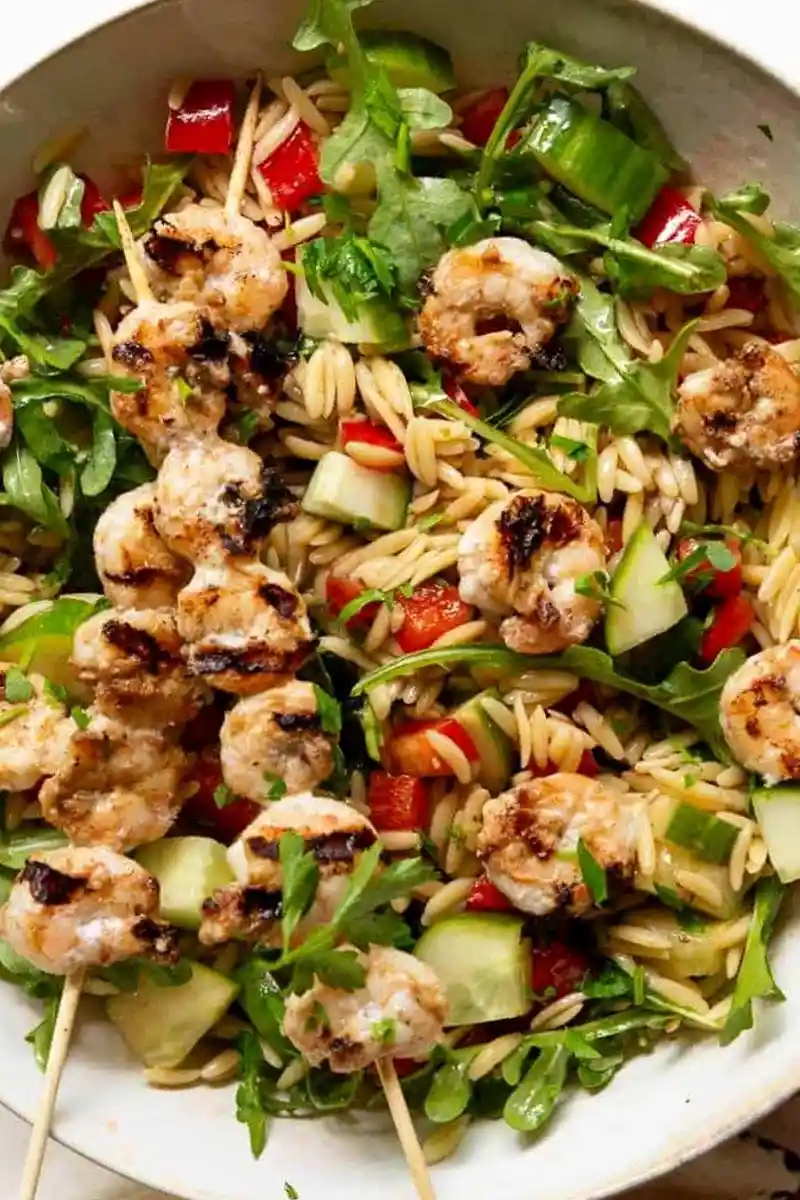
This vibrant shrimp orzo salad offers a perfect balance of smoky grilled protein and refreshing, chilled pasta. It combines tender orzo with crisp seasonal vegetables and a bold balsamic vinaigrette for a meal that feels both sophisticated and satisfying. Designed for efficiency, this recipe ensures you have a nutritious, high-protein lunch or dinner on the table in under thirty minutes.
List of ingredients
- 6 tbsp extra virgin olive oil
- 3 tbsp balsamic vinegar
- ½ tbsp Dijon mustard
- 1 tbsp water
- 1 ½ tsp Italian seasoning
- ½ tsp salt
- ¼ tsp pepper
- 1 pound shrimp, peeled & deveined
- 1 medium garlic clove, minced
- 1 ¾ cups dry orzo
- 1 English cucumber, chopped
- 1 red bell pepper, chopped
- 1-2 cups fresh arugula
- Fresh parsley, for serving
step-by-step instructions
- Step: Pat the shrimp dry. Toss with the minced garlic and half the dressing in a bowl. Marinate in the fridge for 20 minutes, up to 1 hour.
- Step: Bring a large pot of salted water to a boil. Cook the orzo according to package instructions. Drain and let it cool.
- Step: Whisk together the olive oil, balsamic vinegar, Dijon mustard, water, and Italian seasoning until combined. Set aside.
- Step: Chop the cucumber, red bell pepper, and parsley.
- Step: Once the orzo is cool, combine it with the chopped veggies and arugula in a large bowl. Drizzle with the dressing and toss to coat.
- Step: Heat a grill pan or skillet over medium-high. Thread shrimp onto skewers if desired. Cook 2 to 3 minutes per side, until just pink and cooked through.
- Step: Pile the warm shrimp over the cold salad, toss gently, and serve right away. Garnish with parsley.
Practical Preparation Techniques
Managing Temperature Contrast for Best Results
The core appeal of this salad lies in the deliberate temperature difference between the chilled orzo and the warm, freshly grilled shrimp. To achieve this, it is essential that your orzo is completely cooled before you begin the final assembly. If you mix the warm, freshly cooked pasta with the dressing, it will absorb all the liquid and become gummy. By chilling the pasta and vegetables beforehand, you preserve the distinct texture of each ingredient and ensure the dressing coats the surface rather than disappearing into the starch.
Ensuring Shrimp Texture and Moisture
Shrimp can become rubbery or tough if left over high heat for even a minute too long. The most effective way to monitor doneness is to look for the color transition from translucent gray to opaque pink with a slight white edge. Once the shrimp curls into a distinct ‘C’ shape, they are typically ready to come off the heat. Avoid the ‘O’ shape, which indicates that the protein fibers have tightened excessively and the shrimp is likely overcooked.
Maximizing Marination Efficiency
While marinating is essential for flavor, the inclusion of balsamic vinegar in the marinade requires careful timing. Because the vinegar is acidic, leaving the shrimp in the mixture for an extended period can begin to ‘cook’ the exterior of the protein prematurely, resulting in a mealy texture once grilled. Stick to the 20 to 60-minute window to balance the need for deep flavor penetration with the requirement for a tender, succulent final texture.
Refining the Dish with Substitutions
Pasta Variations for Different Needs
While orzo is the signature shape for this dish due to its size and texture, you can experiment with other small pasta varieties. Ditalini or pearl couscous offer a similar mouthfeel and work excellently as direct swaps. If you need a grain-free or gluten-free alternative, you can substitute the orzo with cooked quinoa or even cauliflower rice, though you may need to reduce the amount of dressing as these alternatives are more porous than traditional semolina pasta.
Green and Vegetable Customizations
Arugula is chosen for its bold, peppery profile, but it can be swapped depending on your local availability or flavor preferences. Baby spinach offers a more neutral base that allows the balsamic and garlic flavors to stand out, while chopped watercress introduces an even sharper, brighter bite. If you find the red bell pepper too sweet, you can introduce sun-dried tomatoes (packed in oil and patted dry) to maintain a savory depth or use diced celery for a clean, structural crunch.
Serving and Storage Dynamics
Creating a Balanced Plate
Because this salad is high in protein and fiber, it functions as a complete, self-contained meal. If you are hosting a gathering, consider serving it alongside a warm side to round out the experience. A crusty sourdough or toasted pita bread is ideal for catching any remaining dressing at the bottom of the bowl. For a heartier spread, you can pair this salad with grilled zucchini spears or a side of cold gazpacho to play on the refreshing, summer-focused theme of the meal.
Effective Make-Ahead Strategies
This recipe is highly adaptable for busy schedules because the components can be prepped independently. You can boil the orzo, chop the vegetables, and whisk the dressing up to 24 hours before you plan to eat. Keep the orzo in an airtight container with a light drizzle of oil to prevent sticking, and store the dressing in a separate jar. Do not combine the components until you are ready to serve, as the vegetables will release moisture over time, which can dilute the flavor of the balsamic dressing.
Reheating and Leftover Handling
If you find yourself with leftovers, the salad is best consumed cold directly from the refrigerator. While many enjoy the pasta cold, some people prefer to warm the leftover shrimp. To do this without ruining their texture, avoid the microwave at all costs. Instead, place the shrimp on a baking sheet and heat them in a toaster oven or air fryer at 350 degrees Fahrenheit for just 2 to 3 minutes until warmed through. Fold them into the cold salad only at the very last moment before eating to maintain the signature texture contrast.
Addressing Common Preparation Queries
Why do my shrimp get rubbery when I grill them?
Shrimp have very little connective tissue, so they respond rapidly to heat. They become rubbery when the proteins tighten due to excessive heat exposure. You can avoid this by ensuring your grill is preheated to the correct medium-high temperature before the shrimp hit the grates, reducing the time they spend hovering in the pan, and removing them the moment they turn opaque.
Is it necessary to use fresh shrimp?
Fresh shrimp is wonderful, but high-quality frozen shrimp are a practical and reliable alternative. The key is to thaw them slowly in the refrigerator overnight rather than using warm water. If you are in a rush, place the sealed bag in a bowl of cold, circulating water; replace the water every 30 minutes until they are fully thawed. Always ensure they are patted completely dry, as residual water will steam the shrimp rather than allowing them to develop a nice char.
Can I add other proteins to this salad?
Absolutely, the flavor profile of the balsamic dressing pairs well with a variety of protein sources. Grilled chicken thighs, marinated extra-firm tofu, or even chickpeas are excellent alternatives. If using plant-based proteins like chickpeas, you can simply toss them in with the orzo and vegetables during the assembly stage, as they do not require grilling to be delicious in this context.
Why does the dressing clump on the pasta?
This usually happens if the emulsification is not strong enough or if the pasta was still warm when the dressing was added. Ensure that you whisk the Dijon mustard and balsamic vinegar together vigorously before slowly streaming in the olive oil. This process creates a stable emulsion that clings to the orzo rather than separating. If the pasta is cold and the dressing is room temperature, they will combine much more effectively.
How can I make this salad more filling for dinner?
If you want to turn this into an even more substantial main course, consider adding extra density through heartier vegetables or additional legumes. Roasted eggplant cubes, canned white beans (rinsed and drained), or a generous sprinkle of toasted pine nuts can add complexity and satiety. These additions maintain the integrity of the Mediterranean theme while providing extra fiber and protein to keep the meal feeling satisfying for longer periods.
Print
Shrimp Orzo Salad
- Total Time: 30 minutes
- Yield: 6 servings 1x
- Diet: Dairy-free
Description
This shrimp orzo salad is a light, protein-packed summer dish made with grilled shrimp, tender orzo, crisp veggies, and a tangy balsamic dressing. The shrimp get a quick char on the grill, then go warm over the cold salad. Ready in under 30 minutes and naturally dairy-free.
Ingredients
- 6 tbsp extra virgin olive oil
- 3 tbsp balsamic vinegar
- ½ tbsp Dijon mustard
- 1 tbsp water
- 1 ½ tsp Italian seasoning
- ½ tsp salt
- ¼ tsp pepper
- 1 pound shrimp, peeled & deveined
- 1 medium garlic clove, minced
- 1 ¾ cups dry orzo
- 1 English cucumber, chopped
- 1 red bell pepper, chopped
- 1–2 cups fresh arugula
- Fresh parsley, for serving
Instructions
- Step: Pat the shrimp dry. Toss with the minced garlic and half the dressing in a bowl. Marinate in the fridge for 20 minutes, up to 1 hour.
- Step: Bring a large pot of salted water to a boil. Cook the orzo according to package instructions. Drain and let it cool.
- Step: Whisk together the olive oil, balsamic vinegar, Dijon mustard, water, and Italian seasoning until combined. Set aside.
- Step: Chop the cucumber, red bell pepper, and parsley.
- Step: Once the orzo is cool, combine it with the chopped veggies and arugula in a large bowl. Drizzle with the dressing and toss to coat.
- Step: Heat a grill pan or skillet over medium-high. Thread shrimp onto skewers if desired. Cook 2 to 3 minutes per side, until just pink and cooked through.
- Step: Pile the warm shrimp over the cold salad, toss gently, and serve right away. Garnish with parsley.
Notes
Keep the salad chilled until serving, then top with freshly grilled shrimp for the best mix of textures and temperatures. Store leftovers in an airtight container in the fridge for up to 3 days.
- Prep Time: 15 minutes
- Cook Time: 15 minutes
- Category: Lunch & Dinner
- Method: Grilling
- Cuisine: Mediterranean
Nutrition
- Serving Size: 1 serving
- Calories: 373 kcal
- Sugar: 3 g
- Sodium: 305 mg
- Fat: 14 g
- Saturated Fat: 1 g
- Unsaturated Fat: 12 g
- Trans Fat: 0 g
- Carbohydrates: 38 g
- Fiber: 3 g
- Protein: 22 g
- Cholesterol: 122 mg
Keywords: shrimp, orzo, salad, grilled, dairy-free, summer, high-protein