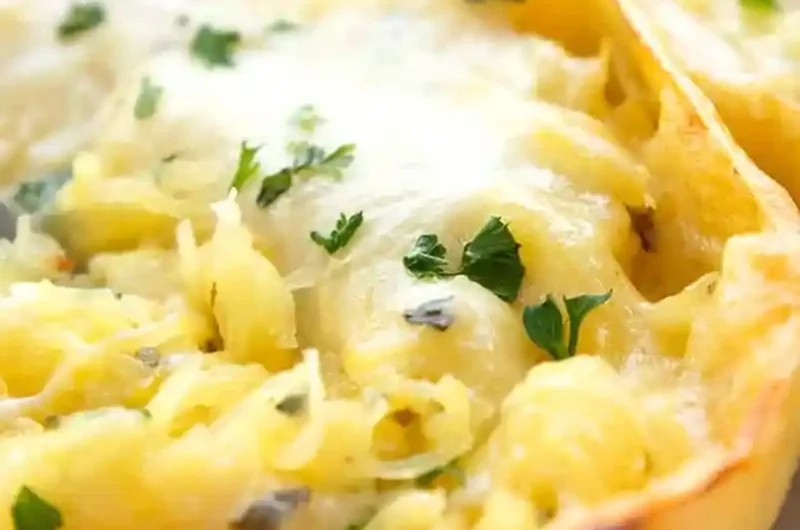
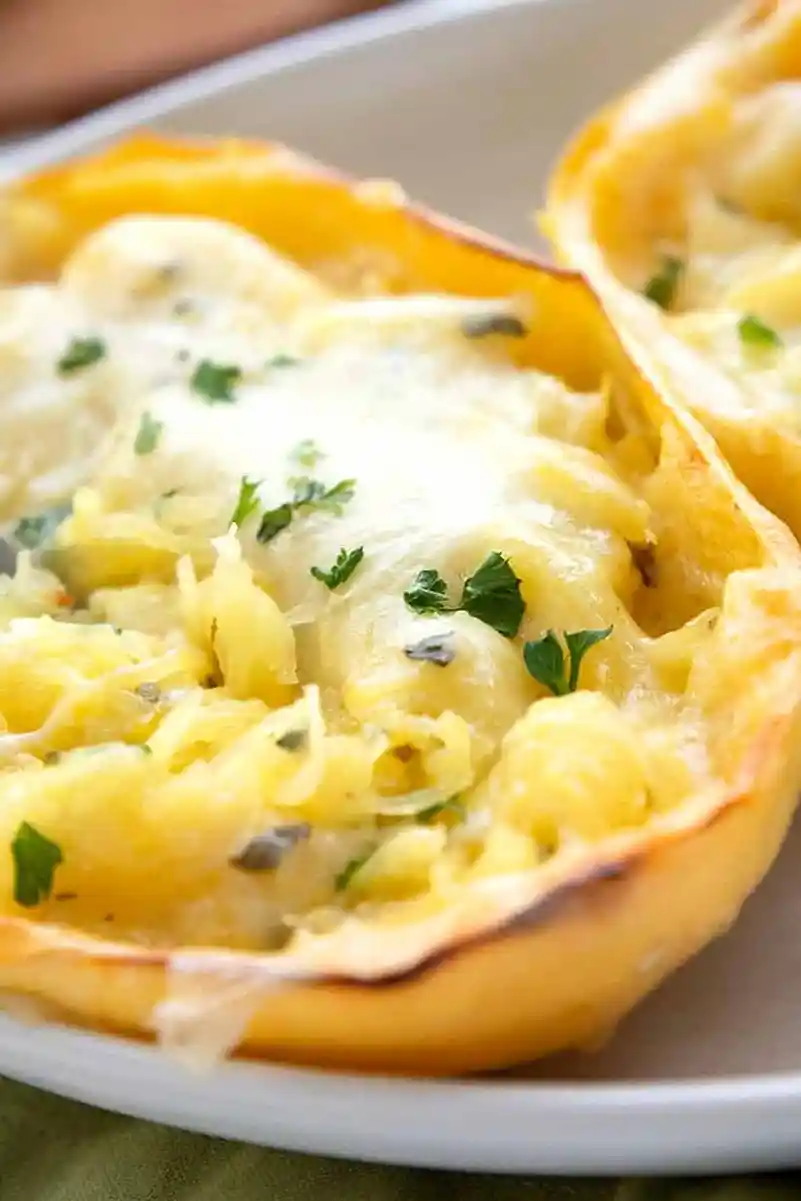
This twice baked spaghetti squash recipe transforms a humble winter vegetable into a comforting, cheese-laden dish that pairs perfectly with any main course. By roasting the squash until tender and then returning it to the oven with aromatic garlic, melted butter, and premium cheese, you create a rich side that appeals to everyone at the table. It is an effortless way to enjoy a nutrient-dense, low-carb alternative to traditional pasta, offering a sophisticated flavor profile with minimal kitchen time.
List of ingredients
- 1 medium spaghetti squash (about 3 to 3.5 lb)
- 2 tbsp butter
- 1 ounce Parmesan, grated
- 2 cloves garlic, minced
- 1 tsp dried crumbled basil
- Salt and pepper to taste
- 3 ounces sliced Provolone or mozzarella
step-by-step instructions
- Step: Preheat the oven to 350ºF and line a large baking sheet with parchment paper.
- Step: Using a very sharp large knife, cut the squash in half lengthwise and scoop out and discard seeds. Place cut side down on the prepared baking sheet. Bake 60 to 75 minutes, until tender. You should be able to squeeze the outside of the squash and feel it give.
- Step: Remove and use a large spoon to scoop the flesh into a medium bowl, reserving the skins. Add the butter and let melt in the hot squash, then add the Parmesan, garlic, basil, salt and pepper. Toss until well combined.
- Step: Divide the mixture between the reserved skins and top with sliced Provolone or mozzarella. Return to the oven and bake another 8 to 10 minutes, or until cheese is melted and bubbly.
Refining Your Roasting Technique
Choosing the Perfect Spaghetti Squash
Select a squash that feels heavy for its size and has a firm, unblemished skin. A dull, matte skin is generally preferred over a shiny one, as it typically indicates the squash has been cured properly and will have a deeper, sweeter flavor profile once roasted.
Achieving Uniformly Cooked Strands
To avoid overcooking the strands into a mushy consistency, keep a close watch during the last 15 minutes of the initial bake. Because squash sizes vary, some may require less time; you want the noodles to be tender but still retain a slight “al dente” quality that mimics pasta.
Handling the Hot Shells Safely
Since you are working with hot roasted shells, consider using kitchen tongs to move them around the baking sheet. If the shells are too unstable, you can trim a very thin slice off the outer bottom of the skin to create a flat base, which prevents the shells from wobbling when they are full of the cheese-coated squash.
Flavor Enhancements and Additions
Incorporating Fresh Herbs
While dried basil is convenient, folding in freshly chopped parsley or chives at the final stage adds a vibrant, grassy brightness that cuts through the heavy creaminess of the melted cheese. Simply stir these fresh ingredients in right before you add the top layer of cheese to ensure they stay flavorful.
Adding Texture with Toppings
For a bit of contrast, consider sprinkling the cheese with a light dusting of toasted pine nuts or sunflower seeds before the second bake. This adds a subtle, nutty crunch that pairs exceptionally well with the earthy flavor of the roasted squash and the sharpness of the Parmesan.
Managing the Garlic Intensity
If you prefer a milder flavor, try roasting the garlic cloves whole alongside the squash during the first bake. Once soft, mash the roasted garlic into a paste before mixing it with the butter and squash; this removes the harsh bite of raw garlic and replaces it with a mellow, jam-like sweetness.
Practical Serving Suggestions
Creating a Balanced Meal
This dish is versatile enough to serve as a vegetarian centerpiece or a decadent side. Pair it with a crisp green salad tossed in a sharp vinaigrette to provide a refreshing acidic balance to the rich, buttery squash and melted cheese.
Building a Hearty Platter
If you need to feed a crowd, arrange the stuffed squash shells on a large serving platter surrounded by roasted seasonal vegetables. The bright orange of the squash combined with the melted cheese makes for a visually striking presentation that is perfect for holiday dinners or casual weekend gatherings.
Storage and Reheating Advice
Refrigeration Best Practices
Leftovers should be stored in an airtight container within two hours of cooking. Kept in the refrigerator, this dish maintains its quality for up to five days. To ensure the best texture, store the squash and cheese mixture in a single layer rather than stacking it, which helps prevent the strands from becoming overly compacted.
Reheating for Optimal Texture
Avoid the microwave if you want to keep the squash from becoming watery. Instead, reheat individual portions in a conventional oven or a toaster oven set to 350ºF for about 10 to 15 minutes. Covering the dish with foil for the first few minutes of reheating keeps the moisture contained, and removing it at the end allows the cheese to soften and bubble again.
Freezing Considerations
While you can technically freeze the cooked squash, it is not recommended because the cell structure of the squash softens considerably upon thawing, leading to a watery result. If you must freeze, drain any excess liquid that forms after thawing before reheating, and plan to consume it within two months for the best taste.
Common Questions Addressed
Is this dish suitable for those with dietary restrictions?
This recipe is naturally gluten-free and works well for those following low-carbohydrate or keto eating patterns. It is also an excellent nut-free option for those with allergies, provided you ensure your cheese and butter sources are processed in facilities without cross-contamination. Always verify labels if you are cooking for guests with severe sensitivities.
Can I swap the cheese for a different variety?
Absolutely, you can use any variety that melts well, such as Fontina, Gruyere, or even a mild Monterrey Jack. Avoid using highly aged cheeses that are too dry, as they may not melt into the smooth, gooey consistency that makes this dish so enjoyable. Combining two types of cheese often provides the best balance of meltability and depth of flavor.
Why did my squash become watery?
Watery squash is usually a result of under-roasting or leaving the cut side up, which allows steam to trap inside the cavity rather than evaporating. Ensure your squash is fully cooked so the natural sugars have a chance to concentrate, and always place it cut-side down on the parchment to allow excess moisture to escape during the initial roasting period.
Can I prepare the squash base ahead of time?
Yes, you can roast the squash up to two days in advance. Store the cooked, scraped-out flesh in an airtight container in the fridge, and perform the seasoning and the second bake just before you are ready to serve. This makes the dish an excellent choice for planning ahead during busy work weeks.
Print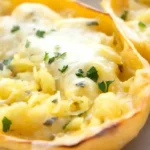
Twice Baked Spaghetti Squash
- Total Time: PT85M
- Yield: 4 servings 1x
- Diet: Low Carb, Gluten-Free
Description
Twice-baked spaghetti squash is the comfort food side dish you’ve been looking for! Made with tender roasted squash, butter, garlic, and plenty of melty cheese, it’s rich and hearty, and yet naturally low carb and gluten-free.
Ingredients
- 1 medium spaghetti squash (about 3 to 3.5 lb)
- 2 tbsp butter
- 1 ounce Parmesan, grated
- 2 cloves garlic, minced
- 1 tsp dried crumbled basil
- Salt and pepper to taste
- 3 ounces sliced Provolone or mozzarella
Instructions
- Step: Preheat the oven to 350ºF and line a large baking sheet with parchment paper.
- Step: Using a very sharp large knife, cut the squash in half lengthwise and scoop out and discard seeds. Place cut side down on the prepared baking sheet. Bake 60 to 75 minutes, until tender. You should be able to squeeze the outside of the squash and feel it give.
- Step: Remove and use a large spoon to scoop the flesh into a medium bowl, reserving the skins. Add the butter and let melt in the hot squash, then add the Parmesan, garlic, basil, salt and pepper. Toss until well combined.
- Step: Divide the mixture between the reserved skins and top with sliced Provolone or mozzarella. Return to the oven and bake another 8 to 10 minutes, or until cheese is melted and bubbly.
Notes
Store the leftovers in a covered container in the fridge for up to 5 days.
- Prep Time: PT15M
- Cook Time: PT70M
- Category: Side Dish
- Method: Baking
- Cuisine: American
Nutrition
- Serving Size: 1 serving
- Calories: 186 kcal
- Sugar: 3 g
- Sodium: 320 mg
- Fat: 12.7 g
- Saturated Fat: 7 g
- Unsaturated Fat: 5 g
- Trans Fat: 0 g
- Carbohydrates: 8.3 g
- Fiber: 1.7 g
- Protein: 8.9 g
- Cholesterol: 35 mg
Keywords: spaghetti squash, keto, low carb, gluten-free, side dish