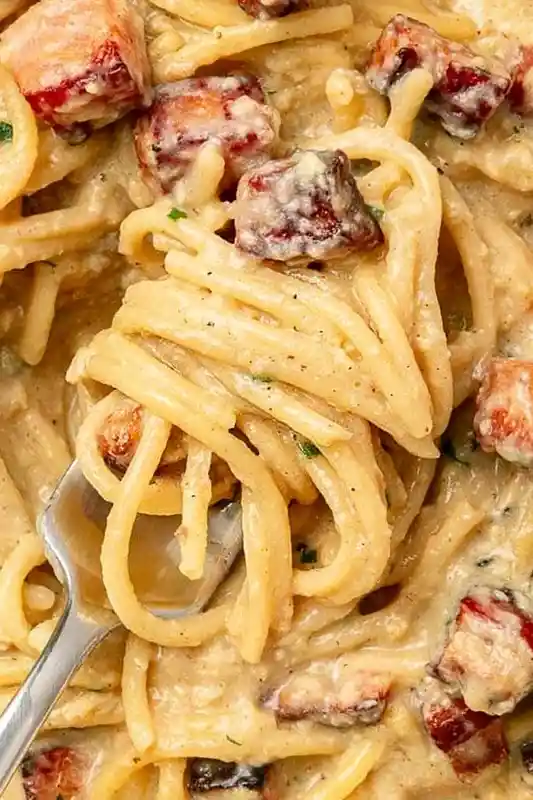
This savory pasta dish is a quick, reliable version of a classic Italian favorite, perfect for busy weeknights when you need a comforting meal in under 30 minutes. By using pantry staples and a careful technique for the sauce, you can create a silky, satisfying dinner that feels sophisticated yet remains incredibly accessible. It is a wonderful way to bring family members together for a fast, delicious meal that relies on high-quality ingredients and precise timing.
List of ingredients
- 12 ounces spaghetti noodles
- 3 eggs
- 3/4 cup freshly grated Parmesan
- 8 ounces plant-based savory protein crumbles
- 6 cloves garlic (minced)
- 1/4 cup packed fresh parsley leaves (minced and divided)
- Salt and freshly ground black pepper (to taste)
step-by-step instructions
- Step: Bring a large pot of water to a boil. Generously season with salt, add spaghetti noodles, and cook to al dente according to package directions.
- Step: While the spaghetti is cooking, crack the eggs into a medium bowl, whisk, stir in the Parmesan until well combined, and set aside.
- Step: Cook the plant-based savory protein crumbles in a large pot or Dutch oven over medium heat until browned and crispy.
- Step: Add the minced garlic and stir for a minute until golden and fragrant.
- Step: When the spaghetti is done cooking, reserve at least 1 cup of the pasta water. Drain the remaining spaghetti and add it to the pot with the protein crumbles, with the heat turned off.
- Step: Pour the egg and Parmesan mixture over the spaghetti. Immediately and vigorously stir to combine. Add the reserved pasta water a few tablespoons at a time, stirring constantly until the sauce reaches a smooth and creamy consistency.
- Step: Stir in half of the minced parsley, season with salt and pepper to taste, and serve immediately garnished with the remaining parsley.
Mastering the Silky Sauce Technique
Understanding Residual Heat Management
The secret to a perfect sauce lies in using the residual heat of the pasta rather than direct burner heat. If the pot remains on a hot burner, the eggs can quickly transition from a creamy liquid to solid scrambled bits. Always ensure your flame is completely extinguished before introducing the egg mixture to the noodles for the best results.
The Role of Starchy Water in Emulsification
Pasta water is essentially liquid gold in this recipe because it contains released starches that stabilize the sauce. By whisking this water into the eggs and pasta, you create an emulsion that clings to every strand of spaghetti. If your sauce feels too thick or tacky after a few minutes, adding another tablespoon of this reserved water will loosen it perfectly.
Refining Your Ingredient Selection
Choosing the Right Pasta Shape
While spaghetti is the traditional choice for this dish, other long noodles such as fettuccine or linguine are also excellent options because they provide a large surface area for the sauce to adhere to. Avoid using very thin strands like angel hair, as they tend to break down or become clumpy during the rapid stirring process. Ensure the pasta is cooked al dente to maintain the necessary structure that supports the creamy coating.
Selecting High Quality Cheeses
Freshly grated Parmesan is significantly superior to pre-grated varieties because it melts into the sauce without leaving a grainy texture. For a more intense, sharp flavor profile, you can swap half of the Parmesan for Pecorino Romano. Both cheeses provide the saltiness required to balance the richness of the eggs and the savory base of the dish.
Variations and Enhancements
Incorporating Roasted Vegetables
To add nutritional density, consider folding in lightly roasted vegetables like zucchini slices or blanched peas during the final stirring stage. These additions should be cooked separately before joining the pasta to ensure they maintain their own distinct textures. Small florets of roasted cauliflower can also provide a wonderful crunch that mimics the texture of the savory strips.
Adjusting the Herbal Profile
While fresh parsley is the traditional garnish, you can experiment with other soft herbs to change the character of the dish. Fresh basil provides a sweeter, more aromatic note, while chopped chives offer a mild, onion-like bite that pairs well with the garlic. Always fold in these herbs at the very end to keep their vibrant colors and fresh flavors intact.
Storage and Reheating Strategies
Managing Leftover Portions
If you have leftovers, store them in an airtight container in the refrigerator for up to three days. The sauce will naturally firm up as it cools, so it is important to handle the reheating process with care to avoid drying out the noodles. Always give the pasta a good toss before storing to ensure the residual oils and fats are evenly distributed through the container.
Reheating for Optimal Texture
When reheating, use a splash of vegetable broth or even a little water to help re-emulsify the sauce back into a smooth consistency. Microwaving in 30-second increments while stirring frequently is the fastest method to prevent the eggs from overheating. For a more controlled approach, gently warming the pasta in a non-stick skillet over low heat with a small amount of added moisture often produces a result closer to the freshly prepared dish.
Frequently Asked Questions
Can I make this dish without any savory meat substitutes?
Yes, this recipe works quite well as a vegetarian dish by omitting the strips entirely and perhaps adding toasted breadcrumbs for crunch. You might consider adding a bit more garlic or a pinch of red pepper flakes to ensure the flavor remains bold and punchy.
Why did my sauce turn out grainy?
Grainy sauce usually indicates that the eggs were exposed to too much heat too quickly, causing them to cook rather than emulsify. Ensure you are stirring constantly the moment the eggs touch the hot pasta and that you have removed the pot from the stove entirely before combining ingredients.
What if I do not have fresh parsley?
If fresh parsley is unavailable, you can substitute with fresh cilantro or fresh basil, though the flavor profile will shift slightly. Avoid using dried herbs for this recipe, as the dish relies on the bright, vibrant pop that only fresh, minced greenery can provide at the moment of serving.
How do I make the dish heartier?
You can increase the protein content by adding more savory strips or by serving a side of sautéed mushrooms. Another excellent way to add substance is by stirring in a handful of baby spinach during the final minute of tossing; the residual heat will wilt it perfectly into the creamy sauce.
Troubleshooting Common Issues
Addressing Overly Thick Sauce
If the sauce becomes too thick or pasty, it is almost always due to the pasta absorbing too much water or the cheese clumping. The solution is simple: keep a small amount of extra hot water ready and add it one teaspoon at a time while stirring vigorously. This process introduces more starch and moisture, which helps to reset the emulsion and restore that desired velvety shine.
Avoiding Bland Flavors
The seasoning in this dish is very simple, which means the quality of your salt and pepper is paramount. If the dish tastes flat, it usually needs more freshly cracked black pepper, which cuts through the richness of the eggs and cheese. Always taste the dish right before serving to determine if an extra pinch of salt is necessary, keeping in mind that the cheese also contributes a fair amount of saltiness.
Dealing with Clumped Pasta
If the spaghetti starts to stick together while you are preparing the sauce, a quick drizzle of reserved pasta water will act as a lubricant. Never use oil to prevent sticking, as this will prevent the creamy egg sauce from adhering to the noodles effectively. The starchy water is the only liquid you should rely on for both texture and separation of the strands.
Print
Easy Savory Pasta Carbonara Style
- Total Time: 25 minutes
- Yield: 4 servings 1x
- Diet: Vegetarian
Description
This Carbonara recipe is a quick and easy version of the classic, made with simple and accessible ingredients for a flavorful dinner that’s on the table in under 30 minutes!
Ingredients
- 12 ounces spaghetti noodles
- 3 eggs
- 3/4 cup freshly grated Parmesan
- 8 ounces plant-based savory protein crumbles
- 6 cloves garlic (minced)
- 1/4 cup packed fresh parsley leaves (minced and divided)
- Salt and freshly ground black pepper (to taste)
Instructions
- Step: Bring a large pot of water to a boil. Generously season with salt, add spaghetti noodles, and cook to al dente according to package directions.
- Step: While the spaghetti is cooking, crack the eggs into a medium bowl, whisk, stir in the Parmesan until well combined, and set aside.
- Step: Cook the plant-based savory protein crumbles in a large pot or Dutch oven over medium heat until browned and crispy.
- Step: Add the minced garlic and stir for a minute until golden and fragrant.
- Step: When the spaghetti is done cooking, reserve at least 1 cup of the pasta water. Drain the remaining spaghetti and add it to the pot with the protein crumbles, with the heat turned off.
- Step: Pour the egg and Parmesan mixture over the spaghetti. Immediately and vigorously stir to combine. Add the reserved pasta water a few tablespoons at a time, stirring constantly until the sauce reaches a smooth and creamy consistency.
- Step: Stir in half of the minced parsley, season with salt and pepper to taste, and serve immediately garnished with the remaining parsley.
Notes
Work quickly when combining the eggs and pasta to ensure a silky sauce. Using reserved pasta water is key to emulsifying the sauce. If the sauce thickens too much, add an extra splash of warm water to loosen it up.
- Prep Time: 10 minutes
- Cook Time: 15 minutes
- Category: Main Course
- Method: Boiling and Sautéing
- Cuisine: Italian
Nutrition
- Serving Size: 1 serving
- Calories: 457 kcal
- Sugar: 2 g
- Sodium: 506 mg
- Fat: 21 g
- Saturated Fat: 8 g
- Unsaturated Fat: 11 g
- Trans Fat: 0 g
- Carbohydrates: 46 g
- Fiber: 2 g
- Protein: 19 g
- Cholesterol: 118 mg
Keywords: carbonara, pasta, italian, dinner, quick meal