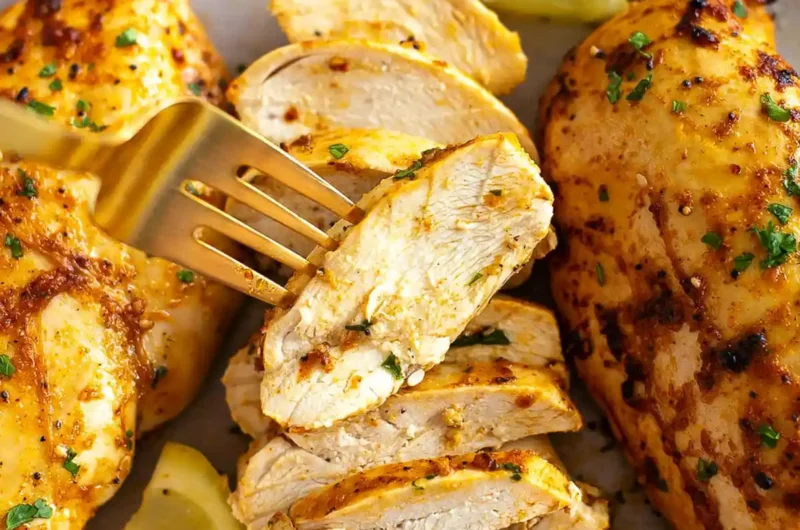
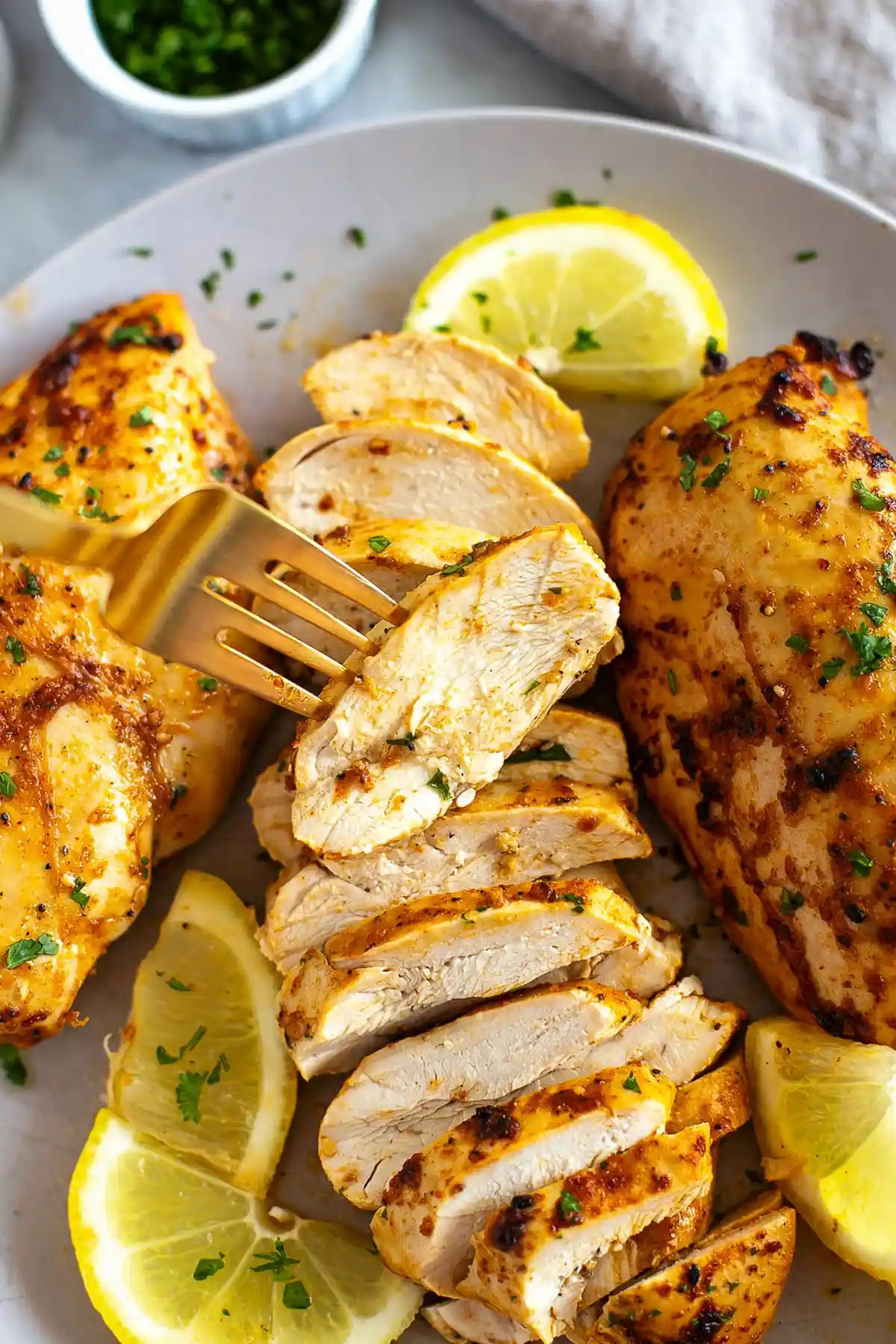
Achieving perfectly juicy chicken breast every time is a fundamental culinary skill that saves both time and effort during busy weeks. This versatile marinade balances bright acidity with aromatic spices, transforming basic poultry into a tender, flavorful centerpiece suitable for any occasion. Whether you are prepping for multiple lunches or need a quick high-protein dinner, this foolproof method ensures consistently delicious results.
List of ingredients
- 1 lb chicken breasts (about 6 oz each)
- 1/4 cup olive oil
- 2 tbsp lemon juice
- 1 tbsp Dijon mustard
- 1/2 tsp paprika
- 1/2 tsp chili powder
- 1/2 tsp onion powder
- 1/2 tsp garlic powder
- 1/2 tsp salt
- 1/2 tsp pepper
- 1/2 tsp everything bagel seasoning (optional)
step-by-step instructions
- Step: Preheat oven to 425 F.
- Step: Mix olive oil, lemon juice, dijon and spices together in a small bowl, and pour over chicken in a resealable bag. Marinate for at least 15 minutes and up to 48 hours.
- Step: Line a baking sheet with parchment paper, then add marinated chicken breasts.
- Step: Bake for 20 minutes. Check that chicken is cooked through by using a meat thermometer. Make sure it registers at least 165 F degrees in the thickest part of the chicken.
- Step: Let chicken rest for 5 minutes before slicing or chopping.
Refining your seasoning combinations
Adapting spices for different regional flavors
You can easily modify the flavor profile by swapping the spice blend for dried herbs like rosemary, thyme, or oregano to achieve a Mediterranean influence. If you prefer a warmer profile, consider adding a pinch of cumin or coriander, which pairs beautifully with the tangy notes of the Dijon mustard.
Adjusting spice heat levels
If you prefer a milder chicken, reduce the chili powder and replace it with a pinch of smoked paprika for depth without the heat. For those who enjoy extra intensity, a dash of cayenne pepper or crushed red pepper flakes can be added directly to the marinade to introduce a distinct kick.
Perfecting your cooking technique
Ensuring uniform thickness
Chicken breasts often vary in size and thickness from one end to the other, which can lead to uneven cooking. Using a meat mallet to gently pound the thicker sections to match the thinner ends ensures the entire piece of meat reaches the desired internal temperature simultaneously.
The importance of the resting period
Never bypass the five-minute resting phase, as this allows the proteins to relax and reabsorb the rendered moisture released during the high-heat cooking process. Slicing immediately after removing from the oven causes the juices to run out, which can leave your final dish tasting dry.
Serving and pairing suggestions
Creating balanced plate arrangements
This chicken pairs exceptionally well with roasted root vegetables or steamed cruciferous greens like broccoli or cauliflower. The acidity of the lemon-based marinade cuts through the starchiness of potatoes, making roasted wedges or mashed sweet potatoes excellent companions for a hearty meal.
Incorporating into diverse dishes
Because the flavor profile is neutral yet savory, this chicken is ideal for slicing cold and placing on top of massaged kale salads or grain bowls topped with quinoa. You can also dice the cooked breasts to stir into warm pasta dishes or wrap them in whole-grain tortillas with fresh vegetables and hummus for a quick lunch.
Storage and quality maintenance
Managing shelf life in the refrigerator
Store your cooked chicken in a shallow, airtight container to encourage rapid cooling, which helps maintain food safety. When properly sealed, the cooked poultry will remain at peak quality in the refrigerator for up to five days.
Best practices for freezing leftovers
To freeze, wrap each breast individually in plastic wrap before placing them in a heavy-duty freezer bag to prevent freezer burn. When you are ready to consume, allow the chicken to thaw in the refrigerator for at least 12 hours before reheating or adding it to your dish.
Troubleshooting common culinary issues
Preventing dry results
If you find your chicken is consistently drying out, verify that your oven is calibrated correctly with an independent oven thermometer. Overcooking by even a few minutes at 425 F can be detrimental to the texture, so prioritize the internal temperature reading over the suggested time ranges.
Managing uneven browning
If the surface of the chicken appears to be browning too rapidly compared to the center, rotate your baking sheet halfway through the cooking time. If the edges become too dark, you can lightly tent a piece of aluminum foil over the top of the pan for the final five minutes of baking.
Commonly asked questions
Is it necessary to use a specific type of oil?
While olive oil provides a classic flavor, you can substitute it with avocado or grape seed oil, which have higher smoke points and neutral profiles. These alternatives are excellent if you plan on using even higher temperatures or if you prefer an oil that does not impact the final aroma of the spices.
Can I prepare the marinade in larger batches?
Yes, you can prepare a double or triple batch of the marinade ingredients and keep them in a glass jar in the refrigerator for up to two weeks. Shake well before each use to re-emulsify the oil, mustard, and spices before applying it to your fresh chicken breasts.
Is it safe to marinate longer than 48 hours?
It is not recommended to marinate beyond 48 hours because the acidity in the lemon juice will eventually begin to break down the muscle fibers too much, leading to a mushy texture. If you need to store the chicken for longer periods, it is safer to freeze the chicken directly in the marinade immediately after preparation.
How do I cook larger breasts?
If you are working with extra-large chicken breasts, increase the baking time by 2-3 minutes for every additional ounce of meat. Always use your meat thermometer as the final authority, as the specific weight and shape of the poultry will dictate exactly when it has finished cooking safely.
Why should I use parchment paper?
Parchment paper prevents the marinade, specifically the mustard and spices, from sticking to the baking sheet and burning. This makes the cleaning process significantly faster and ensures that the bottom of the chicken achieves a golden, rather than charred, finish during the high-temperature bake.
Print
The Ultimate Marinated Baked Chicken Breast
- Total Time: 25 minutes
- Yield: 4 servings 1x
- Diet: Gluten-Free
Description
This is the perfect juicy baked chicken breast marinade recipe – it’s the only one you’ll ever need and it’s super customizable!
Ingredients
- 1 lb chicken breasts (about 6 oz each)
- 1/4 cup olive oil
- 2 tbsp lemon juice
- 1 tbsp Dijon mustard
- 1/2 tsp paprika
- 1/2 tsp chili powder
- 1/2 tsp onion powder
- 1/2 tsp garlic powder
- 1/2 tsp salt
- 1/2 tsp pepper
- 1/2 tsp everything bagel seasoning (optional)
Instructions
- Step: Preheat oven to 425 F.
- Step: Mix olive oil, lemon juice, dijon and spices together in a small bowl, and pour over chicken in a resealable bag. Marinate for at least 15 minutes and up to 48 hours.
- Step: Line a baking sheet with parchment paper, then add marinated chicken breasts.
- Step: Bake for 20 minutes. Check that chicken is cooked through by using a meat thermometer. Make sure it registers at least 165 F degrees in the thickest part of the chicken.
- Step: Let chicken rest for 5 minutes before slicing or chopping.
Notes
Nutritional info is for one serving. Let the chicken rest after baking for maximum juiciness. Store leftovers in the fridge for 5 days. Freeze cooked or raw marinated chicken for up to 3 months.
- Prep Time: 5 minutes
- Cook Time: 20 minutes
- Category: Main Dish
- Method: Baking
- Cuisine: American
Nutrition
- Serving Size: 1 breast
- Calories: 221 kcal
- Sugar: 0 g
- Sodium: 262 mg
- Fat: 9 g
- Saturated Fat: 1 g
- Unsaturated Fat: 7 g
- Trans Fat: 0 g
- Carbohydrates: 1 g
- Fiber: 0 g
- Protein: 40 g
- Cholesterol: 144 mg
Keywords: chicken breast, marinade, healthy, meal prep, baked chicken, gluten-free, protein