

This vibrant fusion soup brings together the bold, tangy, and spicy notes of traditional Indo-Chinese cuisine in one comforting bowl. Packed with fresh vegetables, protein-rich tofu, and slurpable ramen noodles, this satisfying meal comes together in under thirty minutes. It is a perfect choice for busy weeknights when you crave something nourishing, flavorful, and entirely plant-based.
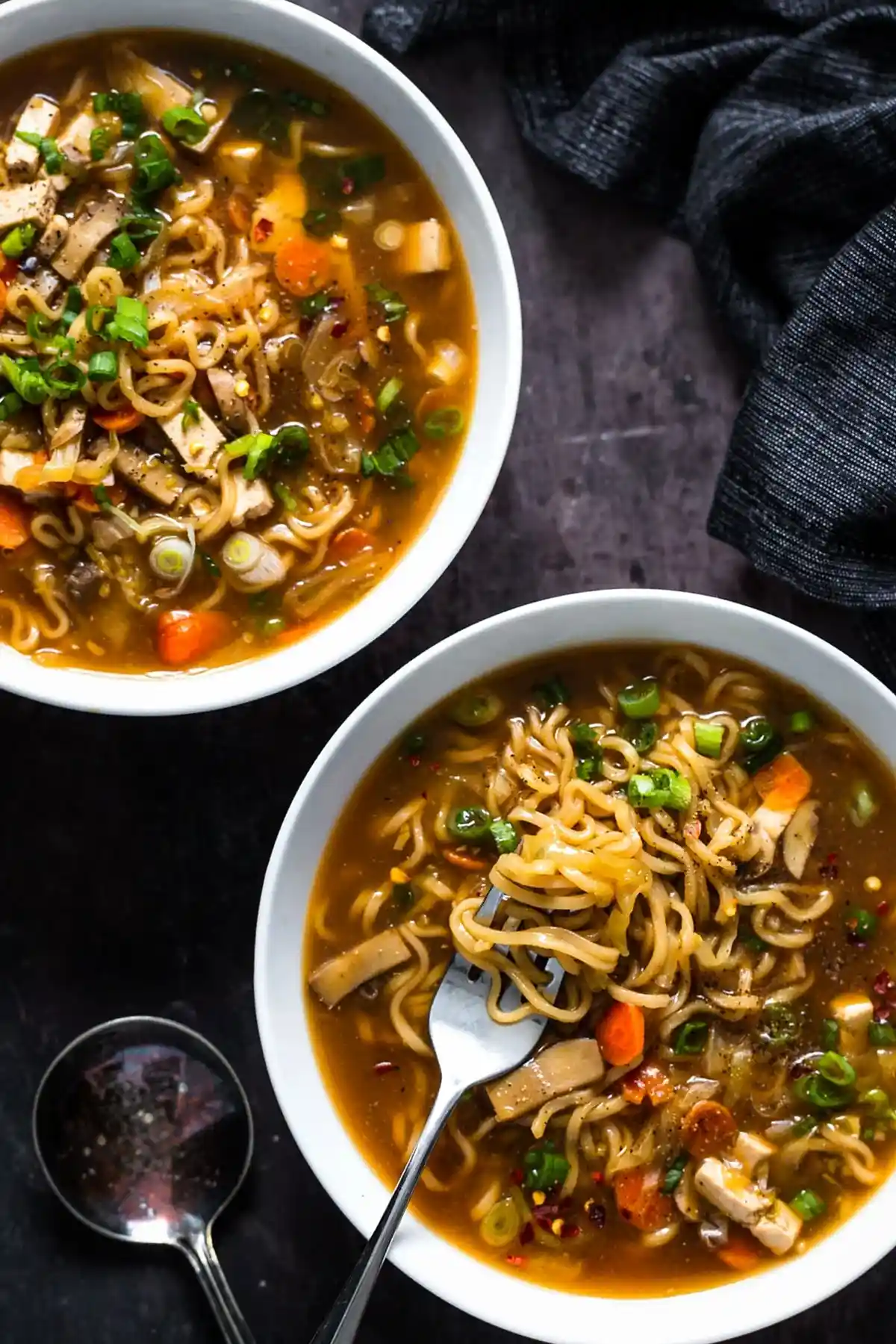
List of ingredients
- 5 1/2 cups vegetable broth (or mushroom broth)
- 1/2 inch ginger
- 2 cloves garlic
- 1 hot green chili
- 3 tbsp soy sauce
- 1 tbsp dark soy sauce (or 1 tbsp regular soy sauce, and 1 tsp molasses)
- 1 tbsp vinegar (such as rice vinegar, or white vinegar)
- 1/4 tsp salt
- 1/8 tsp black pepper
- 1 dash white pepper
- 1 tsp sugar (or maple syrup)
- 1/2 cup thinly sliced carrots
- 1 cup chopped mushrooms
- 1 cup thinly shredded cabbage
- 1/2-1 cup chopped firm tofu
- 1 tbsp cornstarch
- 3 or 4 green onions (chopped)
- 3 oz ramen noodles
step-by-step instructions
- Step: Add 5 cups of broth to a saucepan over medium heat.
- Step: Mince your ginger, garlic, and chili together and add to the broth.
- Step: Add all the sauces, and seasonings, the soy sauce, dark soy sauce, vinegar, salt, peppers, and sugar to the broth.
- Step: Once the mixture is starting to boil, add in your mushroom, carrots, tofu, and stir.
- Step: Once the mixture is rapidly boiling, add in the cabbage.
- Step: Mix in the cabbage, then carefully taste and adjust the flavor with the extra soy sauce, and vinegar if needed.
- Step: Add in the white parts of green onions.
- Step: While the soup is boiling, make your cornstarch slurry with 1 tbsp of cornstarch mixed in 1/2 cup of the remaining broth.
- Step: Toss in the ramen noodles, and once they have broken apart and are al dente, add in your cornstarch mixture and mix well.
- Step: Let the mixture start to boil again, then take off heat.
- Step: Take the pot off the heat, taste and adjust salt and flavor with soy sauce, salt, vinegar, and garnish with pepper flakes and remaining green onions before serving.
Cooking for Texture and Flavor
Balancing the Acidic Profile
The hallmark of this soup is its precise balance between heat and sourness. If the vinegar flavor feels too aggressive upon your first taste test, do not be alarmed as the acidity mellows significantly during the simmering process. Should it remain too tart for your preference, add a half-teaspoon of maple syrup or a small squeeze of fresh orange juice to round out the sharp edges.
Preventing Mushy Noodles
Ramen noodles continue to soften rapidly due to the residual heat within the broth. To ensure the best texture, monitor the noodles closely and remove the pot from the burner when they still have a slight bite. Since you are serving the dish immediately, this technique guarantees that each mouthful remains satisfying and firm rather than mushy.
Selecting the Best Broth
The flavor of your base broth significantly impacts the final outcome of the dish. While high-quality vegetable stock is excellent, using a mushroom-based broth provides an extra boost of umami that complements the tofu and cabbage perfectly. If your stock is particularly salty, reduce the amount of added soy sauce during the seasoning step to maintain balance.
Practical Ingredient Substitutions
Exploring Noodle Varieties
While instant ramen noodles are convenient, this recipe is highly versatile regarding starch components. For a slightly different mouthfeel, consider using glass noodles, which absorb the soup’s flavors effectively, or heartier sweet potato noodles. Always adjust the cooking time according to the package instructions, as these alternatives often require different durations to reach the ideal texture.
Adapting the Vegetable Medley
Feel free to customize the vegetables based on what is available in your pantry. Bok choy or baby spinach can easily replace the shredded cabbage, providing a softer bite. If you enjoy extra texture, adding bamboo shoots or water chestnuts provides an authentic crunch that stands up well to the heat and sour elements of the broth.
Enhancing the Aromatics
If you want to move toward a more traditional flavor profile, consider incorporating a small amount of Sichuan peppercorn powder. This specific ingredient creates the signature ‘numbing’ sensation associated with this style of cuisine. If you cannot find this, a dash of high-quality toasted sesame oil added right at the end can provide a deep, nutty richness that ties all the ingredients together.
Serving and Storage Suggestions
Optimal Serving Ideas
This soup is a complete meal in itself, but it pairs beautifully with simple side dishes that provide contrast. Serving it alongside some steamed edamame or a crisp, cold cucumber salad helps to cleanse the palate between bites of the hot and sour broth. If you prefer a larger meal, adding a side of vegetable spring rolls creates a satisfying spread for family gatherings.
Managing Leftovers
When storing the soup for later consumption, it is best to keep the noodles separate if possible to prevent them from absorbing too much broth and becoming soft. Store the broth and vegetables in an airtight container in the refrigerator for up to three days. When reheating, bring the soup back to a gentle simmer on the stove before adding fresh noodles or incorporating leftover ones, which will soften perfectly in the hot liquid.
Freezing the Base
For a convenient make-ahead option, you can prepare the soup base, including all vegetables and tofu, without the noodles. Allow the mixture to cool completely before transferring it to freezer-safe bags or containers. When you are ready to eat, simply thaw the soup overnight in the refrigerator, reheat it until boiling, and drop in your favorite noodles for a quick, fresh dinner.
Frequently Asked Questions
Can I use different types of vinegar?
Rice vinegar is the standard choice due to its mild, slightly sweet profile that integrates well with other ingredients. If you do not have rice vinegar, distilled white vinegar works as a suitable substitute, though you may need to add a touch more sweetener to balance its sharper, more acidic bite.
How do I make the soup thicker?
The cornstarch slurry is the primary thickening agent for this recipe. If you prefer a thicker, more viscous consistency similar to restaurant-style soups, you can increase the cornstarch to 1.5 tablespoons while keeping the water amount the same. Ensure the mixture is completely cold when you stir it into the boiling soup to prevent clumps from forming.
Is it possible to make this recipe soy-free?
If you have a soy allergy, you can replace the soy sauce with coconut aminos. While coconut aminos are slightly sweeter and less salty than traditional soy sauce, they provide a very similar depth of flavor. You may need to add a small pinch of extra salt during the seasoning stage to ensure the soup remains savory.
What is the secret to perfect tofu texture?
For the best results, use extra-firm tofu and press it for at least fifteen minutes before cutting it into small cubes. This process removes excess moisture, allowing the tofu to absorb more of the flavorful broth as it cooks. Cutting the cubes into small, uniform pieces ensures that every spoonful of the finished soup contains a satisfying morsel of protein.
Print
Vegan Hot and Sour Soup with Ramen
- Total Time: 40 minutes
- Yield: 4 servings 1x
- Diet: Vegan
Description
For a hearty Indo-Chinese meal full of veggies and tofu try this Vegan Hot and Sour Soup with Ramen! The perfect Asian-inspired comfort food that’s ready in under 30 minutes! 1 Pot and no added oil.
Ingredients
- 5 1/2 cups vegetable broth (or mushroom broth)
- 1/2 inch ginger
- 2 cloves garlic
- 1 hot green chili
- 3 tbsp soy sauce
- 1 tbsp dark soy sauce (or 1 tbsp regular soy sauce, and 1 tsp molasses)
- 1 tbsp vinegar (such as rice vinegar, or white vinegar)
- 1/4 tsp salt
- 1/8 tsp black pepper
- 1 dash white pepper
- 1 tsp sugar (or maple syrup)
- 1/2 cup thinly sliced carrots
- 1 cup chopped mushrooms
- 1 cup thinly shredded cabbage
- 1/2–1 cup chopped firm tofu
- 1 tbsp cornstarch
- 3 or 4 green onions (chopped)
- 3 oz ramen noodles
Instructions
- Step: Add 5 cups of broth to a saucepan over medium heat.
- Step: Mince your ginger, garlic, and chili together and add to the broth.
- Step: Add all the sauces, and seasonings, the soy sauce, dark soy sauce, vinegar, salt, peppers, and sugar to the broth.
- Step: Once the mixture is starting to boil, add in your mushroom, carrots, tofu, and stir.
- Step: Once the mixture is rapidly boiling, add in the cabbage.
- Step: Mix in the cabbage, then carefully taste and adjust the flavor with the extra soy sauce, and vinegar if needed.
- Step: Add in the white parts of green onions.
- Step: While the soup is boiling, make your cornstarch slurry with 1 tbsp of cornstarch mixed in 1/2 cup of the remaining broth.
- Step: Toss in the ramen noodles, and once they have broken apart and are al dente, add in your cornstarch mixture and mix well.
- Step: Let the mixture start to boil again, then take off heat.
- Step: Take the pot off the heat, taste and adjust salt and flavor with soy sauce, salt, vinegar, and garnish with pepper flakes and remaining green onions before serving.
Notes
You can substitute ramen with glass noodles or sweet potato noodles. Adding a small amount of Sichuan peppercorn powder adds an authentic touch. If making a big batch to freeze, omit the noodles and add them fresh upon reheating.
- Prep Time: 15 minutes
- Cook Time: 25 minutes
- Category: Main Course
- Method: Stovetop
- Cuisine: Chinese, Japanese
Nutrition
- Serving Size: 1 bowl
- Calories: 179 kcal
- Sugar: 5 g
- Sodium: 893 mg
- Fat: 5 g
- Saturated Fat: 2 g
- Unsaturated Fat: 3 g
- Trans Fat: 0 g
- Carbohydrates: 27 g
- Fiber: 4 g
- Protein: 8 g
- Cholesterol: 0 mg
Keywords: vegan, hot and sour soup, ramen, chinese, japanese, soup, healthy, tofu, quick meal


