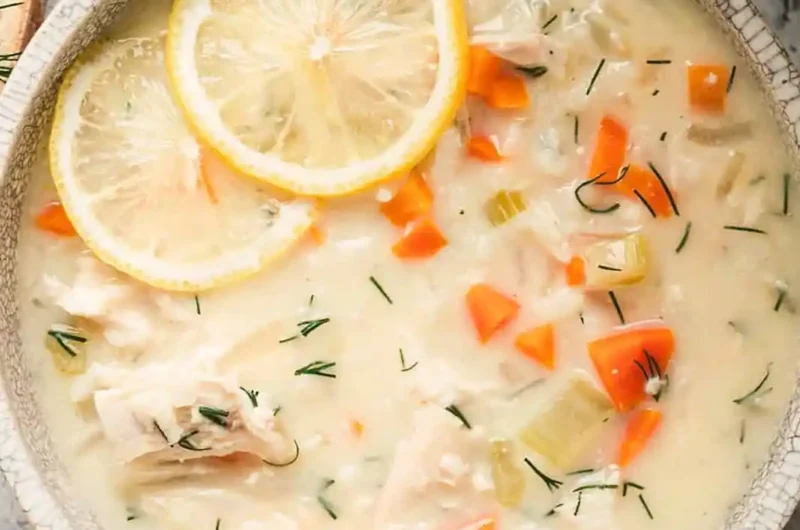
Avgolemono soup is a quintessential Greek classic, celebrated for its refreshing citrus profile and velvety, comforting texture. By combining nutrient-dense chicken with creamy eggs and bright lemon, this soup offers a sophisticated balance that feels both light and deeply satisfying for any time of year.
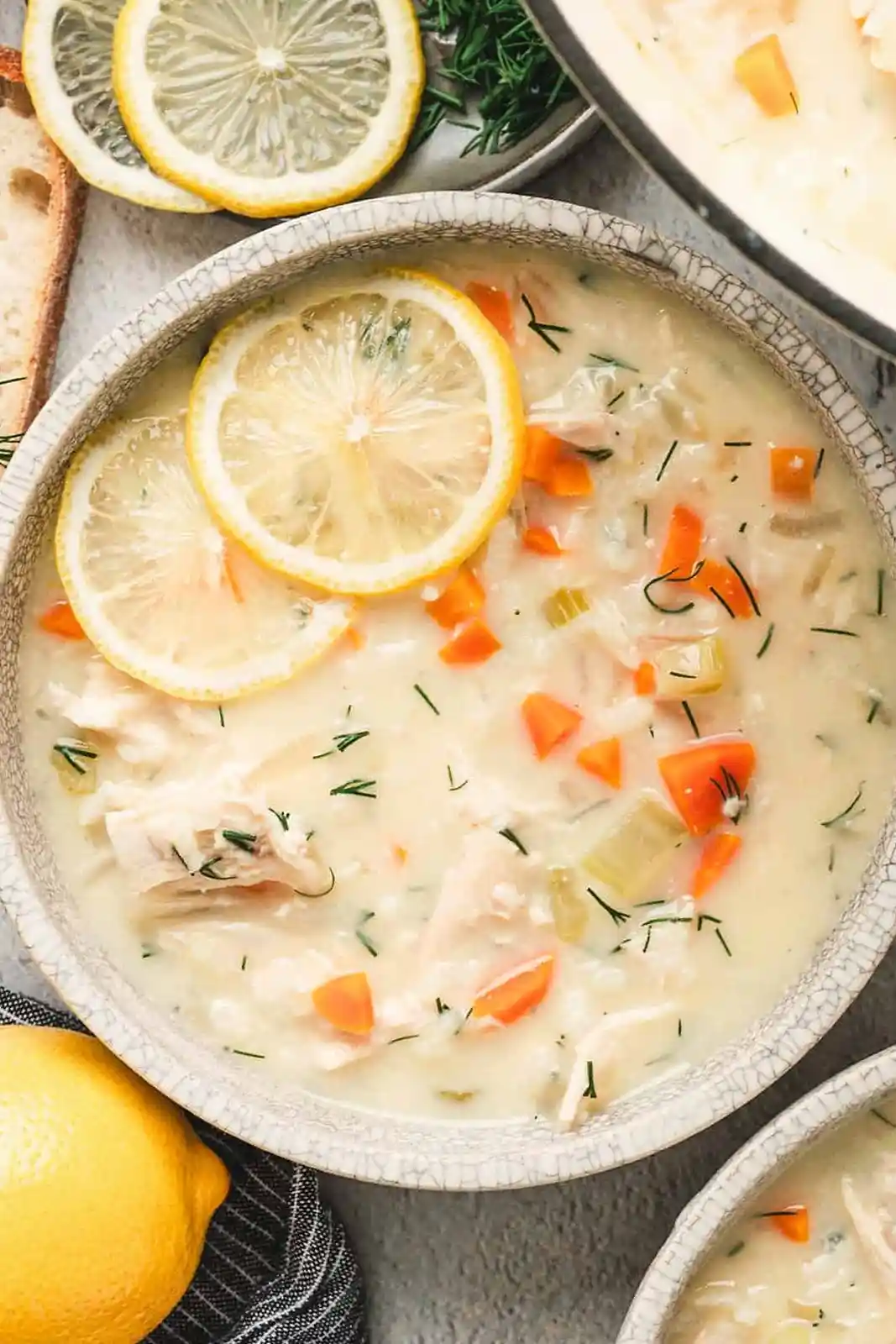
List of ingredients
- 2 tbsp olive oil
- 1 small sweet onion, diced small
- 2 stalks celery, diced small
- 2 medium carrots, diced small
- 2 cloves garlic, minced
- ½ tsp kosher salt
- ⅛ tsp pepper
- ½ cup dry Arborio rice
- 6 cups low-sodium chicken stock
- 1 large dried bay leaf
- 2 (6 oz. each) chicken breasts, cooked and shredded
- ⅓ cup fresh lemon juice
- 2 large eggs
- 2½ tbsp chopped fresh dill
step-by-step instructions
- Step: Warm the olive oil in a large saucepan over medium heat. Add in the onion, celery, and carrots; saute until the vegetables are tender and the onion is translucent, about 3 minutes.
- Step: Add in the garlic and saute until slightly browned and fragrant, 20 seconds. Season with the salt and pepper.
- Step: Add in the rice and stir to coat in the oil.
- Step: Add the chicken stock and bay leaf; bring to a simmer. Simmer until the rice is tender, about 10 minutes. Remove the bay leaf.
- Step: Add the shredded chicken and maintain a gentle simmer.
- Step: In a medium bowl, whisk together the lemon juice and eggs until light and frothy.
- Step: Remove the saucepan from the heat and slowly whisk 2 cups of the hot broth into the egg mixture, then slowly pour the egg mixture back into the soup; stir and incorporate.
- Step: Stir in the dill. Taste and adjust seasoning, if necessary. Ladle into bowls and serve immediately.
Refining the Tempering Process
Achieving a Perfectly Smooth Emulsion
The success of this soup hinges entirely on the process of tempering the eggs. When you add the hot broth to the cold egg-lemon mixture in the bowl, you are gradually raising the temperature of the protein, which prevents the eggs from scrambling when they eventually hit the full pot. Never skip the step of removing the pot from the heat, as even a residual simmer can cause the proteins to coagulate too quickly and create unwanted texture.
The Role of Constant Whisking
Keep your whisk in constant motion from the moment the hot broth enters the bowl until the entire mixture is incorporated back into the soup. This mechanical action ensures the egg proteins bond properly with the broth rather than clumping. If you find the soup is still not as thick as you prefer, ensure you have used enough rice, as the starch released during the initial simmering process acts as a thickening agent that supports the eggs.
Selecting and Preparing Ingredients
The Importance of Starchy Rice
Using high-starch rice, specifically Arborio, is the secret to a professional result. Unlike long-grain varieties that remain firm and distinct, Arborio releases significant starch into the broth as it cooks, which provides the characteristic creamy foundation for the egg mixture. If you must use a different grain, expect a slightly thinner soup, and consider whisking in a teaspoon of cornstarch to the egg mixture if you desire a heavier body.
Ensuring Brightness with Fresh Lemon
Always use freshly squeezed lemon juice rather than bottled alternatives. Fresh juice contains natural oils that provide an aromatic profile impossible to replicate with shelf-stable options. The acidity of the lemon is not just for taste; it helps to balance the richness of the egg yolks, creating a refreshing brightness that defines this traditional dish.
Managing Soup Consistency
Handling Rice Absorption
Rice continues to absorb liquid long after the heat is turned off, which can lead to a soup that thickens significantly in the refrigerator. If you are preparing the meal for later consumption, consider keeping the rice ratio modest. Should the soup become too thick, add a splash of extra chicken stock or water before reheating it to restore the original, elegant consistency.
Optimizing for Texture
If you intend to store the soup for several days, consider cooking the rice separately and adding it to individual bowls before pouring the broth over it. This prevents the rice from becoming overly soft or mushy during the cooling and reheating process. It also ensures that each serving maintains the perfect structural integrity of the individual ingredients.
Storage and Reheating Guidelines
Appropriate Refrigerator Maintenance
Store your leftovers in an airtight container once the soup has completely cooled to room temperature. It will remain safe and flavorful for up to three days. Keep the container away from the back of the refrigerator where the temperature is coldest, as extreme cold can occasionally cause the emulsion to separate slightly, though this can be whisked back together upon heating.
Safe Reheating Methods
When reheating, never bring the soup to a full boil, as the delicate egg emulsion is heat-sensitive. Gently heat the soup on the stovetop over low to medium-low heat, stirring frequently. If you are using a microwave, reheat in short 30-second bursts, stirring between each interval to distribute the heat evenly and prevent hot spots that could curdle the eggs.
Frequently Asked Questions
Can I use leftover roasted chicken instead of freshly boiled breast meat?
Yes, shredded rotisserie chicken or any leftover roasted chicken works exceptionally well in this recipe. Just ensure that the chicken is shredded into manageable pieces and that you remove any skin or excess fat before adding it to the broth.
What is the best way to handle curdled eggs?
If you accidentally boil the soup and see small egg solids, you can attempt to strain the soup through a fine-mesh sieve into a new pot. While you may lose some of the silky texture, it will remove the unwanted solids and allow you to serve the remaining broth successfully.
Is there a way to make this soup heartier?
To make the soup more filling, increase the volume of diced carrots and celery or add a handful of fresh spinach during the final minute of simmering. The vegetables add fiber and bulk without compromising the delicate, clean flavor profile that defines this traditional soup.
Can I freeze this recipe successfully?
While the soup can be frozen for up to two months, the egg-based emulsion may change slightly upon thawing. If you plan to freeze it, wait until you are reheating it to add a fresh squeeze of lemon juice, as this helps brighten the flavor profile and masks any textural changes caused by the freezing process.
Print
Traditional Avgolemono Soup (Greek Lemon Chicken Soup)
- Total Time: PT25M
- Yield: 6 servings 1x
- Diet: High Protein
Description
Avgolemono Soup is a traditional Greek Lemon Chicken Soup that gets richness from eggs and tang from fresh lemons. It’s silky smooth, light, bright, and wonderful!
Ingredients
- 2 tbsp olive oil
- 1 small sweet onion, diced small
- 2 stalks celery, diced small
- 2 medium carrots, diced small
- 2 cloves garlic, minced
- ½ tsp kosher salt
- ⅛ tsp pepper
- ½ cup dry Arborio rice
- 6 cups low-sodium chicken stock
- 1 large dried bay leaf
- 2 (6 oz. each) chicken breasts, cooked and shredded
- ⅓ cup fresh lemon juice
- 2 large eggs
- 2½ tbsp chopped fresh dill
Instructions
- Step: Warm the olive oil in a large saucepan over medium heat. Add in the onion, celery, and carrots; saute until the vegetables are tender and the onion is translucent, about 3 minutes.
- Step: Add in the garlic and saute until slightly browned and fragrant, 20 seconds. Season with the salt and pepper.
- Step: Add in the rice and stir to coat in the oil.
- Step: Add the chicken stock and bay leaf; bring to a simmer. Simmer until the rice is tender, about 10 minutes. Remove the bay leaf.
- Step: Add the shredded chicken and maintain a gentle simmer.
- Step: In a medium bowl, whisk together the lemon juice and eggs until light and frothy.
- Step: Remove the saucepan from the heat and slowly whisk 2 cups of the hot broth into the egg mixture, then slowly pour the egg mixture back into the soup; stir and incorporate.
- Step: Stir in the dill. Taste and adjust seasoning, if necessary. Ladle into bowls and serve immediately.
Notes
Do not boil after adding the eggs to prevent curdling. If reheating, do so gently and add a splash of broth as the rice will continue to absorb liquid.
- Prep Time: PT10M
- Cook Time: PT15M
- Category: Soup
- Method: Stovetop
- Cuisine: Greek
Nutrition
- Serving Size: 1 bowl
- Calories: 199 kcal
- Sugar: 5 g
- Sodium: 322 mg
- Fat: 8 g
- Saturated Fat: 2 g
- Unsaturated Fat: 6 g
- Trans Fat: 0 g
- Carbohydrates: 24 g
- Fiber: 2 g
- Protein: 9 g
- Cholesterol: 71 mg
Keywords: Greek, Soup, Chicken Soup, Lemon, Avgolemono