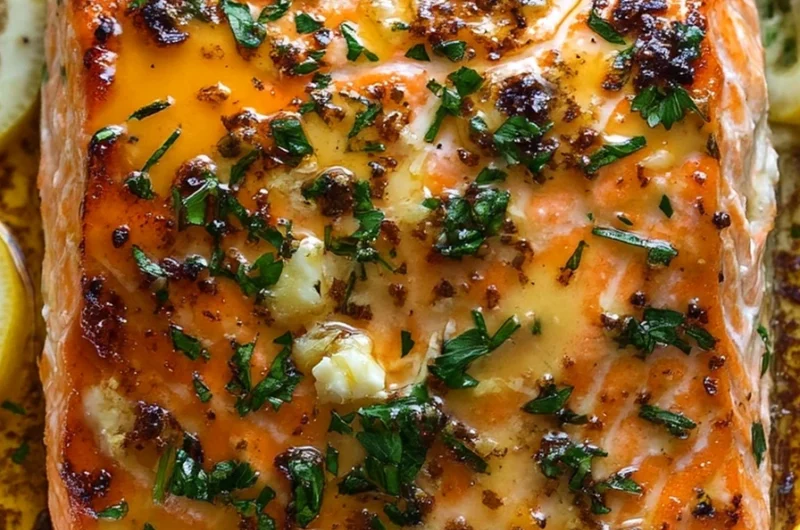
Preparing high-quality seafood at home can be both effortless and impressive with this simple garlic butter preparation. This method uses a foil-packet technique to steam the fish in its own juices, ensuring the fillets remain incredibly moist and tender. It is a reliable solution for anyone seeking a flavorful, healthy meal that comes together in under thirty minutes.
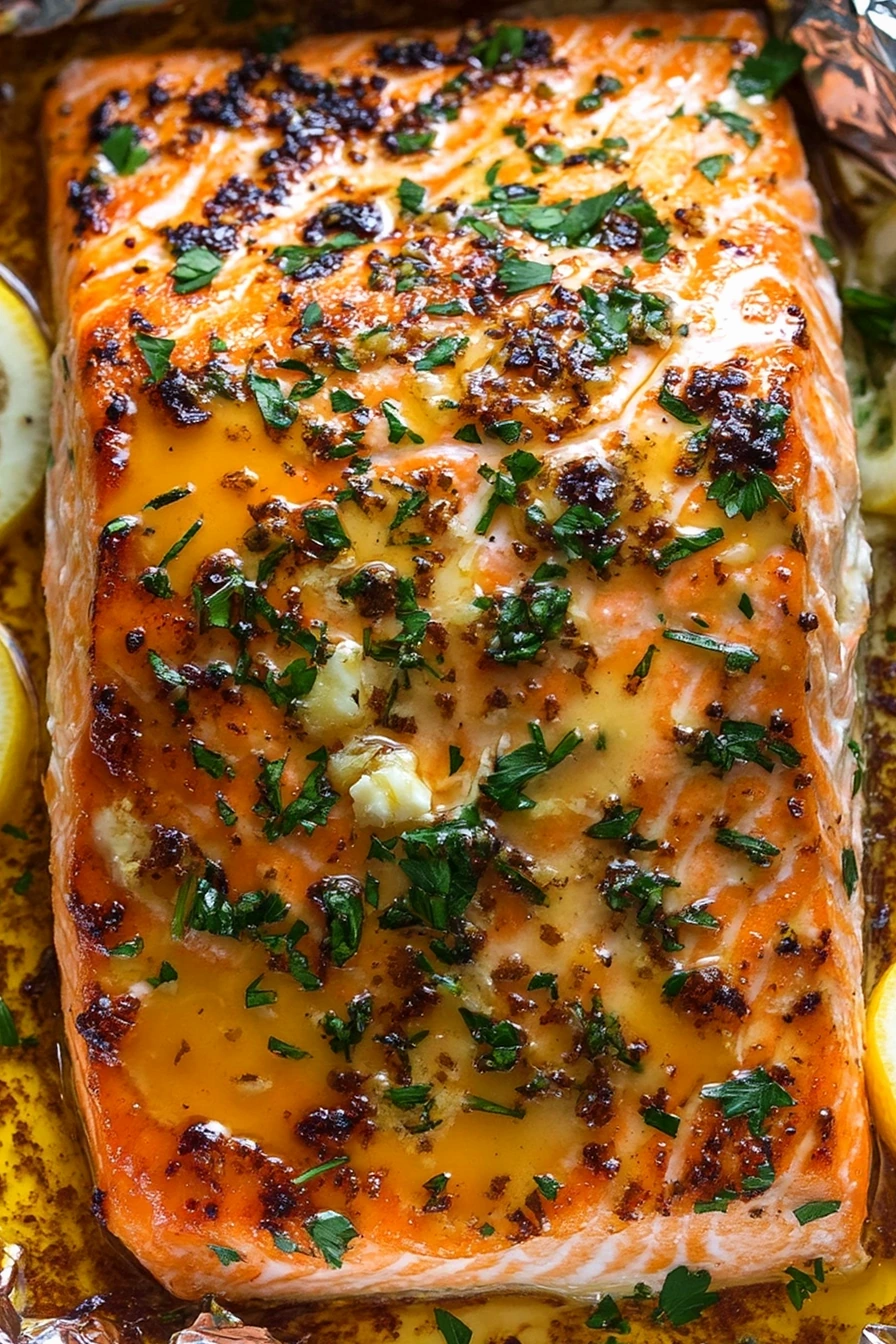
List of ingredients
- 1 large salmon fillet about 2 pounds
- 4 tablespoons unsalted butter, melted
- 4 cloves garlic, minced
- 1 teaspoon salt
- 1/2 teaspoon black pepper
- 2 tablespoons fresh lemon juice
- 1/4 teaspoon red pepper flakes
- 1 tablespoon chopped fresh parsley
- 1 lemon, sliced
step-by-step instructions
- Step: Preheat oven to 400 degrees Fahrenheit. Line a baking sheet with foil and place a 2 pound salmon fillet in the center. Pat dry and season with 1 teaspoon salt and 1/2 teaspoon black pepper.
- Step: In a bowl mix 4 tablespoons melted butter with 4 minced garlic cloves and 2 tablespoons lemon juice. Stir well and brush evenly over the salmon.
- Step: Sprinkle 1/4 teaspoon red pepper flakes if desired and top with lemon slices. Fold foil around salmon creating a sealed packet.
- Step: Bake for 12 to 15 minutes until salmon flakes easily with a fork. For slight browning open foil during the last 2 minutes.
- Step: Rest for 5 minutes before serving. Spoon extra butter from the foil over the salmon and garnish with 1 tablespoon chopped parsley.
Refining Your Baking Technique
Achieving Perfect Doneness
Salmon is a delicate protein that benefits from precise temperature control. By using the 400-degree setting, you achieve a rapid heat transfer that cooks the fish through while keeping the exterior from becoming rubbery. Always test for doneness at the thickest part of the fillet to avoid serving an undercooked center.
The Role of the Foil Packet
Using foil creates a micro-environment that traps moisture inside the cooking area. This essentially poaches the fish in the garlic-infused butter, which is significantly gentler than direct dry-heat roasting. This method is particularly effective for larger fillets that might otherwise dry out in a standard baking dish.
Managing Moisture Levels
If your salmon fillet is exceptionally thick, it may require an extra two minutes of cooking time. Conversely, if you are using a thinner tail-end piece, start checking the internal texture after just 10 minutes to prevent overcooking. The goal is to see the salmon transition from translucent to an opaque, light pink color throughout.
Customizing Your Seafood Dinner
Adjusting the Aromatics
While garlic and lemon are the traditional foundations for this dish, you can incorporate other herbs to change the flavor profile. Fresh dill or chives work exceptionally well when sprinkled on at the end, providing a different dimension of brightness. If you enjoy deeper savory notes, consider adding a teaspoon of dry mustard or crushed fennel seeds to the butter mixture before coating the fish.
Managing the Heat Levels
The red pepper flakes provide a gentle warmth, but you can increase this by adding a pinch of cayenne or chopped fresh chili if you prefer a spicier meal. If you are cooking for guests who are sensitive to heat, simply omit the red pepper flakes entirely. The garlic butter will still provide plenty of depth without the need for additional spice.
Practical Serving Suggestions
Selecting Complementary Starches
Because the salmon is rich and buttery, it pairs best with starches that can absorb the extra sauce. Steamed jasmine rice or fluffy couscous are excellent vehicles for catching the drippings. Alternatively, roasted baby potatoes with rosemary provide a hearty base that complements the citrus notes of the lemon slices.
Integrating Fresh Vegetables
To create a balanced meal, include vibrant green vegetables that can be prepared alongside the fish. Roasted asparagus, sautéed spinach, or blanched snap peas offer a clean, crisp contrast to the decadent garlic butter. The acidity from the lemon in the salmon recipe also helps to enhance the flavor of these green vegetables.
Using the Leftovers Effectively
If you find yourself with extra portions, the cooled salmon can be flaked into large chunks for use the following day. It is excellent when chilled and added to a grain bowl with quinoa, cucumber, and a light yogurt dressing. Alternatively, you can gently fold the flaked fish into a warm pasta dish, letting the residual butter coat the noodles.
Addressing Common Cooking Concerns
What is the best way to reheat this dish?
To avoid drying out the fish during reheating, place the fillets in a small oven-safe dish with a tablespoon of water or broth. Cover the dish tightly with foil and heat it at 300 degrees Fahrenheit until just warmed through. This low-temperature method prevents the fats from separating and keeps the protein supple.
Can this recipe be prepared ahead of time?
You can prepare the garlic butter mixture and portion out the salmon on the foil-lined sheet in advance. Store the prepared tray in the refrigerator, but do not add the lemon juice or salt until you are ready to bake. Adding acid and salt too early can start to cure the surface of the fish, changing the final texture.
How do I know if the salmon is fresh?
Quality salmon should have a mild, oceanic scent rather than a strong or fishy smell. The flesh should appear firm and retain its shape when pressed, with a vibrant color and no visible bruising. When purchasing, choose fillets that look uniform in thickness to ensure that every portion reaches the perfect stage of flakiness at the same time.
Is it necessary to remove the skin?
The skin acts as a protective barrier between the heat source and the delicate flesh of the fish. It is often easier to bake the salmon with the skin on and simply slide a spatula between the skin and the meat when serving. This ensures that you do not accidentally tear the flesh while transferring it to the serving plate.
How can I make the sauce thicker?
The sauce provided in this recipe is intended to be a light, buttery drizzle rather than a heavy gravy. If you desire a thicker consistency, you can emulsify the pan juices with a small amount of cold butter at the very end. Whisking the cold butter into the warm pan liquid creates a glossy, slightly thicker finish that clings beautifully to the salmon.
Print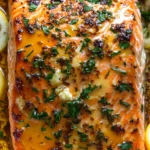
Garlic Butter Salmon
- Total Time: 25 minutes
- Yield: 4 servings 1x
- Diet: Low Calorie
Description
Looking for the best Garlic Butter Salmon recipe? This quick and easy dinner idea is simple to prepare and packed with flavor. Fresh salmon baked in rich garlic butter and lemon creates a healthy and satisfying meal. Perfect for weeknights, family dinners, gatherings, or holiday meals when you want something impressive yet effortless.
Ingredients
- 1 large salmon fillet about 2 pounds
- 4 tablespoons unsalted butter, melted
- 4 cloves garlic, minced
- 1 teaspoon salt
- 1/2 teaspoon black pepper
- 2 tablespoons fresh lemon juice
- 1/4 teaspoon red pepper flakes
- 1 tablespoon chopped fresh parsley
- 1 lemon, sliced
Instructions
- Step: Preheat oven to 400 degrees Fahrenheit. Line a baking sheet with foil and place a 2 pound salmon fillet in the center. Pat dry and season with 1 teaspoon salt and 1/2 teaspoon black pepper.
- Step: In a bowl mix 4 tablespoons melted butter with 4 minced garlic cloves and 2 tablespoons lemon juice. Stir well and brush evenly over the salmon.
- Step: Sprinkle 1/4 teaspoon red pepper flakes if desired and top with lemon slices. Fold foil around salmon creating a sealed packet.
- Step: Bake for 12 to 15 minutes until salmon flakes easily with a fork. For slight browning open foil during the last 2 minutes.
- Step: Rest for 5 minutes before serving. Spoon extra butter from the foil over the salmon and garnish with 1 tablespoon chopped parsley.
Notes
Do not overbake to keep salmon moist. Use fresh garlic for best flavor. Adjust baking time based on thickness. Let salmon rest before slicing.
- Prep Time: 10 minutes
- Cook Time: 15 minutes
- Category: Dinner
- Method: Baked
- Cuisine: American
Nutrition
- Serving Size: 1 serving
- Calories: 380 kcal
- Sugar: 1 g
- Sodium: 650 mg
- Fat: 22 g
- Saturated Fat: 9 g
- Unsaturated Fat: 11 g
- Trans Fat: 0 g
- Carbohydrates: 3 g
- Fiber: 1 g
- Protein: 38 g
- Cholesterol: 115 mg
Keywords: Garlic Butter Salmon, Salmon Recipe, Baked Salmon, Easy Dinner