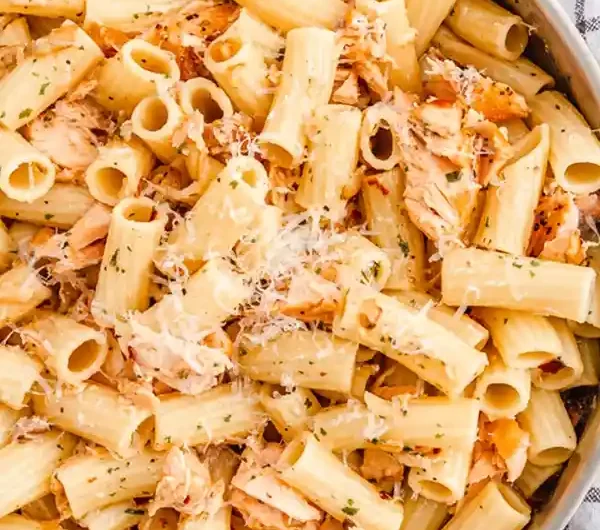
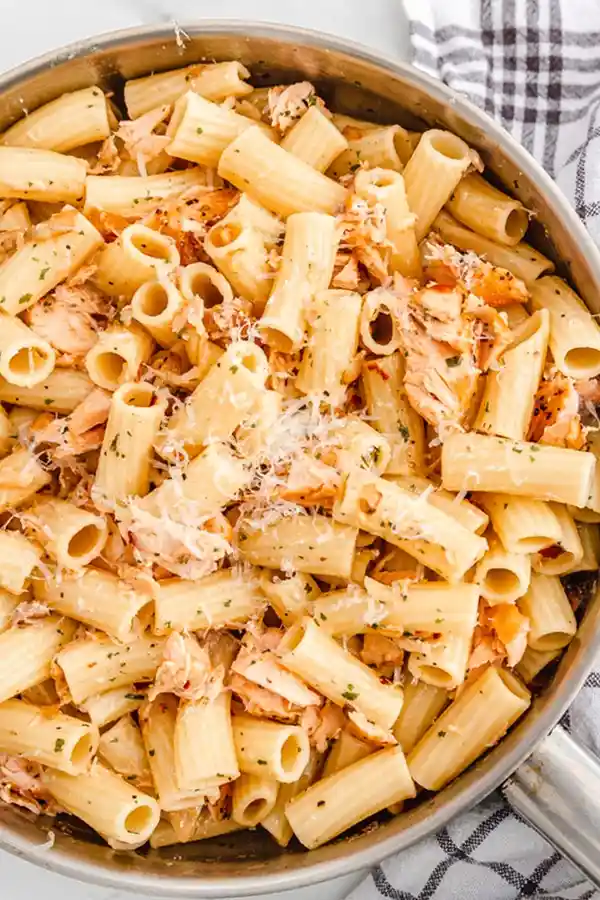
This vibrant salmon pasta dish proves that you do not need heavy cream to create a luxurious, restaurant-quality meal at home. By utilizing a simple emulsion of pasta water, butter, and parmesan cheese, you achieve a silky coating that perfectly complements tender, seared salmon flakes. It is an ideal solution for busy weeknights when you want something healthy, hearty, and full of flavor in under 30 minutes.
List of ingredients
- 400 g dry pasta
- 1 lb Salmon
- 2 tablespoons Olive oil
- 3 garlic cloves, chopped
- ½ cup onions, chopped
- ⅓ cup milk
- 2 Tablespoons unsalted butter
- 1 cup grated Parmesan cheese
- Red pepper flakes to taste
- 1 teaspoon dried parsley
- Salt and black pepper to taste
- 1 cup pasta water
step-by-step instructions
- Step: Bring a large pot of salted water to a boil, add the dried pasta, and cook according to package instructions until aldente. Reserve about 1 cup of pasta water then drain and set aside.
- Step: Pat the salmon dry with a kitchen paper towel then season with salt and black pepper.
- Step: Place a pan on medium-high heat then add oil. Once the pan is hot, place the salmon skin side up and cook for 3-4 minutes without moving it in the pan. Flip the salmon over and cook for another 2-3 minutes until it is cooked through.
- Step: Remove from heat and set aside on a plate then flake the salmon into big chunks with a fork.
- Step: Reduce the heat, still using the same pan (reduce the oil if need be, you only need about 1 Tablespoon of oil in the pan). Add chopped onions to the pan and cook for about 1 minute until soft and translucent, add butter, dried parsley and chopped garlic and cook for another 30 seconds.
- Step: Add about 20% of the flaked salmon, black pepper, and chili flakes to the pan, stir to combine, and cook for 30 seconds.
- Step: Stir in the milk, ½ cup pasta water, and parmesan cheese and stir to combine. Cook for about 1 minute or so or just until the sauce reduces.
- Step: Add cooked pasta and toss gently into the sauce, then add the remaining flaked salmon. Gently stir or toss to combine to avoid breaking the fish. If the pasta is too dry, add more pasta water to achieve your desired consistency. Taste and adjust the seasoning accordingly.
- Step: Take it off the heat and serve immediately with more grated parmesan cheese and a squeeze of lemon juice.
Refining the Preparation Process
Managing Multiple Cooking Tasks Simultaneously
Success with this recipe relies on timing your boiling water and your skillet work so they conclude at the same time. Start the pasta as soon as the water boils, as it will likely take 8 to 12 minutes depending on the variety, leaving you the perfect window to sear the salmon. Having your onion, garlic, and salmon ready before the heat is turned on prevents rushing during the final assembly phase.
Achieving the Perfect Sear on Salmon
The secret to a great sear is moisture control and heat management. Always pat the salmon fillet very dry with paper towels before adding it to the pan, as surface moisture leads to steaming rather than browning. Ensure the oil is shimmering before the fish touches the surface, and avoid moving the pieces until the crust has naturally released from the pan bottom.
Selecting the Best Pasta Shapes
While rigatoni and penne are recommended for their ability to capture chunks of salmon and sauce in their hollow centers, other shapes work well if you have them on hand. Bowtie pasta or fusilli are excellent alternatives because their intricate shapes are designed to hold onto thick sauces. Spaghetti or linguine also work well, especially when the sauce is emulsified properly, as the thin strands get thoroughly coated by the garlic and parmesan mixture.
Refining Flavor and Texture
Creating a Stable Sauce Emulsion
The star of this dish is the sauce, which relies on the starch-heavy water left over from boiling the pasta. Never discard all of this liquid, as the starch acts as a binding agent that transforms the butter, milk, and cheese into a smooth, emulsified sauce rather than a broken or oily mess. Add the liquid gradually, assessing the texture after each addition to ensure the pasta stays glossy.
Enhancing the Dish with Fresh Additions
If you wish to introduce more brightness to the meal, consider finishing the pasta with fresh lemon juice or lemon zest. The acidity cuts through the richness of the butter and parmesan, elevating the flavor of the salmon significantly. Adding a handful of fresh baby spinach leaves just before turning off the heat also adds a nutritional boost and a pleasant color contrast without altering the overall taste profile.
Substituting Ingredients for Dietary Needs
For those looking for a vegetarian version of the base sauce, simply omit the salmon and replace the protein with sautéed mushrooms or roasted cauliflower. If you prefer to avoid dairy, substitute the butter with a high-quality olive oil and use a plant-based parmesan alternative to maintain the salty, umami kick. While the milk adds a specific silkiness, you can omit it entirely and rely solely on extra pasta water and parmesan to create a lighter, Mediterranean-style coating.
Practical Serving and Storage
Storing Leftovers for Optimal Quality
This dish is best enjoyed immediately upon preparation when the pasta is perfectly firm and the salmon is tender. If you do have leftovers, place them in a glass or airtight plastic container and refrigerate for up to 48 hours. Using a quality container helps prevent the pasta from absorbing odors in the fridge and maintains the integrity of the sauce components.
Revitalizing Pasta During Reheating
Reheating pasta often results in the noodles absorbing the sauce, leading to a dry texture. To correct this, add a splash of vegetable broth or plain water to the container before heating it in the microwave or on the stove. This small amount of moisture allows the sauce to re-emulsify when stirred over low heat, restoring the dish to its initial creamy state.
Planning for Ahead-of-Time Preparation
While the final assembly should happen right before serving, you can prep components ahead of time to make the process smoother. Chop your onions and garlic, measure out your spices, and grate your cheese during your weekly prep window. You can even sear the salmon earlier in the day if you are pressed for time, simply flaking it into the sauce at the last minute during the reheating phase.
Frequently Asked Questions
Why does my sauce look thin?
If the sauce seems thin, it is likely due to the pasta being slightly undercooked when it hits the pan or using too much liquid. Continue to simmer the pasta in the sauce for an additional minute, as the starch will continue to release and thicken the mixture as it evaporates.
Can I use frozen salmon for this recipe?
Yes, frozen salmon works perfectly fine provided it is completely thawed in the refrigerator overnight before cooking. Always pat the thawed fish dry thoroughly, as it may retain more surface moisture than fresh fillets, which can hinder the browning process during the searing stage.
What should I do if the pasta is too dry?
If the pasta appears dry after tossing it with the sauce, it has likely absorbed the liquid quickly while sitting. Stir in a small amount of warm water or broth, about a tablespoon at a time, and toss over low heat until the sauce becomes fluid and glossy once more.
Is it necessary to use pasta water?
The pasta water is technically optional, but it is highly encouraged for the best results. The starchy, salty water acts as a bridge between the fat from the butter and the proteins in the cheese, ensuring a creamy texture that tap water alone cannot provide.
Can I serve this with a salad?
Yes, a crisp, acidic salad with a vinaigrette dressing is an ideal side dish for this meal. The acidity and crunch of the salad greens provide a perfect contrast to the savory, buttery notes of the pasta and the richness of the salmon.
How do I prevent the salmon from breaking?
The key is to reserve a portion of the flaked salmon to add at the very end of the cooking process. By gently folding it into the pasta just before serving, you ensure that the fish remains in visible, distinct chunks rather than being shredded into the sauce during the vigorous tossing step.
Print
Easy Salmon Pasta Without Cream
- Total Time: PT23M
- Yield: 4 1x
- Diet: Pescatarian
Description
This easy salmon pasta without cream is delicious, indulgent, healthy, and full of flavor! It’s perfect for a date night or a quick, easy weeknight meal. Plus, it’s ready in just 30 minutes!
Ingredients
- 400 g dry pasta
- 1 lb Salmon
- 2 tablespoons Olive oil
- 3 garlic cloves, chopped
- ½ cup onions, chopped
- ⅓ cup milk
- 2 Tablespoons unsalted butter
- 1 cup grated Parmesan cheese
- Red pepper flakes to taste
- 1 teaspoon dried parsley
- Salt and black pepper to taste
- 1 cup pasta water
Instructions
- Step: Bring a large pot of salted water to a boil, add the dried pasta, and cook according to package instructions until aldente. Reserve about 1 cup of pasta water then drain and set aside.
- Step: Pat the salmon dry with a kitchen paper towel then season with salt and black pepper.
- Step: Place a pan on medium-high heat then add oil. Once the pan is hot, place the salmon skin side up and cook for 3-4 minutes without moving it in the pan. Flip the salmon over and cook for another 2-3 minutes until it is cooked through.
- Step: Remove from heat and set aside on a plate then flake the salmon into big chunks with a fork.
- Step: Reduce the heat, still using the same pan (reduce the oil if need be, you only need about 1 Tablespoon of oil in the pan). Add chopped onions to the pan and cook for about 1 minute until soft and translucent, add butter, dried parsley and chopped garlic and cook for another 30 seconds.
- Step: Add about 20% of the flaked salmon, black pepper, and chili flakes to the pan, stir to combine, and cook for 30 seconds.
- Step: Stir in the milk, ½ cup pasta water, and parmesan cheese and stir to combine. Cook for about 1 minute or so or just until the sauce reduces.
- Step: Add cooked pasta and toss gently into the sauce, then add the remaining flaked salmon. Gently stir or toss to combine to avoid breaking the fish. If the pasta is too dry, add more pasta water to achieve your desired consistency. Taste and adjust the seasoning accordingly.
- Step: Take it off the heat and serve immediately with more grated parmesan cheese and a squeeze of lemon juice.
Notes
This is a quick recipe that comes together in under 10 minutes or less once the fish and pasta are cooked. You can make this dish with skinless or skin-on salmon.
- Prep Time: PT5M
- Cook Time: PT18M
- Category: Dinner
- Method: Stovetop
- Cuisine: American
Nutrition
- Serving Size: 1 serving
- Calories: 770 kcal
- Sugar: 5 g
- Sodium: 509 mg
- Fat: 29 g
- Saturated Fat: 10 g
- Unsaturated Fat: 16 g
- Trans Fat: 0.2 g
- Carbohydrates: 82 g
- Fiber: 4 g
- Protein: 44 g
- Cholesterol: 99 mg
Keywords: easy salmon pasta, how to make salmon pasta, salmon pasta without cream